Insect Bite and Sting Guides: First Aid, Warning Signs & Prevention
Browse StingHelp’s newest identification comparisons, first-aid guidance, warning-sign explainers, and prevention resources.
What Bit Me?
Compare exposure clues, timing, and symptom patterns.
First Aid
Practical immediate-care and symptom-relief guidance.
Warning Signs
Recognize symptoms that deserve closer attention.
Prevention
Reduce bites and stings at home, outdoors, and while traveling.
All StingHelp articles
No-See-Um Bites: Symptoms, Relief, Prevention, and How to Reduce Biting Midges
Bug Bite Prevention for International Travel: Mosquitoes, Ticks, Fleas, and Bed Bugs
How to Reduce Mosquito and Tick Bites Around Your Home and Yard
Fire Ant Stings: Pustules, First Aid, Allergy Warning Signs, and When to Get Help
Bed Bug Bites vs Flea Bites: Key Differences, Treatment, and What to Do
Puss Caterpillar Sting Treatment: Safe First Aid, Relief, and When to Get Help
Black Widow Bite Treatment: Safe First Aid, Relief, and When to Get Help
Brown Recluse Bite Treatment: Safe First Aid, Relief, and When to Get Help
American dog tick bite vs dog flea bite: Pictures, Key Differences, and What to Do

Insect Sting First Aid: A Practical Safety Checklist
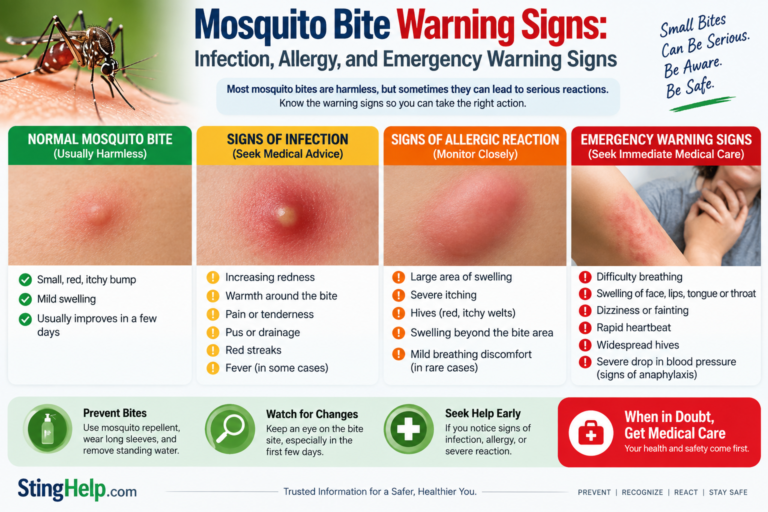
Mosquito Bite Warning Signs: Infection, Allergy, and Emergency Warning Signs
Lone Star Tick Bite vs Paper Wasp Sting: Key Differences
How to use the StingHelp article library
StingHelp publishes practical educational guides for insect bites and stings, with a focus on identification clues, first aid, warning signs, prevention, and safer next-step decisions. The library is organized so readers can start with the question they actually have instead of scrolling through unrelated articles.
Not sure what caused the mark?
Start with What Bit Me? comparison guides. These pages explain which clues are useful and why skin appearance alone often cannot confirm the exact cause. Timing, recent activities, body location, whether an insect or tick was seen, and how symptoms change can be more useful than the color of one bump.
Need immediate-care guidance?
Use the First Aid hub for practical bite-and-sting care principles, or browse Bites & Stings by likely culprit when the exposure is known. Our treatment guides emphasize simple wound care, safe symptom relief, what to avoid, and the point at which home care should stop and professional evaluation should begin.
Concerned about severity?
Go directly to Emergency & Warning Signs when symptoms are rapidly worsening, affecting the whole body, or involve breathing, circulation, severe illness, or another concerning change. Fever, spreading redness, pus, red streaking, increasing pain, or an expanding rash after a relevant exposure may also deserve prompt medical attention.
Trying to prevent the next exposure?
Use the Prevention library for repellent guidance, protective clothing, home and yard measures, tick checks, mosquito source reduction, and travel planning. Prevention works best as a layered routine rather than a single product or one-time treatment.
StingHelp content is general educational information for U.S. readers and does not replace diagnosis, treatment, poison-center guidance, or emergency evaluation by a qualified healthcare professional.