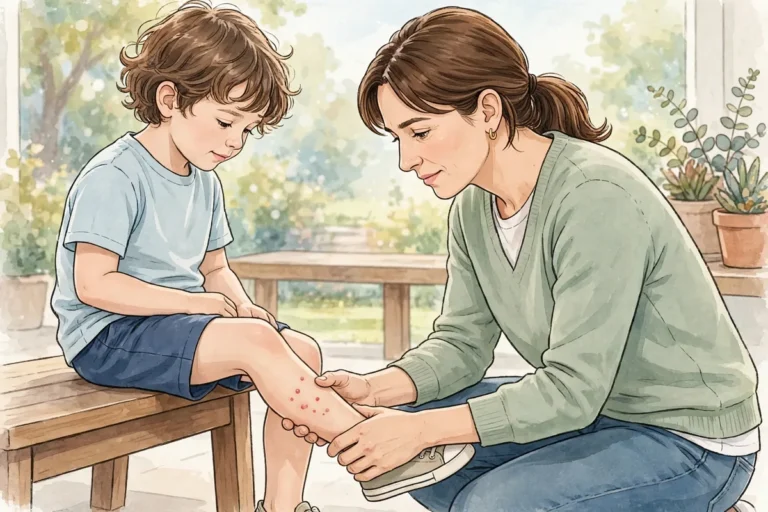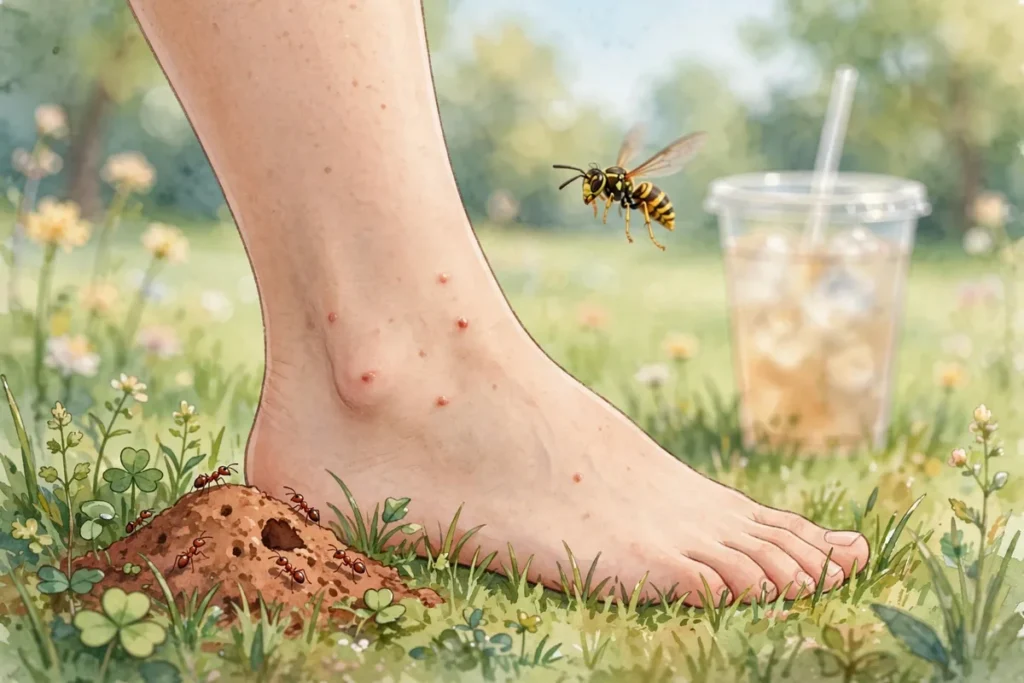
If you came back from a picnic or yard work with a burning welt and no idea what stung you, the question fire ant sting vs yellow jacket sting matters more than you’d think. The short answer: fire ant stings almost always produce small sterile white pustules within about 24 hours, while a yellow jacket sting leaves a single red, swollen welt without pustules. Fire ants attack in clusters after you disturb a mound; yellow jackets usually deliver one sharp sting, often around food or while you mow near a ground nest.
This guide walks through the visible differences, how each insect behaves, first aid for each type of sting, and when a sting crosses the line from painful nuisance to medical emergency.
How Fire Ant Stings Look and Feel
Fire ants are the only common US stinging insect whose venom reliably leaves a signature: the pustule. The sequence usually plays out the same way. First comes an instant burning sensation — the sensation that gives fire ants their name — followed by redness and a raised, hive-like welt within about 30 minutes. Then, within several hours to a full day, the center of each sting turns into a small white, pus-filled bump. According to extension and dermatology sources, pustules appear at sting sites in the vast majority of cases (one pediatric source notes they occur in about 96% of fire ant stings), making them essentially diagnostic of fire ants.
Here is the part people get wrong: the pus in fire ant pustules is sterile. It is not an infection — it is dead tissue and white blood cells reacting to the alkaloid toxins in fire ant venom. Popping them or scrubbing them raw is what introduces infection, so the pustules are best left alone. They typically dry out and scab within a few days, though itching can linger for a week or more, and some people are left with a brownish mark for weeks or months.
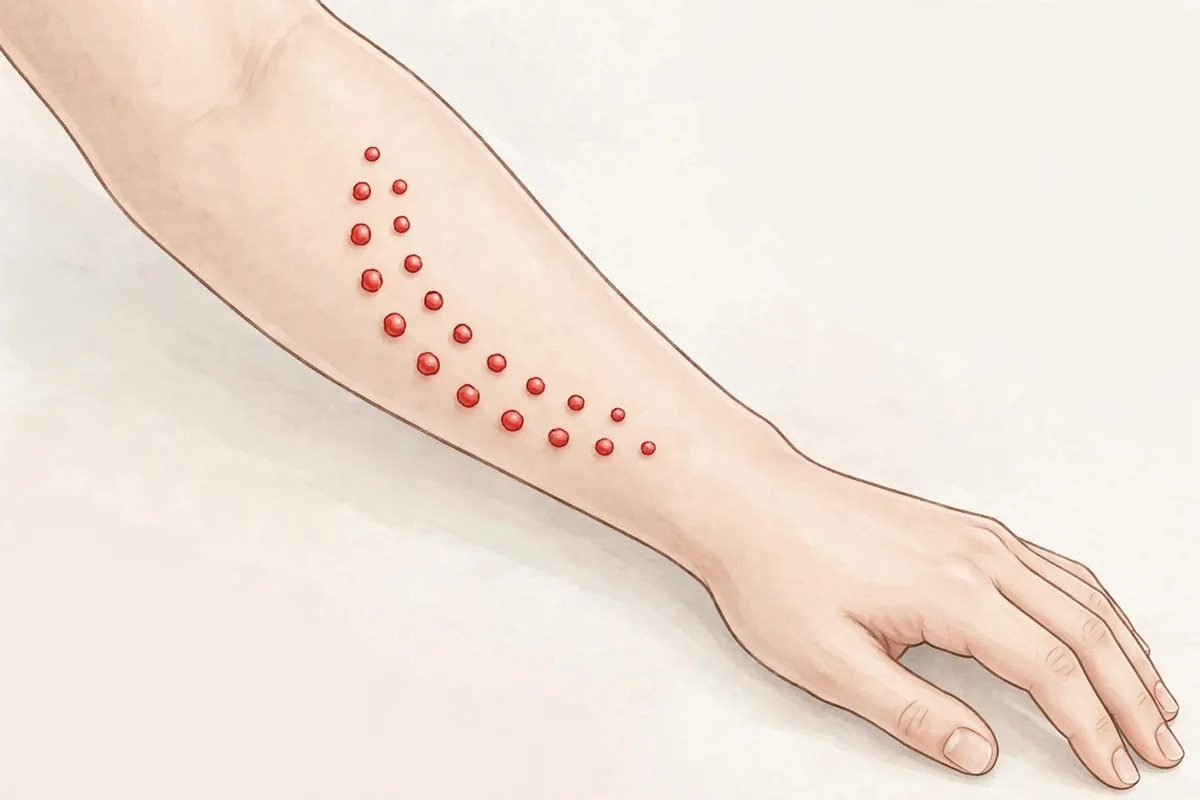
Fire ant stings tend to appear in clusters: a single ant grips your skin with its jaws and stings repeatedly while pivoting, so you may see several stings in a curved line. Step on a mound and dozens of ants sting at once, usually across the feet and ankles. Dramatic swelling that peaks around 24 hours is a common large local reaction; it looks alarming but most cases resolve on their own, though swelling that limits movement deserves a call to your doctor.
How Yellow Jacket Stings Look and Feel
A yellow jacket sting is a different experience. The pain is immediate and sharp — many people describe it as a hot needle or electric jolt — followed within minutes by redness, swelling, and a warm, tender welt. Unlike fire ant stings, yellow jacket stings do not produce pustules. You get one clean red welt per sting, possibly with a raised center, and the swelling peaks within a day or two before gradually fading over up to a week.
Yellow jackets are wasps, which means their stingers are straight and smooth — they can sting repeatedly and usually do not leave a stinger behind in your skin. (That is the key mechanical difference from honeybees, whose barbed stingers tear free and keep pumping venom.) So if someone tells you they “pulled the stinger out,” the culprit was almost certainly a honeybee, not a yellow jacket.
The classic pattern is a single defensive sting — you swat at one near your soda can or walk too close to an unseen nest entrance. But disturb a whole ground nest, say by mowing over it in late summer, and you can take dozens of stings in seconds. The welts may resemble fire ant clusters at first, but the absence of pustules a day later tells the real story. Swelling can be disproportionate: a single sting on an eyelid can balloon the area shut within hours, which is usually just a large local reaction rather than something dangerous.
The Insects Themselves: Fire Ants vs Yellow Jackets
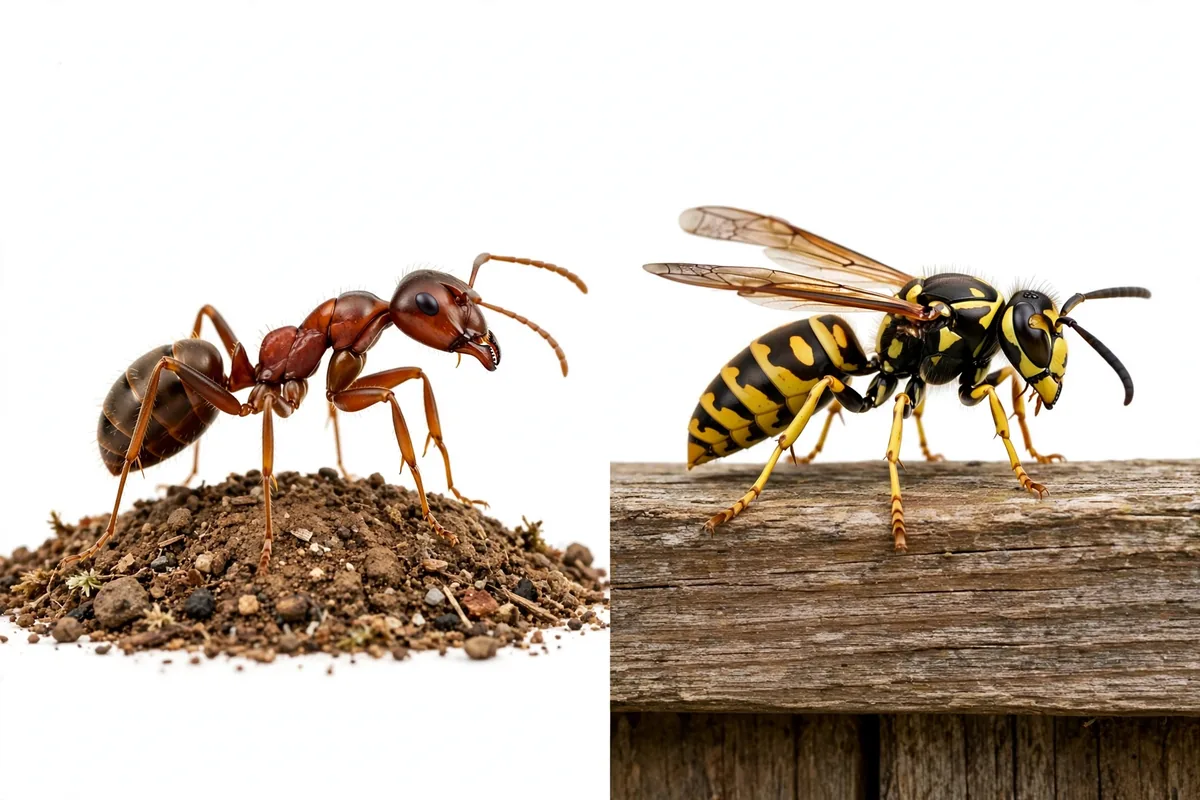
Identification settles most arguments. Fire ants are small reddish-brown ants, roughly 2 to 6 millimeters long, building unmistakable dome-shaped mounds of crumbly soil in sunny lawns and fields. Disturb a mound and thousands of ants swarm onto the intruder within seconds, climbing clothing and stinging where fabric is tight — sock lines, waistbands, cuffs.
Yellow jackets are stocky black-and-yellow wasps about 10 to 15 millimeters long with narrow waists, often hovering around garbage, fallen fruit, and drinks. A wasp circling your soda can is a yellow jacket almost by definition. They nest in the ground (hidden holes in grass), in wall voids, and in hanging paper nests, and late summer and fall is peak aggression season, when colonies are largest and natural food runs short.
The encounter setting is itself a clue: burning welts on your feet after standing near a mound means fire ants; a single painful welt after eating outdoors in September means yellow jacket.
First Aid for Fire Ant Stings
Speed matters: the sooner you get the ants off, the fewer stings you take. Brush or flick them off — they grip with their jaws, so they do not always fall off easily — and move away from the mound immediately. Get indoors and rinse the area with soap and water.
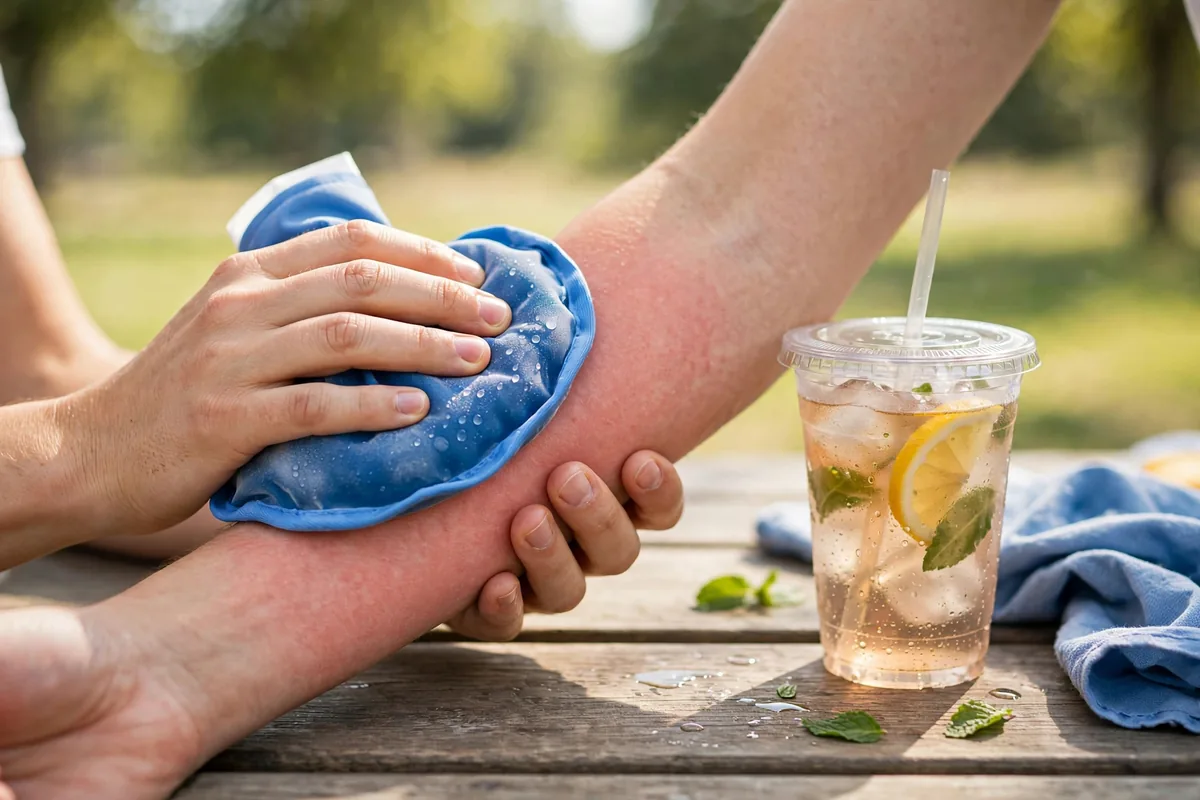
Apply a cold compress wrapped in a cloth for 10 to 15 minutes at a time to dull the burning and slow swelling, and avoid heat on fresh stings. Our full first-aid checklist walks through the first hour step by step.
The cardinal rule of fire ant aftercare: do not pop the pustules. The fluid is sterile, and breaking the skin invites bacterial infection. Trim fingernails, keep the area clean, and resist scratching. For the common mistakes that make things worse, see what not to do with fire ant pustules.
First Aid for Yellow Jacket Stings
Yellow jacket first aid starts with the same basics: get away from the nest area, then calmly check the sting site. Because yellow jackets rarely leave a stinger, there is usually nothing to remove — but if you see a dark speck, scrape it away sideways with a card or fingernail rather than squeezing it, which can push more venom in. Then wash the area with soap and water.
Apply a cold compress for 10 to 15 minutes at a time to ease pain and swelling, and keep the stung limb elevated if it is an arm or leg. Over-the-counter pain relief and antihistamines can reduce discomfort and itching; some people find a paste of baking soda and water soothing on the welt.
Watch the welt for 24 to 48 hours. Redness and warmth that stay within a few centimeters of the sting are normal. If redness spreads outward day by day, becomes increasingly warm, or develops red streaks or pus, that suggests a skin infection rather than venom reaction — and infections need a doctor, not more ice.
Do not wait out trouble breathing, hives spreading beyond the sting, or dizziness after any sting — those are anaphylaxis, and they are an emergency. Yellow jackets cause a meaningful share of sting-related allergic emergencies each year, so take systemic symptoms seriously.
Which One Is More Dangerous?
For the average person, both are painful but not dangerous — and fire ant pustules are not a sign of a worse outcome. The danger comes from two directions: allergy and mass stinging.
Anaphylaxis is possible after both. Severe reactions to fire ants occur in a small minority (pediatric guidance puts it at roughly 1 to 2% of stung children), while wasp-venom allergy is one of the more common insect allergies in adults. If you have ever had trouble breathing, widespread hives, or faintness after a sting, carry epinephrine and talk to an allergist about venom immunotherapy.
Mass stinging is where yellow jackets edge out fire ants for acute danger: a disturbed ground nest can deliver dozens of stings in seconds, and a very large number of stings can cause systemic toxicity — nausea, fever, muscle pain — even without allergy. Fire ants can also mass-sting a small child on a mound, though their slower climb-and-sting pattern is easier to interrupt by brushing them off.
Preventing Stings Outdoors
Prevention differs for the two insects. For fire ants: watch the ground, teach kids not to poke dirt mounds, wear closed shoes in infested areas, and keep lawns mowed. Broadcast bait products in spring and fall reduce colony pressure around your yard.
For yellow jackets: keep food covered at outdoor meals, drink from closed containers with straws (soda cans are classic sting traps), seal trash cans, and clean up fallen fruit. Be cautious mowing near overgrown areas in late summer — hidden ground nests are the top cause of mass-sting incidents. Back away calmly from a circling wasp rather than swatting, and leave active nests to pest professionals.
When to See a Doctor for a Sting
Most single stings do not need a doctor. Seek medical care promptly if any of these apply:
- Call 911 or use epinephrine immediately for signs of anaphylaxis: trouble breathing or wheezing, swelling of the lips/tongue/throat, dizziness or fainting, widespread hives, rapid pulse, or a sense of doom. These can begin within minutes of the sting.
- Redness that spreads day after day, increasing warmth, red streaks radiating from the sting, pus that appears after the pustules have already dried (new drainage is not the same as sterile fire ant pustules), or fever — signs of skin infection (cellulitis).
- Stings to the eye, inside the mouth, or many stings at once (dozens), which warrant same-day evaluation.
- Swelling that dramatically limits function — a hand or foot swollen beyond use — or severe pain that worsens after 48 hours.
- Any history of severe sting allergy: even a mild-looking sting deserves urgent evaluation, and you should see an allergist afterward.
If you have experienced anaphylaxis before, review the warning signs at anaphylaxis sting warning signs and confirm your emergency action plan with your doctor.
Frequently Asked Questions
How can I tell if it was a fire ant or a yellow jacket that stung me?
Wait 24 hours. If the sting sites develop small white pustules, it was fire ants — yellow jacket stings never produce pustules. Multiple stings in a curved cluster on the feet or ankles after standing on grass also point to fire ants; a single welt after eating outdoors in late summer points to a yellow jacket.
Do yellow jackets leave their stinger in you?
Almost never. Yellow jackets have smooth stingers designed for repeated use, so there is usually nothing to remove. Honeybees are the ones that leave barbed stingers behind — if you clearly see a stinger, the culprit was likely a honeybee.
Should I pop the white bumps from fire ant stings?
No. The pustules contain sterile fluid — not infection — and popping them breaks the skin barrier, raising the risk of bacterial infection. Let them dry and scab on their own over several days, and keep the area clean.
Can a fire ant sting or yellow jacket sting cause a serious allergy the first time?
Yes, though it is uncommon. Anaphylaxis can develop after a first sting. Trouble breathing, widespread hives, or faintness after any sting is a 911 emergency.
How long do the marks last?
Yellow jacket welts typically fade within a week. Fire ant pustules dry within days, but itching can linger for a week or two, and some people develop brownish marks lasting weeks or months. Scratching prolongs everything, so treat the itch rather than the bump.
Medical review pending: this article has not yet completed qualified human medical review and should not be published until it does.
This article is for informational purposes only and isn’t medical advice. If you’re worried about a bite or sting, talk to a healthcare professional.