You’re at the beach, and something is chewing your ankles. Or you’re on a trail, and a fly the size of a small helicopter just took a chunk out of your arm. People use “horse fly” as a catch-all for any big biting fly — but stable fly bites vs horse fly bites are genuinely different experiences, caused by genuinely different insects. Knowing which one got you matters for treatment, prevention, and knowing whether to worry.
Both flies deliver painful bites and both are found across the United States. But the stable fly is a stealthy ankle-biter you barely see coming, while the horse fly is a large, loud predator you feel immediately. Here’s how to tell them apart and what to do about each.
Meet the Two Flies
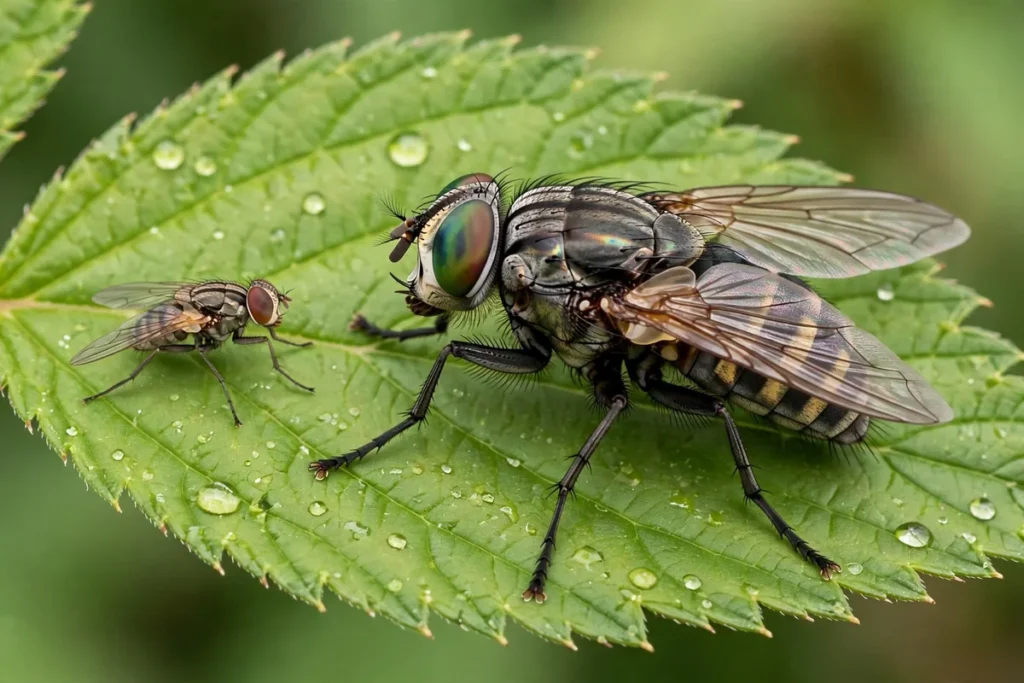
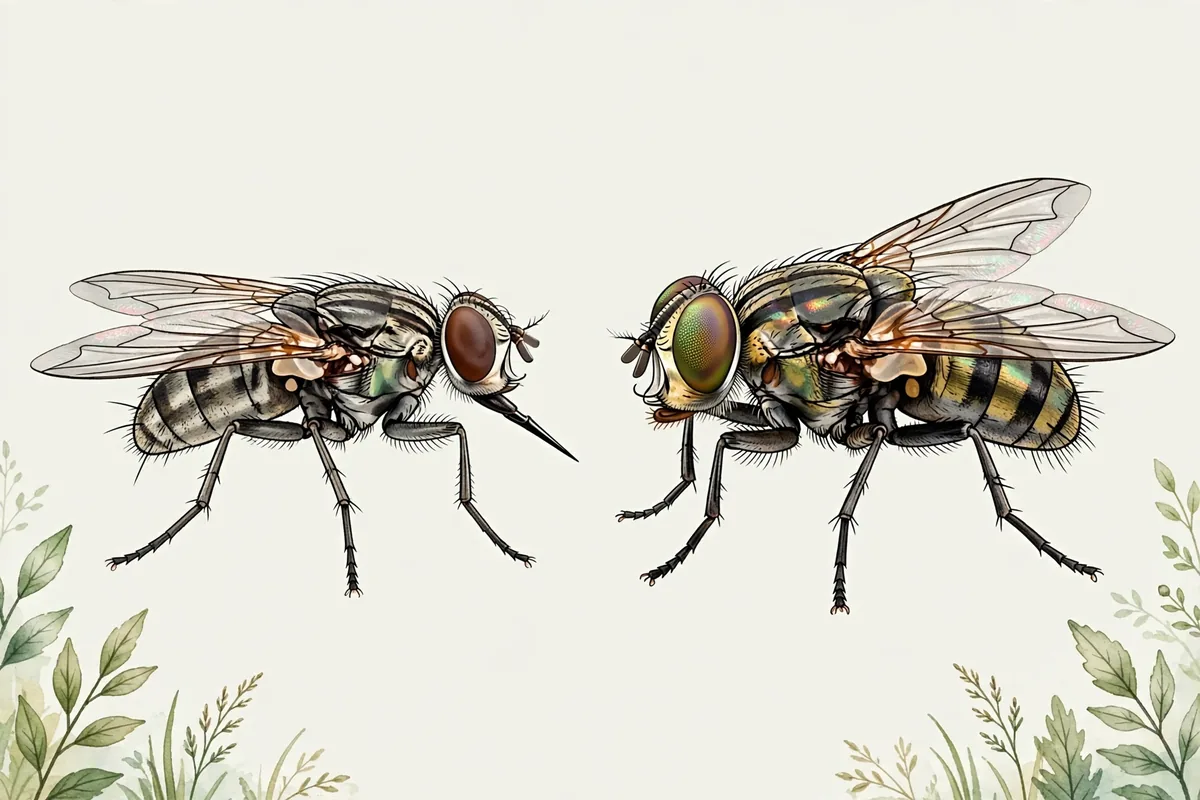
The stable fly (Stomoxys calcitrans) is a medium-sized fly, about a quarter of an inch long — roughly 5 to 6 millimeters. Its most confusing trait is that it looks almost exactly like an ordinary housefly, which is why people call it the “biting housefly.” Look closely, though, and the difference is unmistakable: the stable fly has a long, stout piercing proboscis held under its head like a bayonet, pointing slightly forward. Both males and females feed on blood. Its thorax carries several longitudinal stripes, and its abdomen has round dark spots that give it a slightly checkered look. Adults live about three weeks, and the life cycle from egg to adult averages around three weeks, with eggs laid in decaying organic matter — wet straw, manure, grass clippings, and pet droppings.
The horse fly (family Tabanidae, including deer flies) is a different beast entirely. Some species exceed an inch in length — two to four times the size of a stable fly. Horse flies have enormous compound eyes (often iridescent green or patterned), a stout body, and powerful wings that make them strong, persistent fliers. Unlike the stable fly’s needle-like piercer, the horse fly’s mouthparts are cutting blades — it slashes the skin and laps up the pooling blood. Only females bite, since they need blood meals to develop eggs. They breed in water or moist soil and are most active on warm, sunny, calm days.
The quick field ID: if it looks like a housefly but bites, it’s probably a stable fly. If it’s huge, loud, and the bite feels like a small knife cut, it’s a horse fly.
Where and When They Strike
These two flies have very different hunting styles, and the setting of your bite is often the best clue to which one did it.
Stable flies are ankle assassins. They feed in the morning and evening, attack people’s ankles and lower legs, and are notorious at beaches — where they’re often called “beach flies” or “dog flies.” Beachgoers routinely blame their ankle bites on “sand fleas,” when stable flies are the actual culprits. They’re drawn to areas with decaying organic matter: seaweed lines on beaches, lakeside debris, campgrounds with poor sanitation, and anywhere near livestock. They feed less on cloudy or windy days, which is why a breezy afternoon feels mercifully bite-free.
Horse flies are ambush predators. They hunt by sight, targeting movement and dark colors, and they bite anywhere on the body — arms, neck, legs, wherever they can land. They’re daytime biters, most aggressive in the heat of the day, and they don’t fly well on windy days. You’ll encounter them on hiking trails, near water and wetlands, around horses and livestock, and in rural yards. A horse fly will circle, land, and bite — and the bite is immediately, unmistakably painful.
A useful rule of thumb: many small painful bites clustered around your ankles at the beach or lake in the morning = stable flies. One or two large, painful bites on exposed skin during a hot afternoon hike = horse flies.
What Each Bite Looks and Feels Like
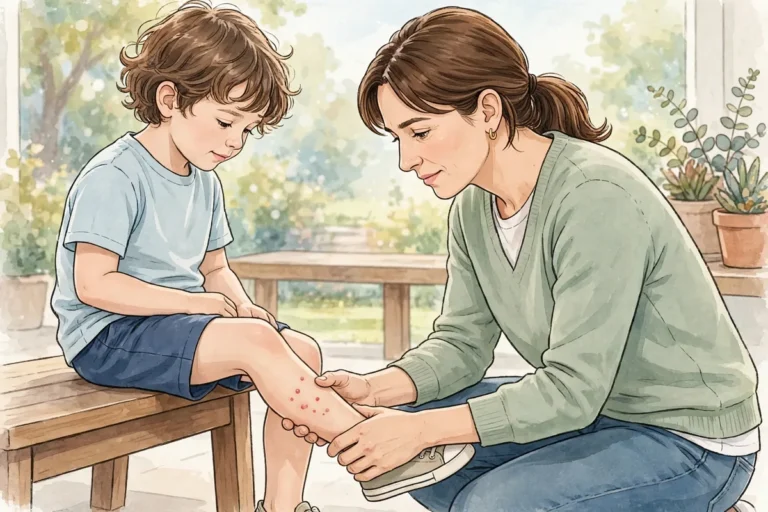
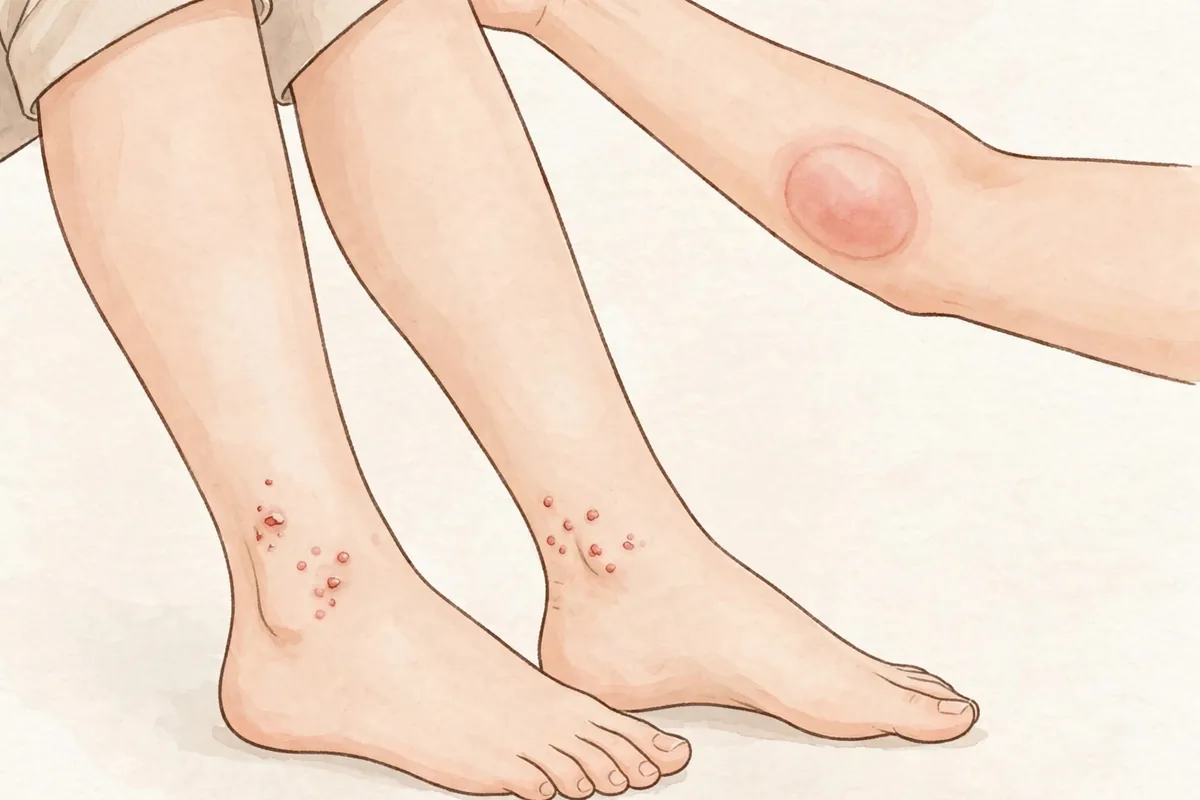
Stable fly bites are usually painful at the moment of the bite — people describe a sharp, needle-like prick — and then develop into small, red, itchy or painful welts or papules, sometimes with a small central crust. Because they bite low, the welts cluster around ankles, feet, and lower calves. Individual bites are small, but stable flies feed in numbers, so people often end up with dozens of ankle bites after a beach morning. The bites itch intensely for a day or two and can leave small dark marks as they heal.
Horse fly bites hurt more — significantly more. The cutting mouthparts slice through skin rather than piercing it, so the initial bite feels like a sharp cut or pinch. The wound may bleed briefly because the fly creates a small open slash rather than a puncture. Swelling can be dramatic: a horse fly bite can swell to several inches across, turn hot and red, and stay sore and itchy for days. Some people develop a bruise-like discoloration around the bite as it heals. Allergic individuals can react more strongly, with large swollen areas.
Disease risk: For people, both flies are primarily a pain-and-itch problem rather than a disease threat. Horse flies can occasionally transmit tularemia (a bacterial infection associated with rabbits and hares) through mechanical transfer, but this is rare. Stable flies are not specifically implicated as disease vectors to humans, though they are assumed capable of carrying some pathogens mechanically. The far more common complication from either bite is secondary bacterial infection from scratching — not anything the fly itself transmitted.
First Aid for Both Bites
Treatment is similar for both, with the horse fly bite simply needing a bit more attention because the wound is larger:
- Clean the bite. Wash with soap and cool water. For a horse fly bite that bled, clean it gently and apply light pressure if it’s still oozing.
- Cold compress. Apply a cold pack or cloth-wrapped ice for 10–15 minutes to reduce pain and swelling. This is the single most effective immediate step for both bite types.
- Reduce itching and inflammation. An over-the-counter hydrocortisone cream or calamine lotion helps with the itch; an oral antihistamine can help if the reaction is strong or if you have many bites.
- Don’t scratch. Breaking the skin with fingernails invites bacteria and can turn a simple bite into cellulitis — a skin infection that needs antibiotics. Our guide on why you shouldn’t scratch or squeeze bites explains the risks.
- Watch horse fly bites more closely. Because the wound is an open cut, keep it clean and covered for the first day, and watch for spreading redness, increasing pain, or pus.
For a complete step-by-step sequence you can use for any bite, keep our bite and sting first-aid checklist handy.
Keeping Both Flies Off You
Prevention differs because the flies behave differently:
Against stable flies:
- Cover your ankles. Long pants and socks at the beach or lake in the morning and evening eliminate their favorite target zone. This one change prevents most stable fly bites.
- Pick your timing. Stable flies feed most in the morning and evening and avoid wind. Plan beach time for breezy midday hours when you can.
- Use repellent on lower legs. EPA-registered repellents help, though stable flies are famously less deterred by repellents than mosquitoes — physical coverage is more reliable.
- Reduce breeding sites. Around campsites and cabins, manage decaying organic matter: clean up grass clippings, pet waste, and damp debris. Stable flies breed in exactly this material.
Against horse flies:
- Wear light colors. Horse flies hunt by sight and are attracted to dark, moving objects. Light-colored clothing makes you less of a target.
- Cover up on trails. Long sleeves and pants during peak horse fly season (summer, hot sunny days) are the most reliable defense.
- Keep moving. Horse flies are persistent but they’re chasing you; steady movement makes landing harder. They also struggle in wind, so exposed ridgelines are safer than still, sheltered hollows.
- Head nets for bad days. In areas with heavy horse fly and deer fly pressure, a head net over a hat protects your face and neck — the spots that are hardest to defend.
- Repellents help somewhat. Permethrin-treated clothing is the most effective chemical option against biting flies; apply repellent to exposed skin as directed.
When you’re planning outdoor time in fly country, general camping bite-prevention habits (sealed food, clean camp, head nets) and a stocked hiking first-aid kit cover the broader preparation.
When to See a Doctor for a Bug Bite

Most stable fly and horse fly bites resolve with home care. See a clinician if:
- Anaphylaxis signs (call 911): difficulty breathing, swelling of the lips or throat, dizziness, rapid heartbeat, or hives spreading far beyond the bite. Review anaphylaxis warning signs so you can act fast.
- Infection signs: spreading redness, red streaks, warmth, swelling that increases after 24–48 hours, pus, or fever — possible cellulitis needing antibiotics.
- Extreme local reactions: a horse fly bite that swells dramatically, blisters, or keeps enlarging after two days deserves a clinician’s look.
- Systemic symptoms: fever, headache, or body aches developing days after fly bites — rare, but worth evaluating, since flies can occasionally transmit infections like tularemia.
- Bites near the eye: significant swelling around the eye from any bite warrants prompt care.
Frequently Asked Questions
Can stable flies bite through clothing?
They can bite through very thin, tight fabrics, but ordinary clothing — especially loose long pants and socks — stops them effectively. They target ankles precisely because that skin is usually exposed, not because they defeat fabric.
Why do horse fly bites hurt so much more than mosquito bites?
A mosquito pierces the skin with a needle-like proboscis; a horse fly cuts it open with blade-like mouthparts. The slash-style wound is larger, bleeds more, and triggers a bigger inflammatory response — hence the greater pain and swelling.
Do horse flies chase people?
They can seem to. Horse flies hunt visually and will follow a moving target, circling and landing repeatedly. They’re persistent, but they’re not singling you out personally — you’re simply a large, warm, moving shape that reads as a potential blood meal.
Are the ankle bites at the beach really stable flies and not sand fleas?
Very often, yes. True “sand fleas” (beach hoppers) don’t bite people, and biting midges (“no-see-ums”) are tiny and nearly invisible. Visible flies delivering painful ankle bites at the beach in the morning are classic stable flies — they’re even nicknamed “beach flies” for this reason.
How long do the bites take to heal?
Stable fly bites typically itch for one to three days and fade within a week if left unscratched. Horse fly bites can stay swollen and sore for several days to a week, with discoloration sometimes lingering longer. Scratching extends both timelines and can leave lasting marks — learn how to help bite dark marks fade.
Medically reviewed by Dr. Sarah Jones, MD.
This article is for informational purposes only and isn’t medical advice. If you’re worried about a bite or sting, talk to a healthcare professional.