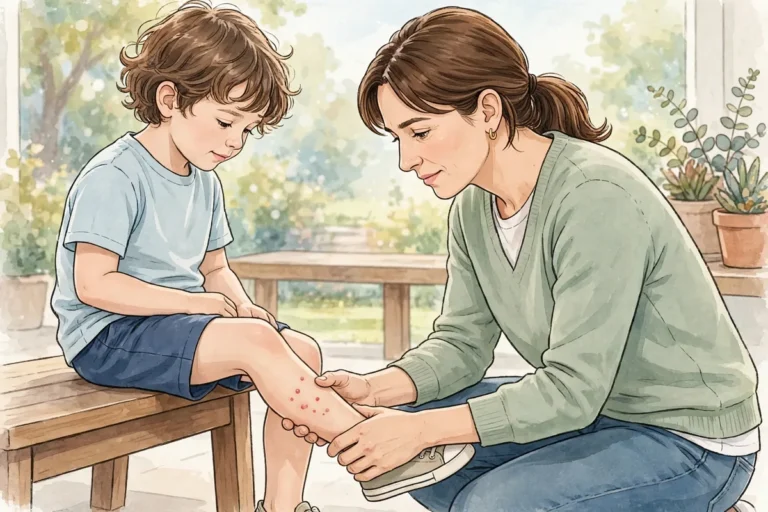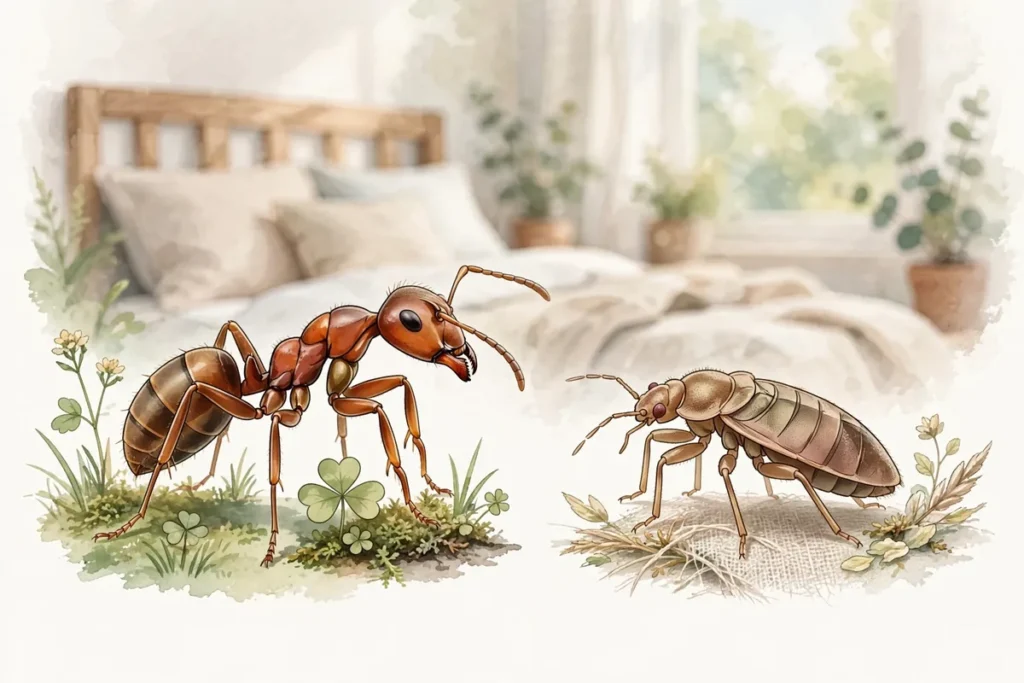
Waking up to clustered itchy bumps sparks an instant debate: did something bite me in the yard yesterday, or is something living in my bed? Two of the most common suspects in the southern and eastern United States are fire ants and bed bugs — and mistaking one for the other sends you down the wrong treatment and prevention path. This guide covers the difference between fire ant bites vs bed bug bites.
The direct answer: fire ants bite and sting, causing immediate burning pain and white or yellow pustules within about 12 to 24 hours. Bed bugs feed painlessly at night — the marks show up hours or days later as itchy welts, often in a line or cluster of three nicknamed “breakfast, lunch, and dinner.” Fire ant encounters happen outdoors; bed bugs infest indoor sleeping areas.
How Fire Ants Attack: Bite Plus Venom Sting
Fire ants (most commonly the red imported fire ant, Solenopsis invicta) aggressively defend their mounds. When a mound is disturbed, workers swarm out and climb onto the intruder by the dozens.
The bite is just the anchor. The ant grips the skin with its jaws, then wheels its body around to sting repeatedly. Because the sting is not barbed, one worker can sting many times — research notes around seven or eight stings per ant — producing dense clusters of lesions, sometimes in a dotted circle.
The sting delivers the venom. It causes the immediate, intense burning pain these ants are named for. The sharp pain usually lasts about ten minutes, then gives way to itching that can linger for days or even weeks. Within about 30 minutes, a hive-like red bump with a raised white center appears; within roughly 12 to 24 hours it becomes a small white or yellow pustule. Studies report pustules in nearly all stung people (around 96 percent in one source), making them nearly diagnostic.
Do not pop the pustules. They resemble infected pimples, but they are sterile — produced by venom alkaloids, not bacteria. Breaking them raises the risk of secondary bacterial infection. They usually open on their own within a few days and dry over, persisting up to a week or more. No other common indoor pest produces sterile white pustules, making this the single most reliable feature separating fire ant stings from bed bug bites.
How Bed Bugs Feed: Painless Nighttime Bites
Bed bugs are nocturnal blood-feeders that live close to where people sleep — mattress seams, box springs, bed frames, headboards, nearby furniture. Drawn to body heat and exhaled carbon dioxide, they feed for a few minutes during the night, then retreat to their hiding places.
You almost never feel it happen. Bed bug saliva contains an anesthetic, so the bite is painless and most people have no memory of it. Itching and redness develop later — often hours afterward, sometimes taking up to a week to appear — because the reaction is the skin’s response to saliva proteins, not the puncture. Morning marks may have been caused nights earlier.
The linear pattern is the signature clue. A single bug often feeds several times in one outing: bite, move a short distance, bite again. Dermatology literature calls this the “breakfast, lunch, and dinner” sign — three bites in a row, though clusters of one to five marks in lines, zigzags, or triangles are all typical. One caveat: fleas produce the same pattern, so if you have pets and the marks cluster around the ankles and lower legs, fleas deserve a look — but fleas cannot create the pustules fire ants do.
Reactions vary person to person. Two people in the same bed may react completely differently. With repeated exposure over weeks, people often become sensitized and react more strongly. The welts are itchy red bumps — raised and irritated, but never fluid-filled pustules. Scratching can invite secondary infection.
Side-by-Side Comparison
| Feature | Fire Ant Stings | Bed Bug Bites |
|---|---|---|
| Pain at the time | Immediate, intense burning pain | Painless; rarely noticed |
| Signature lesion | White/yellow pustule within 12–24 hours | Itchy red welt; never a pustule |
| Timing | Pain first, bump in ~30 min, pustule within a day | Marks appear hours to days later |
| Pattern | Dense clusters or dotted circles | Lines or clusters of 3 (“breakfast, lunch, dinner”) |
| Bite locations | Feet, legs, hands — exposed skin outdoors | Arms, shoulders, neck, back — exposed skin during sleep |
| Setting | Outdoors: yards, parks, mounds | Indoors: beds, couches, hotels, furniture |
| Recurrence | One-time swarm event | Night after night until infestation is treated |
The fastest differentiator: white or yellow pustules within about a day mean fire ants — bed bugs never produce pustules. Painless itchy welts in a row or cluster after sleeping mean bed bugs. Read pattern, timing, and setting together: confirm by searching the environment for fire ant mounds in the yard or rust-colored spots, shed skins, and live bugs along mattress seams.
Where the Exposure Happens: Outdoors vs Indoors
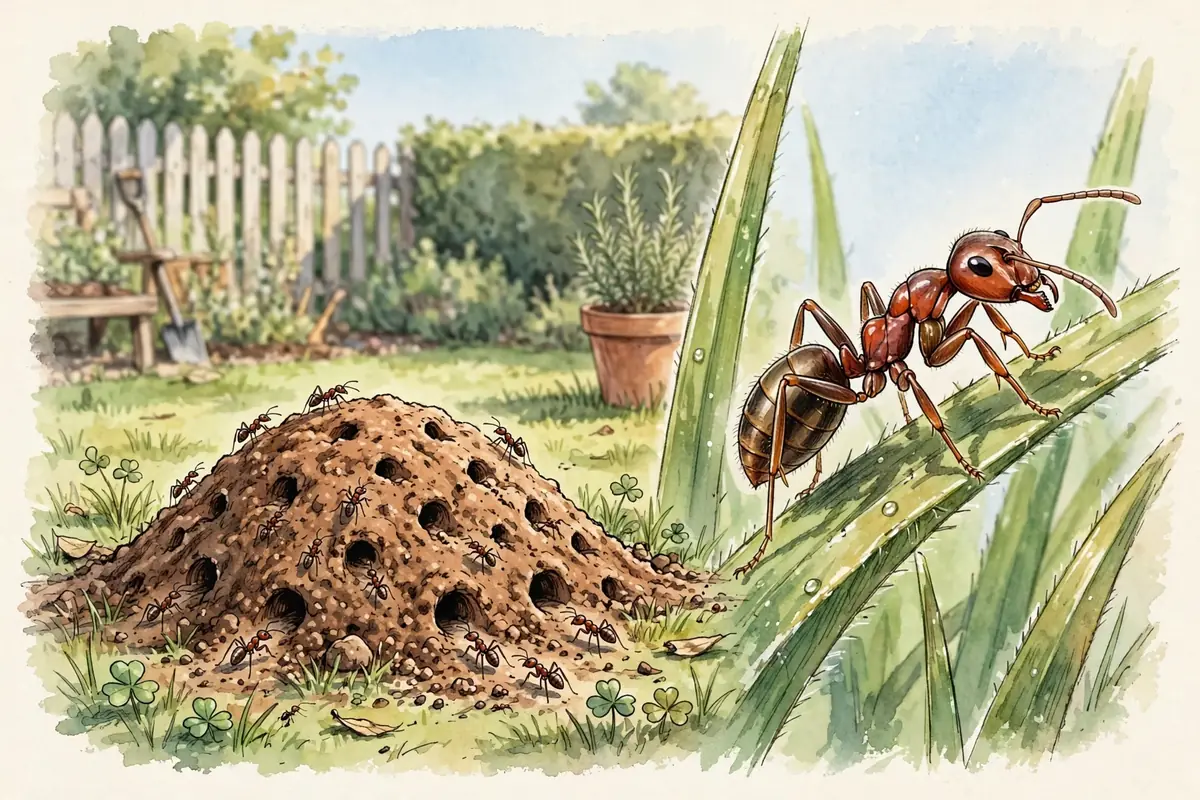
Fire ants live outdoors. They build mounds — loose, dome-shaped soil piles with no obvious entrance — in lawns, parks, and playgrounds, most commonly across the southeastern states, with colonies also in parts of Texas, Arizona, and California. Exposure happens when someone steps on or disturbs a mound: barefoot children in the yard, mowing over a colony, or sitting on infested grass. The whole colony mobilizes, so multiple stings at once are the norm. Fire ants do not nest in mattresses — marks appearing after a night indoors with no outdoor exposure are unlikely to be fire ants.
Bed bugs live indoors. They hide within a few feet of where people rest and travel as stowaways in luggage, used furniture, and clothing, which is why infestations appear in hotel rooms, apartments, dorms, and homes regardless of cleanliness. They can survive many months without feeding. If new welts appear morning after morning on skin that was under the blankets, inspect the bedroom: check mattress seams, bed frames, and headboards for tiny reddish-brown insects, shed skins, and dark rust-colored spots.
The setting often settles the question. Bumps after gardening, picnicking, or kids playing on grass? Think fire ants. Bumps appearing after sleeping — especially repeatedly, with recent travel or used furniture involved? Think bed bugs. For ambiguous cases, our bite and sting clue checklist covers the observations that matter most, and our bed bug bite identification guide details the indoor inspection signs.
First Aid for Each Bite

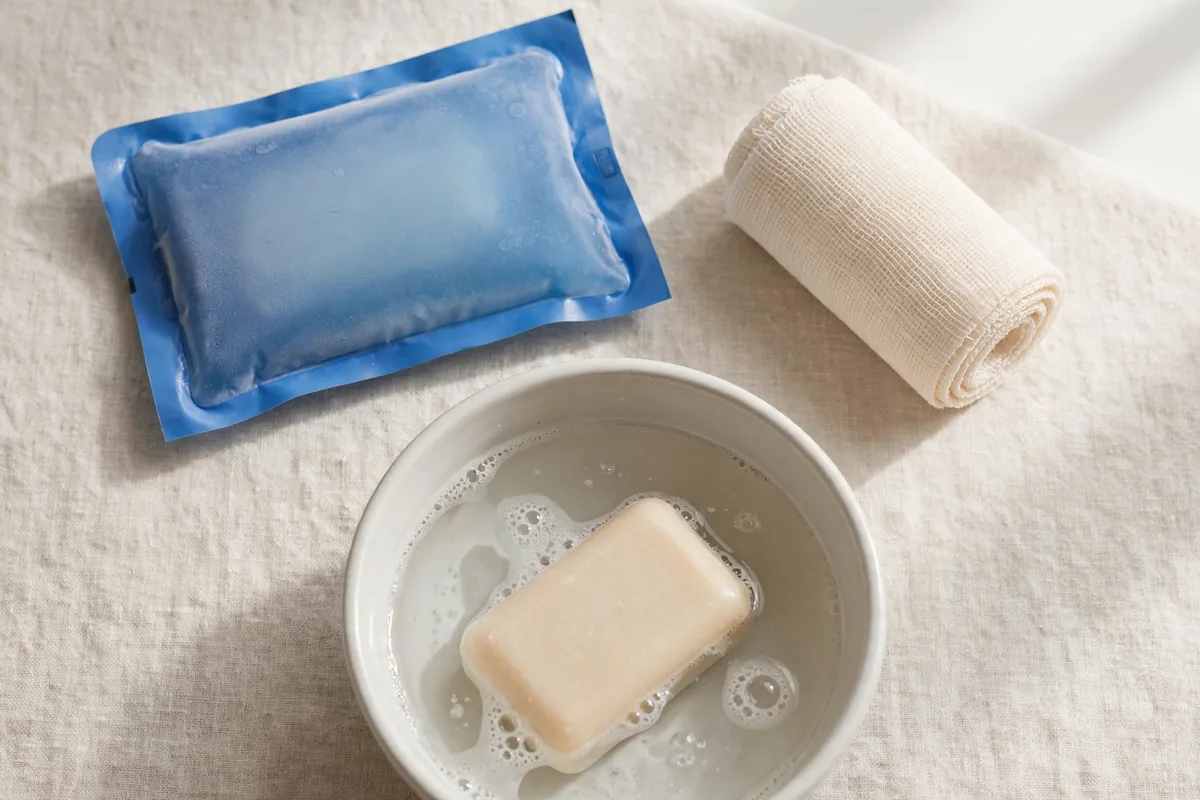
For fire ant stings: brush the ants off and move away from the mound — they keep stinging until removed. Wash gently with soap and water, then apply a cold compress to ease pain and swelling (see our guide to using a cold compress for bites and stings). Do not break the pustules — let them dry and heal on their own. Ease itching with over-the-counter options; ask your pharmacist which suits you. Watch for severe allergic signs (next section) and seek emergency care immediately if any appear.
If a pustule grows increasingly painful, red, or swollen several days after the sting rather than gradually improving, that can signal secondary infection and deserves prompt medical attention. Our guide on fire ant sting pustules and what not to do covers the mistakes that turn a routine sting into a bigger problem.
For bed bug bites: wash the area with soap and water, apply a cold compress, and resist scratching — it worsens irritation and can introduce bacteria. Ease itching with over-the-counter remedies; a pharmacist can advise on suitable options. Most importantly, address the infestation, not just the bites: wash bedding in hot water and dry on high heat, vacuum mattresses and baseboards, and consider a licensed pest inspection — treating only the skin means the welts keep coming.
Antibiotics are not a do-it-yourself step for either situation; they are only appropriate for confirmed secondary infections, and only a clinician should make that call. For a compact printable version, see our bite and sting first aid checklist.
Prevention: Yards and Bedrooms
Fire ant stings are prevented by respecting the mound. Teach children not to step on or play near the soil domes, and wear closed shoes and socks in grassy areas where fire ants are established. For persistent mounds, targeted bait products applied according to label directions are the standard homeowner approach; large infestations may call for a pest professional. Anyone in the household with a known fire ant allergy should discuss an emergency epinephrine plan with an allergist.
Bed bug bites are prevented through vigilance in sleeping areas. When traveling, inspect hotel mattress seams and headboards on arrival, keep luggage on racks away from the bed, and wash travel clothes in hot water when you return. At home, reduce bedroom clutter, inspect secondhand furniture and mattresses before bringing them inside, and seal cracks in baseboards. Mattress encasements designed for bed bugs can help. If bites persist despite these steps, get a professional pest inspection — store-bought sprays alone rarely resolve an established infestation, and the bugs can survive months without feeding.
When to See a Doctor for a Bug Bite
Most fire ant stings and bed bug bites resolve with home care, but certain signs need professional help right away.
- Call 911 for anaphylaxis signs: trouble breathing or swallowing, swelling of the lips, tongue, or throat, widespread hives, dizziness or fainting, or a rapid, weak pulse. Severe allergic reactions to fire ant venom usually develop within minutes of the sting, and in rare cases up to about two hours after. Review the full anaphylaxis warning signs after a sting.
- Signs of infection (cellulitis): increasing pain, expanding redness, warmth, swelling that worsens after the first 24–48 hours instead of improving, red streaks, pus, or fever. Fire ant pustules themselves are sterile, so worsening redness days later points to secondary infection rather than the venom.
- Timeline violations: pustules that fail to improve after a week or more, or welts that keep spreading or multiplying without new exposure.
- Special cases: children, elderly or immune-compromised people, people with diabetes or circulation problems, and significant facial swelling — especially around the eyes, where swelling can threaten vision.
- Repeated severe local reactions: swelling that crosses a wrist or ankle joint or limits movement deserves a clinician’s assessment, even without whole-body allergic signs.
Frequently Asked Questions
Can fire ants get inside the house like bed bugs?
Fire ants are outdoor insects. Stray workers occasionally wander indoors, but they do not nest inside homes or infest beds. If you are getting bitten night after night in bed, bed bugs — not fire ants — are the likely explanation.
Are fire ant pustules a sign of infection?
No — the pustules forming within about a day of a fire ant sting are sterile, caused by venom alkaloids rather than bacteria, and they are nearly diagnostic of a fire ant sting. Infection is signaled by new worsening: increasing pain, spreading redness, or fever days later, especially after a pustule was scratched or broken open.
Do bed bug bites always appear in a line of three?
Not always. The “breakfast, lunch, and dinner” pattern — three bites in a row — is classic, but single welts or clusters of one to five marks in zigzags, triangles, or loose groupings are also typical. The linear or clustered arrangement combined with bites appearing after sleep is what raises suspicion; bites in a line or cluster pattern cover this in more detail.
How long do bed bug bites last?
It varies: some marks fade within days, others persist for a week or two, especially in people who react strongly. Sensitivity often increases with repeated exposure, so later bites may look worse than the first. See our guide on how long bed bug bites last for more detail.
Medically reviewed by Dr. Sarah Jones, MD.
This article is for informational purposes only and isn’t medical advice. If you’re worried about a bite or sting, talk to a healthcare professional.