Asp (Puss) Caterpillar Sting: What to Do — The Tape Trick, Step by Step
The fast answer: If you brushed against a fuzzy, toupee-shaped caterpillar and now have intense, throbbing pain, do three things immediately: (1) press adhesive tape over the sting and peel it off — repeating with fresh tape — to pull out the venomous spines still in your skin; (2) wash the area with soap and water; (3) apply an ice pack. The puss caterpillar, also called the asp, is considered one of the most toxic caterpillars in North America, and its sting is routinely described as worse than a bee sting. Pain often eases within about an hour once the spines are out, but get medical care right away for severe pain, a sting on a child, any eye contact, or symptoms beyond the sting site.
Meet the Asp: A Toupee With Venom
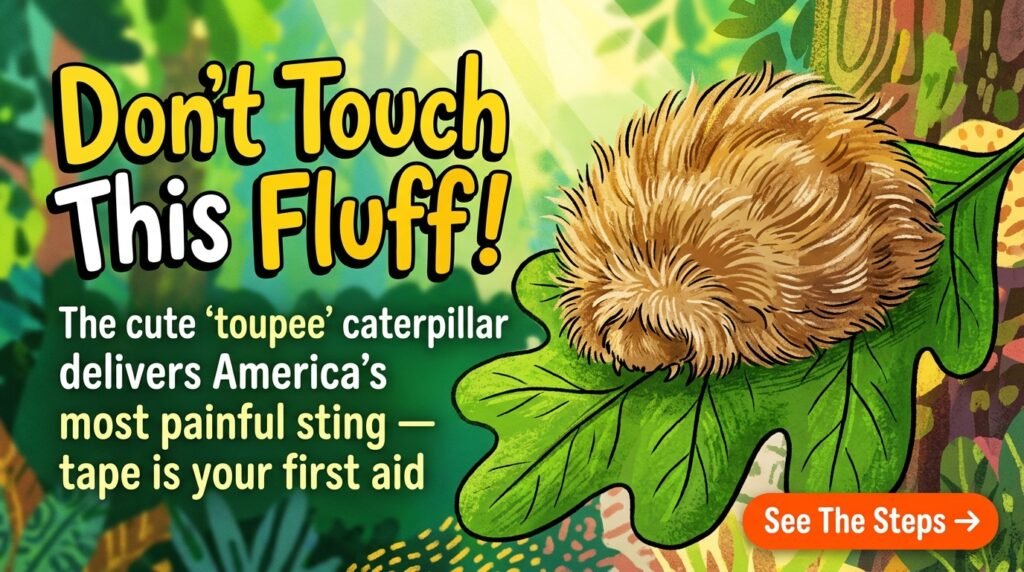
The puss caterpillar is the larva of the southern flannel moth (Megalopyge opercularis). It looks like nothing so much as a tiny, teardrop-shaped tuft of fur — about an inch to an inch and a half long, completely covered in long, silky hairs that range from cream and tan to gray or rusty orange. Its head and legs are hidden under the hair, so it doesn’t even look like an insect. Children compare it to a miniature Persian cat (hence “puss”); Texans call it the asp, a name borrowed from the snake, because the sting hurts like a bite.
Underneath that soft coat is the catch: rows of stiff, venomous spines connected to venom glands. The spines are hollow and fragile. When skin brushes the caterpillar, the tips break off and stay embedded, releasing venom. The caterpillar doesn’t attack — it doesn’t have to. Simply leaning a forearm on the wrong tree branch, reaching into a shrub, or sitting on a bench where one has crawled is enough.
Asps are a southern species, found from New Jersey down the East Coast to Florida and west to Texas, living on shade trees and shrubs — especially oaks and elms — around homes, schools, and parks. They produce two generations a year, which is why sting season is bimodal: a first wave in late spring and a second, often bigger wave in late fall (per the MSD Manual). Even their tough cocoons, left stuck to tree bark, can hold loose spines, so old cocoons deserve the same respect as the caterpillar itself.
What an Asp Sting Feels Like
People who have been stung rarely struggle to describe it. Typical features, drawn from Texas A&M AgriLife Extension and the MSD Manual:
- Immediate, intense pain — sharp, burning, and throbbing, often starting the instant of contact (a few people feel it build over several minutes)
- Pain that radiates — a sting on the hand can throb up the entire arm
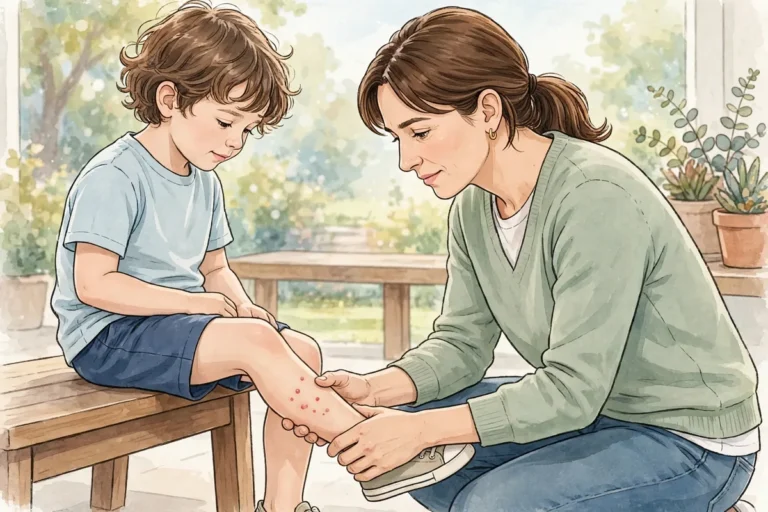
- Red spots in a grid-like pattern — marks appear where each spine entered, sometimes looking like a little checkerboard or imprint on the skin
- Swelling and redness around the sting site
- In stronger reactions: headache, nausea, stomach pain, and swollen lymph nodes. Rarely, susceptible people can develop more serious symptoms including respiratory distress or shock
The good news buried in that list: for most healthy adults, wound pain subsides within about an hour, and the red spots typically disappear within a day. For some people the burning lasts several hours — reactions vary with how many spines went in, how thick the skin is where you were stung, and your personal sensitivity.
First Aid, Step by Step: The Tape Method Done Right
Speed matters. Every spine left in your skin is a tiny venom source still delivering. Texas A&M extension specialists and the MSD Manual describe the same sequence — here it is, in order, with the details most short articles skip:
- Get the caterpillar off — without your bare hand. If it is still on you, flick or brush it off with a stick, a twig, or a gloved hand. Never grab it: pressing it harder against skin with your fingers just drives more spines in, and your fingers get stung too.
- Press tape over the sting and lift. Take a strip of ordinary adhesive tape or clear cellophane tape, press it firmly over the sting site, and peel it away. Embedded spine tips come out with the tape.
- Repeat with a FRESH piece of tape, several times. This is the step people get wrong. A used strip is loaded with spines and can press them back in. Each pass needs clean tape. Work outward from the center of the mark until fresh tape comes away clean.
- Do not rub or scrub the area first. Rubbing snaps spines off below the surface and spreads them across a wider patch of skin. Tape first, wash second.
- Wash gently with soap and water. Once the spines are out, wash the site. The MSD Manual suggests drying without contact — patting dry very gently or even using a hair dryer — so you don’t grind in anything the tape missed.
- Apply cold. An ice pack or cold compress (cloth barrier, 10–15 minutes at a time) numbs the burning and limits swelling. Topical isopropyl alcohol is another option the MSD Manual lists for asp stings.
- Soothe and treat symptoms. A baking soda slurry or calamine lotion can calm the skin. An over-the-counter oral antihistamine helps with itching and swelling; 1% hydrocortisone cream and an oral pain reliever such as acetaminophen or ibuprofen (per label directions) can make the next few hours much more bearable.
- Watch the next 24 hours. Pain should trend steadily downward. If it escalates instead, or new symptoms appear — nausea, headache, spreading swelling, trouble breathing — skip to the “when to get help” section below and act on it.
One folk remedy to ignore: there is no neutralizing trick for asp venom — no vinegar, meat tenderizer, or urine shortcut. Spine removal, washing, cold, and time are what work.
How an Asp Sting Progresses Over the First 24 Hours
Once the spines are out, the typical course is reassuringly predictable. The first hour is the worst of it: throbbing, burning pain at its peak, with the red grid-pattern marks fully visible. For most people this is the window in which the pain does its U-turn — the MSD Manual notes that wound pain usually subsides within an hour. Over the next few hours, burning gives way to soreness and itching, and mild swelling around the marks is common. By the next day, the erythematous spots have typically disappeared; a faint itchy patch or light tenderness where the spines went in may linger a little longer, especially on thin skin.
Deviations from that script are your signal to escalate: pain that plateaus at “severe” instead of easing, swelling that keeps climbing into the second day, marks that spread or develop pus, or any of the whole-body symptoms listed below. A sting that is clearly worse at hour six than it was at hour one is not following the normal pattern, whatever the internet says about how painful these are supposed to be.
Spot the Stinger: The Four Caterpillars People Confuse
Several North American caterpillars sting, and they are constantly mistaken for one another. Use appearance — never touch to test.
| Caterpillar | What it looks like | Where you’ll meet it | Sting notes |
|---|---|---|---|
| Puss / asp | Teardrop-shaped “toupee” of silky hair, cream to rusty orange; no visible head or legs | Shade trees (oak, elm), shrubs, benches and railings; South, late spring + late fall | Most painful of the group; grid-like red marks; pain often fades within ~1 hour after spine removal |
| Saddleback | Bright green body with a brown “saddle” patch on its back; stinging horns at both ends | Garden plants and corn, shrubs; late summer to early fall | Painful sting from horn spines; a favorite of gardeners’ worst-day stories — see Clemson Extension’s “packsaddle” warnings |
| Io moth | Green body with a red-and-white stripe along the side; covered in branching spines | Clusters on tree and garden leaves in summer | Spine tips break off like the asp’s; burning, nettle-like pain |
| Buck moth | Black body dotted with white spots, covered in sharp spines | Oak trees, especially in Gulf Coast cities; spring | Multiple spines deliver a strong, lasting sting; caterpillars often appear in groups |
For a symptom-by-symptom treatment reference, our puss caterpillar sting treatment guide covers the medical details, and our hickory tussock caterpillar rash article covers a close fuzzy look-alike whose hairs cause a rash rather than a true sting. Wondering whether a mark came from a tick or a caterpillar? See tick bite vs. puss caterpillar sting.
When to See a Doctor — or Call Poison Control
Most asp stings are handled at home. Get medical help right away if any of the following apply:
- The person stung is a young child, or an older adult or anyone with a weakened immune system — and the pain is significant
- Pain is severe or still escalating an hour after spine removal and first aid
- Symptoms beyond the sting site: nausea or vomiting, headache, abdominal pain, swollen lymph nodes, or a racing heart
- Any trouble breathing, chest tightness, or swelling of the face, lips, or tongue — call 911; this can be a serious allergic reaction
- Eye contact — the caterpillar or its hairs touched the eye, or a child rubbed their eyes after handling one. Texas A&M stresses that eye contact always needs immediate medical attention
- A large area of skin was stung (for example, leaning back against a tree trunk full of asps)
Not sure how serious it is? Call Poison Control at 1-800-222-1222 — free, confidential, 24 hours a day — or use their online triage tool. For caterpillar stings, they advise on exactly this situation every season.
Prevention: Living With Asp Season
- Teach the one rule: fuzzy caterpillars are look-but-don’t-touch — especially any that look like a tuft of hair. This applies doubly during the late-spring and late-fall generations.
- Gloves for pruning and raking under oaks and elms, and long sleeves when reaching into shrubs you can’t see into.
- Look before you lean. Asps rest on trunks, branches, railings, and outdoor furniture. A two-second glance beats an hour of throbbing.
- Don’t handle cocoons bare-handed. The hard cocoons stuck to bark can shed loose spines long after the moth has left.
- Skip the spray panic. Asps are a normal, seasonal part of southern shade trees. Awareness, not pesticides, is the practical defense.
Frequently Asked Questions
How long does asp sting pain last?
For most people, the worst of the pain subsides within about an hour once the spines are removed with tape, and the red marks fade within a day. Some people burn for several hours — it depends on how many spines embedded and individual sensitivity. Pain that is still getting worse after a few hours deserves medical attention.
What if I don’t do the tape step?
Spine tips left in the skin keep irritating it and can prolong the pain and the rash. The spines are barbed fragments, not stingers that withdraw — your body has to push them out slowly if you don’t lift them out. Tape is fast, painless, and genuinely makes a difference; it is worth doing even an hour later.
My child touched one. What should I do?
Do the tape steps gently (make it a game — “magic stickers”), wash, apply cold, and give an age-appropriate pain reliever per the label. Then call Poison Control (1-800-222-1222) or your pediatrician for guidance — children react more strongly and are less able to describe symptoms, so a professional check-in is always wise. Go to urgent care or the ER for severe pain, vomiting, or any breathing difficulty.
Can an asp sting my dog?
Dogs that nose or paw at caterpillars can be stung on the muzzle or paws, and the reaction is painful. Keep your dog away from fuzzy caterpillars, and call your veterinarian if your pet is drooling, pawing at its face, or seems distressed after contact.
Are asps dangerous?
They are genuinely venomous and the sting is seriously painful — among the worst of any US caterpillar — but life-threatening reactions are rare and usually involve allergy, eye contact, very young children, or large-area stings. Respect them, treat promptly, and know the warning signs above.
When exactly is asp season?
Two waves: late spring (roughly May–June) and late fall (roughly October–November), matching the moth’s two generations per year. The fall wave is the one most likely to catch gardeners and kids collecting caterpillars off guard.
By Dr. Sarah Jones