Do Carpet Beetles Bite? No — It’s the Larvae Hairs Causing That Rash
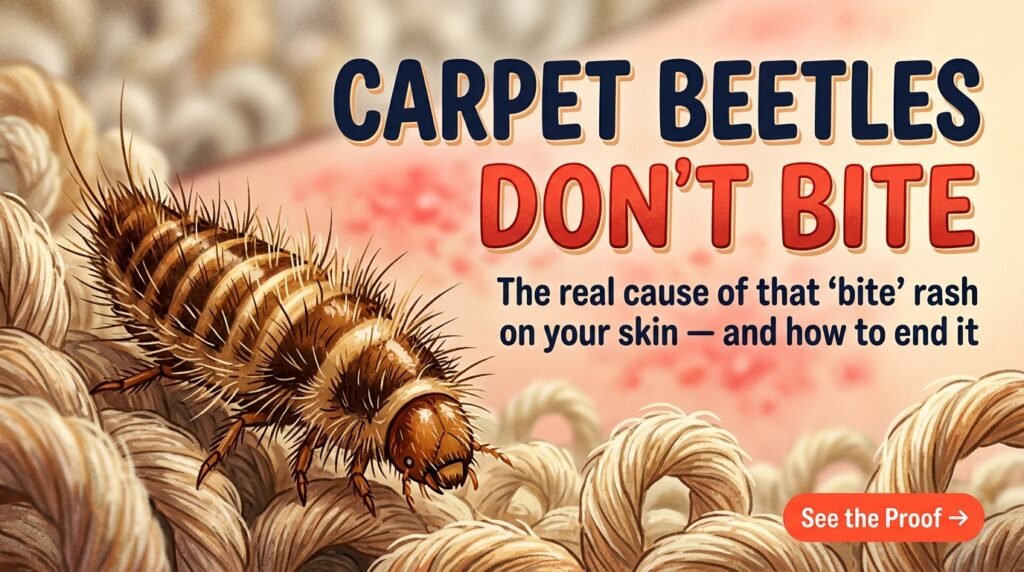
The fast answer: Carpet beetles do not bite people. Not the adults, not the larvae — neither stage feeds on blood, and their mouthparts are not built to pierce skin. What people call a “carpet beetle bite” is actually carpet beetle dermatitis: an allergic or irritant skin reaction to the tiny spear-shaped hairs (called hastisetae) that cover carpet beetle larvae and get shed into carpets, bedding, clothing, and upholstery. The reaction produces scattered, itchy red bumps that are mistaken for bed bug or flea bites so often that dermatology literature specifically flags it as an under-recognized cause of “mystery bites.” The fix is not medicine for a bite — it is removing the larvae and their shed hairs from your home. Read on for how to tell this rash from real bites, how to find the source, and how to end it.
Meet the Beetle: Two Life Stages, Zero Biting
The adults you see on the windowsill
Adult carpet beetles are small, round beetles — the common varied carpet beetle is about an eighth of an inch long, with a mottled, calico-like pattern of white, brown, and yellow scales. Adults feed on pollen outdoors and typically end up indoors by accident, gathering on windowsills and near lights, which is where most people first notice them. They are a signpost, not the problem: an adult on the sill means eggs were (or will be) laid somewhere in the home. Adults do not bite, do not feed on fabric, and do not cause the rash.
The larvae doing the damage
The larval stage is where everything happens. Carpet beetle larvae look like tiny fuzzy caterpillars or “woolly bears” — elongated, banded in brown and tan stripes, and covered in bristly hairs. They avoid light and live in dark, undisturbed places: along carpet edges and under heavy furniture, in closets and dresser drawers, inside upholstered furniture, in air ducts, and in the lint and pet hair that accumulate in corners. Larvae feed on natural animal materials — wool, silk, feathers, fur, hair, shed skin, dead insects — which is why they turn up in stored clothing, natural-fiber rugs, taxidermy, and pet-hair buildup rather than in synthetic fabrics.
As larvae grow, they molt repeatedly, leaving behind dry, brown, husk-like shed skins. Both the living larvae and the accumulated shed skins are covered in hastisetae — minute, spear-shaped hairs that detach easily, become embedded in fabrics and dust, and can even travel through the air in a home’s airflow. A case series published in the CDC’s journal Emerging Infectious Diseases documented families whose skin reactions were traced to these larval hairs, including one household where a contaminated air-conditioning vent was spreading hairs into a child’s bedroom. That is the mechanism behind the “bites”: hairs contact skin, sensitive people react, and everyone goes hunting for a biting insect that does not exist.
What the Carpet Beetle Rash Looks Like
Because it is an allergic/irritant reaction rather than a puncture, carpet beetle dermatitis has its own signature:
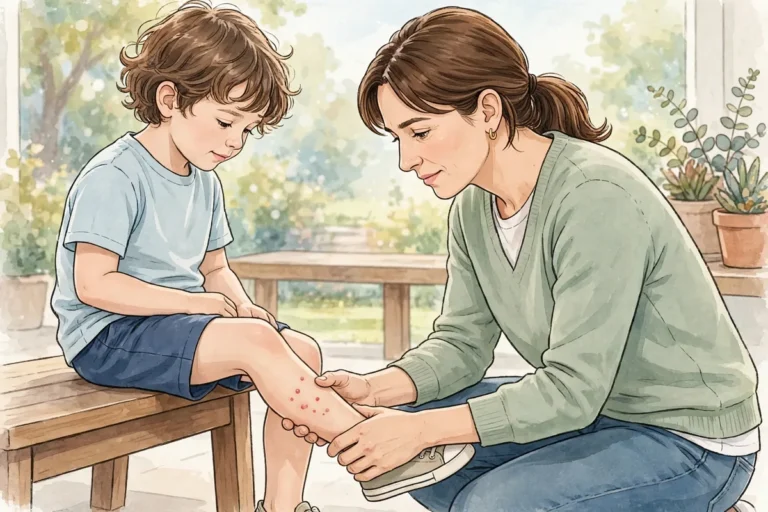
- Scattered, itchy red bumps or welts — sometimes with tiny blisters or a hive-like quality — that can look convincingly like bites, including the classic misdiagnosis of papular urticaria (a bite-allergy pattern).
- No central puncture point. A real bite is a feeding wound, often with a darker center. The carpet beetle rash is a surface reaction, so bumps tend to lack that telltale puncture mark.
- Location follows contact, not exposure. Marks appear where skin touched infested materials — where bedding, clothing, or upholstery held shed hairs against the skin. Unlike bed bug bites, they can appear under clothing, in patches matching where lint and dust collected, as well as on exposed skin.
- Delayed onset. The reaction may start hours after contact, so the timing seems to point at the bed (“I woke up with it”) even when the exposure happened on the couch or in a favorite chair.
- It comes and goes with place. People often notice they react at home but not on vacation, or in one room but not another — a pattern that fits an environmental cause in that room.
- Only some people react. Sensitivity to the hairs varies enormously. One person in a household can be miserable while everyone else is unaffected — and sensitivity can grow with repeated exposure, which is why the “bites” sometimes seem to get worse over months.
Carpet Beetle Rash vs Bed Bug Bites: The Comparison That Matters
This is the comparison that decides where your money and effort go, because the two problems have completely different fixes. Treating a carpet beetle home for bed bugs accomplishes nothing except expense — and the rash continues.
| Feature | Carpet Beetle Dermatitis | Bed Bug Bites |
|---|---|---|
| Is it a bite? | No — allergic/irritant reaction to shed larval hairs | Yes — true feeding punctures |
| Pattern | Scattered, patchy, diffuse; follows fabric contact | Clusters or short lines/zigzags on exposed skin |
| Center mark | Usually no puncture center | Often a darker center where the bug fed |
| Under clothing? | Common — hairs are held against skin by fabric | Uncommon — bed bugs feed on exposed skin |
| Evidence in the home | Fuzzy larvae, brown shed skins along baseboards and in closets, holes in wool/natural fabrics, small mottled beetles on windowsills | Rusty or black spots on mattress seams, blood specks on sheets, shed skins and live bugs near the bed, sometimes a sweetish odor |
| Who reacts | Only sensitive individuals — can be one person in the house | Most people eventually react; reactions vary but are widespread in an infestation |
| The fix | Vacuuming, laundering, removing larvae food sources and the hairs themselves | Targeted bed bug treatment of the bed and room |
If the marks you’re seeing look more like classic welts that come and go within hours, compare with our guide to hives vs bug bites as well — hives are the other great mimic in this category.
Hunt the Source: Where to Look This Weekend
You will rarely catch larvae in the open. Search the quiet places, with a flashlight, in this order:
- Carpet edges and under furniture: Pull furniture away from walls and inspect the carpet perimeter, baseboards, and the undisturbed carpet underneath sofas and beds. Look for live larvae and their shed skins.
- Closets and drawers: Especially stored woolens, blankets, and rarely worn clothing. Check for larvae, skins, and irregular holes or thinning in natural fibers.
- Upholstered furniture: Deep seams and undersides collect lint, hair, and larvae.
- Lint and pet-hair accumulation points: Behind furniture, along vents, under radiators, in the corners nobody vacuums. Larvae graze on exactly this debris.
- Air ducts and vents: In stubborn whole-house cases, hairs and debris in ductwork can distribute the irritant room to room — the CDC case series found precisely this in one home’s air-conditioning system.
- Attics and dead spaces: Old bird nests, wasp nests, and dead insects in attics and wall voids are protein buffets for larvae. A home can import larvae problems from an abandoned nest overhead.
Finding shed skins matters as much as finding live larvae: even after larvae are gone, the accumulated hairs in carpets and fabrics can keep triggering the rash. That is why cleaning, not just pest removal, is the cure. For the symptom-side picture, our dedicated page on carpet beetle dermatitis treatment goes deeper on managing the rash itself.
The Home Action Plan: Removing Larvae and Their Hairs
- Vacuum thoroughly and often — this is the main treatment. Hit carpet edges, baseboards, under furniture, closets, and upholstery with a crevice tool. In an active problem, vacuum the affected rooms several times a week at first. Empty the canister or change the bag into an outdoor bin immediately afterward — the goal is to physically remove larvae, skins, and hairs from the house.
- Launder what’s washable. Wash bedding, clothing, throws, and pet bedding in hot water and dry on high heat. Pay special attention to items from closets and drawers where larvae were found.
- Deal with stored natural fibers. Inspect woolens, blankets, and keepsakes. Clean items before storing them in sealed plastic bins or garment bags; larvae target soiled, undisturbed natural fibers, not clean sealed ones. Heavily infested, low-value items are best discarded in a sealed bag.
- Starve them out. Reduce the food supply: vacuum up pet hair and lint accumulations, clean under and behind furniture, empty lint traps, and clear dead insects from windowsills and light fixtures. Fewer crumbs of protein means fewer larvae next season.
- Address the reservoirs. Remove abandoned bird or wasp nests in attics and eaves (after the birds have left), and consider duct cleaning if reactions occur throughout the home and no room-level source explains them.
- Reduce adult entry in spring. Adults come in from flowers outdoors. Sealing window gaps and promptly removing windowsill beetles lowers the number of eggs laid indoors — a supporting measure, not the main event.
Notice what is not on this list: spraying insecticide around the bedroom. The irritant is a physical hair embedded in fabrics and dust; it must be physically removed. Cleaning is the treatment, which is why the households in the published case reports improved with washing, vacuuming, and clearing the hairs from their homes.
Treating the Rash Itself
Carpet beetle dermatitis is managed the way dermatology sources describe for bite-like reactions generally — symptom-based care while the environment is fixed:
- Wash the affected skin gently with soap and water.
- Use a cold compress to calm itching and swelling.
- Apply 1% hydrocortisone cream or calamine lotion to itchy areas, following the label.
- Take an oral antihistamine if itching is widespread or interrupts sleep.
- Keep nails short and avoid scratching; broken skin invites infection, which turns a simple rash into a medical problem.
- Wash or isolate the clothing and bedding you were using when the rash appeared — if hairs are in the fabric, re-wearing it restarts the reaction.
Expect the rash to flare less often as cleaning removes the hairs, and to stop once the source is eliminated. New bumps appearing in the first days after a deep clean are usually old hairs still working their way out of fabrics, not proof the plan failed. Judge progress over two to three weeks. If you are also sorting out whether marks could be flea-related, our comparison of bed bug bites vs flea bites covers the third common suspect in this mix.
When to See a Doctor
See a clinician — a dermatologist is ideal for persistent mystery “bites” — if:
- The rash is widespread, blistering, painful, or not improving after one to two weeks of home care and cleaning
- You see signs of infection: spreading redness, warmth, swelling, pus, red streaks, or fever
- You develop facial swelling or any trouble breathing — seek emergency care
- The rash involves the eyes or airways (persistent coughing, sneezing, or asthma-like symptoms in a heavily infested space should also be discussed with a doctor)
- Bumps keep appearing despite a thorough cleanup and no evidence of any biting pest — at that point the cause may be another skin condition entirely, and a professional diagnosis beats months of guesswork
Frequently Asked Questions
Do carpet beetles bite humans or pets?
No. Adult carpet beetles feed on pollen, and the larvae feed on natural fibers and debris such as wool, hair, feathers, and shed skin. Neither has mouthparts designed to pierce skin, neither feeds on blood, and they do not live on people or animals. The skin problem linked to them comes only from contact with the larvae’s shed hairs.
What does a carpet beetle rash look like compared with a bite?
Expect scattered, itchy red bumps or small welts — occasionally with tiny blisters — that lack a central puncture point and show up where clothing, bedding, or upholstery pressed against the skin, including under clothes. It often appears hours after contact and can affect just one sensitive person in the home. Real bites, especially bed bug bites, more often form clusters or lines on exposed skin and may leave blood specks on sheets.
Why am I the only one in my house with the rash?
Because carpet beetle dermatitis is a sensitivity reaction, not an attack. People differ widely in how their skin responds to the larval hairs, just as they differ with other contact allergies, and sensitivity can increase with repeated exposure. One reacting person and several unaffected people sleeping in the same home is a classic carpet beetle pattern — and a useful clue that you’re dealing with a reaction rather than a biting pest.
How do I know if I have carpet beetle larvae in my home?
Look for the evidence trail: fuzzy, striped larvae or their dry brown shed skins along carpet edges, in closets and drawers, and under furniture; irregular holes or thinning in wool and other natural fabrics; and small mottled beetles gathered on windowsills. Accumulated pet hair and lint in undisturbed corners make prime larval habitat. A pest professional can confirm identification from a specimen if you’re unsure.
How long does it take for the rash to stop after cleaning?
Individual bumps settle within days with basic skin care. New reactions taper as vacuuming and laundering remove larvae and shed hairs — most households see clear improvement within a couple of weeks of a thorough, repeated cleanup. If nothing changes after that, the source may be a hidden reservoir (attic nest, duct debris, an infested stored item) or the diagnosis may be wrong — both worth a professional look.
Can carpet beetles damage my home or make me sick?
They do not transmit disease and do not damage the structure of a home, but they genuinely damage belongings: wool rugs and clothing, silk, feathers, upholstered furniture with natural fillings, and stored keepsakes can all be eaten through. The health effects are skin (and occasionally eye or airway) irritation from the hairs, plus the secondary risk of skin infection from scratching. The belongings damage is often what finally gets them taken seriously.
By Dr. Sarah Jones