Horse Fly Bite Swelling: How Long It Lasts, Day by Day (and When It’s Infected)
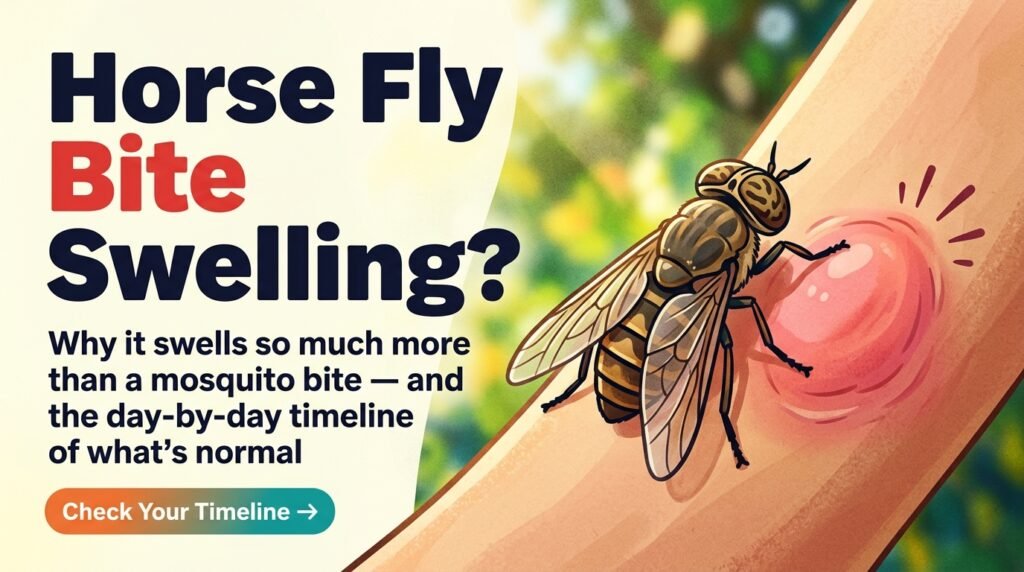
The fast answer: A horse fly bite swells far more than a mosquito bite because the fly doesn’t pierce your skin — it slashes it open with blade-like mouthparts and laps up the blood, flooding a small wound with saliva your body reacts to strongly. For most people the pain peaks in the first day or two, the swelling peaks around 48 hours, and the lump then settles over three to seven days, sometimes taking up to two weeks to flatten completely. The key warning pattern is different: swelling that keeps getting worse after day two or three — hotter, more painful, spreading — is likely infection, not reaction, and should be seen by a clinician.
Why Horse Fly Bites Swell So Much More Than Other Bites
A mosquito is a pickpocket; a horse fly is a burglar with a knife. Only the females bite — they need a blood meal to produce eggs — and their mouthparts include paired, blade-like structures that scissor into the skin, tearing a tiny open wound rather than making a clean needle puncture. The fly then laps the blood that pools in the cut, aided by anticoagulant in its saliva that keeps the blood flowing while it feeds.
That mechanics lesson explains everything people find alarming about these bites:
- It hurts immediately and sharply — a cutting pain, not a prick, which is why you almost always notice a horse fly bite the moment it happens.
- It may bleed. A torn wound plus anticoagulant means a spot of blood at the center of the bite is common and, by itself, not a warning sign.
- The swelling is bigger. Your immune system responds to a larger injury and a larger dose of foreign saliva proteins than a mosquito delivers. The result is a raised, red, hot lump commonly 1 to 5 cm across — and in people with strong reactions, much larger.
- It heals more slowly. An open micro-wound takes longer to close than a puncture, which is why horse fly bites can stay lumpy for a week or more while a mosquito bite vanishes in two days.
Location matters too. Bites on the lower leg, ankle, and foot routinely look worse than bites on an arm, because fluid pools downward and the tissue there has nowhere to expand gracefully. Forum threads about horse and deer fly bites are full of the same report — a foot still swollen at 72 hours — and while it looks dramatic, that timeline alone is usually still within the range of a strong normal reaction. What matters is the direction of travel, which the timeline below spells out.
The Normal Timeline: Day by Day
| When | What’s normal | What it means |
|---|---|---|
| First minutes | Sharp, cutting pain; a small cut at the center; sometimes a little bleeding; a red raised lump forms quickly | The slash wound itself. Wash it now — this is the moment that matters most for preventing infection |
| First few hours | Lump grows, feels hot and firm; pain is at its worst on day one | Your immune response ramps up. Cold compresses and elevation do the most good in this window |
| 24–48 hours | Swelling peaks. The lump may be several centimeters wide, very itchy as pain fades, and look angrier than it did on day one | This peak is expected. Big, hot, itchy — but stable or improving by the end of day two — is still a reaction, not an infection |
| Days 3–7 | Swelling and itching steadily settle; the lump shrinks and softens day by day | Normal resolution. If instead things are getting worse in this window, jump to the infection section below |
| Up to 2 weeks | A small, firm lump or a faint mark may linger before flattening completely | Normal tail-end healing for a bite that cut the skin. A fading lump is fine; a growing one is not |
The pattern to memorize is simple: worse, then better. A horse fly bite that follows the table — peaking around day two, clearly improving by day three or four, gone within a week or two — is doing exactly what horse fly bites do, however theatrical it looks in the middle.
Reaction or Infection? The Timing Test
This is the question nearly everyone asks on day three, staring at a red, swollen leg. Clinicians use one main discriminator: timing. A bite reaction starts within hours and peaks within the first couple of days. A bacterial skin infection takes time to develop — it typically appears two to three days or more after the bite, as bacteria multiply in the little open wound or in skin broken by scratching. As one US health system’s clinicians put it: redness and swelling within the first couple of days are almost always a reaction; infections usually take three or more days to show themselves.
| Sign | Normal reaction (first 1–2 days) | Likely infection (day 3 onward) |
|---|---|---|
| Direction | Peaks by ~48 hours, then improves daily | Getting worse after day 2–3 instead of better |
| Pain | Worst on day one; fades as itch takes over | Pain increasing, throbbing, or tender to light touch |
| Redness | Red patch around the lump, stable in size | Redness spreading outward, or red streaks running from the bite |
| Discharge | None, or a spot of blood right after the bite | Pus, yellow crusting, or weeping fluid |
| Whole body | You feel fine | Fever, chills, swollen lymph nodes, feeling unwell |
If your bite matches the right-hand column, it needs medical care — oral antibiotics are the usual treatment for an infected bite, and only a clinician can judge whether you need them. Our companion guide, horse fly bite infection signs, walks through those red flags in detail.
Relief: What Actually Helps the Swelling Go Down
- Wash the bite with soap and water as soon as you can. This bite is a small open wound, not a puncture. Cleaning it promptly is the single most effective thing you can do to prevent the day-three infection scenario.
- Cold compress, repeatedly. An ice pack or cold cloth, 10–15 minutes at a time with a fabric barrier, several times a day for the first 48 hours. Cold is the best tool against both pain and swelling while the reaction peaks.
- Elevate the limb. For the classic swollen ankle or foot, propping the leg up above heart level whenever you sit makes a visible difference.
- Take an oral antihistamine (such as cetirizine or loratadine, per the label) if itching is intense — it helps most with the itch and the hive-like component of a big reaction.
- Use 1% hydrocortisone cream or calamine on the lump for itch, and an oral pain reliever such as acetaminophen or ibuprofen for the day-one ache, per label directions.
- Protect it and leave it alone. Cover the bite with clothing or a bandage if it’s somewhere that will rub. Don’t scratch — scratching through the skin over a bite is how most infections start — and don’t burst any blister that forms.
- Skip the folk remedies. Vinegar, baking-soda pastes, and similar home treatments have no good evidence behind them for fly bites and can irritate already-injured skin. Cold, clean, elevated, and medicated beats them all.
When to See a Doctor
Most horse fly bites need nothing but home care and patience. Get medical help promptly for:
- Any infection pattern from the table above — worsening after day two or three, spreading redness or red streaks, pus, fever or chills
- No improvement at all after a week, or a lump that is still growing
- Swelling that involves a joint, the face, or the eye area, or swelling so extensive the skin feels painfully tight
- Allergy warning signs: hives spreading over the body, swelling of the lips, tongue, or face, dizziness, or any difficulty breathing — call 911; severe allergy to biting flies is uncommon but real
- Fever plus a sore or ulcer at the bite site a few days later. Very rarely, biting flies can transmit tularemia (the deer-fly relative of this infection is sometimes called “deer fly fever,” and Washington State’s health department lists tularemia among biting-fly risks). It is rare, but fever with an ulcerated bite and swollen lymph nodes in the days after a bite should always be checked
- You have diabetes, poor circulation, or a weakened immune system — treat any worsening bite on the legs as a same-day call
If you’re unsure whether your day-three swelling is reaction or infection, that uncertainty itself is a fine reason to be seen or to call your clinician’s line — this is a judgment call professionals make every day of fly season.
Prevention: Horse Flies Play by Different Rules
Horse flies hunt by sight — movement, large dark shapes, warmth, and the carbon dioxide you breathe out — and they are most aggressive on hot, still, humid days near water, wetlands, and livestock. Two facts shape what works: repellents help but are less reliable against horse flies than against mosquitoes, and the flies are persistent but not fast — they often give up on a target that keeps moving.
- Cover up first, spray second. Light-colored, loose, long sleeves and long pants are the most effective defense; use a DEET- or picaridin-based repellent on exposed skin as backup, not as your only plan.
- Keep moving on trails and shorelines; standing still at the water’s edge at midday is the classic setup for repeated bites.
- Time and place: midday heat near ponds, marshes, stables, and cattle is peak horse fly time — shift the hike or the yard work earlier or later if bites are a recurring problem.
- Know the cousins. Deer flies bite the same slashing way (compare them in horse fly bite vs. deer fly bite), and their swelling follows a similar arc — see how long deer fly bites last.
Frequently Asked Questions
Is it normal for a horse fly bite to still be swollen after 3 days?
It can be. Swelling peaks around 48 hours and then should be improving — by day three the lump should be holding steady or shrinking, even if it’s still obvious, especially on an ankle or foot. The question that matters is direction: better or stable is normal; clearly worse on day three than day two — more pain, more redness, more heat — is the infection pattern and should be seen.
Why did my horse fly bite bleed?
Because the fly cuts the skin instead of piercing it, and its saliva contains an anticoagulant that keeps blood flowing while it feeds. A small amount of bleeding right after the bite is expected. Wash the spot, apply brief pressure with clean gauze if needed, and it should stop quickly.
How long until the hard lump is completely gone?
The swelling and itch usually settle over three to seven days, and a residual firm lump or mark can take up to about two weeks to flatten fully. Large reactions in sensitive people sit at the long end of that range. A lump that is still growing — not shrinking — after the first week is a reason to be checked.
Can a horse fly bite make you sick?
Usually no — the effects stay local. Feeling feverish, unwell, or developing chills after a bite is uncommon and points toward infection of the bite or, very rarely, a transmitted illness such as tularemia. Either way, systemic symptoms after any bite deserve a clinician’s attention rather than watchful waiting.
Why do horse flies seem to target me every summer?
They are drawn to movement, dark clothing, warmth, and exhaled carbon dioxide — so someone exercising outdoors in a dark shirt on a humid day near water is close to a perfect target. Light, loose clothing, repellent on exposed skin, and avoiding still midday air near water and livestock noticeably reduce your bites.
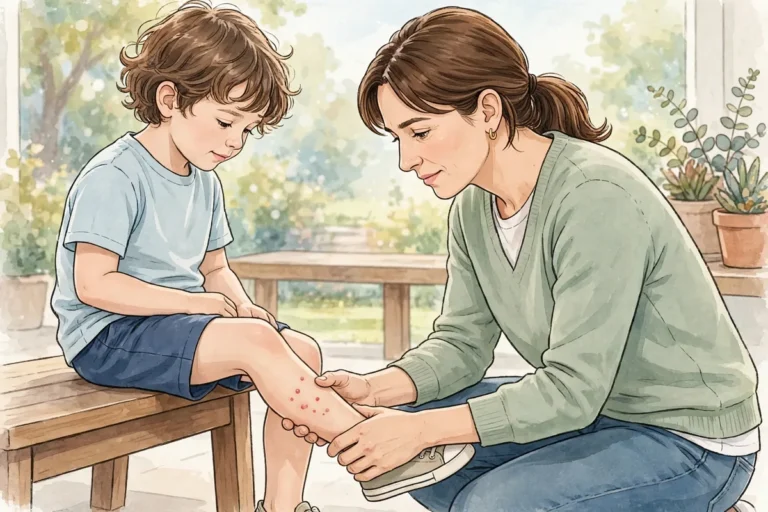
My child’s horse fly bite is huge. Should I worry?
Children often mount bigger local reactions than adults, and a dramatic-looking lump in the first 48 hours is usually still just a reaction. Follow the same timeline test: peaking by day two and improving after is reassuring. Seek care for infection signs, facial or eye swelling, a bite your child can’t stop scratching open, or any trouble breathing.
By Dr. Sarah Jones