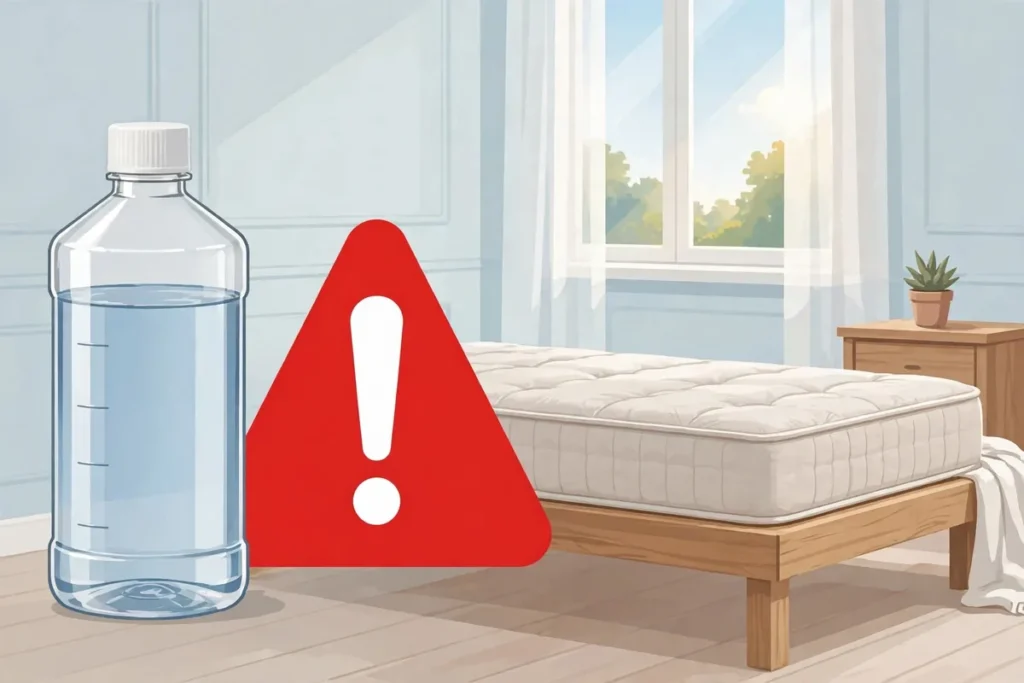
Does rubbing alcohol kill bed bugs? Technically, direct contact with high-concentration isopropyl alcohol can kill some bed bugs it touches — but you should not use it. The U.S. Environmental Protection Agency explicitly warns against using rubbing alcohol for bed bug control: it is not a registered pesticide, it evaporates too quickly to work reliably, it does not kill eggs, and it is dangerously flammable. The EPA reports that rubbing alcohol used against bed bugs has caused numerous house fires. This article is not a how-to guide for an alcohol treatment. It is an explanation of why that treatment is a bad idea, what the real risks are, and what actually works instead.
If you found this page because you are desperate to kill bed bugs tonight with something from the medicine cabinet, that desperation is understandable — bed bugs are stressful, and professional treatment is expensive. But spraying alcohol around your bedroom trades one problem for a potentially catastrophic one. Read on for the full picture before you reach for the bottle.
Why the Idea Is So Persistent
Rubbing alcohol feels like it should work, which is why the myth survives. It is cheap, available everywhere, and it does kill many microbes on contact — so people assume it will do the same to insects. Blog posts and videos describe spraying mattresses with 70% or 91% isopropyl alcohol, and some report seeing bugs die on contact. That visible kill is real but deeply misleading: a few exposed bugs die while the hidden majority — and all of the eggs — survive untouched.
Laboratory research underscores the gap between “kills on contact” and “controls an infestation.” An Ohio State University study tested 50%, 70%, and 91% isopropyl alcohol against bed bugs: topical application killed fewer than 15% of adults after 24 hours, direct sprays needed a full week to kill most nymphs — and 63–100% of directly sprayed eggs still hatched three weeks later. In a real bedroom, where most bugs hide where spray never reaches, the kill rate is far lower still. A product that leaves most adults and eggs alive cannot resolve an infestation; the survivors breed back.
The EPA’s Warning: Fires Are Real
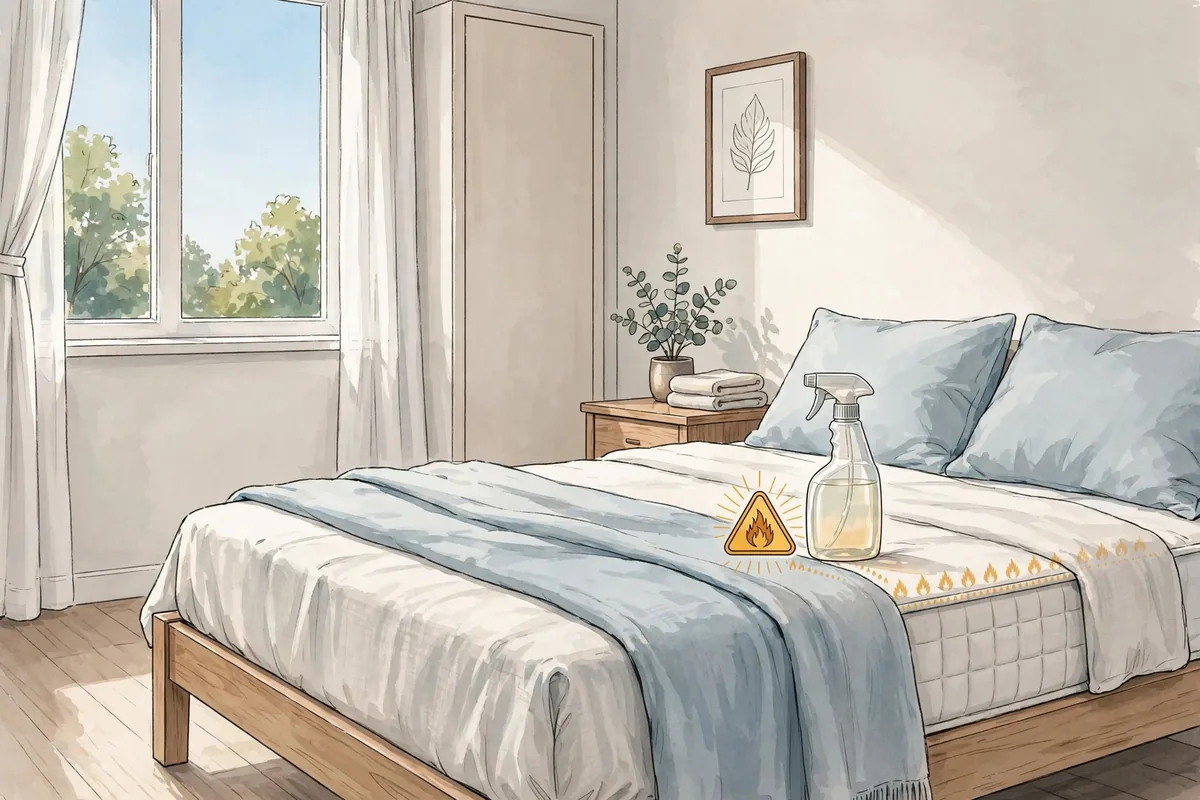
The most important reason to avoid alcohol has nothing to do with the bugs — it is the fire hazard. Isopropyl alcohol is extremely flammable, and its vapors are flammable too. Spraying it across a mattress, sofa, carpet, or bedroom saturates soft furnishings with fuel and fills the air with ignitable vapor. Any ignition source — a candle, an incense burner, a cigarette, a pilot light, even static or an electrical spark — can set it off.
This is not theoretical. In December 2017, a Cincinnati woman doused her furniture in alcohol to fight bed bugs; a nearby candle or incense burner ignited the vapors, and the resulting fire displaced ten people from the multi-family building and caused an estimated $250,000 in damage. Fire officials noted it was the second such alcohol-related bed-bug fire in as many weeks.
What Alcohol Can’t Do (Even Ignoring the Fire Risk)
Set the fire hazard aside for a moment, and alcohol still fails as a bed bug treatment on every technical level:
- It does not kill eggs. Bed bug eggs are protected by a shell that alcohol does not reliably penetrate. Since eggs hatch in roughly one to two weeks, any treatment that leaves eggs alive guarantees a second wave. This alone disqualifies alcohol as a standalone approach.
- It has no residual effect. Alcohol evaporates within minutes. A useful insecticide keeps working after application, killing bugs that emerge from hiding later. Alcohol kills only what it directly touches while wet — everything that crawls out an hour later is unaffected.
- It cannot reach harborages. The defining challenge of bed bug control is that most of the population hides where sprays cannot go: inside box springs, behind baseboards, in wall voids, under carpet edges. A contact-only liquid with no residual activity is useless against bugs it never touches.
- It is not a registered pesticide. The EPA registers bed bug products only after evaluating whether they work and can be used without unreasonable adverse effects. Rubbing alcohol has no such registration for this use, which means no tested label directions, no verified efficacy claims, and no safety review for the application.
- It can damage your belongings. Alcohol can discolor fabrics, damage mattress materials and finishes, and ruin electronics — adding property damage to the list of costs.
Higher concentration does not fix any of this. The EPA’s warning applies regardless of whether the bottle says 70% or 91%: neither concentration provides a safe, complete treatment plan. Do not combine alcohol with other chemicals either — mixing household chemicals creates additional hazards without improving efficacy.
The “It Worked for Me” Trap
You will find personal accounts online from people who swear alcohol solved their bed bug problem. Take these with skepticism. Infestations are frequently misidentified — what someone “cured” may have been carpet beetles or a minor introduction that would have resolved anyway. The visible-contact kill creates a powerful illusion of effectiveness while eggs in the mattress seam carry on.
What to Do Instead: Methods That Actually Work
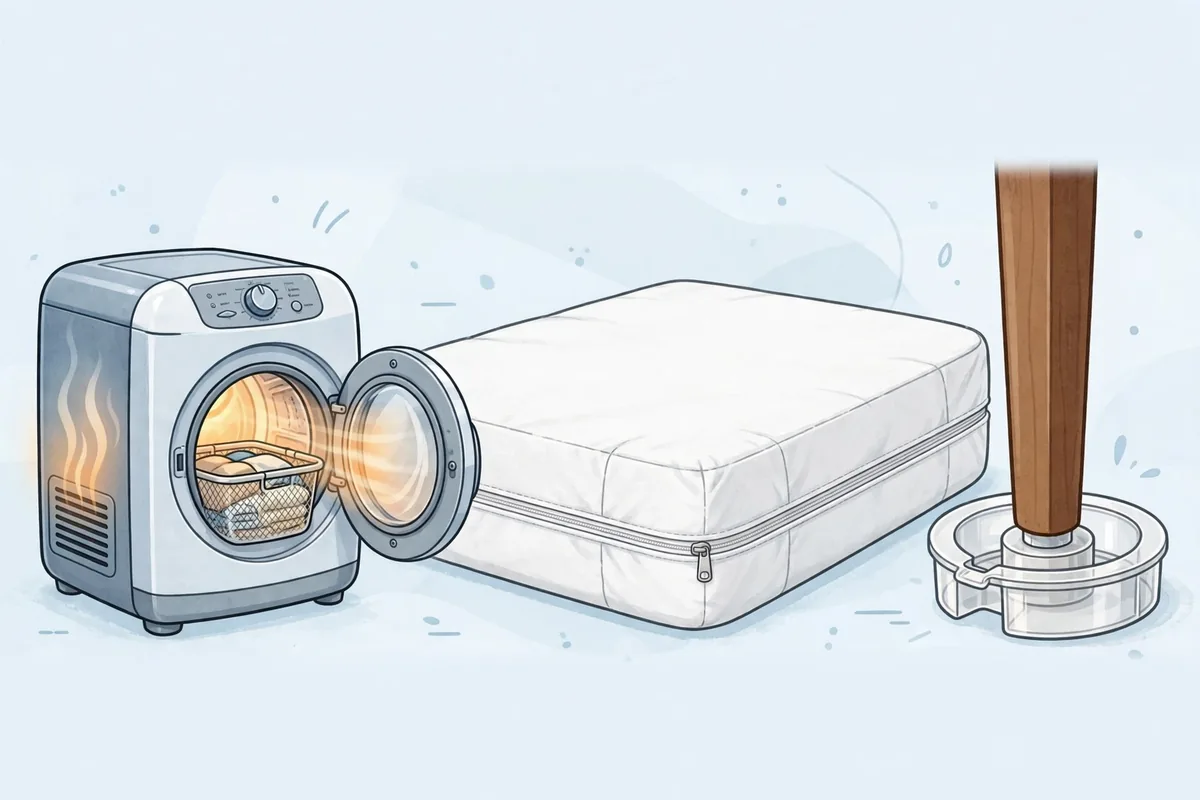
The EPA recommends an integrated pest management (IPM) approach: combining non-chemical and chemical methods, each chosen for what it actually does. Here is what that looks like in practice:
- Launder on hot. Wash clothing, bedding, and fabrics in hot water (above 120°F) and dry on the highest heat setting for at least 30 minutes. Heat kills all life stages, including eggs, and it is the single most effective DIY step.
- Encase mattresses and box springs in zippered, bed-bug-proof covers. Encasements trap any bugs inside (where they eventually die) and eliminate the mattress as a harborage, making inspections far easier.
- Use interceptor traps under bed legs. These simple cups trap bugs traveling to and from the bed, both monitoring the problem and reducing bites.
- Vacuum thoroughly and repeatedly. Vacuum mattress seams, bed frames, baseboards, and carpet edges; immediately seal and discard the vacuum contents outside. Vacuuming physically removes bugs and eggs.
- Reduce clutter around sleeping areas to eliminate hiding places.
- Use EPA-registered products per label if you go the chemical route. Look for the EPA registration number on the label, read the entire label, and follow it exactly. The registration exists because the product was evaluated for efficacy and safety.
- Consider professional heat treatment. Pest professionals can heat rooms to the sustained temperatures that kill all life stages quickly. It is the most reliable single treatment available, and for established infestations it is usually the most cost-effective in the long run.
For prevention habits that keep bed bugs from returning after treatment, see our bed-bug prevention guidance elsewhere on StingHelp. And if you are dealing with bites right now, most bites resolve within one to two weeks, while our bite-sting clue checklist helps sort through the possibilities before you treat.
If You’ve Already Sprayed Alcohol: Damage Control
If you already sprayed rubbing alcohol in your home, prioritize safety immediately. Ventilate thoroughly — open windows and run fans to disperse vapors. Keep all ignition sources away until the alcohol has fully evaporated: no candles, no smoking, no unnecessary electrical switching near treated areas. Do not sleep in a room saturated with alcohol vapors.
Do not “finish the job” with more alcohol — repetition multiplies the fire risk without improving efficacy. Pivot to the proven methods above: start with hot laundering and vacuuming tonight, and call a professional for an assessment if the infestation is more than a few bugs.
The Bottom Line: Skip the Alcohol Entirely
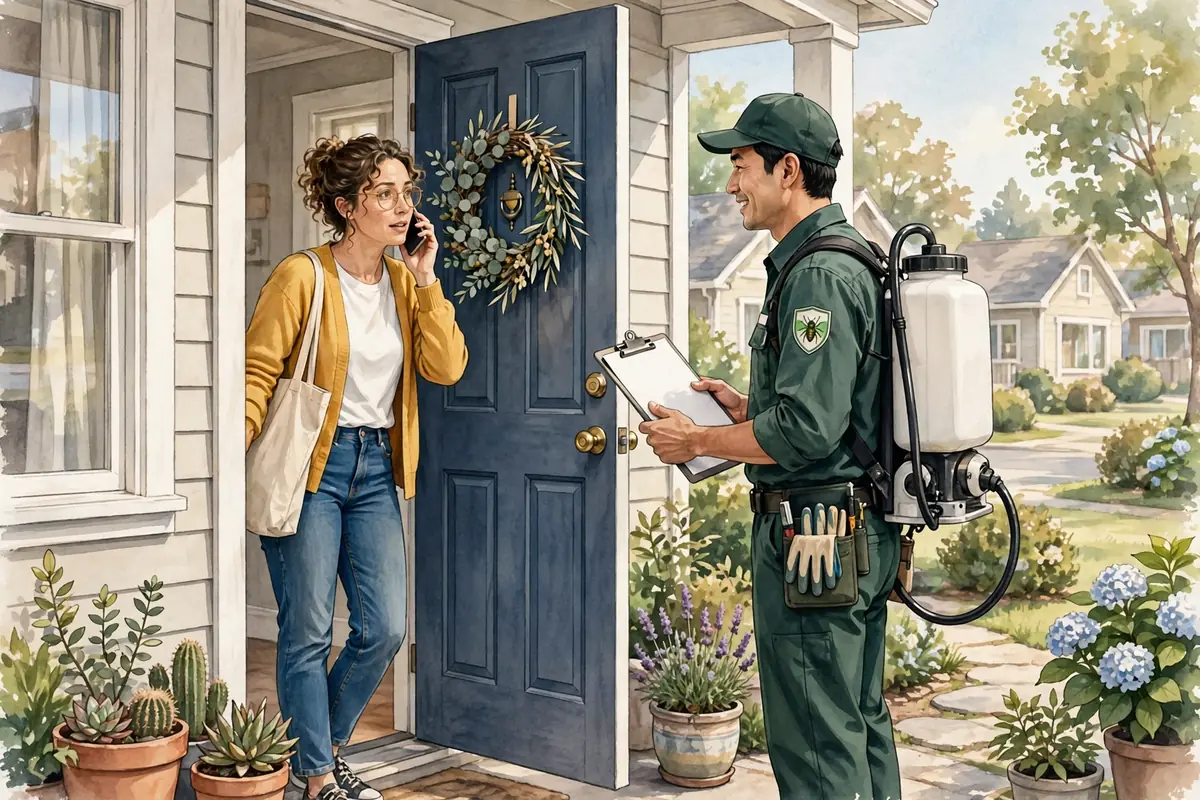
Rubbing alcohol sits in the worst possible category of DIY pest control: dangerous enough to burn your house down, ineffective enough to leave the infestation intact. The EPA warns against it explicitly. Documented fires prove the warning is not hypothetical. Lab research shows it kills only a fraction of even directly sprayed bugs and nothing in the egg stage. It has no residual effect, no registration, and no place in a serious treatment plan.
Bed bugs are beatable, but they are beaten with heat, encasements, monitoring, vacuuming, registered products used per label, and professional help — not with a spray bottle of flammable liquid. If cost is the concern, start with the free and cheap steps tonight: strip the bed, wash everything hot, vacuum the frame and seams, and isolate the bed with interceptors. Then get a professional inspection to understand the true scope. That path is slower than reaching for the alcohol bottle, but it is the path that actually ends with the bugs gone and the house still standing.
When to See a Doctor for a Bug Bite
Bed bug bites themselves are not dangerous, but complications and heavy infestations warrant medical attention:
- Call 911 for any anaphylaxis signs: difficulty breathing, throat swelling, dizziness, or fainting (rare with bed bugs, but treat any severe reaction as an emergency).
- Spreading redness, warmth, swelling, or red streaks around bites — possible cellulitis. Review our cellulitis warning signs.
- Bites with pus, increasing pain, or fever — possible secondary infection from scratching.
- Severe itching or large local reactions that do not improve with over-the-counter care — a clinician can recommend stronger symptom relief.
- Significant sleep disruption, anxiety, or distress from an infestation — this is a legitimate health impact worth discussing with a professional.
- If you are unsure the bites are from bed bugs at all, our bite-sting clue checklist can help you sort through the possibilities before investing in treatment.
Frequently Asked Questions
Does 91% isopropyl alcohol kill bed bugs better than 70%?
Marginally better on direct contact in lab conditions, but the difference is irrelevant in practice: neither concentration kills eggs, neither has residual effect, and the EPA’s fire warning applies to both. Do not choose a stronger concentration — choose a different method.
Can I spray rubbing alcohol on my mattress to kill bed bugs?
No. It is unsafe — alcohol is highly flammable and mattresses are fuel — and ineffective, since it will not reach bugs deep in seams or kill eggs. Use a zippered bed-bug-proof encasement on the mattress instead, and treat the surrounding area with proven methods.
Does rubbing alcohol kill bed bug eggs?
No. Eggs are protected against alcohol, which is one of the main reasons alcohol treatments fail. Eggs hatch within one to two weeks, producing a fresh wave of nymphs after you believed the problem was handled. Heat (above 120°F sustained) is the reliable egg-killer.
What kills bed bugs instantly at home?
Sustained high heat is the fastest reliable home kill — a clothes dryer on the hottest setting for 30+ minutes kills all life stages in the load. For rooms and furniture, professional whole-room heat treatment is the gold standard. No spray, alcohol-based or otherwise, provides an “instant” whole-infestation kill.
Is it illegal to use rubbing alcohol for bed bugs?
The EPA lists using unregistered rubbing alcohol for bed bug control among the dangerous methods people attempt, noting it is not a registered pesticide product. Beyond legality, the practical point stands: it is dangerous and does not work. Use EPA-registered products according to their labels, or hire a licensed professional.
Medically reviewed by Dr. Sarah Jones, MD.
This article is for informational purposes only and isn’t medical advice. If you’re worried about a bite or sting, talk to a healthcare professional.