
You found a tick — and the first question is how long it was there. Tick attachment time before disease transmission is the single biggest factor in your risk, because most tick-borne diseases cannot pass to you in the first hours of feeding. This guide gives you the per-disease timeline, why removal speed matters so much, and exactly what to do next.
The Quick-Reference Chart: Disease by Disease #
Transmission time is not one number — it varies by disease because different pathogens travel through the tick at different speeds. Use this as a rough guide, not a guarantee.
| Disease | Usual tick vector | Roughly how long before transmission risk | |—|—|—| | Lyme disease | Blacklegged ticks | Generally more than 24 hours; risk rises sharply at 36–48 hours | | Anaplasmosis / ehrlichiosis | Blacklegged / lone star ticks | About 24–50 hours | | Rocky Mountain spotted fever | Dog ticks, Rocky Mountain wood ticks | Reports vary widely (roughly a few hours up to several days) — assume it can start early | | Babesiosis | Blacklegged ticks | Generally more than 24–36 hours | | Powassan virus | Blacklegged ticks | Exact window unknown — believed to be much faster than bacterial diseases, possibly within minutes to hours |
The key takeaway: removing a tick within the first 24 hours greatly reduces your risk for Lyme disease, according to the CDC. But “greatly reduced” is not “zero” — especially for Rocky Mountain spotted fever and Powassan, where the window may be short or simply unknown. When in doubt about timing, treat the bite as high-risk and monitor yourself closely.
Why the Bacteria Need Time #
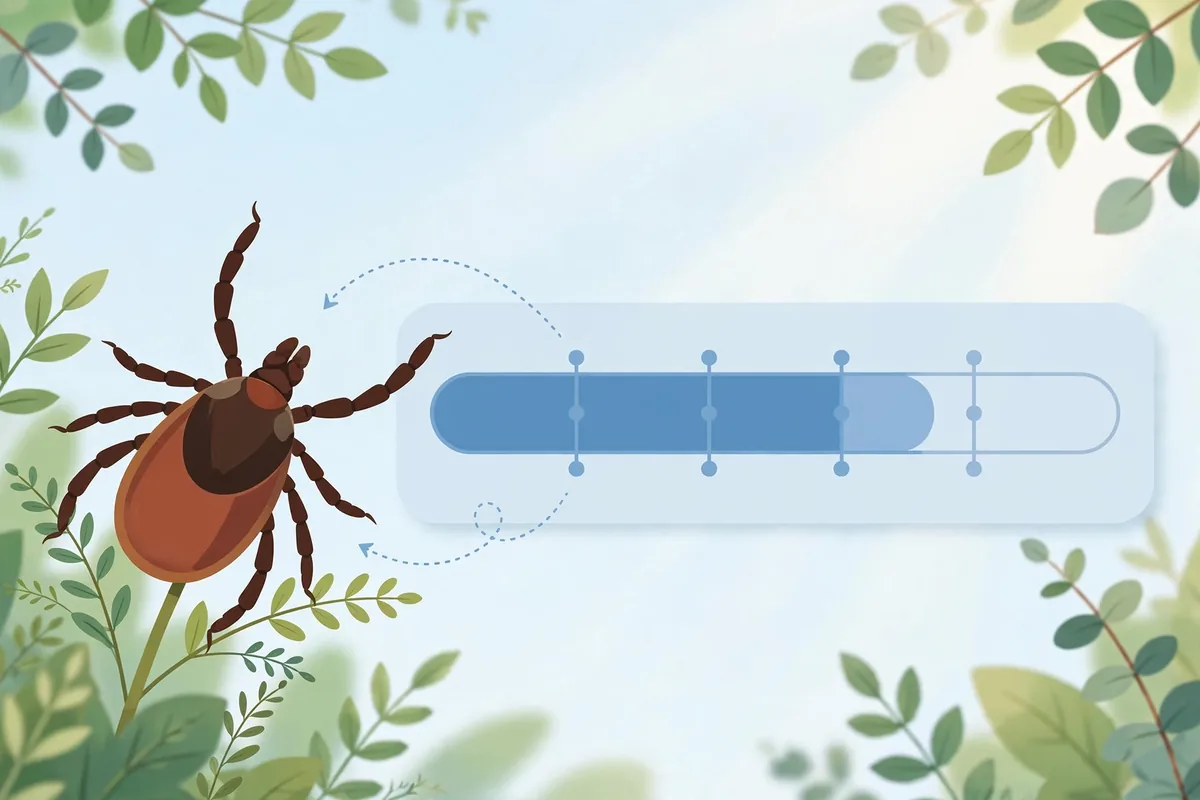
Understanding the mechanism makes the chart intuitive. When a tick begins feeding, Lyme bacteria live in the tick’s gut — not its saliva. Over hours of feeding, the bacteria multiply and migrate from the gut to the salivary glands, and only then flow into you through the saliva. That migration is what takes roughly a day or more.
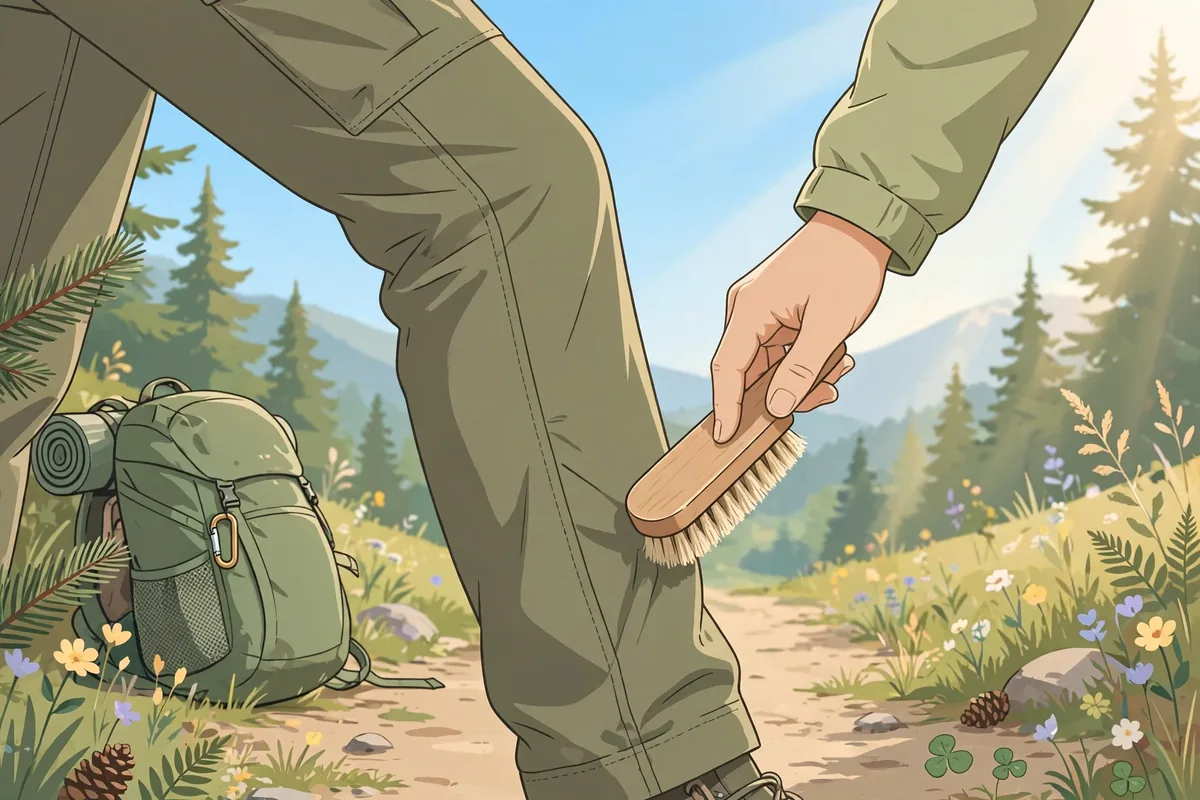
This is also why a tick’s life stage matters. Nymphs — poppy-seed-sized young ticks active from spring through early summer — cause most Lyme infections because they feed unnoticed for the full time the bacteria need. Adult ticks are sesame-seed-sized and usually spotted and removed before the 24-hour mark. The tick’s saliva contains a mild anesthetic, so you typically feel nothing while this whole process plays out. Daily full-body checks after spending time in grassy or wooded areas remain the most reliable defense — and a same-day shower after outdoor activity is recommended by the CDC as part of routine tick-bite prevention.
What to Do the Moment You Find a Tick #
Do not try to guess how long it has been attached and do not wait to act.
- Remove it now. Grasp the tick with fine-tipped tweezers as close to the skin as possible and pull straight up with steady, even pressure. Avoid twisting or jerking.
- Clean up. Wash the bite area and your hands with soap and water, or use rubbing alcohol.
- Dispose of it. Drop it in rubbing alcohol, seal it in a taped container, or flush it. Never crush it with your fingers.
- Skip the folk methods. Do not burn it, smear it with petroleum jelly, nail polish, or alcohol, or twist it loose with a match. These old tricks can make the tick regurgitate into the bite and increase transmission risk.
- Mark the calendar. Note the date and bite location, and photograph the site. Symptom windows run up to 30 days, and a dated photo makes it easier to spot an expanding rash later.
If you are unsure of the species or how long the tick fed, that information gap is normal — many people never notice the tick at all. The CDC notes that Lyme patients often do not recall being bitten. That uncertainty is a reason to watch carefully, not to panic.
What to Watch in the Coming Weeks #
Because some diseases transmit faster than Lyme, do not assume a short attachment means zero risk. Monitor the bite site and your overall health for 30 days. The classic early sign of Lyme is an expanding circular rash — often with central clearing — appearing 3 to 30 days after the bite, sometimes with fever, chills, headache, fatigue, or muscle and joint aches. Rocky Mountain spotted fever, by contrast, can start with fever, headache, and a rash within 2 to 14 days and is treated as a medical emergency in its early phase, since delayed treatment raises the risk of severe illness.
In some cases, a clinician may prescribe a single preventive antibiotic dose after a high-risk bite — for instance, an engorged blacklegged tick attached more than 36 hours in a high-incidence region. That is a medical decision based on local risk, not something to self-administer.
How to estimate attachment time from the tick itself #
You will rarely know exactly when a tick attached. But the tick’s body gives clues, and those clues are worth recording before the tick is discarded, because they help a doctor judge risk later. A flat, unfed tick has probably been attached for only a short time. A tick that is visibly swollen, greyish, and rounded has been feeding for a while and is likely engorged. Nymphs are harder to read because they are poppy-seed-sized even when fed, but a nymph that looks plump and dark rather than flat and pale has been feeding longer. None of this is precise — a tick can feed for many hours and still look fairly flat if it attached recently, and engorgement varies by species and life stage — but the broad categories (flat vs. partly fed vs. fully engorged) are genuinely useful.
Other clues fill in the picture. When did you last spend time in grass, brush, or woods? When did you last shower and change clothes? Did you do a tick check that day, and when? If you checked in the morning and found the tick in the evening, the attachment window is at most that interval. If you were camping for three days without a full check, the window is wider and the risk estimate should be more cautious. Write these details down with the date: where you were, when you likely picked the tick up, what the tick looked like, and when you removed it. A photo of the tick next to a coin for scale, taken before disposal, is even better — it helps with species identification later. For a fuller guide to reading these signs, see how long was the tick attached.
One caution: do not try to squeeze extra information out of the tick by crushing it, burning it, or cutting it open. That destroys the specimen, exposes you to tick fluids, and tells a doctor nothing useful. If you want the tick kept, preserve it in alcohol in a labelled container instead — the decision is covered in should you save a tick after a bite. And remember that attachment time is only one risk factor. The tick species, the region, and the season matter too: a blacklegged tick in a Lyme-endemic area carries a different risk profile from a dog tick elsewhere, even at the same attachment duration. When the estimate is uncertain, treat the bite as higher-risk and monitor accordingly rather than reassuring yourself with a guess.
After removal: keeping a symptom diary that actually helps a doctor #
Most people intend to “watch for symptoms” and then forget what they felt on which day. A short written diary fixes that, and it takes less than a minute a day. Note the removal date, the bite location on the body, and a one-line daily entry: any rash, fever, fatigue, headache, muscle or joint pain, or change at the bite site. Photograph the bite site on the day of removal and again if a rash appears, with a coin or ruler for scale if possible. A rash that expands, a fever that starts a week later, or joint pain that appears after the bite has healed are all patterns a doctor can read from dated notes far more easily than from memory.
The diary also helps you tell normal healing from warning signs. A small red bump that fades over a few days is normal. An expanding bullseye rash, a fever with headache, or a rash that spreads widely are not. Different diseases announce themselves on different schedules: Lyme’s bullseye rash often appears days to a couple of weeks after the bite, while Rocky Mountain spotted fever tends to move faster and can be serious quickly — the signs are detailed in Rocky Mountain spotted fever tick-bite signs. If any fever, rash, or spreading redness appears, contact a clinician promptly and bring the diary, the photos, and — if you saved it — the tick. Do not wait for a textbook symptom: early treatment is far more effective, and a clinician would rather hear about a false alarm than see a late-stage infection.
Finally, a common worry deserves a direct answer: not every tick carries disease, and a bite does not guarantee illness. Our guide to do all ticks carry Lyme disease explains why most ticks in most areas are not infected, while still explaining why monitoring matters. The right mindset is neither panic nor dismissal: remove promptly, record honestly, watch for a few weeks, and seek care early if anything changes. That combination — fast removal plus careful follow-up — is what turns an uncertain attachment time into a manageable risk.
Monitoring schedule after a tick bite #
| Period | What to check daily | Seek care promptly if |
|---|---|---|
| Days 1–3 | Bite site redness, itching, local swelling | Rapidly spreading redness, fever, or severe pain |
| Days 4–14 | Expanding rash, fever, headache, fatigue | Bullseye rash, fever with rash, or feeling systemically ill |
| Weeks 2–4 | Joint pain, lingering fatigue, new rashes | Joint swelling, facial droop, heart palpitations, or persistent symptoms |
| Weeks 4–6 | Any late symptoms, especially joint or neurological | Anything new that was not there before — bring the diary |
Warning signs: when to seek care #
Call 911 immediately if you develop trouble breathing or swallowing, swelling of the face, lips, tongue, or throat, widespread hives, dizziness or fainting, or a racing heartbeat. If you carry epinephrine for a known allergy, use it first, then call 911.
Beyond allergic emergencies, contact your doctor or an urgent-care clinic promptly if you develop fever, chills, headache, or body aches within 30 days of a tick bite; an expanding red rash around the bite site; red streaks spreading from the bite; increasing pain, swelling, warmth, or pus at the site. Always mention the tick bite and — if you noted it — the estimated attachment time, because that detail helps the clinician judge which diseases to test for. For removal technique details, see our remove an attached tick safely guide, and track what happens next with tick bite aftercare for the next few weeks.
Frequently asked questions #
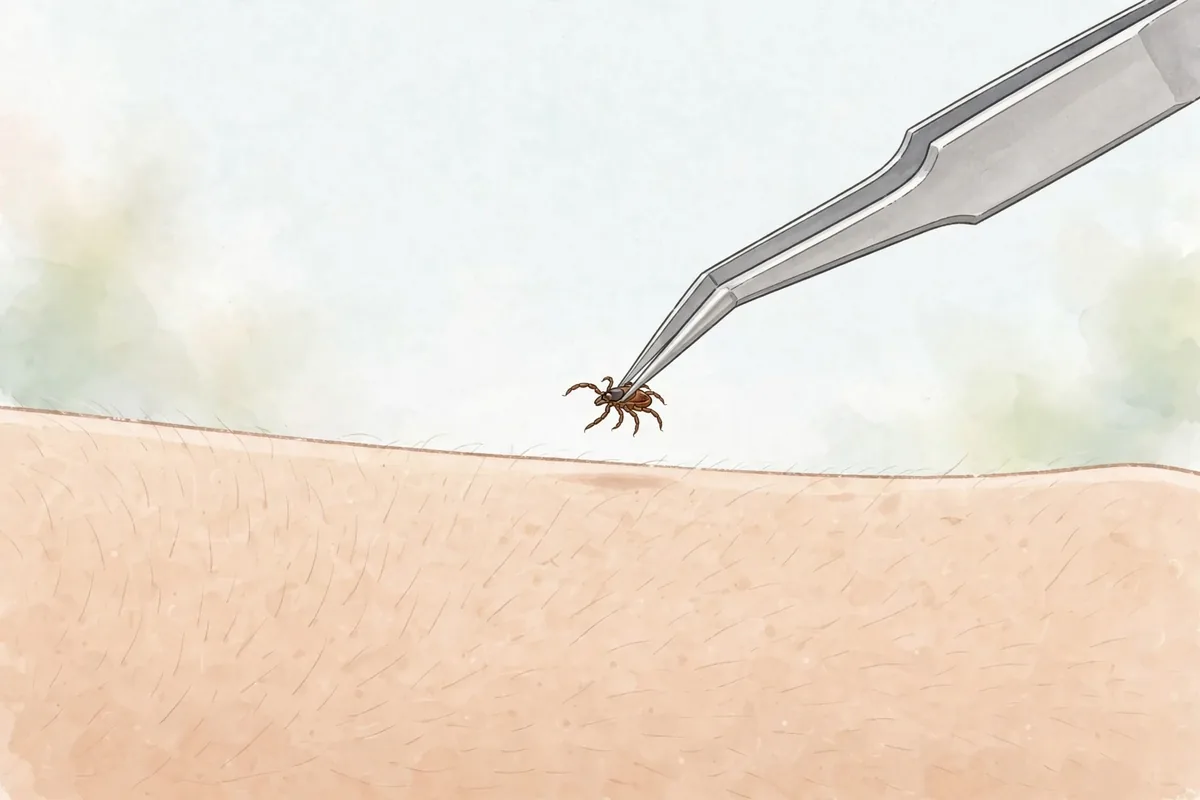
The tick was flat, not engorged — does that mean it was not attached long? #
Not necessarily. Flatness suggests a shorter feed, but a small nymph can transmit disease without obvious engorgement, and a tick can look flat after only a day of feeding. Treat attachment time as unknown and follow the same removal and monitoring steps.
Can disease transmit if the tick bit me but I pulled it off within an hour? #
For Lyme disease, transmission within the first hour is considered extremely unlikely — the bacteria need far longer to reach the saliva. For other diseases, especially Rocky Mountain spotted fever, the safety margin is smaller. Regardless of timing, monitor the bite site for 30 days.
Does saving the tick help my doctor? #
It can help identify the species, which narrows the list of possible diseases. Seal it in alcohol in a labeled bag. But clinicians diagnose mainly from your symptoms, any rash, and the exposure history — tick lab testing is not the standard route to a diagnosis, and a negative tick test does not rule out illness.
Why did I get sick even though I removed the tick the same day? #
A few possibilities: the attachment may have been longer than you thought (nymph bites go unnoticed), a different disease with a faster transmission window may be involved, or the illness may be unrelated to the bite. None of these are things to sort out at home — a clinician should evaluate any fever or rash following a tick bite.
More questions, answered #
Does showering after being outdoors really reduce tick risk? #
Yes, and it works in two ways. A shower washes off unattached ticks before they settle and start feeding, and the routine of showering prompts a full-body check — behind the knees, around the waistband, in the hairline and behind the ears, places where ticks like to hide. Showering within a couple of hours of coming indoors is recommended as part of routine tick-bite prevention, not because water kills attached ticks (it does not remove one that has already bitten), but because it catches the ones that have not yet attached. Combine it with a clothes check: tumble-dry outdoor clothes on high heat for about ten minutes to kill any ticks hiding in fabric.
If the tick was attached for less than 24 hours, can I stop worrying? #
You can worry less, especially about Lyme disease, but you should not stop monitoring. The 24-hour figure is a strong, well-supported threshold for Lyme risk, but it is not a guarantee for every disease — some pathogens transmit faster, and attachment-time estimates are often wrong. The safe approach after a short attachment is the same routine, just with lower anxiety: record the details, watch the bite site and your general health for a few weeks, and seek care if a rash, fever, or unusual symptoms appear. A short attachment lowers risk; it does not erase the follow-up.
Should I take antibiotics just in case after a tick bite? #
Not on your own, and not automatically. Preventive antibiotics are sometimes prescribed in specific situations — for example, a high-risk bite in a Lyme-endemic area with a known attachment duration — but the decision depends on the tick species, the region, how long it was attached, and your health history. Taking antibiotics “just in case” without that assessment can cause side effects and does not protect against viral tick diseases at all. If you are concerned, contact a clinician promptly with your notes and photos and let them judge; the earlier you ask, the more options they have.
Medical and editorial note #
This guide is general information, not medical advice. Transmission timelines are approximate and based on published research summaries; individual cases vary. If you develop a rash, fever, or flu-like symptoms after a tick bite, contact a healthcare professional promptly and mention the bite, the tick species if known, and how long you believe it was attached.


