
Rocky Mountain spotted fever (RMSF) is the most severe tickborne rickettsial illness in the United States, and early treatment makes a major difference in outcomes. The challenge: its first symptoms look like many ordinary illnesses. After a tick bite, rocky mountain spotted fever tick bite warning signs to watch for are fever and headache in the first days, with a rash that often — but not always — follows. Knowing the pattern helps you seek care fast.
Early signs in the first days #
Symptoms typically begin 2 to 14 days after the bite of an infected tick, according to the CDC. The opening act is frustratingly generic: fever, headache, muscle aches, nausea, and a general feeling of being unwell — easily mistaken for flu or a stomach bug. This is exactly why tick-bite history matters so much: a fever that starts within two weeks of a known tick bite, especially in spring or summer, should always raise the question with your clinician.
Do not wait for a rash to seek care. The rash can be delayed by several days or, in some cases, never appear at all — and waiting for it is one of the most dangerous mistakes with this illness. If you develop fever and headache within two weeks of a tick bite, contact your doctor promptly and mention the bite explicitly. Early in the illness, clinicians treat based on clinical suspicion rather than waiting for test results, because delaying treatment while awaiting confirmation worsens outcomes.
The rash: what to watch for #

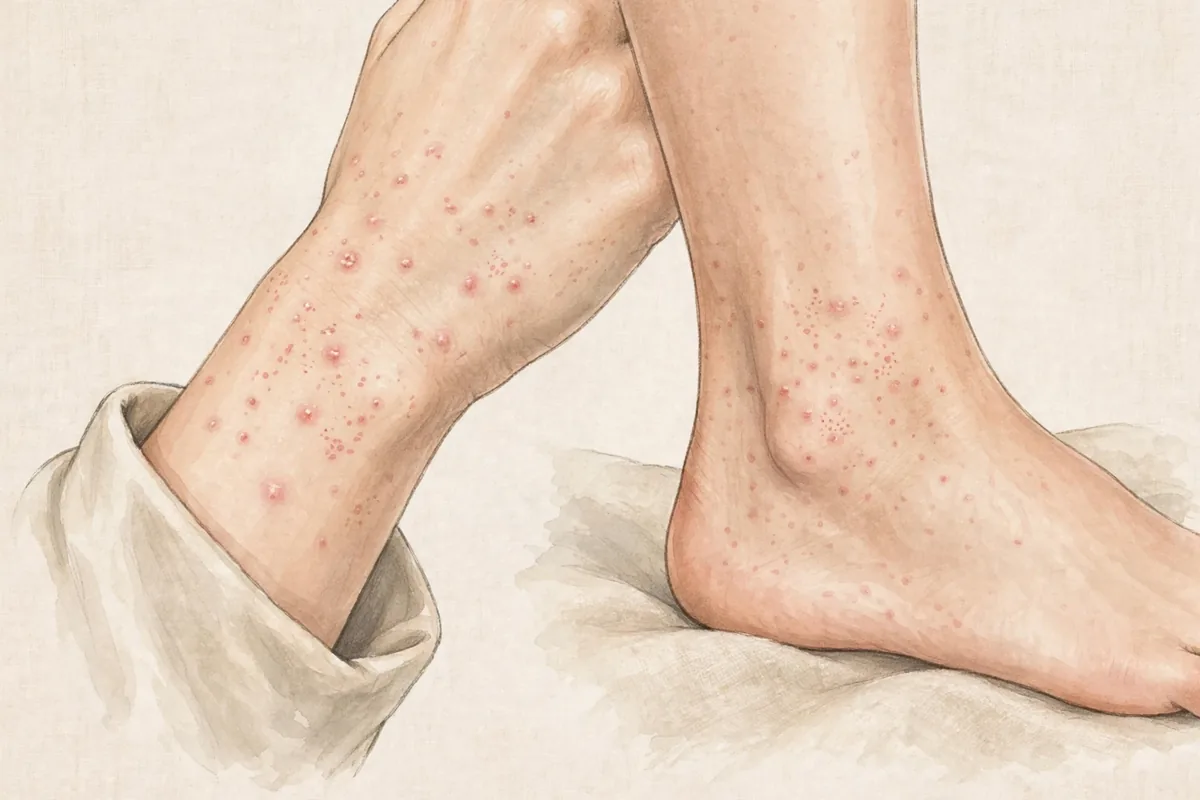
When the rash does appear — usually 2 to 5 days after fever begins — it often starts as small, flat, pink spots on the wrists, forearms, and ankles, then spreads toward the trunk. Later the spots may become raised and develop a petechial (tiny pinpoint bleeding) character. The wrists-and-ankles-first pattern is the classic clue that distinguishes it from many other rashes.
But remember the caveat: some patients never develop a rash, and in others it appears late. A rash plus recent tick exposure plus fever is a combination that needs same-day medical evaluation — do not try to identify it from photos alone or wait to see if it spreads. Compare with guidance on tick bite rash vs local irritation to understand the difference between a simple bite reaction and a spreading systemic rash, while keeping in mind that only a clinician can evaluate RMSF.
Which ticks carry it #
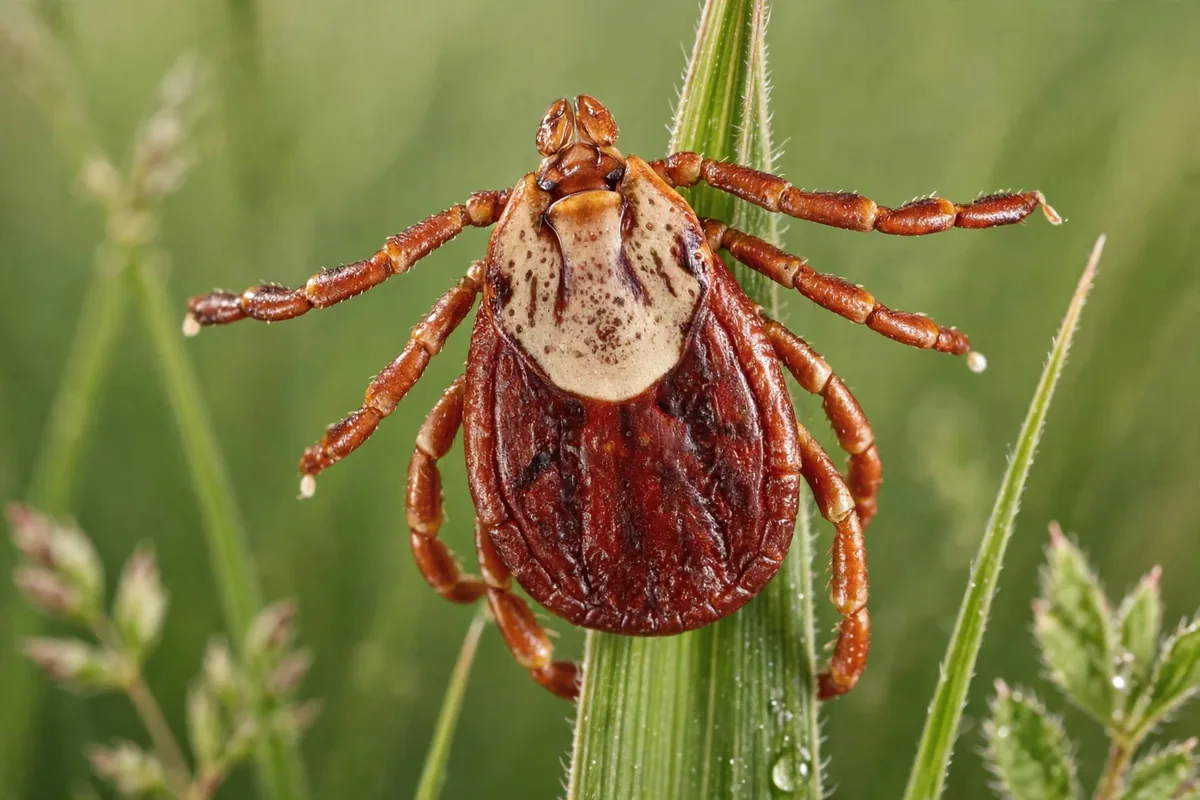
In the US, RMSF is transmitted primarily by the American dog tick, the Rocky Mountain wood tick, and the brown dog tick, per the CDC. Despite the name, the disease occurs well beyond the Rocky Mountains — cases are reported across much of the country, with some of the highest numbers in the southeastern and south-central states. The “Rocky Mountain” name reflects where it was first identified, not where the risk lives today.
Risk follows tick habitat and season: wooded areas, brushy trails, tall grass, and dog-associated environments from spring through early fall. The brown dog tick is notable because it can complete its life cycle indoors, making kennels and homes with dogs potential exposure sites. After any outdoor activity in tick country, do a full-body tick check the same day, and check pets too — dogs can carry infected ticks indoors. Prompt, correct tick removal with fine-tipped tweezers remains the best immediate step after any bite; review how to remove an attached tick safely if you are unsure of the technique.
Why fast care matters so much #
RMSF is a bacterial infection, and it responds to treatment — but the key word is early. The CDC emphasizes that treatment should begin as soon as the disease is suspected, without waiting for laboratory confirmation, because delayed treatment is associated with far worse outcomes. This is one of the few situations in tick-borne illness where the guidance is unambiguous: suspicion alone justifies prompt clinical evaluation.
Never attempt to treat a suspected case yourself — do not use leftover antibiotics or anyone else’s prescription. The choice of medication, dosing, and duration must come from a clinician; this guide will not name drugs or doses because that decision belongs in a medical setting. What you can do is be a good historian: note when the bite happened, when symptoms started, where you have been outdoors, and take a photo of any rash to show the clinician. If you removed the tick, saving it in a sealed bag with the date can help with identification. For a deeper reference, the Rocky Mountain spotted fever article covers pictures, identification, and FAQs.
Warning signs: when to seek care #
Call 911 immediately for confusion, difficulty breathing, severe headache with stiff neck, fainting, or a rapidly spreading purplish rash with fever. These can signal severe or fulminant disease and need emergency care without delay.
Otherwise, the rule is simple and urgent: fever, headache, or rash within two weeks of a tick bite warrants same-day medical evaluation — an urgent-care clinic, your doctor, or the emergency department if those are unavailable. Tell them about the tick bite first, before describing symptoms, because the exposure history changes the diagnostic calculus. Do not wait for the rash, do not wait for test results, and do not self-treat.
Frequently asked questions #
How soon after a tick bite do symptoms start? #
Typically 2 to 14 days, with most cases appearing in the first week. Mark your calendar when you find an attached tick so you can connect later symptoms to the exposure — the link is easy to miss once a week has passed and the bite is forgotten.
Does every tick bite in an RMSF area need preventive treatment? #
No — most tick bites do not transmit disease, and routine preventive antibiotics after every bite are not the standard approach. The guidance is watchful waiting with a low threshold for seeking care: monitor for fever, headache, or rash for two weeks after the bite and get evaluated promptly if they appear.
Can the rash be absent? #
Yes. The rash may be delayed, faint, or absent entirely, which is why clinicians are taught not to require it for diagnosis. Fever and headache after a tick bite are enough reason to be evaluated during tick season, rash or no rash.
Is RMSF only a risk in the Rocky Mountains? #
No — despite the name, cases occur across the United States, with significant numbers in the Southeast, South-Central, and other regions. The name reflects the disease’s discovery location, not its current geography. Anywhere the vector ticks live, the risk exists during tick season.
Medical and editorial note #
This guide is for symptom awareness only — it is not medical advice, cannot diagnose Rocky Mountain spotted fever, and does not recommend any medication. RMSF is a serious illness where early clinical treatment matters greatly. If you develop fever, headache, or rash within two weeks of a tick bite, seek medical care promptly and tell the clinician about the bite.


