
Fire Ant Bites on the Stomach: First Aid, Pustules, and Infection Watch #
Fire ant stings on the stomach need the same fast first aid as stings anywhere else, plus extra care for clothing friction, trapped heat, and pustules that sit under a shirt all day. Get the ants off, wash the skin gently, cool the area, and leave the pustules alone. Then watch the area closely for 24 to 72 hours for spreading redness, rising pain, warmth, streaking, or fever, and get prompt care if any of those signs appear.
How Fire Ants End Up on the Stomach #
Fire ants do not fly onto the stomach or drop from trees in the usual story. They climb, they get trapped under clothing, and then they sting when they feel pressed against skin. The stomach is a common trap zone because a shirt can hold ants against the body while the person keeps sitting, leaning, or working, often without noticing the first few ants at all.
Sitting, Leaning, and Lying Outdoors #
Sitting on grass, a low wall, a porch step, a blanket, or a fallen log puts the stomach close to ant traffic. Leaning forward over a picnic table, a garden bed, or a cooler can let a shirt ride up or gap at the waist, giving ants a path inside. Lying on the ground for a photo, a rest, or play with children increases the contact area even more, because the whole front of the torso can rest against grass or soil where ants travel.
Children and adults who sit directly on the ground after rain, near a mound, or beside a woodpile face higher exposure, because fire ants often move after disturbance and spread out from the nest area. A person who sits down without checking the spot may not see a mound hidden under grass, leaves, or a blanket edge. The first sign is often a sudden burning or prickling feeling across the belly rather than a single sharp sting.
Ants Inside a Shirt #
A loose shirt can act like a net. An ant climbs a leg, a shoe, or a chair, reaches the waistband, and then moves upward inside the shirt where it is warm, dark, and close to skin. A tucked in shirt can trap ants even more effectively, because there is no easy exit at the bottom. An untucked shirt that bunches at the waist can create a pocket where ants gather.
Once inside, ants sting when the fabric presses them against the skin. Bending, twisting, sitting down hard, or pulling the shirt tight can trigger several stings at once. That is why stomach stings often appear in a cluster or a scattered group rather than as one isolated mark. The person may feel stings in several places across the belly, near the navel, along the sides, and close to the waistline, all within a short time.
How to Tell It Is Probably Fire Ants #
Fire ant stings usually start with a sharp burning or stinging pain, followed by redness and a raised bump. Within hours, many of those bumps turn into small white or cloudy pustules. That pustule stage is the most useful clue. Mosquito bites itch and swell but do not usually form firm white pustules in this pattern. A single wasp or bee sting is usually one painful spot, not a cluster under clothing.
If the insect was a large black ant that bit rather than stung, the pattern and aftercare differ. For comparison, the guide to carpenter ant bite treatment explains how a bite from a large wood nesting ant differs from fire ant stings, including the absence of pustules. When the marks match the fire ant pattern, with burning pain followed by pustules, treat the whole stomach area as one affected zone rather than trying to treat each mark as a separate injury.
The First 10 Minutes: Step-by-Step Checklist #

The first 10 minutes matter most for limiting extra stings and for cleaning the skin before irritation builds. Work calmly and in order. Rushing to scratch, or trying to treat the skin before the ants are gone, only adds stings and skin damage.
Step 1: Get Away and Get the Ants Off #
Move away from the grass, blanket, chair, or mound area at once. Do not stay in place to inspect the spot. Once you are clear, take the shirt off if you can do so in private, or lift it and shake it out well away from your body. Brush ants off the skin with a firm sweeping motion using your hand, a towel, or a piece of clothing. Do not try to pick ants off one by one while others are still stinging.
Check the waistband, the inside of the shirt, underwear elastic, and any folds where ants can hide. Ants can stay in a seam or a pocket and sting again later. Shake shoes and pants as well if you were sitting on the ground, because ants may have climbed higher than the stomach. If a child was stung, help the child change out of the affected clothing in a calm and private place, and check the whole torso, not just the spot that hurts most.
Step 2: Wash the Stomach Gently #
Wash the whole stomach area with mild soap and cool or lukewarm running water. Use your hands or a soft cloth, and wash for at least a minute. Gentle washing removes ants, dirt, and surface bacteria, and it helps calm the burning feeling. Pat the skin dry with a clean towel rather than rubbing it hard.
Do not scrub the bumps, do not use harsh soap, and do not pour alcohol, bleach, or strong disinfectant on the area. Harsh products irritate already inflamed skin and can make pustules more likely to break. Plain soap and water is the right choice here, and it is also the step people most often skip when they are in a hurry to apply a cream.
Step 3: Cool the Area #
Apply a cool damp cloth or a cold pack wrapped in a thin cloth to the stomach for about 10 to 15 minutes. Cool temperature helps reduce pain, itching, and swelling. Rest the cloth lightly on the skin rather than pressing hard or wrapping it tightly around the waist. Repeat the cool application a few times during the first day, with breaks in between, if the burning or itching returns.
Do not put ice directly on bare skin, and do not use heat in the first hours. Heat increases blood flow to the area and can make burning and swelling worse. A cool shower can also help if many stings cover a wide area, as long as the water is cool or lukewarm and the skin is patted dry afterward rather than rubbed with a rough towel.
Step 4: Leave Pustules and Bumps Alone #
After washing and cooling, leave the area uncovered for a while if possible. Let the skin breathe and settle. Do not squeeze, scratch, pop, or pick at any bump, even if it looks like a pimple. Fire ant pustules contain sterile fluid at first, and breaking them open creates a path for bacteria from skin, clothing, and hands.
If clothing must go back on, choose a clean, loose shirt and avoid a tight waistband for the rest of the day. Note the time of the stings and take a quick photo of the area for your own reference if that helps you track changes later. A photo taken in good light, without sharing it anywhere, can make it easier to judge whether redness is spreading the next day.
First 10 Minutes Checklist #
- Move away from the ant area immediately.
- Remove or shake out the shirt and check waistband seams.
- Brush all ants off the skin with sweeping motions.
- Wash the stomach with mild soap and cool or lukewarm water.
- Pat dry gently with a clean towel.
- Apply a cool cloth or wrapped cold pack for 10 to 15 minutes.
- Put on a clean loose shirt, or leave the area uncovered if possible.
- Check for hives, breathing trouble, face swelling, or dizziness.
- Note the time and, if helpful, take a private reference photo.
- Plan to recheck the area later the same day and again over 72 hours.
What Fire Ant Stings on the Stomach Look and Feel Like #
Stomach stings follow a fairly predictable course when they stay uncomplicated. Knowing that course helps a person avoid panic on day two, when pustules look worse even though healing is on track, and helps the same person spot the point where the course turns abnormal.
Day One to Day Two: The Pustule Stage #
By the next day, many fire ant sting sites develop small pustules. Each pustule is a raised bump with a white or yellowish cloudy center and a red base. Pustules are a normal part of fire ant healing, not a sign that infection has already started. They form because the venom kills a small area of skin cells, and the body walls off that area.
On the stomach, pustules can be hard to see under clothing and easy to break without noticing. A waistband sliding over them, a belt pressing on them, or a night of tossing in bed can open several pustules at once. Broken pustules may look raw or weepy for a day, and they need clean care afterward, but a single broken pustule alone does not mean infection. Infection is judged by the pattern around the pustules over time, especially spreading redness, rising pain, warmth, and fever, which are covered in the monitoring section below.
Pustules on the Stomach: Care Without Breaking Them #
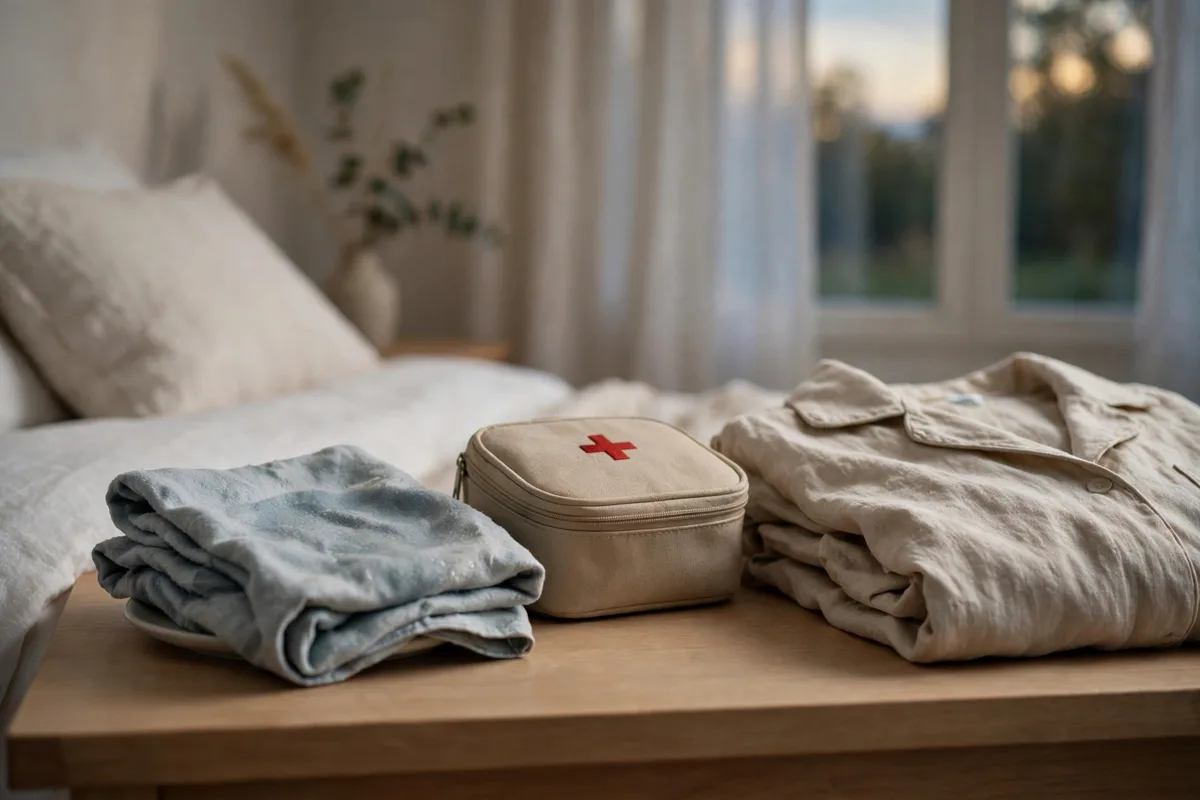
Pustule care on the stomach is mostly about protection. The skin there is covered most of the day, pressed by elastic, and bent every time a person sits or stands. A care routine that works on an arm can fail on the belly if clothing friction is ignored.
Keep the Area Clean and Dry #
Wash the stomach once or twice a day with mild soap and water, and pat it dry. Change into a clean shirt if the first one becomes sweaty or damp. Sweat, heat, and trapped moisture soften pustules and make them easier to break. After a shower, wait until the skin is fully dry before putting on a shirt, and avoid heavy lotions that seal in moisture over fresh pustules.
If a pustule does break, wash the area gently, pat it dry, and cover it with a clean dry dressing or a soft breathable bandage if clothing will rub it. Change the covering daily, or sooner if it becomes damp or dirty. Do not apply adhesive directly over a large cluster of unbroken pustules if removal will tear them. A loose covering, or a clean shirt used as a barrier, is often kinder than a tight bandage across the whole belly.
Hands Off, Even When Itching Peaks #
Itching is the hardest part of pustule care, especially at night and under clothing. Keep nails short and clean, and try cooling the area, pressing a cool cloth lightly on the shirt, or distracting yourself with another activity when the urge to scratch rises. Scratching under a shirt is easy to do without thinking, and it is the most common way stomach pustules break and become infected.
For children, a loose shirt that covers the area, plus a reminder not to scratch, helps more than repeated warnings alone. A cool cloth before bed, clean sleepwear, and a calm bedtime routine reduce nighttime scratching. If itching keeps waking a child, or an adult, night after night, that persistence is worth mentioning to a clinician, because strong itching can be a sign that the area needs a different care plan.
What Not to Do #
Many well meaning home remedies make stomach stings worse, especially when they are applied under clothing where they stay trapped against warm skin for hours. The list below is worth reading before reaching for anything in the bathroom cabinet.
Do Not Break, Squeeze, or Cut Pustules #
Do not pop pustules like pimples, do not squeeze them to drain fluid, and do not cut the skin to let fluid out. Breaking the skin barrier invites bacteria in and can turn a normal healing pustule into an infected sore. It also increases scarring, especially on the stomach where clothing keeps rubbing the raw spot.
Do not use tweezers, pins, or other tools on pustules. Fire ants do not leave a stinger behind in the usual sense, so there is nothing to dig out. Picking at the area only adds trauma and bacteria. If a pustule breaks on its own, clean care afterward is the right response, not further squeezing.
Waistband, Belt, and Clothing Friction #

The waistband is the main reason stomach stings heal differently from stings on an arm or leg. The waistband sits exactly where many stomach stings cluster, it moves with every step and sit, and it holds heat and sweat against the skin. Managing that one band well can prevent many broken pustules.
Why the Waistline Is a High Friction Zone #
Elastic waistbands grip the skin to stay in place. That grip becomes friction when the person walks, bends, sits, or twists. A belt adds a hard edge and a buckle that can press directly on pustules near the navel or hips. Jeans with a stiff waistband, work pants with a thick band, and athletic shorts with a tight drawstring all create the same problem in different forms.
Friction does three things at once. It rubs pustule tops until they break, it pushes bacteria from clothing and skin into tiny breaks, and it keeps the area warm and damp. Warmth and dampness soften skin and slow drying. That combination explains why waistline pustules often look worse than pustules higher on the belly, even when the stings happened at the same time.
Practical Waistband Changes for a Few Days #
For the first few days, choose pants or shorts with a soft, loose waistband that sits above or below the main sting cluster if possible. A drawstring loosened fully, a soft elastic band, or a skirt or loose dress that avoids waist pressure can help. If work requires a belt, loosen it, move the buckle away from the sting cluster, or use suspenders for a short period if that option exists.
Wear a clean soft undershirt as a barrier between the waistband and the skin. A thin cotton undershirt reduces direct rubbing and absorbs some sweat, and it can be changed during the day if it becomes damp. Avoid tucking a shirt tightly into pants while pustules are fresh, because tucking pulls fabric taut across the belly and increases pressure on every bump.
Sleeping Position and Nighttime Care #
Nighttime is when stomach pustules face a second round of friction, heat, and scratching, all while the person is asleep and cannot control it. A few sleep changes can protect the area through the night without special equipment.
Best Sleeping Positions for Stomach Stings #
Sleeping on the back with the stomach uncovered or lightly covered is usually the kindest position for stomach stings, because it avoids pressing the belly into the mattress and avoids folding skin at the waist. If back sleeping is uncomfortable, sleeping on the side with a loose shirt and a soft pillow supporting the belly can reduce pressure. Avoid sleeping face down while pustules are fresh, because body weight presses the whole stomach into bedding and can break many pustules at once.
Keep bedding clean and dry. Change sheets if they become sweaty, and choose a light blanket rather than a heavy quilt that traps heat over the belly. If the room is warm, a fan or cooler room temperature can reduce sweating and itching. The goal is a cool, dry, low friction night, not a perfectly still night, because some movement is normal and unavoidable.
Nighttime Itching and Scratching Control #
Itching often feels stronger at night when there are fewer distractions and the body is warm under covers. A cool cloth applied before bed, a lukewarm shower earlier in the evening, and clean loose sleepwear can lower nighttime itching. Keep nails trimmed, and consider soft cotton gloves for young children who scratch in their sleep, if the child tolerates them.
If scratching wakes the person repeatedly, check the skin in the morning in good light. Look for newly broken pustules, increased redness, or wet spots on sleepwear, and wash the area gently before dressing. A pattern of nightly scratching that keeps breaking the same pustules is worth discussing with a clinician, because it may need a different itch relief plan or a protective covering at night.
Clothing Choices While You Heal #
Clothing is treatment for stomach stings, not just comfort. The right clothes protect pustules, reduce sweat, and let the skin dry. The wrong clothes undo good first aid within hours.
Fabrics and Fit That Help #
Choose soft, breathable, loose cotton or cotton blend shirts that hang freely over the stomach rather than clinging to it. Light colors show dirt and sweat sooner, which is a useful reminder to change. Avoid rough fabrics, stiff denim shirts tucked tightly, synthetic shapewear, and tight athletic tops that press the belly for the first few days.
Underwear elastic deserves the same attention as pants waistbands. A low rise or high rise style that avoids the main sting cluster, with soft elastic, is better than a tight band sitting directly on pustules. If the sting cluster sits low on the belly, choose underwear and pants whose bands sit higher or lower than that cluster for a few days, if that is comfortable and practical.
Table: Clothing Choices During Healing #
| Clothing item | Better choice while healing | Choice to avoid for now |
|---|---|---|
| Shirt | Loose soft cotton shirt, untucked, clean and dry | Tight synthetic top that clings to the belly |
| Pants waistband | Soft loose elastic or drawstring, worn loosely | Tight jeans waistband or stiff belt pressing the cluster |
| Belt | Loosened belt, buckle moved away, or suspenders if possible | Tight belt with buckle over pustules |
| Underwear | Soft elastic that sits away from the main cluster | Tight elastic sitting directly on pustules |
| Sleepwear | Loose cotton top and soft waistband, clean bedding | Tight sleep shorts with strong elastic, heavy quilt |
| Work gear | Tool belt or phone moved away from the cluster | Tool pouch or phone pressing the belly all day |
Warning Signs #
Most stomach fire ant stings heal at home, but some signs mean the situation has changed from a local skin reaction to an emergency or an infection that needs medical care. Learn these signs before they happen, so you do not have to decide under stress.
Emergency Signs: Act at Once #
Call 911 at once for trouble breathing, wheezing, throat or chest tightness, swelling of the lips, tongue, or face, widespread hives away from the stomach, dizziness, fainting, confusion, or a feeling of doom. Use a prescribed epinephrine auto injector if one is available, and seek emergency care even if symptoms improve after epinephrine. A second wave of symptoms can occur hours later.
Call 911 immediately if there is trouble breathing, throat tightness, swelling of the lips or tongue, widespread hives, dizziness, or fainting after fire ant stings. Use a prescribed epinephrine auto injector if available, and go to emergency care even if symptoms ease. Do not wait to see if emergency signs pass on their own.
Infection Warning Signs #
Seek prompt medical care for redness that keeps spreading outward after the first day, pain that grows stronger after initial improvement, increasing warmth or swelling, red streaks extending away from the stomach area, yellow or green drainage that increases, pustules that stay wet and open rather than drying, swelling of the whole belly area, or fever, chills, or feeling generally unwell. These signs can indicate cellulitis or another skin infection that needs clinician evaluation.
People with diabetes, immune suppression, poor circulation, or a condition that slows wound healing should seek care earlier, even for milder signs, because infection can progress faster and be harder to spot early. The same early care advice applies to young children, older adults, and anyone with a large number of stings across the stomach, because a wide affected area leaves more skin vulnerable.
24 to 72 Hour Monitoring: Checklist and Timeline #
The 24 to 72 hour window is the infection watch window. Fire ant pustules look their worst around day two, which can cause false alarm, while true infection also tends to declare itself in this same window. A structured check helps tell the difference.
Monitoring Checklist #
Use this checklist at least twice a day during the first 72 hours, once in the morning before dressing and once in the evening before bed:
- Redness: Is it shrinking, stable, or spreading outward beyond yesterday’s edge?
- Pain: Is it easing, stable, or growing stronger after initial improvement?
- Warmth: Does the stomach area feel hotter than nearby skin, and is warmth increasing?
- Swelling: Is swelling going down, stable, or rising across the belly?
- Pustules: Are they drying and crusting, or staying wet, open, and increasing in number?
- Drainage: Is there new yellow or green drainage, or an unpleasant odor?
- Streaks: Are there red lines extending away from the area toward the chest, sides, or groin?
- Whole body: Is there fever, chills, nausea, or feeling unwell?
- Clothing check: Did a waistband, belt, or tight shirt rub or break pustules today?
- Sleep check: Did nighttime scratching break pustules or leave wet spots on sleepwear?
If most answers point to easing and drying, continue gentle home care. If several answers point to spreading, rising pain, warmth, streaks, or fever, seek medical care promptly rather than waiting for the 72 hour mark. Early care for infection is simpler and more effective than late care.
Timeline: What to Expect and What to Flag #
| Time after stings | Expected pattern | Flag for medical care |
|---|---|---|
| First minutes to hours | Burning pain, redness, raised bumps, itching starting | Breathing trouble, face swelling, widespread hives, dizziness, fainting |
| Hours 6 to 24 | Bumps firm up, soreness with movement, itching increases | Redness spreading fast, pain sharply rising, swelling of the whole area |
| Day 1 to 2 | Pustules form, cloudy centers, red bases, peak itching | Fever, red streaks, warmth spreading, pustules staying wet and painful |
| Day 2 to 3 | Pustules begin to dry and crust, redness starts to shrink | Redness still expanding, pain worse than day one, new swelling, fever |
| Day 3 to 7 | Crusts flatten, itching eases, faint marks remain | No improvement, ulceration, large open sores, ongoing drainage |
| After day 7 | Marks fade, skin calms, occasional faint spots | Lesion still growing, new pain, or any sign of infection at any stage |
This timeline describes a typical uncomplicated course. Individual healing varies with the number of stings, skin type, clothing friction, and general health. The flag column matters more than the exact day count. Any flag sign at any time deserves prompt attention, even if it appears earlier or later than the table suggests.
Relief for Itching and Soreness #
Relief care should calm the skin without breaking pustules or trapping irritants under clothing. Start with non drug measures, then add over the counter options only as directed on the product label and only if they suit your health situation.
Over the Counter Options and Cautions #
Over the counter oral antihistamines and pain relievers, used exactly as directed on the label, can help with itching and soreness for many adults. Topical products meant for itchy intact skin, such as calamine lotion or a mild hydrocortisone product, may help around the area, but they should not be smeared thickly over open pustules or under tight clothing for long periods. Read the label for skin break warnings, and stop any product that increases burning, redness, or itching.
Do not combine several new products at once, because that makes it hard to tell which product caused a reaction. Do not use leftover prescription creams, antibiotic ointments, or steroid creams unless a clinician directs them for this specific injury. If you have other health conditions, take regular medicines, are pregnant, or are caring for a child, check with a pharmacist or clinician before adding a new product, and follow label age guidance for children.
Prevention: Keeping Fire Ants Out of Your Shirt #
Prevention for stomach stings is mostly about checking where you sit and how clothing fits, rather than about avoiding the outdoors altogether. Fire ants live in many warm regions of the United States, and outdoor time is normal. A few habits lower the chance of a repeat cluster under a shirt.
Check Before You Sit #
Before sitting on grass, a blanket, or a low wall, look at the ground and lift the blanket edge to check for mounds or ant trails. Avoid sitting directly on or beside a mound, even a small one hidden in grass. Use a chair, a raised bench, or a clean blanket on a checked surface rather than sitting directly on soil in an area known for fire ants.
After gardening, picnicking, or playing outdoors, shake out blankets and clothing before going inside, and check children’s shirts and waistbands. Ants can travel indoors in a folded blanket or a shirt left on the ground. A quick shake outdoors prevents a second round of stings inside the house.
Clothing and Outdoor Habits #
Wear shoes and socks outdoors in fire ant areas, and avoid loose untucked shirts that can gap at the waist when sitting or leaning. A shirt tucked loosely, or a shirt with a snug but comfortable hem that does not ride up, leaves fewer entry points. For long outdoor sessions, check waistbands and shirt hems during breaks, especially after sitting on the ground.
Keep yards and play areas in mind as well. Avoid standing or sitting still for long periods near a mound, and teach children to move away and tell an adult at once if they feel burning or prickling on the belly or legs. Fast movement away from the area limits the number of stings, which is the most important prevention step once ants are already on clothing.
When to See a Clinician #
Seek prompt care for any emergency sign, any infection flag, or any course that is not improving as expected. Also seek care if the sting area is very large, if many pustules break repeatedly despite loose clothing, if pain interferes with walking, sitting, or sleeping for more than a couple of days, or if you have diabetes, immune suppression, or another condition that affects healing.
A clinician can examine the skin, judge whether infection is present, and advise on wound care, itch relief, or further treatment. Bring your timeline notes and photos if you have them, and mention the number of stings if known, the time they happened, any allergy history, and any products already used. That information helps the clinician avoid repeating a product that irritated the skin and helps distinguish a normal pustule course from infection.
Location specific care matters across sting types. Stings on the stomach face clothing friction, while stings in other places face different risks. For example, the guide to bee sting on the eyelid treatment shows how swelling and care change completely when the sting site is thin eyelid skin near the eye. The principle is the same: match care to the body location, not just to the insect.
Frequently Asked Questions #
Can fire ant bites on the stomach cause pustules under clothing? #
Yes. Pustules are a normal part of fire ant healing, and the stomach is a common place for them because many stings can happen at once under a shirt. Pustules usually appear by day one or two, with a cloudy center and a red base. Keep them clean, dry, and protected from waistband friction, and do not pop them. Pustules that dry and crust over several days are following the expected course, while pustules with spreading redness, rising pain, warmth, streaks, or fever need medical review.
How long do fire ant bites on the stomach take to heal? #
Most uncomplicated stomach stings improve noticeably within a few days and fade over one to two weeks, with faint marks sometimes lasting longer. Pustules often peak around day two, then dry and flatten. Waistline marks may heal a little slower because of daily friction. Healing that stalls, reverses, or shows infection flags after day three deserves clinician review rather than continued waiting. A large number of stings can also take longer to settle than a few isolated stings.
Should I pop fire ant pustules on my stomach? #
No. Do not pop, squeeze, or cut fire ant pustules. Popping breaks the skin barrier, invites bacteria, increases pain and scarring, and raises infection risk, especially under clothing where bacteria and sweat are trapped. If a pustule breaks on its own, wash the area gently with mild soap and water, pat it dry, and cover it with a clean dry dressing if clothing will rub it. Let the remaining pustules dry on their own.
Why do stomach fire ant bites itch more at night? #
Itching often feels stronger at night because the body is warm under covers, there are fewer distractions, and bedding can press or rub the belly. Nighttime scratching while asleep can also break pustules without the person noticing. A cool cloth before bed, clean loose sleepwear, a cooler room, and sleeping on the back or side rather than face down can reduce nighttime itching. If itching repeatedly breaks pustules or disrupts sleep for several nights, seek clinician advice.
Can I wear jeans and a belt while stomach pustules heal? #
It is better to avoid tight jeans and a tight belt for the first few days. A stiff waistband and a belt buckle press directly on pustules, break them, trap heat, and increase pain. Choose soft loose waistbands, loosen any belt, move the buckle away from the sting cluster, and wear a clean soft undershirt as a barrier. If a belt is required for work or safety, keep it as loose as safety allows, check the skin during breaks, and wash the area at the end of the day.
What sleeping position is best with fire ant bites on the stomach? #
Sleeping on the back with the stomach lightly covered is usually best, because it avoids pressing the belly into the mattress. Sleeping on the side with loose sleepwear and a soft supporting pillow is another reasonable option. Avoid sleeping face down while pustules are fresh, because body weight presses the whole stomach into bedding and can break many pustules at once. Keep bedding clean and dry, and use a light blanket rather than a heavy quilt that traps heat.
When should I worry about infection from stomach fire ant bites? #
Worry and seek prompt care if redness keeps spreading outward after the first day, pain grows stronger after initial improvement, the area feels increasingly warm or swollen, red streaks extend away from the area, drainage increases or turns yellow or green, pustules stay wet and open rather than drying, or fever or chills develop. Seek care earlier if you have diabetes, immune suppression, poor circulation, or a very large sting area. A single broken pustule alone is less worrying than a spreading pattern across the whole area.
Medical Disclaimer #
This guide is for general information only and is not medical advice. It does not replace evaluation, diagnosis, or treatment by a qualified healthcare professional. Fire ant reactions vary by person, sting number, health history, and allergy status, and only a clinician who examines you can judge your specific situation. If you have trouble breathing, face or tongue swelling, widespread hives, dizziness, fainting, spreading redness, increasing pain, fever, red streaks, or any symptom that worries you, seek emergency or prompt medical care at once. Do not delay care to try home remedies. If you are caring for a child, a person with diabetes, immune suppression, or poor circulation, or a person with a known insect allergy, seek clinician guidance earlier rather than later. Always follow product labels and clinician directions for any medicine or skin product, and stop any product that worsens burning, redness, or itching and wash it off with mild soap and water.


