
No — do all ticks carry lyme disease is a question with a reassuring answer. Only two tick species in the United States spread Lyme disease bacteria, and even a bite from the right species does not automatically mean infection. This quick reference shows you which ticks to worry about, why timing matters, and exactly what to do next.
Which Ticks Can Actually Carry Lyme? #
The CDC is clear: Lyme disease bacteria that cause human infection in the United States are spread only by blacklegged (Ixodes) ticks. The two species are the blacklegged (deer) tick (Ixodes scapularis) in the Northeast, mid-Atlantic, and north-central regions, and the western blacklegged tick (Ixodes pacificus) along the Pacific Coast. No other common US tick — dog tick, lone star tick, Gulf Coast tick — spreads Lyme disease.
| Tick | Spreads Lyme? | Notes | |—|—|—| | Blacklegged / deer tick (I. scapularis) | Yes | Primary Lyme vector east of the Rockies; also spreads anaplasmosis and babesiosis | | Western blacklegged tick (I. pacificus) | Yes | Lyme vector on the Pacific Coast | | American dog tick | No | Can spread Rocky Mountain spotted fever and tularemia instead | | Lone star tick | No | Associated with ehrlichiosis and alpha-gal syndrome | | Brown dog tick | No | Associated with Rocky Mountain spotted fever in some areas |
One more reassurance from the CDC: in most areas of the southeastern United States, blacklegged ticks are almost never infected with Lyme bacteria. So if you found a tick on you in the Southeast, Lyme is very unlikely to be the issue — though other tick-borne illnesses still deserve attention. If you need help telling your tick apart from a dog tick, our deer tick vs dog tick identification guide walks through the visual differences.
Why Most Tick Bites Do Not Mean Lyme #
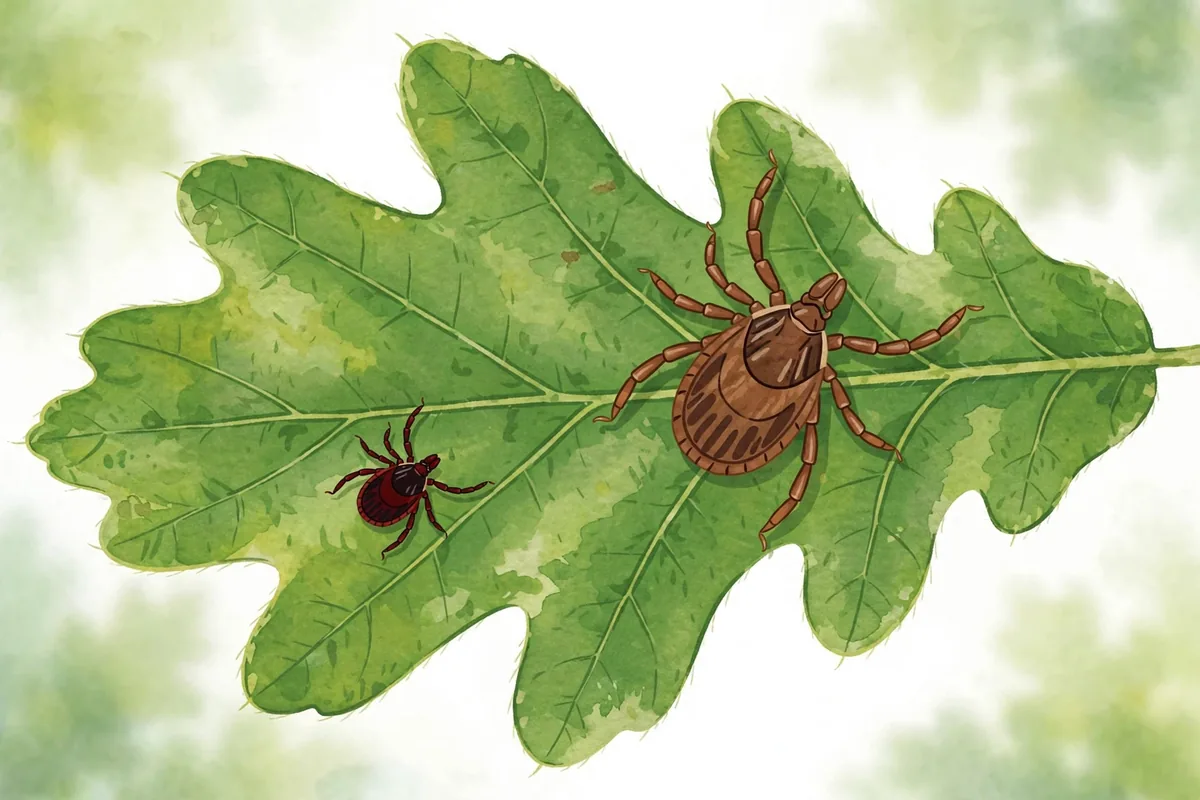
Even when the species is right, the odds are still in your favor. The percentage of ticks infected with Lyme bacteria ranges from none to over 50%, depending on the region and the tick’s life stage, according to the CDC. Nymphs — the poppy-seed-sized young ticks active in spring and early summer — pose the highest transmission risk because they are abundant and easy to miss.
Then there is the attachment clock. In most cases, a tick must be attached for more than 24 hours before the Lyme bacterium can be transmitted. Ticks removed within the first 24 hours carry minimal Lyme risk. Adult ticks are about the size of a sesame seed and are usually noticed and removed before they have fed long enough to transmit. That is the main reason prompt daily tick checks after hiking or gardening are the single most effective prevention habit — removal speed matters more than tick species knowledge. For a deeper look at per-disease timing, see how long a tick must be attached to transmit Lyme.
What to Do Right After Any Tick Bite #
Do not panic, and do not guess at the species — treat every attached tick the same way.
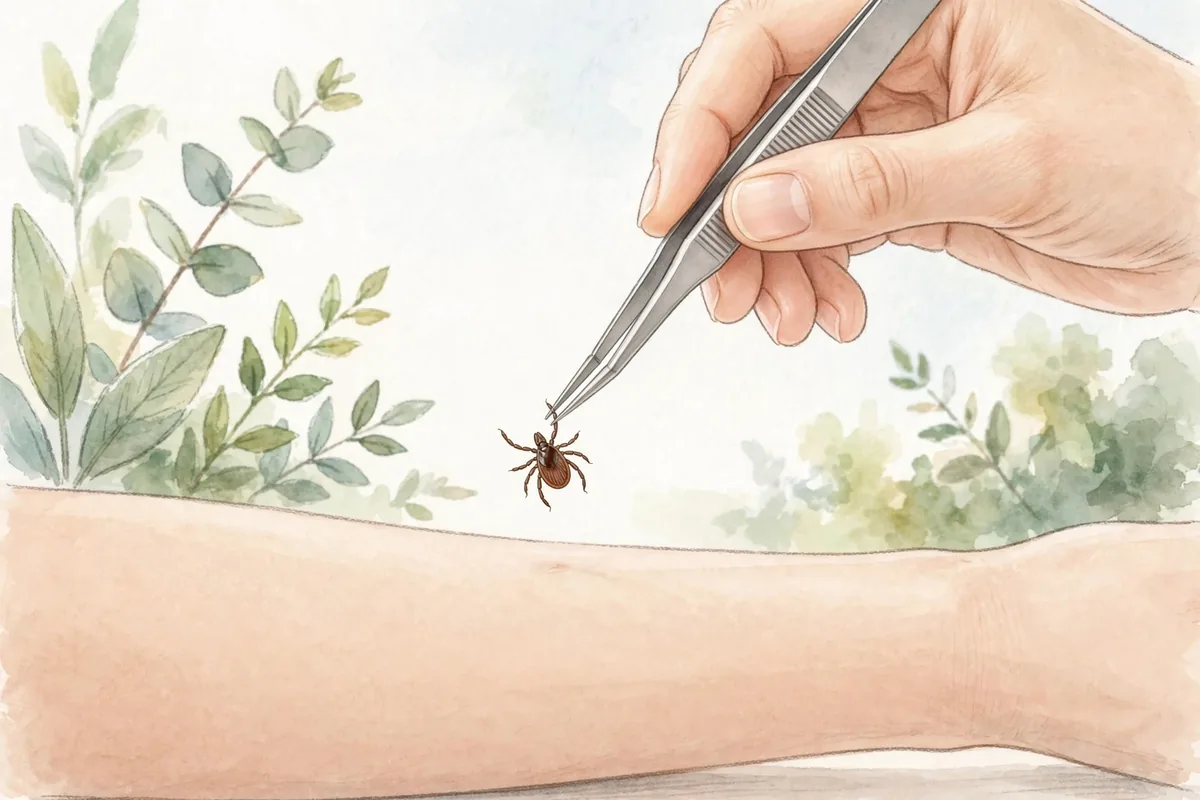
- Remove it promptly. Use fine-tipped tweezers, grasp the tick as close to the skin as possible, and pull straight up with steady pressure. Do not twist, and do not squeeze the body.
- Clean the bite area with soap and water or rubbing alcohol, and wash your hands.
- Dispose of the tick safely. Drown it in rubbing alcohol, seal it in a taped container, or flush it. Some people save it in alcohol in a labeled bag for later identification — this is optional but can help a clinician assess risk.
- Never crush a tick with your fingers. Never use nail polish, petroleum jelly, heat, or alcohol poured on an attached tick to coax it out — these methods can irritate the tick and may increase the chance of pathogen transfer.
- Record the date and location of the bite. Take a phone photo of the bite site so you can track changes over the next weeks.
When a Bite Becomes a Concern: Timeline #
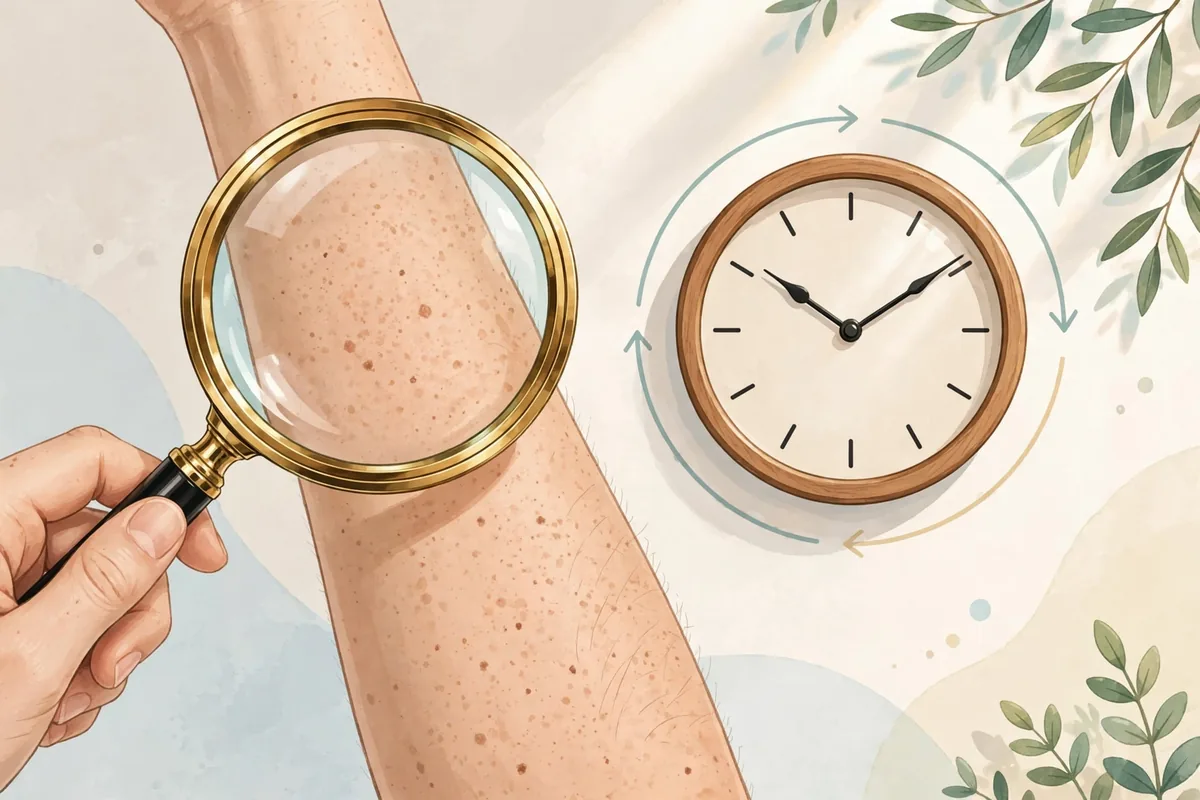
For the next 30 days, watch the bite area and your general health. The classic early sign of Lyme is an expanding circular rash (erythema migrans) — often called a bull’s-eye rash — that usually appears 3 to 30 days after the bite. Flu-like symptoms such as fever, chills, headache, fatigue, muscle and joint aches can appear in the same window. Early Lyme disease is generally treatable with antibiotics, which is why spotting symptoms early matters far more than worrying in advance.
A single preventive antibiotic dose is sometimes offered by a clinician after a high-risk bite — for example, a blacklegged tick attached for more than 36 hours in a high-incidence area — but that decision belongs to your doctor, not to guesswork at home.
Lyme Risk by Region and Season #
National averages hide the most useful fact about Lyme disease: risk is intensely local. In the United States, Lyme is concentrated in the Northeast, the mid-Atlantic, and the north-central states, where blacklegged ticks are common and a substantial share of them carry the Lyme bacterium. Along the Pacific Coast, the western blacklegged tick spreads Lyme too, though infection rates in ticks there are generally lower. In most of the Southeast, blacklegged ticks are almost never infected with Lyme bacteria, so a tick bite there is far less likely to mean Lyme — even though other tick-borne illnesses still matter in that region.
Season matters as much as geography. Nymph ticks, the poppy-seed-sized stage most likely to transmit Lyme, are most active in late spring and early summer, which is why many Lyme infections follow bites in May through July. Adult blacklegged ticks are active in spring and again in fall, and because they are larger — about sesame-seed size — they are usually noticed and removed sooner. That seasonal pattern is also why daily tick checks are most valuable from spring through early autumn: the habit that catches a tick within its first day on the skin does more to cut Lyme risk than any single product or precaution.
Local knowledge beats general advice here. A clinician, pharmacist, or public health office in your county will know whether Lyme is common where you live, which tick species are active this month, and whether a preventive antibiotic dose is ever offered after high-risk bites in your area. If you travel, apply the same logic in reverse: a bite picked up on a hiking trip in a high-incidence area deserves more attention than the same bite at home in a low-incidence area, even if the tick looked identical. Note where and when the bite happened, and share that detail with any clinician you see.
Tick Bites in Children and Pets: Extra Checks #
Children and pets need a more deliberate tick check than adults, because both are less likely to notice or report a bite. After outdoor play, check a child thoroughly: behind the ears, along the hairline, on the scalp, in the armpits, around the waistband, behind the knees, and between the toes. Nymph ticks are tiny and easy to miss in hair, so run fingers slowly over the scalp rather than relying on a quick visual glance. Teach children to tell an adult right away about any tick they find, and to avoid pulling at it themselves — a calm, prompt removal with fine-tipped tweezers is far better than a rushed one.
For dogs and cats, run a post-walk check after grass, brush, or woodland, paying attention to the ears, neck, armpits, groin, and between the toes. Ask your veterinarian about tick prevention products suited to your pet and area, and never use a human insect repellent on a pet. Dogs can develop Lyme disease, and the signs — lameness, fever, loss of appetite — can appear weeks after a bite, so mention any known tick bites at vet visits. Our guide to checking your dog for ticks walks through the post-walk routine step by step, and checking kids for ticks covers the child-specific checklist in more detail.
Testing, Diagnosis, and Why Doctors Rely on Symptoms #
Many people expect a blood test to settle the question immediately after a bite, but Lyme testing does not work that way. The standard blood tests detect antibodies the body produces in response to infection, and those antibodies take weeks to develop, so a test done in the first days after a bite is often negative even if infection has begun. That is why clinicians usually diagnose early Lyme from the exposure history and the characteristic expanding rash, rather than waiting for a test, and why they may repeat testing later if symptoms develop. A negative early test is reassuring but not final, and a positive test weeks later needs clinical interpretation, because antibodies can persist after a past infection.
Tick testing — sending the tick itself to a laboratory — has similar limits. A tick that tests positive for Lyme bacteria does not prove you were infected, and a tick that tests negative does not prove you were not, because transmission depends on attachment time and other factors. Most clinicians therefore base decisions on your symptoms, the rash, and the bite history, not on the tick’s lab result. What genuinely helps your clinician is a simple record: the date of the bite, where you were, how long the tick may have been attached, a photo of the bite site, and any symptoms with their dates. Keep that record for at least 30 days after the bite, and bring it to any appointment. For a day-by-day view of that window, see our first-24-hours checklist and the early Lyme signs checklist.
| When | What to watch | What to do |
|---|---|---|
| Days 1–3 | Bite-site redness, itching, local irritation | Clean the site; photograph it; note the date |
| Days 3–30 | Expanding circular rash, fever, headache, fatigue, joint aches | Contact a clinician promptly if any appear |
| Weeks 2–6 | Lingering fatigue, joint pain, or new symptoms | Mention the tick bite explicitly at any appointment |
Warning signs: when to seek care #
Call 911 immediately if you develop trouble breathing or swallowing, swelling of the face, lips, tongue, or throat, widespread hives, dizziness or fainting, or a racing heartbeat. If you carry epinephrine for a known allergy, use it first, then call 911.
For tick bites specifically, seek urgent care or call your doctor if you notice an expanding red rash around the bite (especially a circular rash with central clearing), fever, chills, headache, or joint pain in the weeks after a bite. Also seek care for spreading redness, red streaks extending from the bite, pus or increasing warmth at the bite site, or a bite that does not improve over several days. Mention the tick bite explicitly — many early Lyme symptoms are easy to mistake for a summer cold, and the bite history is what points a clinician toward testing.
Frequently asked questions #
If the tick was on me for only a few hours, am I safe from Lyme? #
Your risk is very low. The CDC says an infected tick must generally be attached for more than 24 hours to transmit Lyme bacteria, and prompt removal greatly reduces your chances. Still, watch the bite area and your health for 30 days — no timeline rule is absolute, and other tick-borne diseases transmit faster than Lyme.
Can I get Lyme disease from a dog tick? #
No. In the United States, only blacklegged ticks spread Lyme disease bacteria. Dog ticks can spread other illnesses such as Rocky Mountain spotted fever and tularemia, so a dog-tick bite still deserves cleaning and monitoring — just not Lyme-specific worry.
Do all blacklegged ticks carry Lyme? #
Not at all. Infection rates vary widely: the CDC reports anywhere from none to over 50% of blacklegged ticks infected, depending on region and life stage. Blacklegged ticks in most of the Southeast are almost never infected. This is why regional context matters — a clinician in your area will know the local risk far better than a national average.
Should I save the tick for testing? #
You can, but it is optional. Some people seal the tick in alcohol in a labeled bag in case a clinician wants it identified. Tick testing labs exist, but a positive result in the tick does not prove you were infected, and a negative result does not prove you were not. Doctors generally diagnose based on your symptoms, the rash, and exposure history rather than the tick itself.
More questions, answered #
Can Lyme disease spread from person to person? #
No. Lyme disease is not spread through coughing, sneezing, kissing, or other person-to-person contact, and it is not spread through breast milk or sexual contact. It is transmitted through the bite of an infected blacklegged tick. That is why prevention focuses on tick checks and prompt removal rather than on isolating anyone who has been bitten or diagnosed.
If I already had Lyme disease once, can I get it again? #
Yes. A past Lyme infection does not give lasting immunity, so reinfection from a new tick bite is possible. People who spend a lot of time outdoors in high-incidence areas sometimes develop Lyme more than once, which is why tick checks and repellents stay important even after a previous infection. Each new bite should be handled the same way: prompt removal, cleaning, and a 30-day watch for symptoms.
Does a tick need to be engorged to transmit Lyme? #
Engorgement is a clue, not a guarantee either way. The longer a tick feeds, the more engorged it becomes, and the higher the chance that Lyme bacteria — if present — have had time to transmit, which is why the 24-hour attachment guideline exists. But a tick that looks flat may still have been attached long enough, and an engorged tick may not have carried Lyme at all. Use attachment time as a rough guide, watch for symptoms for 30 days regardless, and let a clinician judge the risk rather than deciding from the tick’s appearance alone.
Related guides #
- Tick Bite: Your First-24-Hours Checklist
- Early Lyme Disease Signs: 3-to-30-Day Checklist
- Tick Bite Aftercare: What to Watch for Over the Next Few Weeks
- Should You Save a Tick After a Bite?
- Hiking Tick Safety Checklist
Medical and editorial note #
This guide is general information, not medical advice. Tick-borne illness risk depends on your region, the tick species, and how long it was attached — factors a healthcare professional can evaluate far better than a website. If you are worried about a bite or develop a rash or flu-like symptoms afterward, contact your doctor or an urgent-care clinic promptly.


