
A bark scorpion sting is famous for one thing: pain that feels completely out of proportion to the tiny creature that caused it. The bark scorpion sting first aid steps below work for the common Arizona bark scorpion (Centruroides sculpturatus), the most medically significant scorpion in the United States, found across Arizona and parts of Nevada, New Mexico, California, and Texas. Most healthy adults recover at home with basic care — but children can develop serious neurological symptoms, so knowing what to watch for matters as much as the first aid itself.
Do these first-aid steps right away #
Act calmly but quickly in the first minutes.
- Keep the person still and calm. Anxiety speeds up the heart and can make the pain feel worse. Sit the person down and keep the stung limb at rest.
- Clean the sting site. Wash gently with soap and water. Bark scorpions do not leave a stinger behind, so there is nothing to scrape out — do not dig at the skin.
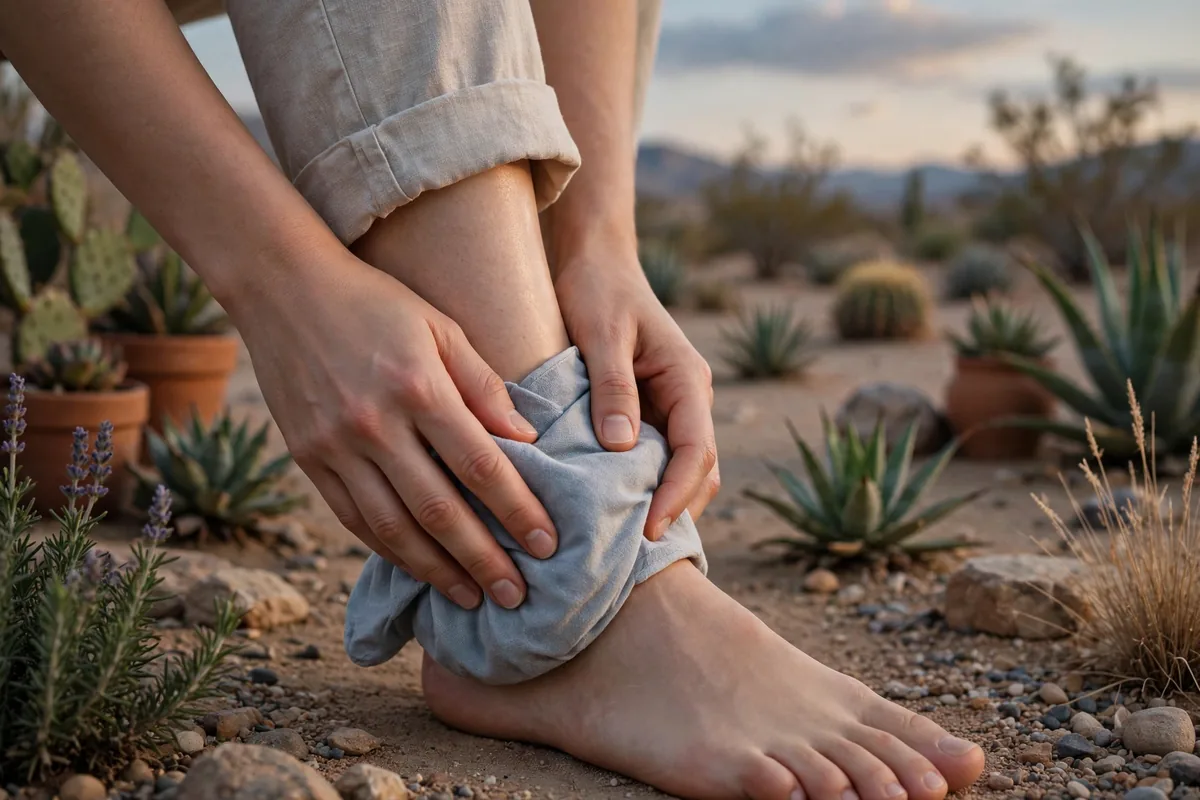
- Apply a cool compress. A cloth-wrapped ice pack or cold wet cloth on the site for about 10 minutes at a time can ease pain and local swelling. Remove it for 10 minutes between rounds.
- Remove rings, watches, or tight jewelry near the sting before any swelling starts, especially for finger and hand stings.
- Keep the limb at roughly heart level. Arizona poison center guidance recommends elevating the affected limb to the level of the heart rather than hanging it down.
- An over-the-counter pain reliever per label directions may help a healthy adult with mild pain. Do not give aspirin to children or teenagers because of the risk of Reye syndrome — when in doubt, ask your pharmacist.
- Mark the edge of any redness with a pen and note the time. If the redness expands, you have a clear record to show a clinician.
Most adults feel intense localized pain, numbness, or tingling at the site that peaks within the first couple of hours and then fades. For a complete general refresher alongside these steps, see the bite-sting first-aid checklist.
Watch children especially closely #
Children under about 10 are at the highest risk for systemic effects after a bark scorpion sting, because a child’s smaller body receives a relatively larger dose of venom. A sting in a small child who becomes inconsolable, unusually restless, or limp always deserves prompt medical evaluation.
Set a timer and observe for at least 2 to 4 hours. Watch for:
- Roving or jerky eye movements — the eyes darting uncontrollably side to side is a classic bark scorpion sign.
- Drooling or trouble swallowing, slurred speech, or a child who cannot stop crying.
- Involuntary jerking or twitching of muscles, restlessness, or thrashing movements.
- Difficulty breathing or unusual breathing patterns.
These neurological symptoms come from the venom’s effect on the nervous system, not from an allergic reaction — which is why they can look so alarming. If any of them appear, go to an emergency department or call 911; do not try to drive there yourself if you are the one who was stung and feel unwell. You can also call Poison Control at 1-800-222-1222 for guidance any time you are unsure.
What not to do after a scorpion sting #
Well-meaning folk remedies can make things worse. Avoid all of these:
- Do not cut the sting site or try to suck out venom. Neither removes venom and both add injury and infection risk.
- Do not apply a tourniquet. Restricting blood flow can damage tissue without slowing venom spread.
- Do not apply heat or electric shock to the sting. Heat has no proven benefit, and electrical “remedies” have documented cases of causing cardiac harm.
- Do not give the stung person alcohol or sedatives to calm them down, especially a child. Sedation masks symptoms that you need to monitor.
- Do not give antihistamines expecting them to “fix” the reaction. Bark scorpion venom is neurotoxic rather than histamine-driven, so antihistamines do not address the core problem (though an oral antihistamine per label directions is not harmful for itch, it should never substitute for monitoring).
- Do not wait to see if severe symptoms appear before calling for help when a child is involved — err on the side of an evaluation.
When the ER steps in: antivenom and hospital care #

If severe symptoms develop, emergency departments have real options. The FDA approved Anascorp, an antivenom for Centruroides (bark scorpion) stings, in 2011 — the first drug ever approved by the FDA for a scorpion sting. It is given by IV in a hospital setting, not at home, and clinical trials showed it resolves neurological symptoms within hours in most cases.
In the emergency department, care for significant envenomation typically includes:
- Monitoring of breathing, heart rate, and oxygen levels, since respiratory trouble is the main danger.
- Supportive medications for agitation, jerking movements, and pain, along with IV fluids.
- Anascorp antivenom for moderate-to-severe systemic symptoms, which larger Southwest hospitals commonly stock; smaller facilities may transfer patients who need it.
- Observation, often for a few hours, to confirm symptoms are resolving before discharge.
Most stings never reach this stage. Arizona’s poison centers report thousands of stings each year, but only a small fraction produce severe symptoms — nearly all in children or when the sting goes unrecognized at first. The full list of red flags to act on is in the bite-sting warning-signs quick reference.
How to tell a bark scorpion from other scorpions #
The bark scorpion is the smallest scorpion in the southwestern United States — adults are usually only 2 to 3 inches long — and that small size is part of what makes it dangerous. People mistake it for a harmless spider or a juvenile, or they do not notice it at all until it stings. Its body is a pale tan or yellowish-brown with no bold markings, its tail segments are long and slender compared with its body, and its pincers are thin and delicate rather than thick and crab-like. A scorpion with heavy, bulky pincers is usually less dangerous, because it relies on crushing its prey; the bark scorpion’s thin pincers mean it relies on its venom instead.
Behavior is the other giveaway. Bark scorpions climb — walls, trees, stucco, fences, and even ceilings — better than any other North American scorpion, and they are often found indoors on walls or in upper rooms. They are most active at night, especially in warm months, and they hunt in the open rather than hiding under rocks all day. If you find a small, pale scorpion walking up a wall at night in Arizona or neighboring desert areas, treat it as a bark scorpion until proven otherwise. Other scorpions in the region, such as the striped bark scorpion’s larger cousins, look similar at a glance but are much less venomous; the safe move is always to assume the worst and keep your distance. If you are unsure whether the scorpion you saw is dangerous, do not try to catch it for a closer look — photograph it from a safe distance instead. And if a small child was stung, the scorpion sting in a toddler guide covers the extra steps that apply to very young children.
Pain timeline: what the first 24 hours usually look like #
A bark scorpion sting hurts immediately, but the way it develops over the next day tells you more than the first five minutes do. The table below shows the usual pattern — use it to judge whether your sting is following the normal track or going off it.
| When | What is normal | What needs care |
|---|---|---|
| First minutes | Sharp, burning pain at the sting site, sometimes with numbness or tingling spreading nearby | Pain spreading rapidly up the limb, muscle twitching, or trouble swallowing |
| First 1–2 hours | Pain peaks, then settles into a strong ache; the area may feel numb to touch | Uncontrolled jerking movements, roving eye movements, drooling, or slurred speech |
| Hours 2–8 | Pain slowly easing, numbness fading, able to move the limb normally | Symptoms getting worse instead of better, breathing difficulty, or a child becoming drowsy |
| Hours 8–24 | Residual soreness and tenderness, pain mostly gone | Any new symptom appearing this late, or pain that suddenly worsens |
Two features of a bark scorpion sting confuse people. First, there is often very little to see — no big welt, no dramatic swelling — even while the pain is severe. Do not let the mild appearance reassure you if the symptoms are escalating; the venom affects nerves, not just skin. Second, the numbness and tingling can linger for days after the pain fades, and that is usually normal. What is not normal is a sting that keeps worsening after the first two hours, or any of the whole-body symptoms in the table above. A black widow bite can produce some overlapping symptoms, and the guide to how long a black widow bite lasts helps you compare the two timelines if you are not sure which spider or scorpion was involved. Dogs react differently again — if a pet was stung, the scorpion sting in dogs guide explains the signs to watch for in animals.
Scorpion-proofing your home after a sting #
One sting indoors usually means there are more scorpions nearby, and a few changes make the house much less inviting. Start with the shoes: scorpions love the dark, warm inside of a shoe left on the floor, so shake out every pair before putting it on and store shoes off the floor or in sealed boxes. The scorpion in shoes prevention guide covers this habit in detail, because a surprising number of stings happen exactly this way.
Next, seal the entry points. Scorpions can squeeze through gaps as thin as a credit card, so check door sweeps, window screens, plumbing penetrations, and the gap under the garage door. Weather-stripping and caulk are cheap and effective. Inside, reduce clutter on the floor — piles of clothes, boxes, and laundry are scorpion shelter — and keep beds a few inches from the wall with bedding that does not touch the floor, since bark scorpions climb bed legs. Outside, clear rock piles, wood piles, and dense ground cover near the house, and trim tree branches that touch the roof or walls, because those are scorpion highways into the home.
Night checks are the most direct tool. A cheap UV blacklight makes scorpions glow a bright blue-green, so a ten-minute walk around the house and yard after dark, once a week in scorpion season, shows you whether your proofing is working. Keep pets and children inside during the check, wear closed shoes, and do not reach into dark corners by hand. If you keep finding scorpions inside despite the proofing, call a pest professional — and remember that small scorpions are not necessarily safer. The guide on whether baby scorpions are more dangerous separates the myth from the fact before you decide how worried to be.
Warning signs: when to seek care #
Call 911 immediately if you notice any of these after a sting: trouble breathing or swallowing; swelling of the face, lips, tongue, or throat; widespread hives; dizziness, fainting, or a racing heartbeat. If you carry an epinephrine auto-injector and suspect anaphylaxis, use it first, then call 911.
Call Poison Control (1-800-222-1222) or go to urgent care or the emergency department if: the sting happened to a young child; you see roving eye movements, drooling, slurred speech, or muscle jerking; pain is severe and not easing after a few hours; or redness and swelling keep spreading well beyond the sting site. See a doctor promptly for any sting near the eye, or if the wound shows signs of infection such as increasing pain after day two, warmth, pus, or fever.
Frequently asked questions #

How long does the pain from a bark scorpion sting last? #
For most adults, the worst pain peaks within the first one to two hours and fades substantially within 24 hours, though numbness or tingling at the site can linger for a day or two. Pain that is still intense and unrelenting after several hours, or that keeps spreading, deserves medical evaluation rather than more waiting.
Can you die from a bark scorpion sting? #
Deaths are extremely rare in the United States with modern care, but bark scorpions are taken seriously because they are the only US scorpion whose venom regularly causes systemic neurological symptoms. The risk is concentrated in small children and in cases where severe symptoms go unrecognized. Fast recognition and hospital care make severe outcomes unlikely.
Should I try to catch the scorpion that stung me? #
Only if you can do it safely — for example, trapping it under a glass. Never handle it with your hands. A photo is useful for identification but is not required; doctors in the Southwest recognize bark scorpion symptoms, and treatment decisions are based on symptoms, not on the specimen.
Does the antivenom work for other scorpion stings? #
Anascorp is specifically designed for Centruroides (bark scorpion) venom. Most other US scorpions cause only local pain and do not need antivenom at all — basic first aid is sufficient. When the scorpion species is unknown and symptoms are severe, the emergency team will treat based on the clinical picture.
Do bark scorpions climb walls and get into beds? #
Yes — bark scorpions are the best climbers among North American scorpions, and they can scale walls, trees, and bed legs. Keep beds away from walls, do not let bedding touch the floor, and check the bed and the wall behind it at night during scorpion season. A bed skirt that pools on the floor is an invitation.
Can a bark scorpion sting through clothing? #
Usually not through normal clothing, but a scorpion trapped against the skin inside a sleeve or a shoe can sting through thin fabric. The real risk is a scorpion inside clothing or shoes, not one stinging from outside. Shake out clothes and shoes that have been on the floor before putting them on, and do not reach into a dark closet shelf by hand.
How do I find scorpions in my house at night? #
Use a UV blacklight flashlight — scorpions glow bright blue-green under ultraviolet light. Walk slowly around baseboards, door frames, closets, and the garage after dark, wearing closed shoes. Do this once a week in warm months; if you keep finding them, it is time to call a pest professional rather than keep hunting.
Are bark scorpions active in winter? #
They slow down a lot in cold weather and may disappear for weeks, but they do not fully hibernate indoors. A warm house in winter can keep scorpions active year-round, and they will still sting if disturbed. Stay in the habit of shaking out shoes and checking bedding even in the cooler months.
Medical and editorial note #
This guide provides general first-aid information about bark scorpion stings and is not medical advice. Scorpion venom affects everyone differently, and children are especially vulnerable to serious effects. When in doubt — particularly with children — call Poison Control at 1-800-222-1222 or seek emergency care promptly. See a healthcare professional for any sting that worries you.


