
Are baby scorpions more dangerous than adults? No — the short answer is that a baby scorpion’s venom is the same venom as the adult’s, just in a smaller package. The widely repeated claim that babies are deadlier because they “can’t control their venom” is a myth. What actually determines danger is the species, the amount of venom injected, and who gets stung — not the scorpion’s age.
The myth: where the confusion comes from #
The story goes like this: adult scorpions can meter their venom and sometimes deliver harmless “dry” stings, while babies supposedly dump everything they have because they cannot control the dose. It sounds plausible, and it gets repeated on countless pest-control blogs and social media posts. It is even the same story people tell about baby rattlesnakes.
But entomologists who actually study scorpions do not support it. According to scorpion researchers, juveniles of a venomous species carry the exact same venom as adults — same potency, same composition. The real differences run the opposite direction from the myth:
- Smaller venom glands mean a baby can only inject a smaller total amount of venom than an adult of the same species.
- Smaller stingers may not even penetrate human skin effectively, especially in very young scorplings.
- Less hunting experience means juveniles are often less effective at delivering a full defensive sting.
So the biological reality is that a baby scorpion of a dangerous species is still something to avoid — but it is not more dangerous than the adult. It is typically less capable of harm, not more.
The science: what actually determines danger #
If age is not the deciding factor, what is? Three things:
1. Species. This is everything. In the United States, the Arizona bark scorpion (Centruroides sculpturatus) is the only species considered medically dangerous to humans — its venom is a potent neurotoxin. Most other US scorpions (striped bark scorpions, desert hairy scorpions, and others) deliver stings comparable to a bee or wasp: painful but not dangerous to healthy adults. A baby bark scorpion and an adult bark scorpion both deserve respect; a baby desert hairy scorpion is about as concerning as the adult — which is to say, not very.
2. Venom dose. Larger scorpions have larger venom glands and can deliver more venom. Within the same species, an adult can inject more than a juvenile. Dose matters enormously for systemic effects.
3. The victim. Small children, older adults, and people with certain health conditions are more vulnerable to scorpion venom because of lower body mass and reduced physiological reserves. A bark scorpion sting that is merely painful for an adult can cause serious systemic symptoms — uncontrolled eye movements, muscle twitching, difficulty swallowing — in a small child. This is true regardless of the scorpion’s age.
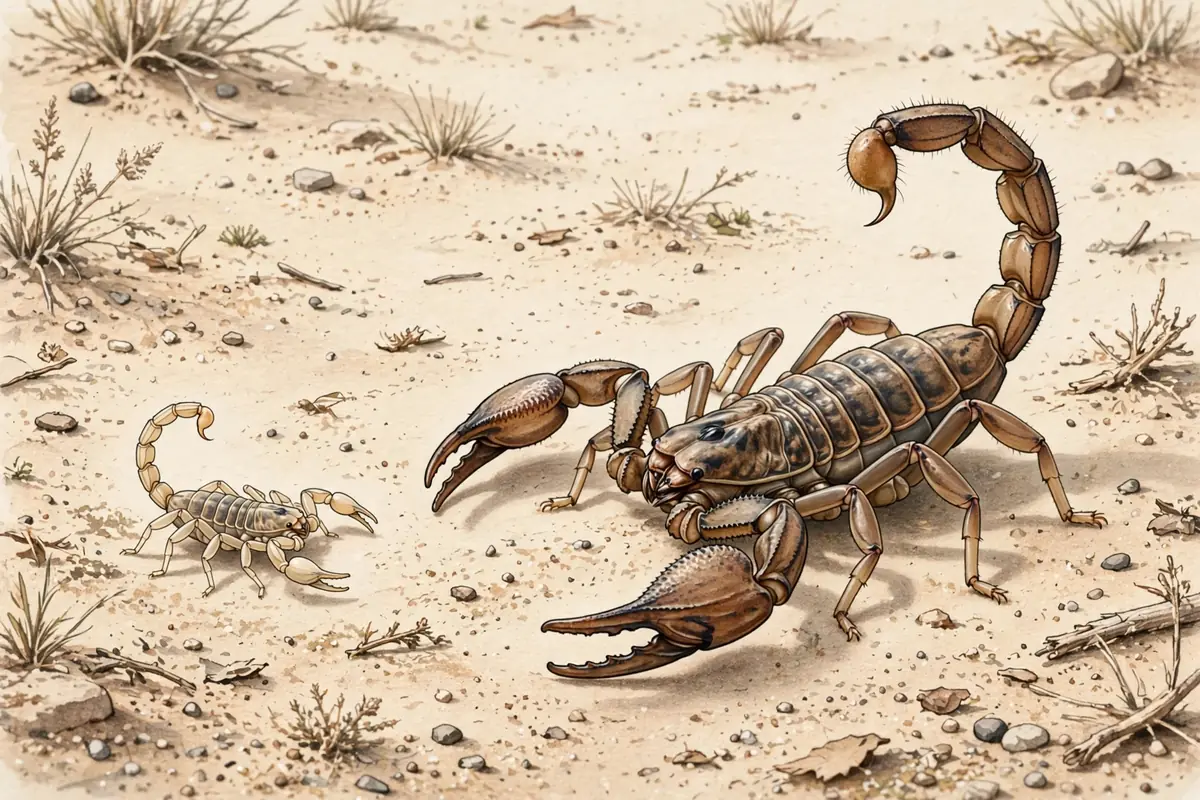
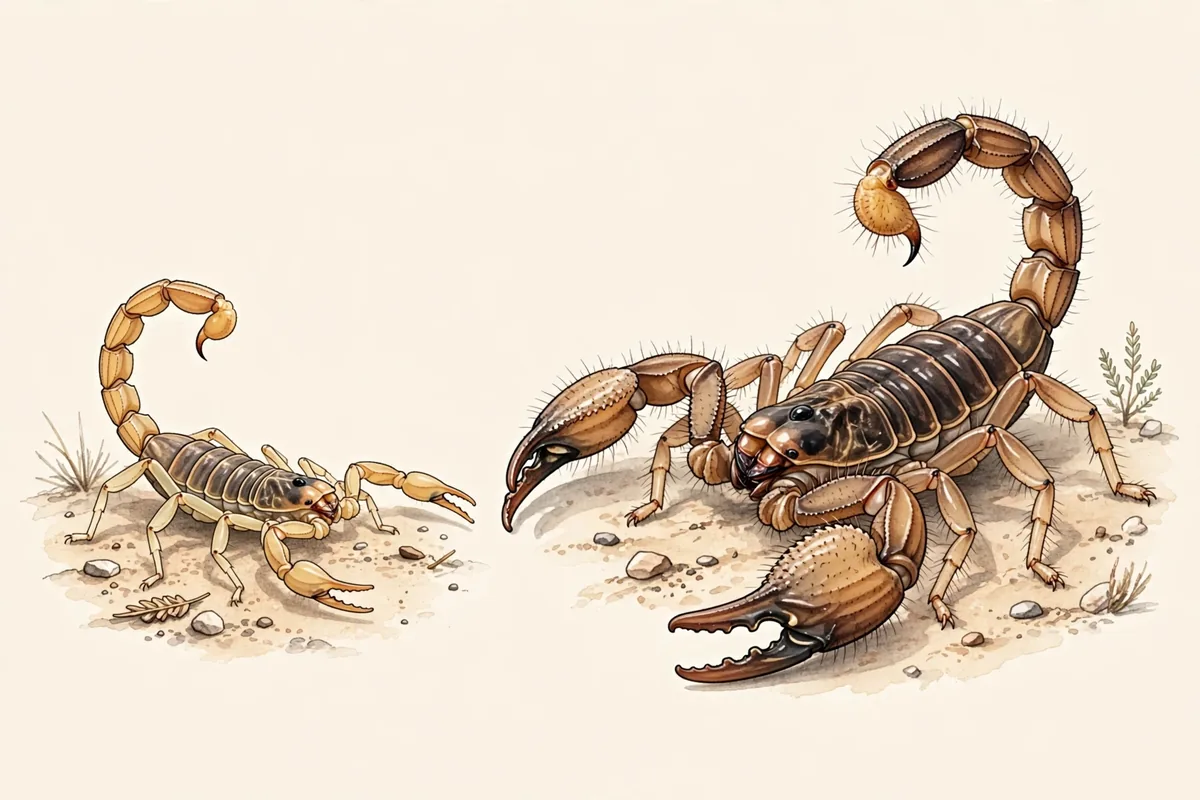
A useful field clue: scorpions with small pincers and thick, robust tails tend to rely more on venom (the bark scorpion fits this pattern), while those with large claws and slender tails usually have weaker venom. It is not a perfect rule, but it is a genuinely informative one.
The baby rattlesnake parallel #
You may have heard the identical myth about baby rattlesnakes — that they are more dangerous because they cannot control their venom. Herpetologists debunk that one too: baby rattlesnakes can control venom delivery, and while their venom can differ slightly in composition, they inject far less of it. The scorpion version of the myth follows the same pattern — a scary-sounding story that falls apart under examination. Treat both myths the same way: with respect for the animal, but without the misinformation.
What to do if you find baby scorpions #
Finding one baby scorpion usually means more are nearby — and possibly the mother, since newborn scorplings ride on their mother’s back for the first weeks of life. Act on that assumption:
- Do not handle them. Their small size makes them easy to underestimate, and a juvenile bark scorpion sting can still cause significant pain and, in vulnerable people, serious symptoms.
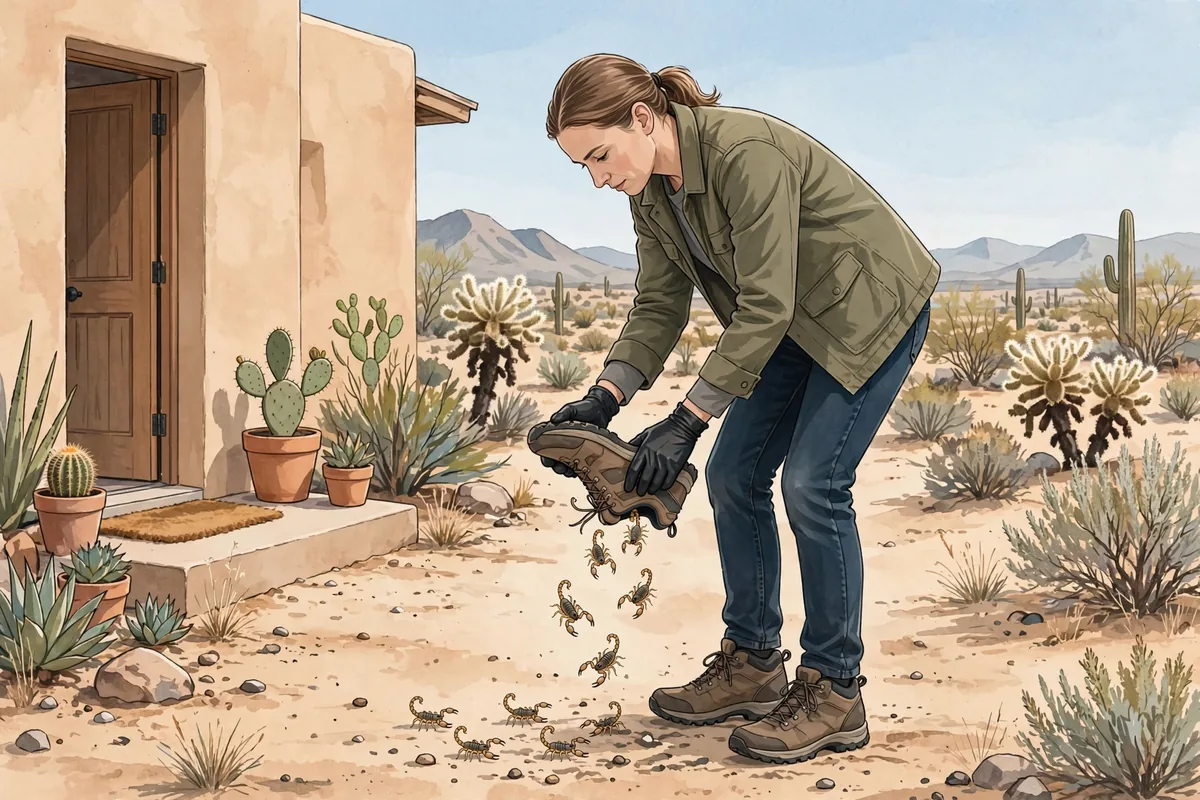
- Check shoes, bedding, and clothing. Shake out shoes before wearing them, and keep bedding from touching the floor in scorpion-prone areas (Arizona, Texas, southern California, and similar regions).
- Seal entry points. Weatherstrip doors, seal gaps around pipes and utility lines, and repair window screens. Scorpions enter through gaps as small as 1/16 inch.
- Reduce habitat. Clear wood piles, rocks, and debris near the foundation. Trim vegetation away from the house. Scorpions hunt at night — consider a UV blacklight inspection after dark, since scorpions fluoresce (note: very young scorplings may not glow until after their first molt).
- Call a professional if you are finding them repeatedly indoors, especially in bark scorpion territory.
If someone is stung: clean the site, apply a cold compress, and watch for symptoms. Most non-bark-scorpion stings need only basic first aid — see our guide on scorpion sting treatment for the full protocol.
When a scorpion sting IS an emergency #
Species and victim matter more than the scorpion’s size or age. For the complete emergency picture, see our bite and sting warning signs guide.
Warning signs: when to seek care #
Call 911 immediately for: trouble breathing or swallowing; swelling of the face, lips, tongue, or throat; widespread hives; dizziness, faintness, or collapse; a racing heartbeat; muscle twitching or uncontrolled movements; difficulty swallowing; or excessive drooling — especially in a child stung by a bark scorpion. Use prescribed epinephrine if available for allergic signs, then call 911.
Seek urgent care or your doctor the same day for: a sting from an unidentified scorpion with spreading numbness or tingling; severe pain that does not ease; any sting in a small child, older adult, or pregnant person; or signs of infection (increasing redness, warmth, pus, fever) in the days after.
Frequently asked questions #
Can a baby scorpion sting even kill an adult? #
With US species, essentially no. The Arizona bark scorpion is the only US scorpion considered medically significant, and while its sting can cause severe symptoms — particularly in children — fatalities in healthy adults are extraordinarily rare with modern medical care. Most US scorpion stings are painful but not dangerous.
Why do people think babies are more dangerous? #
The “can’t control their venom” story is intuitive and gets repeated without verification, including by some pest-control marketing. It also borrows credibility from the parallel (and equally debunked) baby rattlesnake myth. Repetition is not evidence — the entomological research says venom potency is the same and delivered dose is smaller.
How can I tell if a scorpion is a baby or just a small species? #
True babies (scorplings) are often pale, creamy, or translucent with soft exoskeletons, and very young ones ride on the mother’s back. Small adults of small species look like fully colored, hardened miniature scorpions. Either way, the safety rules are the same: don’t handle, identify the species if you can do so safely, and call a professional for indoor infestations.
Should I be more worried about a baby bark scorpion than an adult of a harmless species? #
No — species beats age every time. An adult desert hairy scorpion (large claws, weak venom) is far less concerning than even a juvenile Arizona bark scorpion. If you live in bark scorpion territory, learn to recognize that species specifically rather than worrying about scorpion ages.
Medical and editorial note #
This guide is general information for educational purposes and is not medical advice. Scorpion stings in small children — especially from bark scorpions — can become serious quickly; when in doubt, seek emergency care rather than waiting to see how symptoms develop.


