
You take a swim, and within a day or two your skin erupts in itchy red bumps. Swimmer’s Itch vs Hot Tub Folliculitis: Rash After Swimming is the comparison you need, because these two waterborne rashes look alike but have different causes, different timing, and different treatment. The short answer: swimmer’s itch is an allergic reaction to freshwater parasites and hits exposed skin within hours, while hot tub folliculitis is a bacterial infection of hair follicles from warm water and shows up as pimple-like bumps under your swimsuit one to four days later.
Swimmer’s itch vs hot tub folliculitis: the head-to-head comparison #
Both conditions start the same way in your memory: a swim, then an itchy rash. That is where the similarity ends. Swimmer’s itch, known medically as cercarial dermatitis, is an allergic reaction to microscopic parasites called cercariae that live in freshwater lakes and ponds. These parasites are released by infected freshwater snails, and they normally look for waterfowl to infect. When they mistakenly burrow into human skin, your immune system reacts and the rash appears. The parasites die in human skin, so the condition is not contagious and cannot spread from person to person.
Hot tub folliculitis, by contrast, is a genuine skin infection. It is caused by the bacterium Pseudomonas aeruginosa, which thrives in warm, moist environments such as poorly maintained hot tubs, whirlpools, heated pools, and water slides. The bacteria invade hair follicles and trigger an infection that produces itchy, pimple-like bumps. The key driver is water chemistry: Pseudomonas grows when sanitizer levels such as chlorine or bromine are too low, which happens most often in hot tubs because heat breaks down chlorine faster and heavy bather loads consume sanitizer quickly.
The difference matters because treatment paths diverge. Swimmer’s itch needs symptom relief while your body clears the allergic reaction on its own, usually within one to two weeks according to the CDC. Hot tub folliculitis usually resolves within about a week on its own, but severe or worsening cases may need prescription treatment from a clinician. Understanding which rash you have keeps you from wasting time and money on the wrong remedies.
| Feature | Swimmer’s Itch (Cercarial Dermatitis) | Hot Tub Folliculitis (Pseudomonas Folliculitis) | |—|—|—| | Cause | Allergic reaction to freshwater parasites (cercariae) released by infected snails | Bacterial infection of hair follicles by Pseudomonas aeruginosa | | Typical water | Freshwater lakes, ponds, marshes; also brackish or marine water | Warm water: hot tubs, whirlpools, heated pools, water slides | | Onset after exposure | Within hours, often the same day | 1 to 4 days after exposure | | Rash appearance | Small red bumps or pimples; sometimes tiny blisters; no whiteheads | Itchy red bumps that often develop into whiteheads or pus-filled bumps centered on hair follicles | | Distribution | Exposed skin; areas under a swimsuit usually spared | Often concentrated where the swimsuit trapped contaminated water against skin; can also appear on exposed areas | | Contagious? | No | No — it comes from the water, not the person | | Duration | Itching may last up to a week or more; signs usually resolve in 1–2 weeks | Usually resolves in about 5–10 days without treatment | | First-line care | Antihistamines and topical corticosteroids for itch; cool compresses; calamine | Usually clears on its own; keep area clean; clinician may prescribe antibiotics for severe cases | | Prevention | Towel dry or shower immediately after swimming; avoid shallow or marshy areas; don’t feed waterfowl | Well-maintained water chemistry; shower after soaking; remove wet swimsuit promptly |
Which one is more likely for you? #
Ask yourself two questions: where did you swim, and how fast did the rash appear? If you swam in a lake or pond and felt tingling, burning, or itching within hours, swimmer’s itch is the likelier culprit. If you soaked in a hot tub and woke up a day or two later with pimple-like bumps clustered under your swimsuit area, hot tub folliculitis fits better. When both possibilities seem plausible, the distribution pattern — exposed skin versus swimsuit-covered skin — is the most reliable clue you can observe at home.
Timing and triggers: when each rash shows up #
Timing is the single most useful tool for telling these rashes apart, and it is something you can reconstruct without any special equipment.
Swimmer’s itch onset #
The itching from swimmer’s itch usually begins within hours of leaving the water. Many people notice tingling, burning, or itching while the skin is still wet or shortly after drying off. Small reddish pimples or tiny blisters then appear over the following hours. The itching can persist for up to a week or longer, though the signs typically resolve within one to two weeks. Repeated exposure tends to make reactions stronger, because your immune system has already been sensitized — someone swimming in the same lake for the second time in a season often gets a more intense reaction than on the first visit.
Hot tub folliculitis onset #
Hot tub folliculitis has a slower fuse. The rash generally appears one to four days after exposure to contaminated water. That delay is one reason people don’t always connect the rash to the hot tub — by the time the bumps appear, the relaxing soak is a distant memory. Symptoms can include mild fever, headache, sore throat, fatigue, or swollen lymph nodes in addition to the rash, which is unusual for swimmer’s itch and can be a distinguishing clue.
A simple timeline to check #
| Time after swim | Swimmer’s itch | Hot tub folliculitis | |—|—|—| | During or within hours | Tingling, burning, itching begins; bumps start appearing | Nothing yet | | Next morning (12–24 hours) | Rash established, itching peaks or continues | First bumps may begin appearing | | 2–4 days | Itching continues, gradually easing | Rash fully developed; whiteheads or pustules common | | 5–10 days | Still improving | Usually resolving without treatment | | 1–2 weeks | Usually resolved | Fully resolved |
Rash appearance and distribution: how to tell them apart #
What swimmer’s itch looks like #
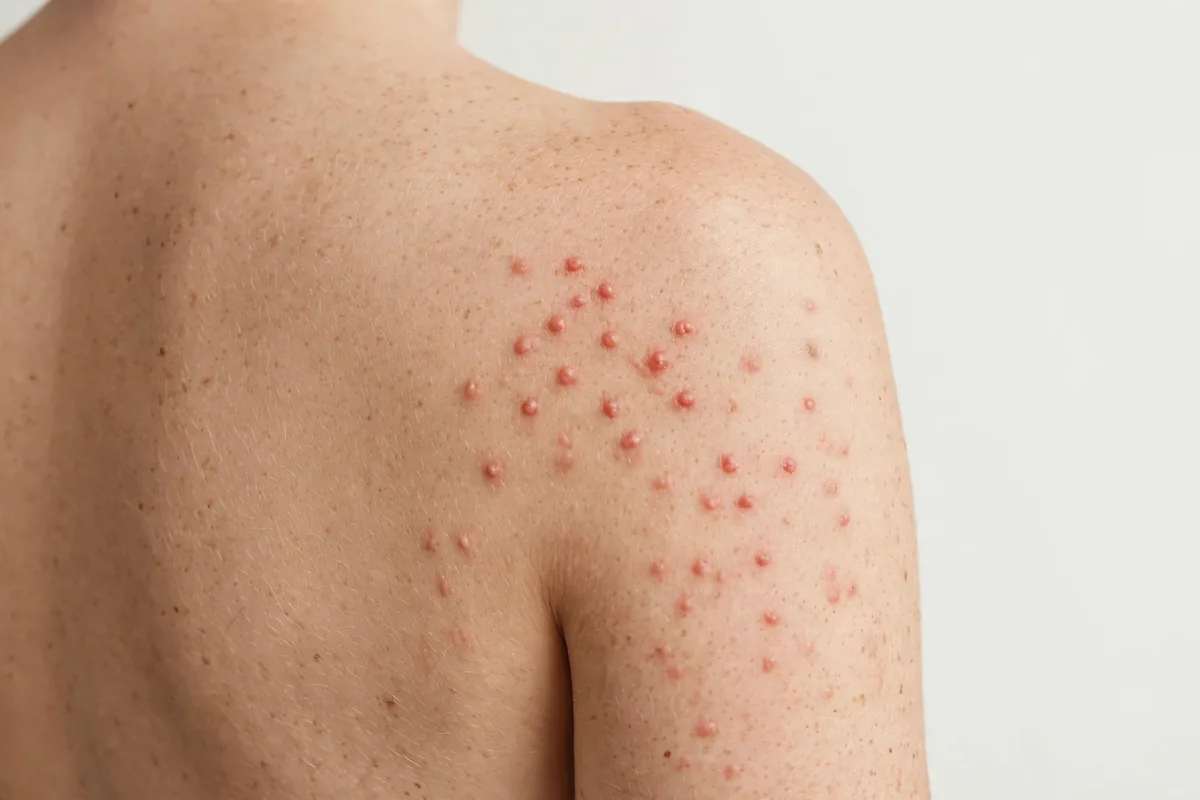
Swimmer’s itch presents as small, reddish bumps or pimples, and in some cases small blisters. The bumps are typically scattered across skin that was exposed to the water — arms, legs, torso areas not covered by swimwear. A useful hallmark: areas covered by a swimsuit are usually spared, because the parasites burrow into whatever skin is directly exposed. The itching can be intense, and scratching can lead to a secondary bacterial infection, which is when the picture can get complicated — infected scratched bumps can develop pus and look similar to folliculitis, so resisting the urge to scratch matters for diagnosis as well as comfort.
What hot tub folliculitis looks like #
Hot tub folliculitis looks like an outbreak of acne-like pimples: pink-to-red bumps, often 2 to 10 millimeters in size, that frequently develop into whiteheads or pus-filled bumps. The defining visual feature is that the bumps are centered on hair follicles, because the infection is a folliculitis — an infection of the follicle itself. Distribution tends to be the mirror image of swimmer’s itch: the rash is often worst where the swimsuit held contaminated water against the skin, since the damp, warm microenvironment under the suit helps the bacteria thrive. Breast tenderness has been reported in some people due to infection of the nipple glands, and the rash can also appear on exposed skin.
A note on lookalikes #
Several other conditions can masquerade as either rash. Chlorine sensitivity or contact dermatitis produces itchy, inflamed, scaly skin without discrete bumps. Poison ivy can produce linear blistering if you brushed against plants walking to the lake — a comparison guide on poison ivy versus bug bites can help sort out plant-related rashes. Heat rash shows up as small prickly bumps in friction areas rather than after swimming. If the bumps are weeping, crusting, or developing honey-colored crusts, that pattern points toward a secondary infection rather than the original swim rash — and that is the point where normal healing versus infection becomes a useful reference.
First aid and treatment for both rashes #
Neither condition usually requires a doctor visit, but knowing what actually helps — and what doesn’t — saves you days of unnecessary itching.
Immediate steps after you notice the rash #
Stop scratching. This is the single hardest and most important step. Scratching breaks the skin barrier and opens the door to secondary bacterial infection, which is the most common complication of both conditions. Keep your fingernails trimmed short, and if you catch yourself scratching in your sleep, consider light cotton gloves at night.
Keep the area clean. Wash gently with mild soap and water, pat dry, and keep the rash area clean and dry between treatments. Good hygiene is the foundation of recovery for both conditions and reduces the risk of secondary infection.
Symptom relief options #
For itching: Over-the-counter antihistamines taken by mouth, used according to the label directions, can reduce itching from the allergic reaction of swimmer’s itch. For hot tub folliculitis, antihistamines may provide some itch relief as well, though the underlying issue is bacterial rather than allergic. A cool compress held on the rash for 10–15 minutes at a time can calm itching quickly for either condition.
For inflammation and irritation: Topical corticosteroid creams can reduce itching and inflammation, particularly for swimmer’s itch. Calamine lotion is a time-tested soothing option. Oatmeal baths, Epsom salt baths, or a baking soda paste can also provide relief for widespread itching. For hot tub folliculitis specifically, topical antiseptics may help keep the follicles clean, but avoid aggressive scrubbing that further irritates the skin.
For hot tub folliculitis specifically: Most cases resolve on their own within about a week. See a clinician if the rash is severe, spreading, or not improving after several days — oral antibiotics may be prescribed for serious cases. If there are signs of a deeper infection such as increasing pain, swelling, or fever, get medical care promptly.
For swimmer’s itch specifically: The CDC notes that treatment has not been evaluated in clinical trials, but systemic antihistamines or topical antihistamines or corticosteroids are commonly used to reduce symptoms. Topical antiseptics or antibiotics may be needed if a secondary infection develops from scratching. The allergic reaction is self-limiting, so the goal is comfort while your body finishes the job.
What to avoid #
- Do not prescribe yourself prescription antibiotics or steroids. Over-the-counter options and clinician guidance are the right path.
- Do not use harsh antiseptics, alcohol, or hydrogen peroxide repeatedly. They irritate healing skin and delay recovery.
- Do not cover the rash with tight occlusive bandages. Let the skin breathe unless a clinician advises otherwise.
- Do not use tanning or heat on the rash. Sun and heat intensify itching in most cases.
- Do not pick or squeeze whiteheads. In hot tub folliculitis, squeezing can push infection deeper and cause scarring.
- Do not soak in a hot tub again while the rash is active. Re-exposure to the same water restarts the problem.
Prevention checklist for your next swim #
Prevention is where these two conditions differ most, because their causes are completely different. Match your prevention strategy to the water you’re entering.
Preventing swimmer’s itch in lakes and ponds #
- Choose your swimming spot carefully. Avoid swimming in areas known to have had swimmer’s itch outbreaks, and stay away from marshy areas where snails are commonly found. Check with local health departments or park services — many lake regions track and report cases.
- Swim in deeper water. The parasites are more commonly found in shallow, warm water near shore, so swimming out past the shallows reduces exposure.
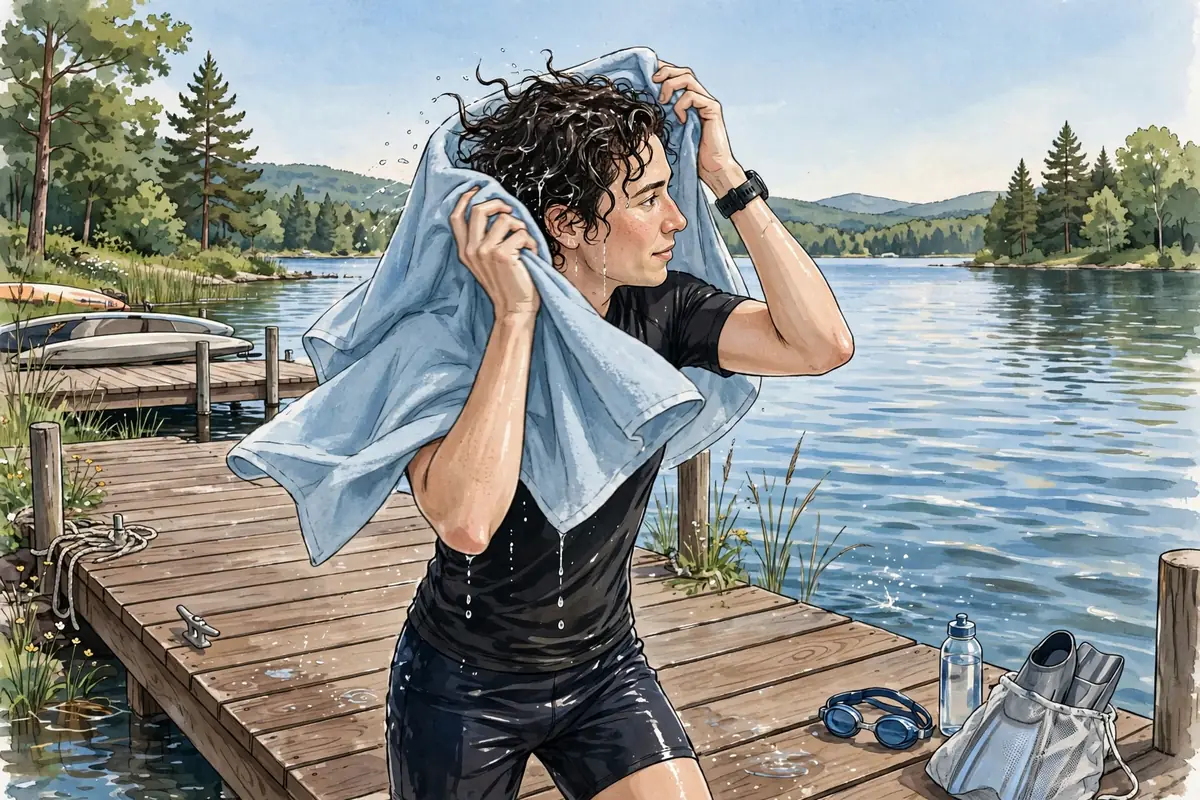
- Towel dry or shower immediately after leaving the water. This is the single most effective prevention step. Rubbing with a towel and rinsing with soap removes parasites from the skin before they can burrow in. Do not let lake water air-dry on your skin.
- Do not feed waterfowl at swimming beaches. Ducks and geese are part of the parasite’s life cycle; attracting them to swimming areas increases the concentration of cercariae in the water.
- Consider protective clothing. Wetsuits or rash guards reduce the exposed skin area available to the parasites.
- Avoid long swims in suspect water. Longer exposure means more parasites contacting your skin.
Preventing hot tub folliculitis #
- Ask about maintenance. If you own a hot tub, keep sanitizer levels in the recommended range and clean it regularly — Pseudomonas thrives when chlorine or bromine levels drop. If you use a hotel, resort, or gym hot tub, look for clear water with no strong chemical or musty odor and no slimy surfaces. Cloudy or foul-smelling water is a red flag.
- Shower with soap after soaking. Rinsing right after the hot tub washes bacteria off before they settle into follicles.
- Remove the swimsuit promptly. The damp fabric against your skin is exactly the environment Pseudomonas loves. Change into dry clothes quickly after soaking.
- Limit soak time. Longer exposure gives bacteria more opportunity to colonize follicles, especially if water chemistry is borderline.
- Shave after, not before. Shaving creates micro-cuts that give bacteria easy entry points. If you shave before a hot tub session, folliculitis risk rises.
| Prevention moment | Swimmer’s itch (lake/pond) | Hot tub folliculitis | |—|—|—| | Before swimming | Pick deep, clean water; avoid marshy shore areas; check local outbreak reports | Verify water is clear and well-maintained; avoid cloudy or smelly tubs | | During | Swim out past the shallows; limit time in suspect water | Limit soak time; keep water chemistry in range | | Immediately after | Towel dry briskly and shower with soap — the most effective step | Shower with soap; remove swimsuit immediately |
Warning signs: when to seek care #
Call 911 immediately if: you develop trouble breathing, throat tightness, or swelling of the lips, tongue, or face after swimming; you feel faint, dizzy, or confused; or you notice a rapidly spreading rash with hives and difficulty swallowing. These are signs of a severe allergic reaction, which needs emergency treatment. If you have been stung by an insect during the swim and the reaction is escalating, that is also an emergency — see our anaphylaxis guide for more detail.
Seek urgent care or contact your doctor promptly if the rash develops pus, increasing pain, or warm, swollen areas that are getting worse rather than better after a few days, which suggests a secondary bacterial infection. Red streaks spreading outward from the rash, fever, chills, or swollen and tender lymph nodes are signs that infection may be spreading and need medical evaluation. For swimmer’s itch specifically, get medical advice if symptoms are severe, cover a large area of the body, or persist beyond two weeks without improvement. For hot tub folliculitis, see a clinician if the bumps keep spreading after several days, become deeply painful nodules, or recur after every hot tub session, since repeated episodes may indicate an ongoing water-quality problem that needs addressing at the source. People with weakened immune systems, diabetes, or chronic skin conditions should have a lower threshold for seeking care for either rash.
Frequently asked questions #

Can you get swimmer’s itch from a swimming pool? #
Swimmer’s itch is associated with freshwater lakes, ponds, and marshes where infected snails live, not with properly chlorinated swimming pools. If you develop a rash after a pool visit, consider hot tub folliculitis (if a hot tub or heated feature was involved), chlorine sensitivity, or contact dermatitis instead. A poorly maintained pool could theoretically harbor bacteria, but the classic parasite-driven swimmer’s itch needs the snail-to-bird life cycle that exists in natural freshwater bodies.
Is hot tub folliculitis contagious? #
No. Hot tub folliculitis is not spread from person to person through skin contact. It comes from contaminated water — the Pseudomonas bacteria colonize hair follicles when your skin is exposed to them in the water. If several people develop the rash after sharing the same hot tub, that means the water was contaminated, not that anyone caught it from each other. The same applies to swimmer’s itch, which is an allergic reaction in your own skin and cannot be transmitted.
How long does swimmer’s itch last? #
The itching can last up to a week or longer, and according to the CDC, signs and symptoms usually resolve within one to two weeks. People with repeated exposures may react more strongly because their immune systems have been sensitized. If the rash persists beyond two weeks, worsens, or shows signs of infection such as increasing pain, pus, or fever, have it evaluated by a clinician.
Why does hot tub folliculitis show up under the swimsuit? #
The swimsuit traps warm, contaminated water against the skin, creating a moist environment where Pseudomonas bacteria thrive. Friction from the fabric may also help the bacteria reach into hair follicles. Removing the swimsuit promptly after soaking and showering with soap are two of the most effective prevention steps. This distribution pattern — worse under the swimsuit, better on exposed skin — is also a useful clue that distinguishes hot tub folliculitis from swimmer’s itch, which tends to affect exposed skin and spare swimsuit-covered areas.
Can children get these rashes, and is treatment different? #
Yes, children can get both rashes — they swim in lakes and use hot tubs just like adults. The same basic approach applies: do not scratch, keep the area clean, use age-appropriate over-the-counter itch relief according to label directions, and watch for warning signs. Children may scratch more and therefore develop secondary infections more often, so keeping nails short and the rash covered loosely with breathable clothing can help. Talk to your pediatrician or pharmacist before using any medication on young children, and seek care promptly if a child’s rash spreads quickly, produces fever, or does not improve within the expected timeframe.
Medical and editorial note #
This guide is general information for comparing two common post-swimming rashes. It is not medical advice and does not replace evaluation by a healthcare professional. Skin conditions can look similar while having different causes, so if you are unsure what is causing your rash, if it is severe, spreading, or not improving, or if you have an underlying health condition, see a clinician or dermatologist for an in-person assessment.


