
Itchy red marks showed up a day or two after your time outside — and now you are playing detective. In the poison ivy vs bug bites matchup, the pattern and the timing usually give the answer away.
Poison Ivy vs Bug Bites: Side-by-Side Comparison #
Use this table as your first sorting step. The biggest giveaways are the shape of the rash and how long it took to appear.
| Clue | Poison ivy rash | Bug bites | |—|—|—| | Pattern | Linear streaks or lines where the plant brushed the skin | Scattered individual bumps; sometimes in clusters | | Center mark | No puncture mark | Often a tiny puncture or raised center | | Onset | Delayed — usually 12 to 72 hours after exposure | Fast — minutes to a few hours after the bite | | Look | Redness, swelling, and blisters arranged in streaks | Separate itchy welts or papules | | Duration | 1 to 3 weeks | Usually a few days to about a week | | Contagious? | The rash itself is not contagious — only the plant oil (urushiol) spreads it | Not contagious | | Cause | Allergic reaction to urushiol oil on the plant | Insect saliva injected during feeding |
One important caveat: poison ivy does not always form neat lines. If the oil transferred from clothing, gardening tools, or pet fur, the rash can be more spread out. But even then, it tends to appear as a patchy area rather than isolated bumps, and the delayed onset still sets it apart from bites. Our bite and sting clue checklist walks through more of these distinguishing details.
How to Read the Pattern on Your Skin #
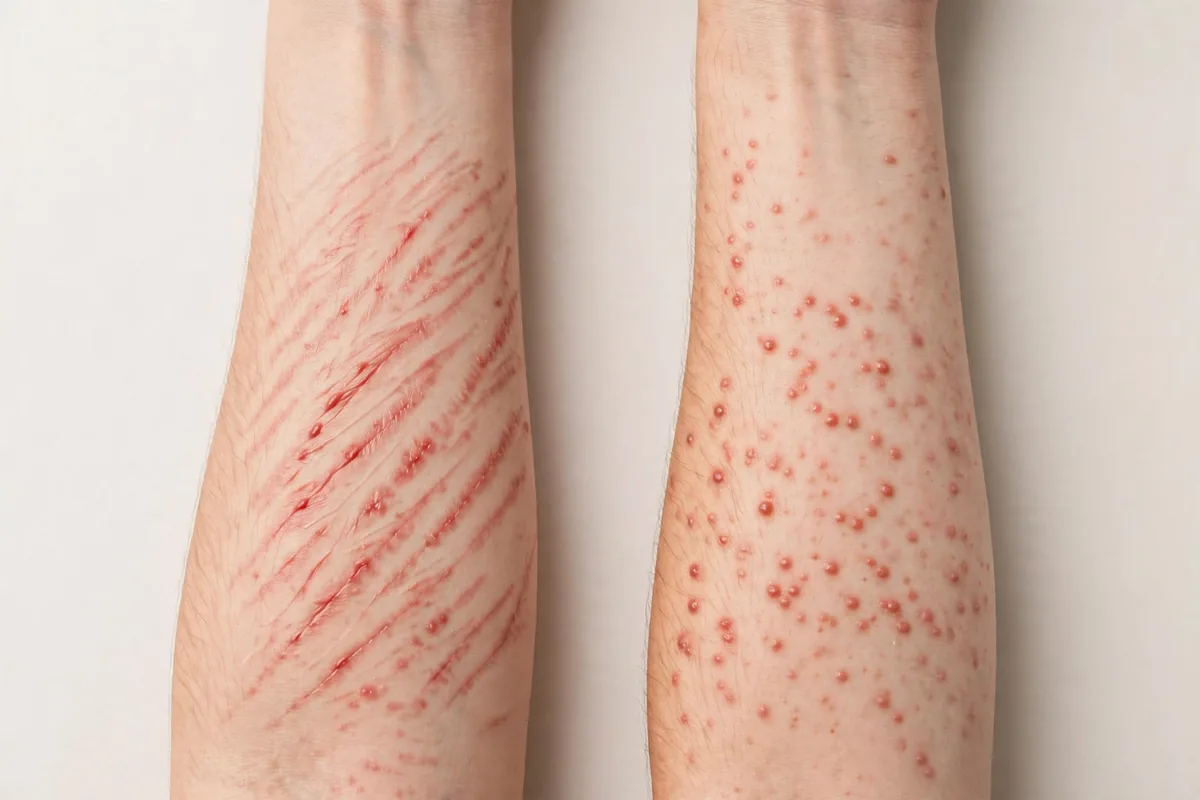
Linear streaks point to a plant. Poison ivy rash often appears as straight lines or streaks because that is exactly how the foliage brushed against you — a leaf edge dragged across a forearm, a stem grazed a calf. Blisters may form along those lines, and the itch is typically intense.
Scattered bumps point to insects. Mosquitoes, chiggers, fleas, and other biters leave individual marks where each insect fed. You might see a few grouped together (some insects bite several times in one area), but each bump stands alone rather than forming a continuous streak.
Watch for the “second wave.” New patches of poison ivy rash appearing over several days do not mean the rash is spreading from person to person or from blister fluid — Mayo Clinic confirms blister fluid does not spread it. It usually means some skin areas received less oil and are reacting more slowly.
Check the location. Poison ivy strikes wherever skin touched the plant — often lower legs, arms, and hands. Bites favor exposed skin too, but ankles and waistlines (where insects crawl under clothing) are classic bite territory.
What to Do for Each: First Steps That Help #
If it looks like poison ivy:
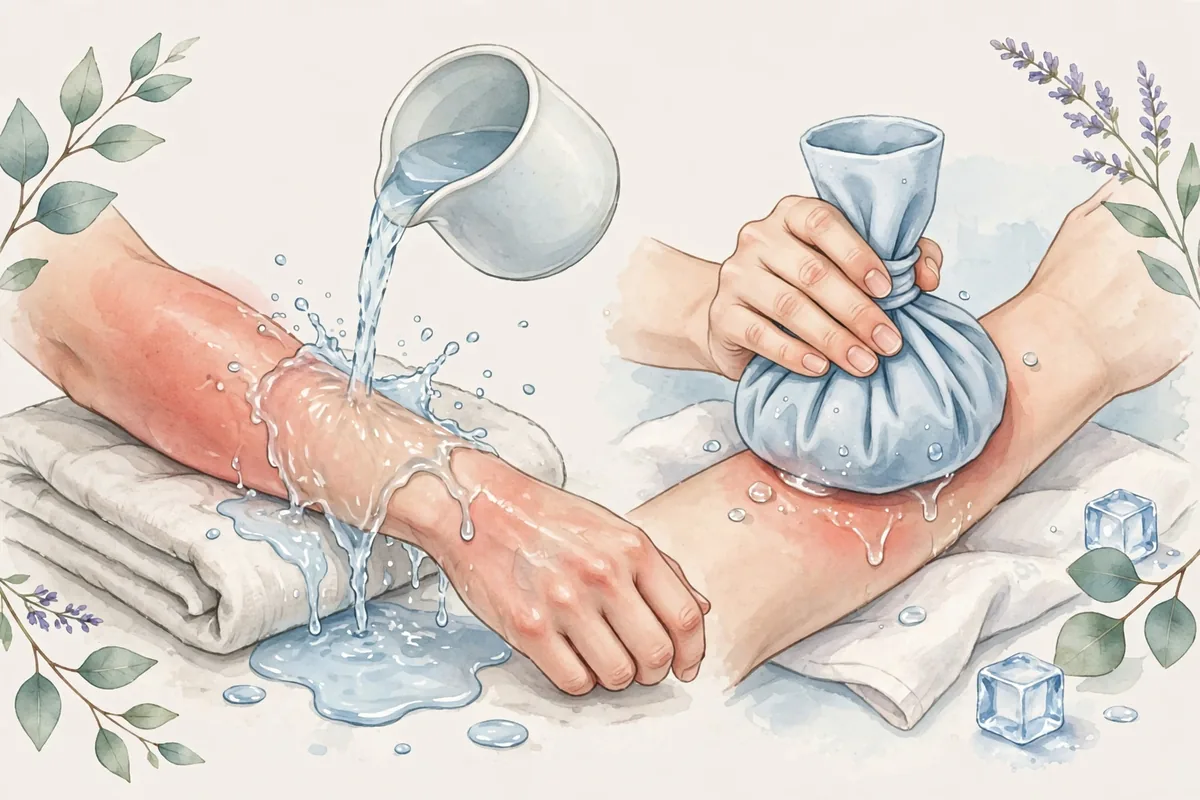
- Wash the skin with soap and cool water as soon as possible. Removing urushiol oil early may reduce the severity of the rash.
- Wash everything the oil touched — clothing, gardening gloves, tools, and pet fur can all carry urushiol and cause repeat exposure.
- Cool compresses and cool baths calm the itch and swelling.
- Calamine lotion or an oatmeal bath soothes mild cases.
- An oral antihistamine per label directions may help with itching, though it does less for the rash itself.
- Do not scratch. Scratching breaks the skin and invites infection.
If it looks like bug bites:
- Wash the area with soap and water to reduce infection risk.
- Apply a cold compress to bring down swelling and itch.
- Resist scratching — broken skin is how a simple bite turns into something worse. See our guide to normal healing vs infection to know what healthy recovery looks like.
- An oral antihistamine per label directions can ease itching for particularly bothersome bites.
The Timeline: When Each Appears and Fades #

Timing is one of the most reliable clues you have. Here is how the two typically unfold:
Poison ivy timeline:
- Hour 0: Contact with the plant. You feel nothing — the oil is invisible and painless.
- 12 to 72 hours later: Redness and itching begin, sometimes starting as mild irritation before blisters form.
- Days 3 to 7: The rash typically peaks — swelling, streaks, and fluid-filled blisters at their worst.
- Weeks 1 to 3: Gradual fading as the skin heals. The rash resolves on its own in most mild cases.
Bug bite timeline:
- Minutes to hours: The bump appears, often with itching starting quickly.
- Day 1 to 2: Redness and swelling peak, then start to settle.
- Days 3 to 7: Most bites fade, sometimes leaving a small mark that disappears over the following weeks.
The key contrast: if the marks showed up within hours of being outdoors, insects are the likely culprit. If your skin was fine for a day or two and then erupted, think plant.
Warning signs: when to seek care #
Most poison ivy rashes and bug bites are miserable but manageable at home. Still, know the red flags that mean it is time to get help.
Call 911 or your local emergency number right away if you notice: trouble breathing or swallowing; swelling of the face, lips, tongue, or throat; widespread hives; dizziness or fainting; or a racing heartbeat. If you carry an epinephrine auto-injector and have signs of a severe allergic reaction, use it as prescribed, then call emergency services.
See a doctor or urgent care if the reaction is severe or widespread, if blisters are oozing pus, if you develop a fever, or if the rash affects your eyes, mouth, or genitals — Mayo Clinic lists all of these as reasons to seek care. Inhaling smoke from burning poison ivy and having difficulty breathing is an emergency. Also get checked if a bite shows spreading redness, red streaks, or increasing pain after the first day, or if any rash is not improving within a few weeks.
Frequently asked questions #
Can poison ivy spread from person to person? #
No. The rash itself is not contagious, and blister fluid does not spread it. Only the urushiol oil — on skin, clothing, tools, or pet fur — can transfer the reaction to someone else. Wash contaminated items to prevent that.
Why did my poison ivy rash show up in new spots days later? #
That is common and does not mean it is spreading. Skin that received a lighter dose of oil reacts more slowly, so new patches can appear over several days even though the exposure happened all at once.
Can bug bites ever form lines like poison ivy? #
Some insects, such as bed bugs, can bite in rough lines or clusters — but each mark remains a separate bump with its own center, unlike the continuous streaky blisters of poison ivy. Timing helps too: those bites appear within hours, not days.
How long does poison ivy oil stay active on surfaces? #
Urushiol is remarkably persistent — it can remain active on clothing, tools, and gear for a long time if not washed off. That is why washing everything that may have contacted the plant matters as much as washing your skin.
Medical and editorial note #
This article is for general information only and is not medical advice. Rashes can be tricky to identify, and poison ivy is not the only plant or condition that causes streaky rashes. If your rash is severe, spreading, or worrying you in any way — or if you are unsure what caused it — see a doctor, dermatologist, or other qualified healthcare professional for an in-person evaluation.


