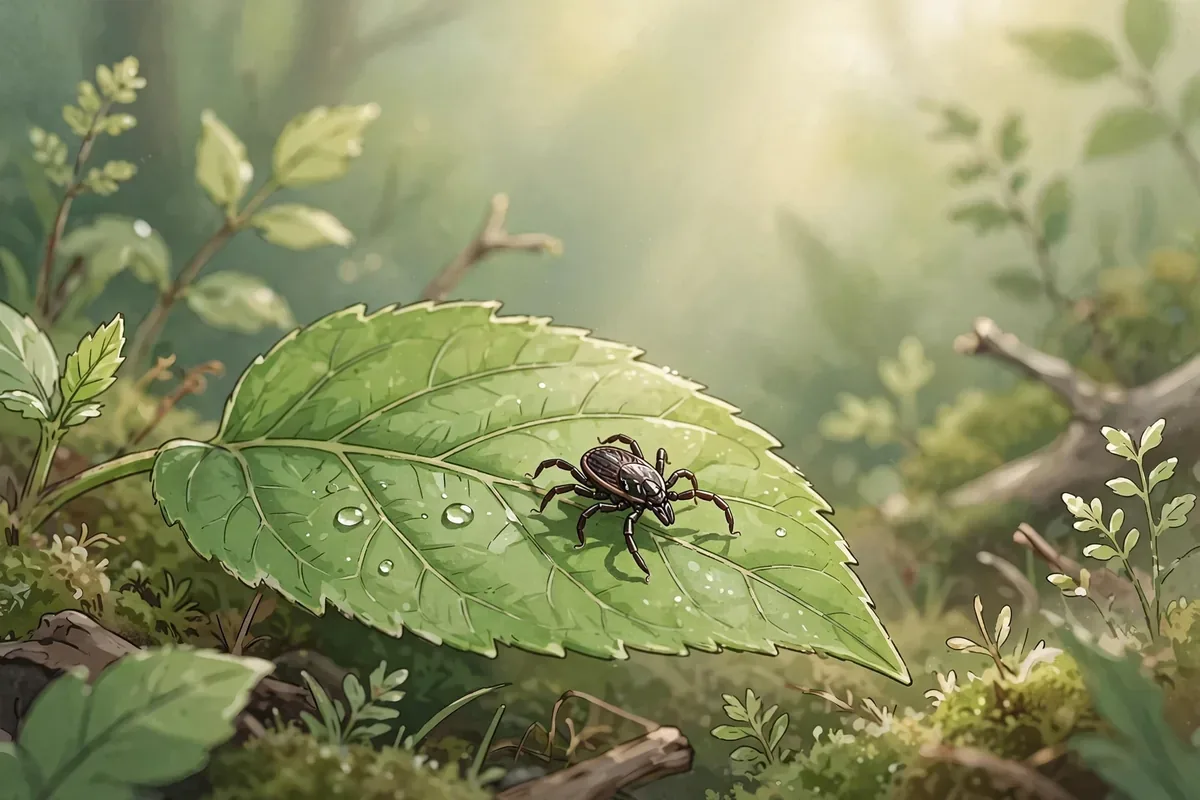
Picture malaria’s playbook, shrunk down and delivered by a deer tick: a microscopic parasite slips into your red blood cells and multiplies there. The condition described as babesiosis after tick bite symptoms — fever, chills, drenching sweats, headache, and a bone-deep fatigue — typically begins 1 to 4 weeks after the bite, though it can take longer to surface. Many infected people never feel sick at all, which makes the illness easy to underestimate and, for some, dangerous to miss.
Parasite, Not Bacteria: Why That Distinction Matters #
Most tick-borne diseases you have heard of — Lyme disease, anaplasmosis, ehrlichiosis, Rocky Mountain spotted fever — are caused by bacteria. Babesiosis is the outlier: it is caused by Babesia, a microscopic parasite that infects red blood cells. The most common species infecting people in the United States is Babesia microti, carried by the same blacklegged (deer) tick that spreads Lyme disease and anaplasmosis, concentrated in the Northeast and upper Midwest.
The parasite-versus-bacteria distinction is not trivia; it drives real differences in how the illness behaves and how doctors approach it.
- It attacks red blood cells. Because the parasites live inside red blood cells and destroy them as they multiply, babesiosis can cause hemolytic anemia — red blood cells destroyed faster than the body can replace them. That is why fatigue can be profound, and why signs like jaundice (yellowing of skin or eyes) or unusually dark urine can appear in more significant cases.
- It resembles malaria more than Lyme. Clinicians sometimes describe babesiosis as malaria-like: cyclical fevers, chills, sweats. Unlike Lyme disease, it does not cause an expanding bullseye rash at the bite site.
- Treatment follows different lines. The antibiotics used for bacterial tick infections are not the whole story here; doctors treat symptomatic babesiosis with antimicrobial drugs aimed at the parasite, and in very severe cases may use exchange transfusion to rapidly reduce infected red blood cells. Treatment choices are your clinician’s call — the point is that the playbook differs.
- It is not contagious. Like other tick-borne illnesses, babesiosis does not spread person to person through casual contact. Rare exceptions documented by public health agencies include transmission through blood transfusion and from a pregnant person to their baby.
The comparison table below puts babesiosis side by side with the two infections it is most often confused with.
| Feature | Babesiosis | Lyme disease | Anaplasmosis | |—|—|—|—| | Organism type | Parasite (Babesia microti) | Bacterium (Borrelia) | Bacterium (Anaplasma) | | Target in the body | Red blood cells | Skin, joints, nerves, heart | White blood cells (neutrophils) | | Typical onset after bite | 1-4 weeks (can be longer) | 3-30 days | 1-2 weeks | | Bullseye rash | No | Common | Rare | | Hallmark symptoms | Cyclical fever, sweats, fatigue | Expanding rash, flu-like illness | Severe headache, fever, muscle aches | | Anemia risk | Yes — hemolytic anemia possible | Not characteristic | Not characteristic | | Same tick vector | Blacklegged (deer) tick | Blacklegged (deer) tick | Blacklegged (deer) tick |
Notice the last row: all three ride the same tick. That shared vector is exactly why co-infection happens and why a single bite can produce a confusing blend of symptoms.
The Babesiosis Timeline: A Slower Burn #
Babesiosis unfolds more slowly than most tick-borne illnesses. The CDC notes that symptoms, when they appear, may start around a week after infection but usually develop over a few weeks — and California’s public health department describes the typical window as 1 to 4 weeks following a tick bite. Plan your watch accordingly: this is a longer vigil than the 1-2 weeks for anaplasmosis.
Week 1. Most people feel nothing. The parasites are establishing themselves in red blood cells, and there is no early skin signal — no rash, no ulcer, no dramatic bite-site change. If you are watching for trouble this week, watch for the absence of certainty: a normal-feeling week after a deer tick bite does not close the book.
Weeks 1-4: the flu-like phase. When symptoms arrive, they look like a stubborn flu: fever, chills, sweats (sometimes drenching night sweats), headache, body aches, loss of appetite, nausea, and fatigue. The fatigue deserves special mention — people often describe it as heavier than ordinary tiredness, the kind that does not lift with a good night’s sleep. That heaviness makes sense given what is happening: red blood cells are being destroyed faster than usual.
Weeks 4 and beyond. In healthy people with mild infections, symptoms may resolve on their own over days to weeks. But babesiosis can also smolder. Some people develop a prolonged, low-grade illness with intermittent fevers and lingering fatigue. In people without a spleen, with weakened immune systems, or with serious liver or kidney disease — and in adults over 50 — the infection can become severe or even life-threatening, with significant anemia, organ stress, or unstable blood pressure.
A note on the asymptomatic majority. Public health sources consistently note that many people infected with Babesia never feel ill. Estimates of the exact share vary, which is why this guide avoids pinning a number on it — but the practical point stands: feeling fine after a bite does not prove you were not exposed, and feeling ill weeks later deserves the same attention whether or not you remember the bite.
Because the timeline is long and the symptoms are generic, babesiosis is the tick-borne illness most likely to be misattributed — to a lingering virus, to stress, to “just getting older.” If flu-like symptoms with unusual fatigue arrive 1-4 weeks after time in deer-tick country, mention the tick exposure to your clinician explicitly.
One Tick, Two Infections: The Co-Infection Problem #

Here is the scenario that confuses patients and sometimes delays care: a single blacklegged tick carrying both Babesia microti and the Lyme bacterium (or Anaplasma) feeds on you, and you develop a blended illness that does not match any single textbook description.
Co-infection matters for three reasons. First, symptoms overlap and stack. You might develop the bullseye rash of Lyme disease alongside the drenching sweats and crushing fatigue of babesiosis — or the severe headache of anaplasmosis layered over babesial fevers. The blended picture can make each individual infection harder to recognize.
Second, the timelines differ. Lyme symptoms may appear within days to weeks, anaplasmosis within 1-2 weeks, babesiosis over 1-4 weeks or longer. A person might feel ill, start to recover, then feel ill again — not a relapse of one disease but the second one arriving on its own schedule. If your symptoms seem to come in waves weeks apart after one bite, tell your doctor; the pattern itself is a clue.
Third, it changes the clinical conversation. When a clinician knows the bite came from a deer tick in an area where multiple pathogens circulate, they can evaluate for more than one infection. Your job is to supply the raw material: the date of the bite, the tick species if you saved it, the full sequence of your symptoms with dates, and any test results you already have.
| Clue | Suggests babesiosis may be in the mix | |—|—| | Drenching sweats or night sweats with fevers | Characteristic of babesial infection | | Fatigue far heavier than the fever seems to justify | Consistent with red blood cell destruction | | Symptoms persisting despite treatment for Lyme alone | Possible untreated co-infection | | Second wave of flu-like illness weeks after the first | Different pathogen, different timeline | | Dark urine or yellowing eyes/skin | Possible hemolytic anemia — seek care promptly |
None of these clues diagnose anything on their own — they are reasons to have a thorough conversation with your clinician, not conclusions. But they are the details that help a doctor connect a confusing case.
Who Faces Higher Risk #
For most healthy adults, babesiosis is a miserable few weeks that resolves. For certain groups, it can become a serious, even life-threatening illness. The CDC names these groups explicitly, and if you belong to one, your threshold for seeking care should be lower and your follow-up more diligent.
- People without a spleen. The spleen filters damaged red blood cells, so its absence removes a key defense against a parasite that destroys red blood cells. This is the highest-risk group named in public health guidance.
- People with weakened immune systems. This includes people undergoing cancer treatment, people with lymphoma or HIV, and people taking immunosuppressive medications. The immune system is what keeps parasite numbers in check; when it is suppressed, the infection can escalate.
- Adults over 50. Age brings higher risk of severe disease, partly because of accumulated health conditions and partly because of natural immune changes.
- People with serious liver or kidney disease. These organs are already under strain, and the added burden of hemolytic anemia and systemic infection can tip the balance.
If you are in one of these groups and you spend time in deer-tick country, prevention deserves extra emphasis: permethrin-treated clothing, EPA-registered repellents per label directions, daily tick checks, and prompt, proper tick removal. And if flu-like symptoms with heavy fatigue arrive in the weeks after exposure, do not wait to see if they pass — call your clinician the same day and mention both the tick exposure and your risk factors.
For everyone else, the risk message is simpler: take the illness seriously without panic. Most infections are mild or silent, but the ones that are not announce themselves with persistent fever, sweats, and fatigue that does not behave like an ordinary virus.
Symptoms Checklist: What to Watch #
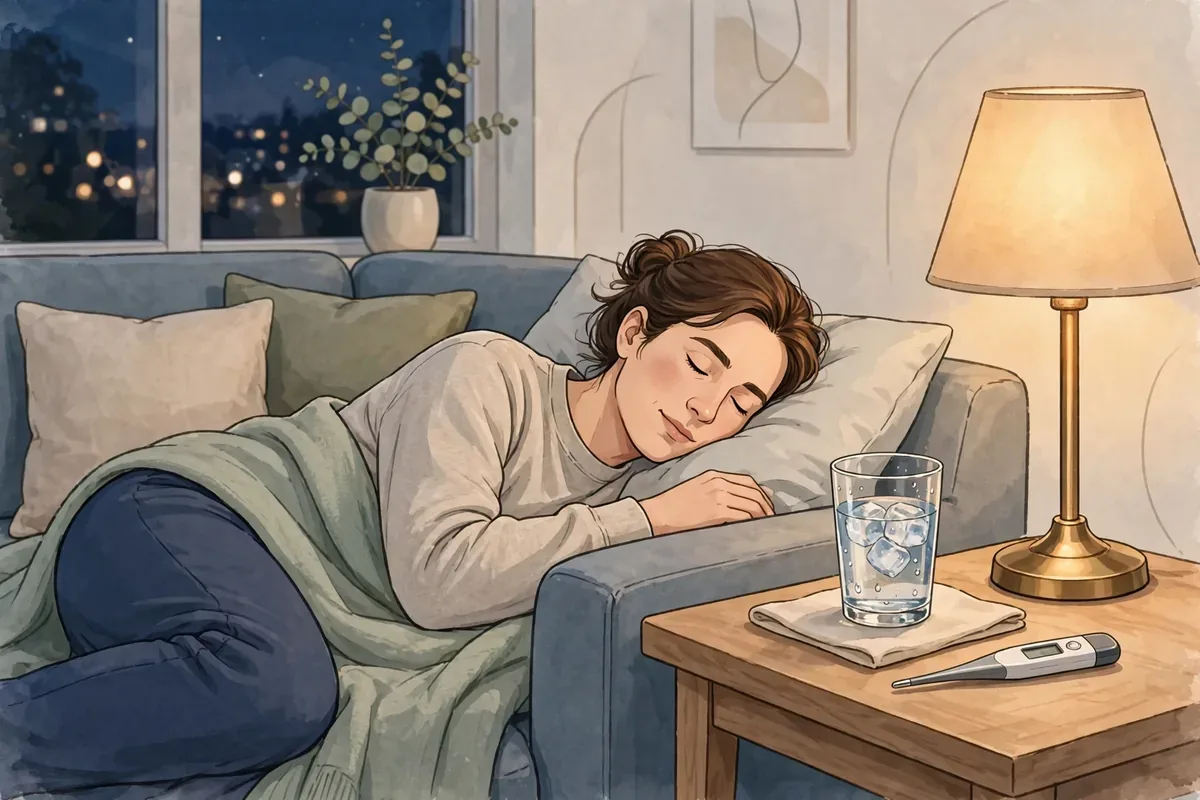
Use this checklist during the month after a deer tick bite or sustained time in tick habitat. Check in with yourself every few days — babesiosis rewards the patient observer.
- Fever. Often the first clear sign. It may come and go in cycles rather than burning steadily, which is part of the malaria-like pattern.
- Chills and sweats. Shaking chills followed by sweating, sometimes drenching night sweats that soak sheets. Sweats are one of the more distinctive babesiosis features.
- Headache and body aches. Generalized aching, similar to a bad flu. Muscle pain without exertion is the pattern to note.
- Profound fatigue. Heavier than ordinary tiredness; rest does not fix it. If exhaustion feels out of proportion to the rest of your symptoms, note it — it reflects red blood cell loss.
- Loss of appetite and nausea. Common companions of the febrile phase. Vomiting or diarrhea can occur and, in clinical descriptions, tend to mark more severe infection.
- Dark urine or yellowing skin/eyes. These suggest significant red blood cell breakdown. They are not “wait and see” symptoms — they warrant prompt medical attention.
- Shortness of breath or chest discomfort. Can accompany severe anemia. Seek care promptly.
What you will not see: a bullseye rash. Babesiosis does not produce the expanding red ring of Lyme disease, and unlike tularemia it does not ulcerate the bite site. The absence of skin findings is itself characteristic — if you are waiting for a visible skin clue, you will wait in vain.
Tracking tip. Because the illness stretches over weeks, keep a simple dated log: morning temperature, energy level, any sweats or chills, appetite. A two-minute daily note creates a trend line that is far more useful to your clinician than “I’ve felt bad for a while.”
What Doctors Do: Tests and Follow-Up #
Understanding the general shape of medical evaluation helps you advocate for yourself — without trying to direct your own care.
Blood tests. Clinicians diagnose babesiosis by finding evidence of the parasite in your blood. The classic method is examining a blood smear under a microscope, where trained eyes can spot the parasites inside red blood cells — sometimes in a distinctive cross-like arrangement. Antibody tests and molecular (DNA-based) tests can also detect the infection. Your clinician chooses based on timing and availability; early in illness, the parasite may be easier to find directly, while antibodies take time to develop.
Why timing matters. Because Babesia antibody tests can take weeks to turn positive and because the parasite load varies, a single negative test early on does not always close the case. If your symptoms fit and exposure is plausible, clinicians may retest or treat based on the clinical picture. This is another reason your dated symptom log matters.
Treatment in general terms. Symptomatic babesiosis is treated with antimicrobial medications aimed at the parasite — different drugs than those used for bacterial tick infections, which is why the parasite-versus-bacteria distinction from the first section has practical weight. People who are very ill may need hospital care, and in severe cases clinicians may use exchange transfusion to rapidly lower the number of infected red blood cells. Asymptomatic infections found incidentally (for example, through blood donation screening) are managed according to clinical judgment — not every positive test leads to treatment.
Follow-up. Expect your clinician to monitor your recovery with repeat blood work, especially if you had anemia. Fatigue can linger as red blood cell counts rebuild — that gradual recovery is normal, but new or worsening symptoms after initial improvement deserve a call. And if you were treated for Lyme disease but still feel significantly ill weeks later, raise the co-infection question explicitly.
Warning signs: when to seek care #
Call 911 immediately if you or someone near you has trouble breathing or swallowing, swelling of the face, lips, tongue, or throat, widespread hives, dizziness or fainting, or a racing heartbeat after a bite or sting. If you carry an epinephrine auto-injector, use it as prescribed and still call 911, because symptoms can return.
For babesiosis specifically, contact your doctor promptly if you develop fever, chills, sweats, and heavy fatigue within a month of a deer tick bite or time in tick habitat. Seek urgent or emergency care for dark or bloody urine, yellowing of the skin or eyes, shortness of breath, chest pain, confusion, or a fever that persists despite rest and fluids. If you have no spleen, a weakened immune system, or are over 50, do not wait out these symptoms — call the same day they appear. People managing the aftermath of any tick bite over several weeks may also find our guide on tick bite aftercare for the next few weeks useful for the monitoring routine.
Frequently asked questions #
Can babesiosis go away on its own? #
In healthy people, mild infections sometimes resolve without treatment over days to weeks — the immune system can clear the parasite. But “sometimes” is not a plan. Because the illness can also smolder, cause significant anemia, or turn severe in higher-risk groups, the safe approach is medical evaluation rather than waiting it out. Your clinician can assess the severity with blood work and decide whether treatment or watchful monitoring is appropriate.
How is babesiosis different from Lyme disease? #
Three fundamental differences: the organism (parasite versus bacterium), the target (red blood cells versus skin, joints, nerves, and heart), and the skin findings (no bullseye rash in babesiosis). They share the same tick vector and the same flu-like opening act, which is why they are confused — and why co-infection from a single bite is possible. The sweats-heavy, fatigue-dominant pattern with no rash leans babesial; the expanding rash leans Lyme. Only testing sorts it definitively.
Do I need antibiotics for babesiosis? #
That is your clinician’s decision, and it depends on whether you have symptoms, how severe they are, and your risk factors. The medications used for babesiosis differ from those used for bacterial tick infections because the target is a parasite, not a bacterium. Do not take leftover antibiotics or someone else’s prescription hoping they cover it — the wrong drug for the wrong organism helps no one and can cause harm. Bring your symptom log and exposure history to your appointment.
Can my dog give me babesiosis? #
Not directly — babesiosis does not spread person to person or pet to person through casual contact. Dogs can, however, carry infected deer ticks into your home and yard on their fur, which raises your bite risk. There are also Babesia species that infect dogs themselves (a separate veterinary matter — ask your vet). The practical move is the same either way: check your dog for ticks after outdoor time, and check yourself too. For the broader question of tick risk and pets, see do all ticks carry Lyme disease.
Why did I feel better and then get sick again weeks later? #
Several explanations exist, and they are worth sorting with your doctor rather than guessing. One is co-infection: a single deer tick can transmit multiple pathogens with different timelines, so a second wave of illness weeks later may be a second infection surfacing. Another is the naturally prolonged course of babesiosis itself, which can wax and wane. A third is an unrelated new illness. The distinguishing details — exact dates, which symptoms returned, any new exposures — are what help your clinician tell these apart, so bring your log.
Medical and editorial note #
This guide is general health information about recognizing possible babesiosis symptoms after a tick bite. It is not medical advice and cannot diagnose any individual. Flu-like symptoms with fatigue have countless causes, and only a healthcare professional with your history, examination, and laboratory results can determine what is going on. If you develop persistent fever, sweats, or unusual fatigue in the weeks after a tick bite — especially if you have no spleen, a weakened immune system, or are over 50 — contact your doctor promptly.


