
A delayed allergic reaction after bee sting means symptoms appear hours — or even days to weeks — after the sting instead of right away. Most stings cause only local pain and swelling, but reactions that develop more than four hours later are medically classed as delayed reactions, and they range from uncomfortable to dangerous. Here is what can happen, when, and what to do at each stage.
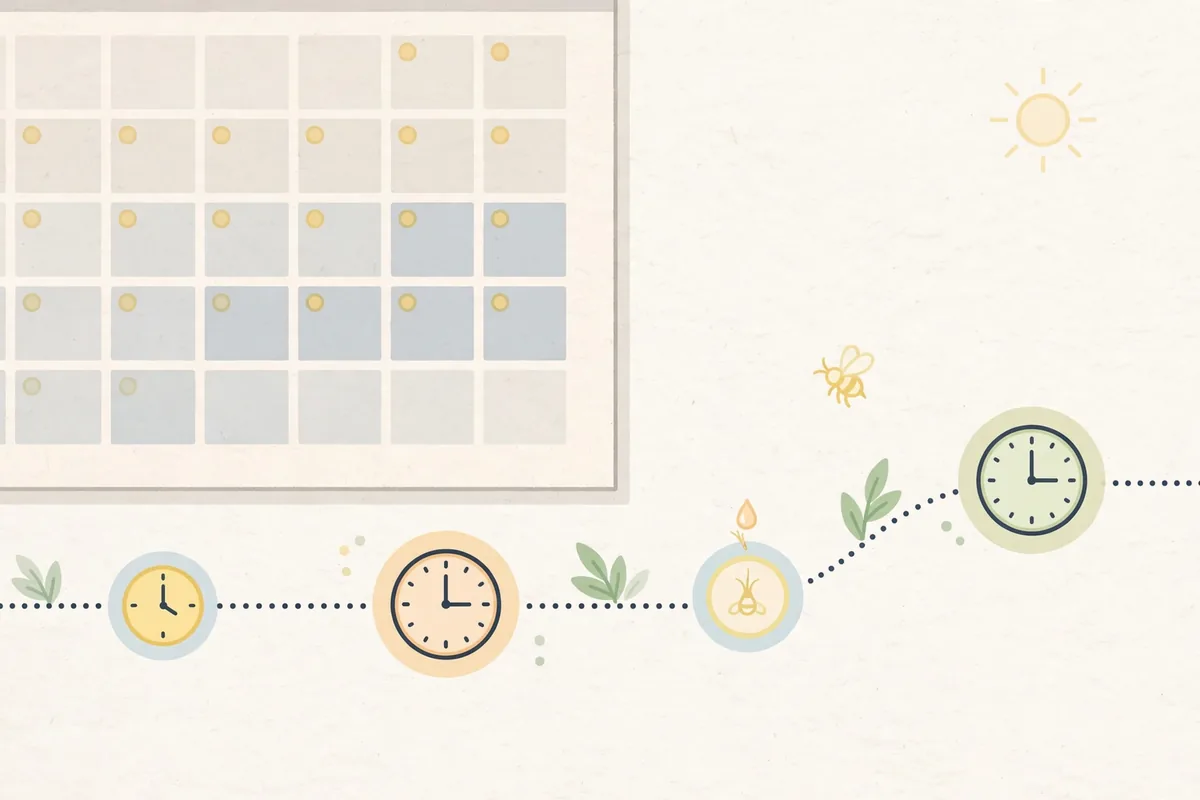
The four delayed reaction windows #
Not all late reactions are the same. Knowing which window you are in helps you respond correctly.
Biphasic anaphylaxis (hours later). After an initial allergic reaction improves, a second wave of symptoms can return following a quiet period of roughly 1–8 hours, and in rare cases up to about 12 hours later. This is called biphasic anaphylaxis. Anyone who had hives, throat tightness, wheezing, or used an epinephrine auto-injector should stay under observation — ideally in an emergency department — for several hours after the first episode, because the second phase can be just as severe.
Progressive large local reactions (24–48 hours). Swelling that starts small and keeps spreading over the next day or two is the most common “delayed” complaint. A sting on the hand, for example, can lead to swelling that travels up the forearm within a day. This is uncomfortable and alarming, but when there are no whole-body symptoms (no hives elsewhere, no breathing trouble), it is usually a large local reaction rather than an emergency. Watch it closely — if swelling crosses a joint or keeps expanding past 48 hours, get checked.
Worsening itch and hives (6–24 hours). Some people develop generalized hives or intense itching many hours after the sting, particularly if they had mild symptoms earlier and did nothing about them. New hives plus any breathing change, dizziness, or throat swelling after a delay is a 911-level event — do not assume “it was hours ago, so it must be fine.”
Serum sickness-like reactions (7–14 days). About a week after a sting, a rare delayed immune reaction can appear: itchy rash, fever, joint pain, fatigue, and swollen lymph nodes. Researchers who studied patients with allergic reactions 1–2 weeks after insect stings found venom-specific antibodies in these cases, and venom immunotherapy was recommended for patients who had them. This pattern is uncommon, but it is the reason doctors ask about recent stings when someone shows up with unexplained rash and joint pain a week later.
Serum sickness: the week-later reaction #
Serum sickness is a type of delayed immune response where the body reacts against proteins from the venom days after exposure. Symptoms typically show up 7–10 days after the sting and may include an itchy or burning rash (sometimes with hives), low-grade fever, aching or swollen joints, fatigue, and tender lymph nodes near the sting site.
This is different from an infection. Cellulitis from a sting usually brings increasing pain, spreading redness, warmth, and often pus within a few days — not joint aches and fever a week out. That said, you should not try to tell these apart on your own. A clinician can sort it out quickly, and serum-sickness-type reactions sometimes respond to prescription anti-inflammatory treatment.
The good news: serum-sickness-type reactions to stings are uncommon, and the published cases were managed successfully once recognized. The key is simply knowing the pattern exists, so a rash-plus-joint-pain combo a week after a sting gets reported instead of ignored.
What to do at each stage #
First 24 hours: After the initial sting care (remove the stinger, wash, apply a cold pack), keep watching the site and your whole body for a full day. Use an oral antihistamine per label directions for itching and hives if you do not have whole-body symptoms. Mark the edge of the swelling with a pen so you can tell if it is spreading.
If symptoms return after improving: Treat this as an emergency until proven otherwise. If you have a prescribed epinephrine auto-injector, use it at the first sign of returning breathing trouble, throat swelling, widespread hives, or dizziness — then call 911. Biphasic reactions are the reason allergy guidelines recommend observation after anaphylaxis, not just a quick discharge.
Days 1–3: Track whether swelling is getting better or worse. Normal healing means pain and redness start easing after 24–48 hours; swelling can linger up to about a week for large local reactions. If swelling keeps expanding past two days, crosses a joint, or you develop fever, red streaks, or pus, see a clinician — see our overview of the normal timeline for sting healing to calibrate what is on track.
Week 1–2: A new rash with fever, joint pain, or swollen lymph nodes a week or more after the sting deserves a doctor visit, even if the sting itself felt minor. Mention the sting explicitly — the timing is the diagnostic clue.
Long-term: Anyone who had anaphylaxis — immediate or delayed — should see an allergist about venom testing and whether venom immunotherapy is appropriate. Also review the signs that make any sting an emergency in our guide to when a bee sting is an emergency.
Delayed reaction or infection? How to tell them apart #
A delayed reaction and a skin infection can look similar at first glance — both can involve redness, swelling, and discomfort days after a sting — but they follow different patterns, and telling them apart matters because the treatment is different. The table below compares the usual clues. It is a guide for deciding how urgently to seek care, not a diagnosis: when the picture is mixed, a clinician should sort it out in person.
| Clue | More like a delayed reaction | More like an infection |
|---|---|---|
| Timing | New hives, joint pain, or fever appearing 7–14 days after the sting | Spreading redness, warmth, and pain building over 1–3 days after the sting |
| Symptoms beyond the sting site | Joint aches, fatigue, low-grade fever, swollen lymph nodes | Red streaks spreading from the site, pus, increasing tenderness |
| Itch vs pain | Itch and rash dominate; pain is usually mild | Pain and heat dominate; the area feels hot to the touch |
| Response to antihistamines | Itching and hives often ease, at least partly | Redness and pain keep spreading despite antihistamines |
In practice, both problems can overlap — a large local reaction can become infected if the skin is scratched open, and a delayed immune reaction can coexist with local inflammation. That is why the safest rule is simple: spreading redness with fever or pus needs same-day care, and a new rash with joint pain a week after a sting also needs a clinician, even if the sting site itself looks calm. The guide to large local reactions versus anaphylaxis explains how whole-body symptoms change the urgency, and the guide to a bee sting that still feels hot after two days covers the infection side of the picture in more detail.
Who is most likely to have a delayed reaction #
Anyone can have a delayed reaction, but a few factors raise the odds. People who have already had a systemic reaction to a sting — hives away from the sting site, breathing trouble, or dizziness — are more likely to react again, including in a delayed pattern, and should have an allergy plan in place. People who have had a large local reaction before, where swelling spread widely over a day or two, are more likely to have another large local reaction, though that does not necessarily mean they will develop anaphylaxis. Stings in areas with loose tissue, such as the face or around the eye, tend to swell more dramatically and for longer, which can make a normal healing curve look alarming. Children and older adults are not automatically at higher risk of delayed allergy, but their symptoms deserve a lower threshold for in-person review because they may describe symptoms less precisely or have other conditions that complicate the picture. If you have ever needed emergency care for a sting, tell every clinician who treats you for a later sting about that history before they decide how long to observe you.
What to tell your clinician: a simple symptom log #
Delayed reactions are diagnosed largely from the story — when the sting happened, what appeared, and in what order. A short written log makes that story much easier to tell accurately, especially a week later when details blur. Note the date and approximate time of the sting, whether a stinger was removed, and what first-aid you used. Then record, day by day, the size of the swelling (marking its edge with a pen helps), any new symptoms such as hives, fever, joint pain, or fatigue, and every medicine you took, including doses and times. Photographs of the sting site taken in consistent light on successive days are genuinely useful: they show whether swelling is expanding, stable, or receding far better than memory does. Bring the log and the photos to the appointment, and mention the sting explicitly even if you are being seen for something that seems unrelated, such as new joint pain — the timing is often the clue that connects the two. A sting allergy action plan checklist can help you organize this information before your next outdoor season, and the guide to serum sickness after an insect sting describes the week-later pattern in more depth.
After a delayed reaction: follow-up and prevention #
Once a delayed reaction has been evaluated, the follow-up matters as much as the first visit. If you had any systemic symptoms — anything beyond the sting site itself — ask for a referral to an allergist for venom testing, even if the reaction has fully settled. Testing can clarify whether you have a venom allergy and whether venom immunotherapy, a course of treatment that gradually desensitizes the immune system, is appropriate for you. If you were prescribed an epinephrine auto-injector, carry it whenever you are outdoors, check its expiry date, and make sure the people around you know where it is and how to use it; the checklist for what to do after using an EpiPen covers the steps that follow an emergency use, including why emergency care is still needed after the injection. For prevention, the practical steps are unglamorous but effective: avoid wearing strong fragrances outdoors in sting season, keep food and sweet drinks covered, wear closed shoes on grass, and do not disturb nests. A delayed reaction does not mean you must avoid the outdoors, but it does mean the next sting should be treated as a known-risk event, with a plan ready before it happens rather than improvised afterward.
Warning signs: when to seek care #
Call 911 immediately if you develop any of these — at any point after a sting, including hours later: trouble breathing or swallowing, swelling of the face, lips, tongue, or throat, widespread hives, dizziness or fainting, or a racing heartbeat. If you have a prescribed epinephrine auto-injector, use it first, then call 911. A delayed return of symptoms after an earlier reaction is still an emergency.
For non-emergency concerns, see a clinician or urgent care the same day if: swelling keeps spreading after 48 hours, red streaks extend from the sting, there is pus or the area feels hot with fever, the sting is near an eye or inside the mouth, or you develop a rash with joint pain or fever a week or more after the sting. People with known sting allergies should follow their allergist’s action plan and report any late symptoms at their next visit — delayed patterns can change the recommendation for immunotherapy.
Frequently asked questions #

Can anaphylaxis happen 12 hours after a bee sting? #
Yes, rarely. A biphasic reaction can bring a second wave of anaphylaxis hours after the first episode improved, with a quiet period in between. Cases up to about 12 hours have been reported, which is why people who have had anaphylaxis are usually observed for several hours rather than sent home immediately.
Why is my bee sting itchy a week later? #
Lingering itch days later is common — the body’s histamine response sometimes clears slowly. But itching with a new rash, fever, or joint pain a week out points toward a serum-sickness-type delayed reaction rather than a normal tail-end of healing, and it should be evaluated.
Is swelling that gets worse the next day an allergy? #
Usually not. Swelling that grows over 24–48 hours with no whole-body symptoms is most often a large local reaction, which is inflammatory rather than allergic. It becomes a concern if it crosses a joint, does not improve after a few days, or is joined by hives, breathing symptoms, or dizziness.
Should I get an EpiPen just in case after a delayed reaction? #
That is a decision for your doctor or allergist. A history of any systemic reaction to a sting — immediate or delayed — is typically what prompts allergy testing and a discussion about carrying epinephrine. Bring the exact timeline of your symptoms to the appointment; the pattern guides the recommendation.
More questions, answered #
Can a delayed reaction happen if the first reaction was mild? #
Yes. A mild first reaction does not guarantee that a later phase will also be mild, and a biphasic second wave can be more severe than the first. That is why anyone who had whole-body symptoms — hives away from the sting, breathing changes, dizziness — should stay under observation for several hours and seek emergency care immediately if symptoms return, even if the first episode seemed to have settled completely.
Should I keep taking an antihistamine for days after a sting? #
An antihistamine can help with itching and hives during the first few days, taken per label directions, but it is not a substitute for medical evaluation if symptoms are spreading, worsening, or systemic. If you need an antihistamine for more than a few days, if the dose is not controlling the symptoms, or if new symptoms such as joint pain or fever appear, see a clinician rather than extending self-treatment on your own.
Does a delayed reaction mean I am allergic to bee stings for life? #
Not necessarily. A large local reaction that appears a day or two later is an inflammatory response, not the same as a systemic allergy, and many people with large local reactions never develop anaphylaxis. A systemic or serum-sickness-type reaction is a stronger signal and usually prompts allergy testing, which is the only reliable way to answer the question for an individual. Until testing is done, treat a future sting with caution and have an emergency plan ready.
Can children have delayed reactions too? #
Yes, and delayed patterns in children deserve prompt review because children may not report joint pain, fatigue, or mild breathing changes as clearly as adults. Parents should watch a stung child for the full first day and again around a week later, and should mention the sting at any medical visit in the following two weeks if a new rash, fever, or joint complaint appears.
Medical and editorial note #
This guide is general information about delayed reactions to bee stings, not medical advice. Everyone’s immune response is different, and only a clinician who reviews your full history can diagnose what happened in your case. If you are worried about symptoms at any stage after a sting, get checked — early evaluation is always safer than waiting out an uncertain reaction.


