
Most bee stings hurt for a few hours and then fade. But a small percentage turn dangerous fast. When is a bee sting an emergency? The moment symptoms spread beyond the sting site — trouble breathing, throat or tongue swelling, widespread hives, dizziness — you are looking at possible anaphylaxis, and minutes matter. Here is how to tell the difference and what to do.
The Red Flags: Anaphylaxis in Minutes #
Anaphylaxis is a severe, whole-body allergic reaction. It usually begins within minutes of the sting — often within the first 10 — though it can occasionally start later. Watch for:
- Trouble breathing — wheezing, coughing, shortness of breath, or a feeling of tightness in the chest or throat
- Swelling of the throat, tongue, lips, or face
- Widespread hives, itching, or flushing — well beyond the sting site
- Dizziness, faintness, or confusion — signs blood pressure may be dropping
- Rapid or weak pulse
- Nausea, vomiting, stomach cramps, or diarrhea
- A sense of doom or that something is very wrong — take this seriously
Any one of the breathing or swelling symptoms is enough to treat it as an emergency. Do not wait to see if it gets worse — anaphylaxis can escalate from manageable to life-threatening in minutes, and it can even occur in people who have been stung before without problems.
What a Normal Sting Looks Like #
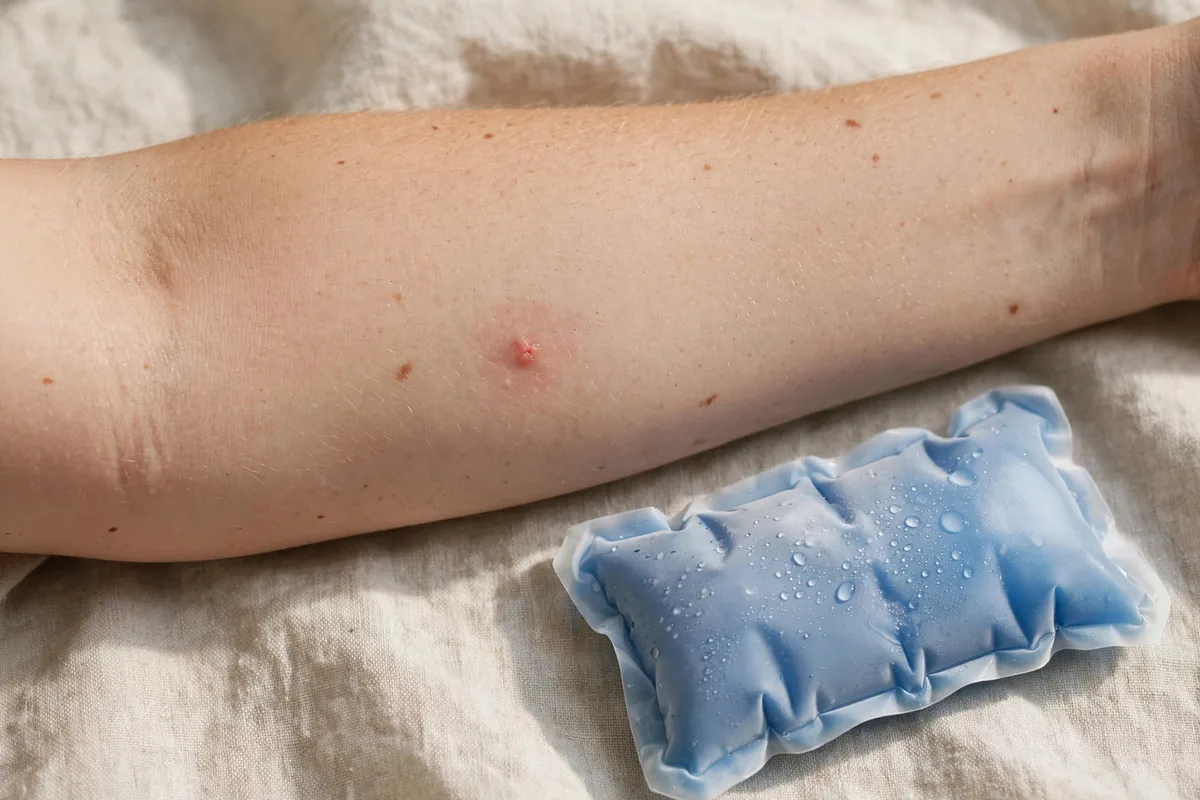
For comparison, here is the ordinary course of a non-emergency sting:
- Immediate: sharp pain or burning at the site, a white spot where the stinger entered, redness spreading a few inches around it.
- First hours: pain eases; itching and mild swelling take over. A cold compress and an oral antihistamine per label directions usually handle it.
- Next 1 to 2 days: swelling may peak, especially on hands, feet, or the face. This is still normal.
- Large local reactions: some people develop swelling across a large area — an entire forearm, for example — that peaks around 48 hours and fades over several days. Uncomfortable, but not anaphylaxis as long as symptoms stay local and breathing is unaffected.
The dividing line is simple: local symptoms = uncomfortable; symptoms beyond the sting site or any breathing difficulty = emergency.
The First 10 Minutes: Your Action Plan #
- Move away from the area. Bees release alarm signals that can draw more stings. Get indoors or into a car if you can.
- Remove the stinger fast. Scrape it out with a fingernail or credit card edge — speed matters more than method. (More detail in our doc on how to remove a bee stinger.)
- Assess for red flags. Breathing trouble? Throat, tongue, or face swelling? Hives spreading across the body? Dizziness? If yes to any — this is the emergency path.
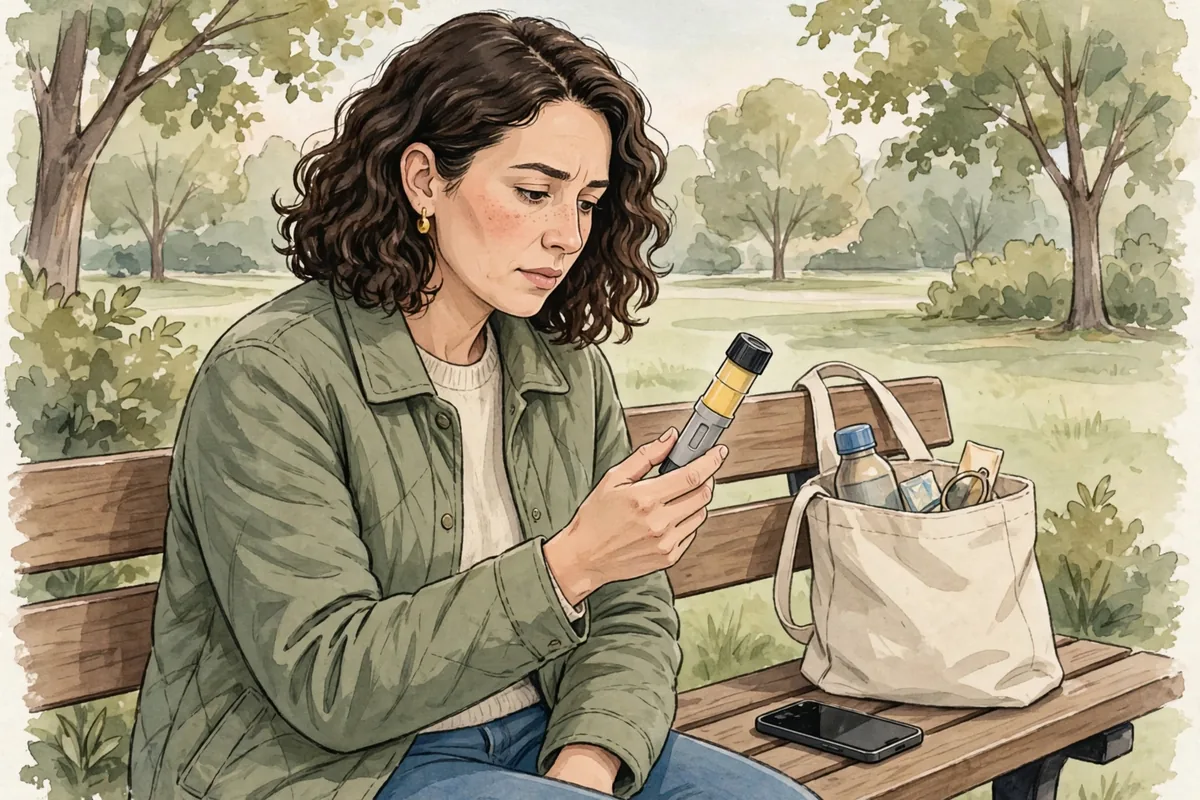
- Use prescribed epinephrine immediately if you carry it. Do not wait for symptoms to worsen. Note the time you used it.
- Call 911. Even if the epinephrine seems to work, you need emergency evaluation — its effects are temporary and symptoms can return (a second wave hours later is possible).
- Lie down with legs raised if dizzy or faint, unless breathing is difficult — then sit upright. Do not drive yourself.
- If no red flags: clean the sting, apply a cold compress 10 minutes on and off, and monitor yourself for at least 30 to 60 minutes. Delayed reactions are uncommon but possible.
Special Situations That Raise the Stakes #
- Stings to the mouth, throat, or inside the nose. Even without allergy, swelling here can block the airway. Treat any such sting as urgent — see our doc on bee sting in the mouth or throat.
- Multiple stings. Dozens of stings deliver a large venom load that can cause serious illness even without allergy — seek emergency care.
- Known sting allergy. If you have ever had a systemic reaction, you should carry epinephrine and have an emergency plan. Talk to an allergist about testing and prevention.
- Stings in infants or small children. Their small body size means venom hits harder; get medical advice promptly for multiple stings or any systemic symptom.
- Stings near the eye. Swelling can threaten vision — urgent evaluation is warranted.
Warning signs: when to seek care #
Call 911 immediately if you develop trouble breathing or swallowing, swelling of the face, lips, tongue, or throat, widespread hives, dizziness or fainting, or a racing heartbeat after any bite or sting. If you carry prescribed epinephrine, use it first, then call for help — you still need emergency care even if you feel better.
Also seek same-day medical care if: swelling from a sting keeps growing after 48 hours or shows pus, red streaks, or increasing pain (possible infection); you were stung many times; the sting is inside the mouth or throat; or you have a known sting allergy and were stung even without severe symptoms this time — your allergist should know.
Frequently asked questions #

How quickly does anaphylaxis start after a sting? #
Usually within minutes — most cases begin in the first 10 minutes. That speed is exactly why carrying epinephrine and calling 911 immediately matter more than any other step.
Can I develop a bee sting allergy if I never had one before? #
Yes. A severe reaction can happen even with no history of sting allergy, and reactions can worsen with repeated stings over the years. Any systemic symptoms after a sting deserve an allergist’s evaluation.
Should I go to the ER if the epinephrine worked? #
Yes, always. Epinephrine buys time — it does not end the reaction. Symptoms can rebound hours later, and emergency staff can monitor and treat you through that window.
Is a hugely swollen arm an emergency? #
A large local reaction — swelling across much of a limb that peaks around day two — is painful but not anaphylaxis, provided breathing is fine and symptoms stay local. But if swelling is still expanding after 48 hours, becomes hot and increasingly painful, or you develop fever, get it checked for infection.
Medical and editorial note #
This guide is general information, not medical advice. Allergic reactions are unpredictable and can be life-threatening. If you have any sign of a systemic reaction after a sting — or a known sting allergy — treat it as an emergency, use prescribed epinephrine if you have it, call 911, and follow up with an allergist.


