Insect Bite and Sting Warning Signs: When to Get Help
Know which bite or sting symptoms may require urgent medical attention, prompt clinical evaluation, or closer monitoring instead of routine home care.
Breathing symptoms
Trouble breathing or throat swelling can be an emergency.
Whole-body reactions
Fainting, collapse, widespread hives, or severe dizziness need prompt attention.
Infection-like changes
Fever, drainage, spreading redness, streaking, or worsening pain may need evaluation.
Use symptom severity—not appearance alone—to judge urgency
A dramatic-looking bite or sting is not always dangerous, and a small skin mark does not guarantee that the situation is minor. Warning-sign decisions should focus on breathing, circulation, whole-body symptoms, rapid progression, severe illness, and the person’s overall condition rather than the size or color of one lesion.
Emergency symptoms need immediate action
Breathing difficulty, swelling of the lips, tongue, or throat, fainting, collapse, severe confusion, or another rapidly worsening life-threatening reaction should be treated as an emergency. Call 911 or your local emergency service.
Some symptoms need prompt medical evaluation
Worsening pain, spreading redness, drainage, fever, severe swelling, persistent symptoms, or significant illness after an exposure may deserve professional assessment even when they are not immediately life-threatening.
Do not delay care while trying to identify the culprit
Online comparison guides can be useful for context, but the exact insect or arthropod may remain uncertain. When symptoms are severe or worsening, safety takes priority over identification.
Latest warning-sign guides
Use these resources to distinguish routine local reactions from infection-like changes, severe allergy, and other concerning symptoms.

How Long Does Bee Sting Pain Last? Healing and Warning Signs
Bumblebee Sting Warning Signs: When to Seek Medical Help
Fire Ant Stings: Pustules, First Aid, Allergy Warning Signs, and When to Get Help
Puss Caterpillar Sting Treatment: Safe First Aid, Relief, and When to Get Help

Black Widow Bite Treatment: Safe First Aid, Relief, and When to Get Help
Brown Recluse Bite Treatment: Safe First Aid, Relief, and When to Get Help

Insect Sting First Aid: A Practical Safety Checklist
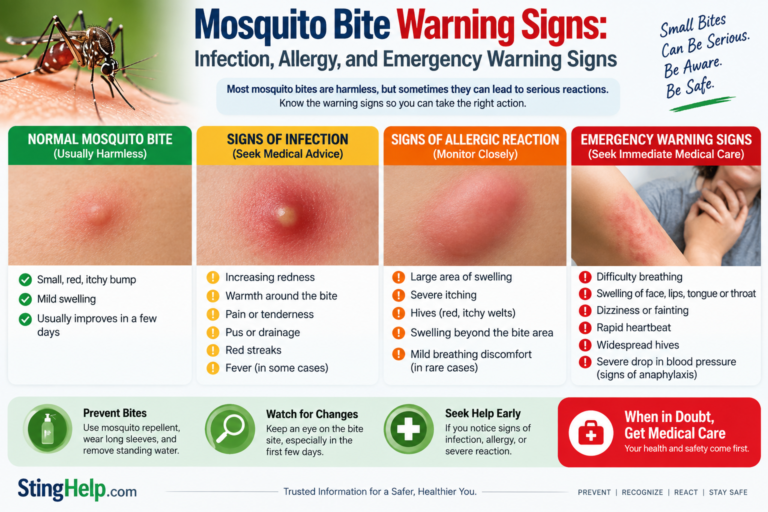
Mosquito Bite Warning Signs: Infection, Allergy, and Emergency Warning Signs
Skeeter Syndrome Warning Signs: Infection, Allergy, and Emergency Warning Signs
Severe symptoms should not wait for online identification.
Call 911 or your local emergency service for breathing difficulty, throat swelling, fainting, collapse, or another rapidly worsening life-threatening reaction.
Frequently Asked Questions
Which symptoms can signal a severe allergic reaction?
Warning signs can include trouble breathing, swelling of the lips, tongue, face, or throat, fainting or severe dizziness, a weak or rapid pulse, and rapidly progressing symptoms involving more than the sting or bite site. Treat suspected anaphylaxis as an emergency.
What changes can suggest infection or another complication?
Increasing warmth, tenderness, swelling, spreading redness, pus or drainage, red streaking, fever, or a site that is becoming more painful instead of improving can justify prompt medical evaluation. Skin appearance alone cannot confirm the cause.
When should I contact a clinician after a tick bite?
CDC advises contacting a healthcare professional if a rash or fever develops within several days to weeks after removing a tick. Tell the clinician when the bite happened and where the exposure likely occurred.
Are multiple stings more concerning than a single sting?
Multiple stings can increase venom exposure and deserve a lower threshold for medical advice, especially in children or when symptoms extend beyond the local sting sites. Any breathing, throat, fainting, or rapidly progressive systemic symptoms require emergency care.
Medical context: American Academy of Dermatology, CDC, and Mayo Clinic. Educational information only.