Bug Bite Day by Day: What Normal Healing Looks Like — and How Infection Breaks the Pattern
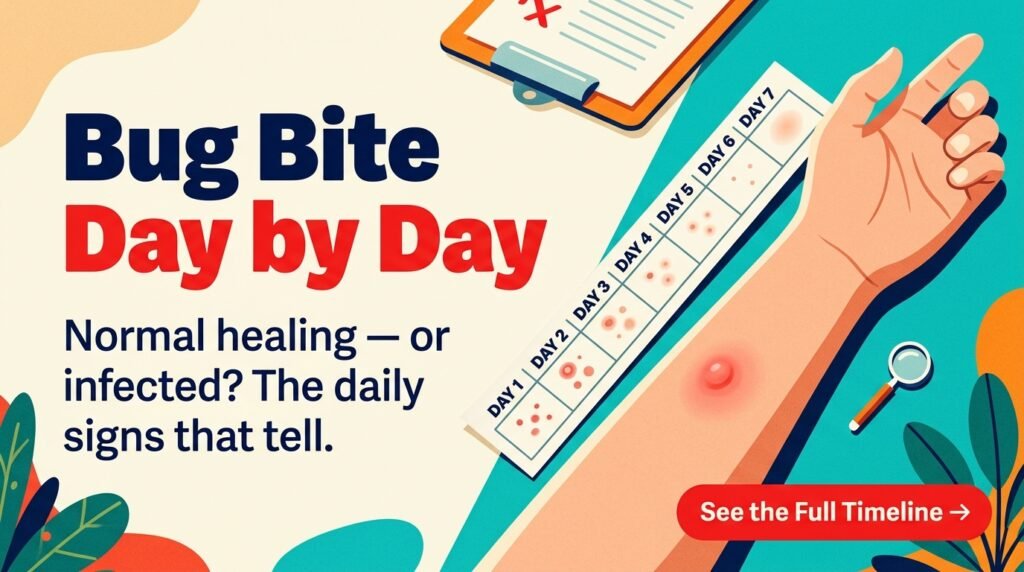
The fast answer: A normal bug bite is at its worst in the first 24 to 48 hours. It itches, swells a little, and then — this is the part that matters — it steadily improves every single day after that. An infected bite does the opposite. It may look quiet at first, then around day two or three it starts getting redder, hotter, and more painful instead of better. Doctors deciding whether a bite needs treatment care less about how it looks in a single snapshot and more about which direction it is travelling. This day-by-day guide shows you the normal route, the infection route, and the exact points where the two split apart.
Why a Bite Looks Worse Before It Looks Better
When a mosquito, fly, or other biting insect feeds, it injects a tiny amount of saliva into your skin. That saliva contains proteins your immune system treats as intruders. Your body responds by releasing histamine and sending fluid and immune cells to the area — and that response, not the bite itself, is what produces the redness, swelling, warmth, and itch.
Because the immune response takes time to build, a bite rarely looks its worst at the moment it happens. The bump typically grows over the first several hours and reaches its peak sometime in the first day or two. That is why a bite you barely noticed at breakfast can look angry by bedtime and still be completely normal. What separates a healthy reaction from a problem is not the size of the peak — it is what happens next.
The Normal Timeline: Day 0 to Full Healing
Every body reacts a little differently, and bites on the feet, hands, and face tend to swell more than bites elsewhere. But for a typical bite on a typical adult or older child, healing follows a recognisable arc:
| When | What a normal bite does | What it feels like |
|---|---|---|
| First minutes | A small raised white or pale wheal appears at the bite point, sometimes with a visible centre dot. | A brief sting or nothing at all, then the start of an itch. |
| Hours 1–6 | The wheal firms up into a pink or red bump roughly 1–2 cm across. Mild swelling around it. | Itching builds. This is usually the itchiest phase of the first day. |
| Day 1 (up to 24 hours) | Redness and swelling reach their peak. The bump may look its largest and angriest today. | Itch is dominant. Slight warmth is normal. Little or no pain. |
| Day 2 | Peak has passed. The bump is the same size or slightly smaller; the red halo starts to pull inward. | Still itchy, but the intensity begins to ease for most people. |
| Day 3 | Clear improvement. Swelling is visibly down, colour fades from bright red toward pink or brownish. | Itch comes in waves, often worse at night or after a hot shower, but trending down. |
| Days 4–5 | The bump flattens. A small firm centre or a tiny crust may remain where the skin was punctured. | Occasional itch, especially if clothing rubs the spot. |
| Days 5–7 | Most bites are essentially gone or reduced to a faint mark. | Little to no itch. |
| Week 2 and beyond | A flat darker or lighter patch may linger, particularly on darker skin, before fading completely. | No symptoms. A fading mark without itch, pain, or growth is normal. |
Two normal variations are worth knowing so they don’t frighten you. First, children often react more strongly than adults: their bumps get bigger, last longer, and a bite near a young child’s eye can swell the eyelid dramatically and still be a normal reaction. Second, some people get what clinicians call a large local reaction — swelling that spreads several centimetres and peaks around 48 hours before slowly shrinking over five to ten days. A large local reaction looks alarming, but it follows the same rule: it peaks, then it improves a little every day.
The Infection Timeline: How Cellulitis Breaks the Pattern
Cellulitis is a bacterial infection of the deeper layers of the skin. It usually does not start at the moment of the bite. Instead, common skin bacteria slip in through the tiny puncture the insect made — or, very often, through the scratches you added afterwards, sometimes in your sleep. That delay is exactly why the infection timeline looks different from the normal one:
| When | What an infected bite does | What it feels like |
|---|---|---|
| Day 1 | May look like any ordinary bite — sometimes even a mild one. The infection is not yet established. | Mostly itchy, like a normal bite. |
| Day 2–3 | Instead of shrinking, the red area starts expanding again. Edges look blurry rather than crisp. | The balance shifts: tenderness and aching begin to replace the itch. |
| Day 3–4 | Redness keeps spreading outward. The skin feels noticeably hot compared with the skin around it. Red streaks may track away from the bite. | Pain when you press the area. You may feel run down, or develop a fever or chills. |
| Day 4+ | Without treatment, spreading usually continues. A pocket of pus (an abscess) may form — a soft, fluctuant, increasingly painful lump. | Ongoing or worsening pain and swelling; fever may persist. |
The single most reliable difference is direction of travel after 48 hours. A healing bite gets a little less red, a little less swollen, and a little less itchy every day. An infected bite gets a little more of at least one of those things — and it adds pain, heat, and spreading to the picture.
The Two Questions Doctors Ask First
1. Does it itch, or does it hurt?
Itch is the signature of an immune (allergic-type) reaction. Pain and tenderness are the signature of infection. Almost every bite involves a little of both at some point, but clinicians pay attention to the dominant sensation and how it changes. A bite that was mostly itchy on day one and is mostly painful on day three has changed character — that shift is one of the classic reasons a clinician will suspect cellulitis and consider antibiotics. You can read more about that decision in our guide to when a bug bite needs antibiotics.
2. Is it bigger or smaller than it was at the 48-hour mark?
Growth in the first day or two is expected. Growth that starts or continues after the second day is the red flag. If you cannot honestly remember whether it has grown, that is exactly what the pen test below is for.
The Pen Test and the Photo Trick
The most useful home monitoring tool is a ballpoint pen. Trace a line around the outer edge of the redness and write the time beside it. Check again in 8 to 12 hours:
- Redness has pulled back inside the line, or stayed put while symptoms ease: consistent with a normal reaction that is healing.
- Redness has pushed well past the line, and the area hurts more: a pattern clinicians associate with spreading infection — time to get it assessed.
Pair the pen line with a daily phone photo taken in the same light, from the same distance, with a clean coin beside the bite for scale. A short photo series tells a clinician more in ten seconds than a worried description can — and it protects you from the very normal human tendency to misremember yesterday’s size. Our companion guide walks through the same distinction from the healing side: normal healing vs. infection.
Home Care, Stage by Stage
Day 0–1: Calm the reaction
- Wash the bite gently with soap and water.
- Apply a cold compress or ice pack wrapped in cloth for 10–15 minutes at a time to reduce swelling and numb the itch.
- Use an over-the-counter anti-itch option if needed: 1% hydrocortisone cream, calamine lotion, or an oral antihistamine such as cetirizine or loratadine, following the label directions.
- Keep nails short and do your best not to scratch — scratching is the main doorway bacteria use.
Days 2–3: The decision window
- Do the pen test and take your daily photo.
- Check in with the two questions: itch or pain? Bigger or smaller than at 48 hours?
- If there is a crust or a scratched-open spot, keep it clean and covered with a plain bandage.
- Take your temperature if you feel unwell — a fever changes the picture.
Days 4–7: Confirm the trend
- A healing bite needs little more than patience and itch control at this point.
- If the bite is not clearly improving by day four or five — or it improves and then worsens again — stop watching and get it looked at. A bite that stalls or rebounds is one of the patterns described in our guide to bug bite infection and cellulitis antibiotics.
When to See a Doctor
Get care the same day if:
- Redness is still spreading after 48 hours, or pushes past your pen line.
- The bite has become painful or tender rather than itchy, or is noticeably hot.
- You see pus, a growing soft lump, or red streaks moving away from the bite.
- You develop a fever, chills, swollen lymph nodes, or feel generally unwell.
- The bite is on your face, near an eye, on a hand, or over a joint and swelling is significant.
- You have diabetes, poor circulation, a weakened immune system, or chronic leg swelling — your threshold for being seen should be lower, and earlier.
Seek emergency care immediately if:
- You have trouble breathing, or swelling of the lips, tongue, or throat.
- Hives spread across your body, or you feel dizzy or faint.
- Redness is spreading very fast over a matter of hours, pain seems far worse than the skin looks, or skin turns dark, blistered, or numb.
Frequently Asked Questions
My bite is bigger on day 2 than day 1. Is that normal?
Usually, yes. Most bites peak in size and redness somewhere between 24 and 48 hours, and large local reactions can keep swelling up to the 48-hour mark. What matters is what happens next: after the peak, a normal bite improves a little every day. Growth that begins or continues past day two, especially with rising pain or heat, is the pattern to get checked.
How long should a bug bite last in total?
Most ordinary bites resolve within three to seven days. Large local reactions can take five to ten days to fully settle. A flat, fading colour mark can linger for a couple of weeks after all symptoms are gone — that is pigmentation fading, not active inflammation, and it is normal.
The bite is hot to the touch. Does that mean infection?
Not by itself. A fresh reaction is often mildly warm because of increased blood flow to the area. Warmth becomes a warning sign when it is noticeably hot compared with surrounding skin, appears or intensifies on day two or three, and arrives with spreading redness and pain rather than itch.
Can a bite get infected even if I never scratched it?
Yes, though scratching makes it more likely. The bite itself is a tiny break in the skin, and bacteria can enter through it or through invisible micro-damage from rubbing and clothing. Keeping the area clean lowers the risk; it just doesn’t reduce it to zero.
Should I start leftover antibiotics just in case?
No. Antibiotics treat bacterial infection, not the allergic-type inflammation that causes most bite reactions — for a healing bite they add side-effect risk without benefit. If the timeline suggests infection, get assessed; a clinician can confirm and choose the right antibiotic and course.
Why does my bite itch more at night?
Several ordinary reasons: fewer distractions, warmer skin under bedding, and the body’s natural daily rhythm of inflammation and cortisol. Night-time itching alone is not a sign of infection — judge the bite by its day-over-day direction, not by a 2 a.m. itch.
This guide is general information to help you judge how urgently to seek care. It cannot diagnose your bite. When the pattern and this timeline disagree, trust the pattern less and get checked sooner.
By Dr. Sarah Jones