
Direct answer: Black widow bite treatment should focus on immediate washing, a wrapped cold pack, removing tight jewelry or clothing near swelling, keeping the person calm, and getting professional medical advice. Black widow venom can cause severe pain and muscle cramping beyond the bite site. Call 911 for breathing trouble, collapse, severe weakness, confusion, or rapidly worsening symptoms.
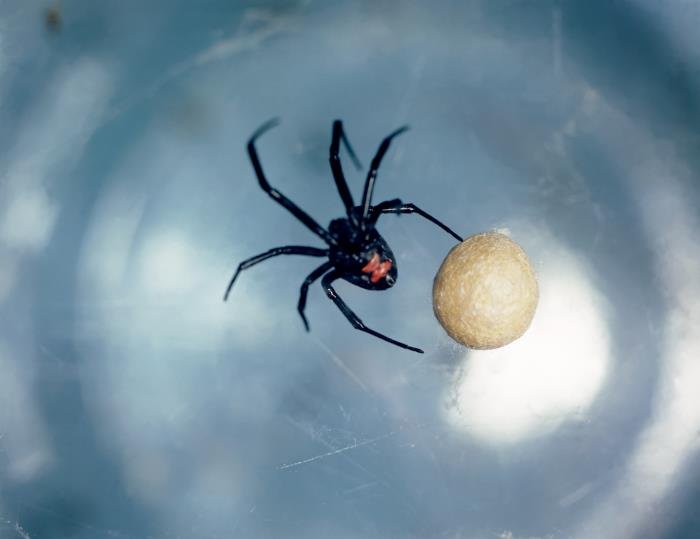
Black widow spiders (Latrodectus species) are venomous spiders found in parts of the United States. CDC/NIOSH notes that black widow venom is neurotoxic and can cause pain that spreads beyond the bite area, including the chest or abdomen. Many suspected “spider bites” are never confirmed, so the goal is not to diagnose a black widow from a skin mark alone. A witnessed spider, safe photograph, exposure setting, and symptom pattern are more useful.
If you are looking for how to treat black widow bite on behind the knee, the first-aid steps are the same as for other body sites, but the location can make swelling, walking, and bending more uncomfortable. Do not wait for a dramatic skin lesion before asking for help: black widow envenomation can cause significant whole-body symptoms even when the bite site itself looks small.
What should you do first after a suspected black widow bite?
Move away from the area where the spider was encountered and stay calm. If the spider can be photographed from a safe distance, a photo may help a clinician or poison specialist, but do not try to catch it with your hands. Spiders can bite again if trapped or handled.
Wash the bite area gently with soap and water. Apply a cold pack wrapped in cloth for short intervals rather than putting ice directly on the skin. MedlinePlus advises loosening clothing and removing rings or other tight jewelry before swelling increases. If the bite is on an arm or leg, keep the area comfortably still while arranging medical advice.
In the United States, Poison Help at 1-800-222-1222 connects callers with a poison center. Because black widow bites can cause significant neurologic and muscular symptoms, professional guidance is appropriate when a black widow exposure is suspected, especially when pain is increasing or symptoms are moving beyond the bite site.
Black widow first aid: what to do and what to avoid
| Step | Reason | Avoid |
|---|---|---|
| Wash with soap and water | Basic wound hygiene helps protect the skin. | Scrubbing until the skin is raw. |
| Use a wrapped cold pack | May reduce local pain and swelling. | Direct ice on bare skin. |
| Remove tight jewelry or clothing | Prevents constriction if swelling develops. | Waiting until rings or braces become difficult to remove. |
| Keep the person calm and still | Reduces unnecessary exertion while symptoms are assessed. | Running, heavy exercise, or “sweating out” venom. |
| Contact Poison Control or a clinician | Symptoms can become systemic and may need treatment. | Relying only on home remedies. |
| Bring a safe photo if available | May support identification. | Handling or trapping a live spider. |
What symptoms can a black widow bite cause?
The bite may feel like a pinprick, but symptom severity is not determined by the size of the skin mark. CDC/NIOSH describes pain that can spread from the bite area to the chest, abdomen, or the rest of the body. Other references describe muscle cramping or spasms, sweating, nausea, vomiting, weakness, restlessness, and changes in heart rate or blood pressure in more significant envenomation.
Some people have mostly local pain. Others develop generalized symptoms. Children, older adults, people with significant medical conditions, and anyone with severe or rapidly progressive symptoms deserve a lower threshold for urgent evaluation.
Do not use two puncture marks, redness, or a “target” appearance as proof of a black widow bite. Many skin conditions, infections, and other arthropod exposures can look similar. The combination of an actual spider encounter and a compatible symptom pattern is much more informative.
How to treat a black widow bite behind the knee
For how to treat black widow bite on behind the knee, start with washing, a wrapped cold pack, and removing tight clothing or supports around the leg. The back of the knee is a flexural area, so repeated bending and friction can make even mild local pain feel worse. Rest the leg in a comfortable position while you contact Poison Control or a healthcare professional.
Do not wrap the leg tightly, apply a tourniquet, cut the bite, suction the skin, or attempt to “draw out” venom. These approaches do not safely remove spider venom and can cause additional injury. If swelling progresses, check that clothing is not constricting the thigh or calf.
More importantly, watch for symptoms beyond the knee: severe abdominal or back cramps, widespread muscle pain, vomiting, profuse sweating, marked weakness, breathing difficulty, fainting, or confusion. Whole-body symptoms can make the situation more urgent even if the skin looks relatively mild.
Which symptoms need urgent or emergency care?
Seek prompt medical evaluation when a black widow bite is suspected and pain is severe, muscle cramps are developing, symptoms are spreading, or the person feels significantly unwell. A poison center can help decide the safest level of care.
Call 911 for trouble breathing, collapse, severe weakness, inability to stay awake, severe confusion, seizure, or another rapidly worsening life-threatening symptom. Do not drive yourself if severe symptoms make driving unsafe.
Chest pain, severe abdominal pain, or intense muscle spasms can overlap with other emergencies. Do not assume they are “just the spider bite.” Clinical assessment may be needed to rule out other causes and provide pain control, fluids, monitoring, or other treatment.
What treatment might a hospital provide?
Hospital treatment depends on the symptoms rather than the appearance of the bite alone. Clinicians may monitor vital signs, provide pain control, treat severe muscle spasms, give fluids when appropriate, and observe for complications. Antivenom can be used in selected severe widow-spider envenomations, but it is not needed for every case and treatment decisions belong to the medical team.
Tell the clinician the approximate time and location of the bite, where the spider was encountered, which symptoms began first, and how they changed. Mention important medical conditions, allergies, pregnancy, current medicines, and prior serious reactions.
If a safe photograph of the spider is available, bring it. Do not bring a loose live spider into an emergency department. A secure specimen may sometimes be useful, but only if it can be collected without another exposure.
What does recovery usually look like?
Recovery varies with the amount of venom, the person’s age and health, and symptom severity. Local soreness may improve before generalized muscle pain or fatigue completely resolves. The important trend is decreasing pain, fewer systemic symptoms, stable breathing and circulation, and improving ability to move and function.
Return for medical care if symptoms recur or worsen, the wound becomes increasingly warm or painful, drainage or fever develops, or new neurologic, breathing, or severe systemic symptoms appear. Secondary skin infection is a separate problem from venom effects and may need its own evaluation.
Could it be something other than a black widow bite?
Yes. CDC Yellow Book guidance notes that reports of spider bites are often unreliable because people may attribute unexplained skin wounds or infections to spiders even when no spider was seen. CDC also warns that skin infections such as MRSA can be mistaken for spider bites.
A black widow bite is more plausible when there was a witnessed spider or a clear exposure in an area where widows live, followed by a compatible pattern such as escalating pain and muscle cramping. A pus-filled bump, rapidly spreading warm skin infection, or an isolated lesion without any spider exposure may need a different explanation.
| Clue | Black widow envenomation can involve | Consider another cause when |
|---|---|---|
| Exposure | Spider seen or likely contact in a web, woodpile, storage area, or debris. | No spider was seen and another exposure is more plausible. |
| Pain pattern | Local pain that may spread with muscle cramps or spasms. | Primarily a pus-filled, hot, progressively infected-looking lesion. |
| Systemic symptoms | Sweating, nausea, weakness, abdominal or muscle symptoms. | Symptoms fit another acute illness or allergic reaction better. |
| Skin appearance | May be modest and is not diagnostic. | Diagnosis is being made from a photo alone. |
How can black widow bites be prevented?
Black widows tend to use sheltered, undisturbed spaces. Wear gloves when moving firewood, boxes, outdoor furniture, stored materials, or debris. Shake out gloves, shoes, clothing, and equipment that have been stored in garages, sheds, basements, or other low-traffic areas.
Keep storage areas organized, reduce clutter, and use caution when reaching into dark spaces you cannot see. Outdoor workers should use protective clothing in areas where venomous spiders may occur. Do not crush spiders with a bare hand.
Frequently asked questions
What should you do first for black widow bite treatment?
Wash the area, use a wrapped cold pack, remove tight jewelry or clothing near the bite, keep the person calm, and contact Poison Control or a healthcare professional for guidance.
Does a black widow bite always leave two puncture marks?
No skin feature reliably confirms the species. Puncture marks may be subtle or absent, and many other conditions can resemble a spider bite.
Can a black widow bite cause stomach cramps?
Yes. Widow-spider venom can cause severe muscle cramping and pain that may involve the abdomen, back, chest, or other areas.
Should I use a tourniquet?
No. Do not tightly bind the limb, cut the bite, or attempt suction. Use basic wound care and seek professional guidance.
When should I call Poison Control?
Call when a black widow exposure is suspected, symptoms are developing, or you are uncertain about the safest next step. In the U.S., Poison Help is 1-800-222-1222.
When is a black widow bite an emergency?
Call 911 for breathing difficulty, collapse, severe confusion, seizure, inability to stay awake, or rapidly worsening severe symptoms.
Related StingHelp guides
- Spider Bites
- First Aid for Bites & Stings
- Emergency & Warning Signs
- Infection, Complications & Healing
- What Bit Me? Identification Guide
Authoritative references
- CDC/NIOSH — Venomous Spiders at Work
- MedlinePlus — Black Widow Spider
- MedlinePlus — Spider Bites
- CDC Yellow Book — Spider Envenomation
- CDC — MRSA Skin Infections and Spider-Bite Confusion
Bottom line
For how to treat black widow bite on behind the knee, wash the area, use a wrapped cold pack, remove constricting clothing, keep the person calm, and contact Poison Control or a clinician. The seriousness of a black widow bite is determined more by pain, muscle cramping, weakness, breathing, circulation, and other whole-body symptoms than by the size of the skin mark.
Medical review status: Pending. This draft provides educational information for a U.S. audience and must not be published as medically reviewed until a qualified reviewer and review are documented.