
You used the first EpiPen, and now you are staring at the clock. The question epipen second dose when comes down to one number you should memorize: 5 to 15 minutes. If symptoms continue or come back after that window while help is still on the way, a second dose may be needed. Here is exactly how that decision works, how to give dose two, and the mistakes that trip people up.
The 5-to-15-minute rule, explained #
Epinephrine works fast but wears off fast. The standard guidance — repeated by GoodRx, hospital discharge instructions, and allergy guidelines — is:
- Wait at least 5 to 15 minutes after the first dose before even considering a second.
- Give the second dose only if symptoms persist or return (or get worse) and emergency help has not arrived yet.
- Do not give dose two sooner to “speed things up.” Injecting too much epinephrine too close together can be dangerous.
Why the wait? A single dose is enough for most reactions, and it takes several minutes to take full effect. Studies of food- and venom-induced reactions have found roughly 21–36% of reactions end up needing a second dose — so this is common, not a sign that something went wrong. The second dose exists for exactly two situations: the first dose did not fully control the reaction, or symptoms improved and then returned (a biphasic reaction, which can occur hours later).
The rule is simple to say and hard to follow when someone you love is struggling to breathe: start timing the moment the first dose goes in, call 911 immediately, and let the clock — not your panic — decide.
How to give the second dose, step by step #
The second dose is given exactly like the first. If you have practiced with a trainer pen, this will feel familiar:
- Confirm it is time. At least 5–15 minutes have passed since dose one, symptoms persist or have returned, and EMS is not yet on scene.
- Use a fresh auto-injector. Each pen holds one dose. Remove the blue safety release (on EpiPen) the same way you did before.
- Inject into the outer mid-thigh. Hold the orange tip against the outer thigh — through clothing is fine. Press firmly until you hear or feel the click.
- Hold for the full count. Keep the device pressed against the thigh for about 10 seconds (some brands say 3 seconds — follow your device’s instructions), then remove.
- Massage the site gently for about 10 seconds to help the medication spread.
- Note the exact time of the second dose and keep both used pens to show the paramedics.
Important: a second dose goes into the other thigh if possible. And never inject into a hand, foot, or buttock — thigh muscle is where absorption is fastest.
Why doctors say to always carry two pens #
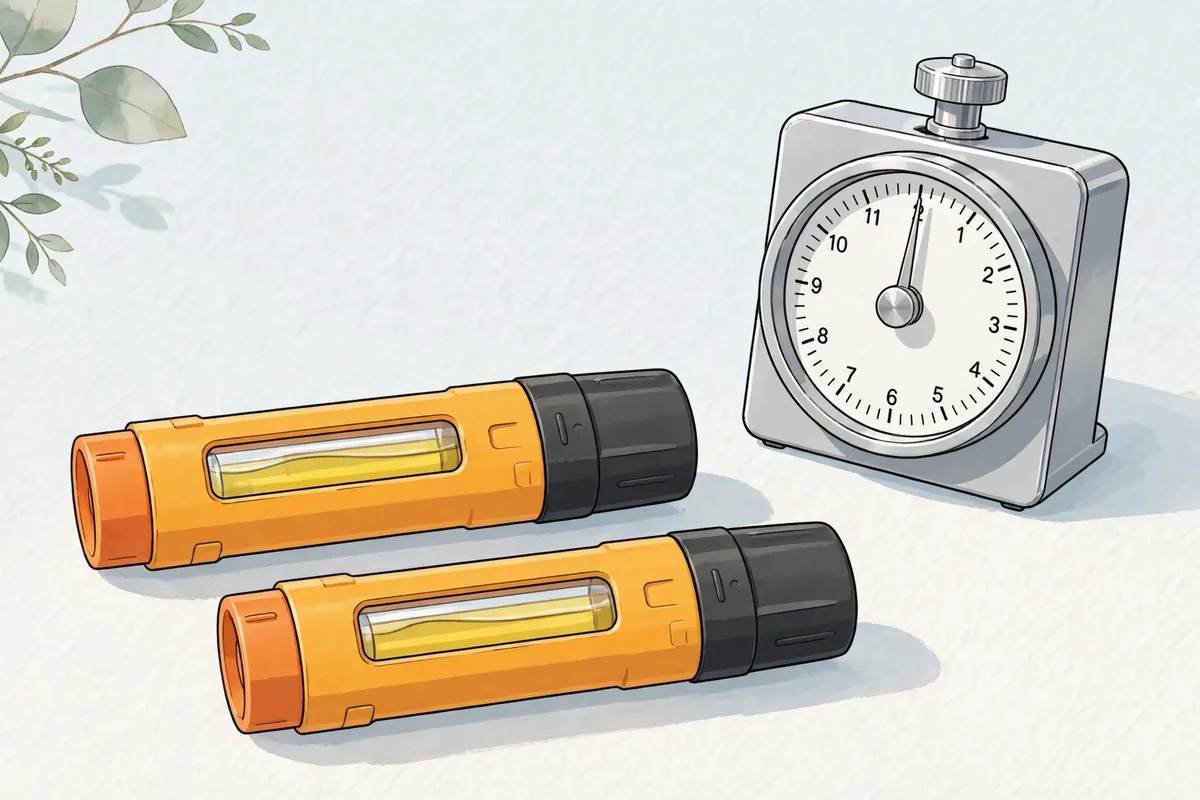
“Best to carry two auto-injectors at all times” is one of the most consistent pieces of advice in anaphylaxis care, and the reasons are practical:
- One may not be enough. As noted above, a significant minority of reactions need a second dose before medical help arrives.
- The first attempt can misfire. If the pen does not click or the injection was wrongly administered, that dose is wasted — you need a backup immediately, not a trip to the pharmacy.
- Biphasic reactions. Symptoms can resolve and then return 1–8 hours later (occasionally up to 24–48 hours). The second pen is your bridge if a late phase begins before you are under medical observation.
- Shared responsibility. Two pens mean a friend, teacher, or coworker can keep one in a bag while you keep one on your body.
Check expiration dates regularly — epinephrine degrades over time — and do not store pens in a hot car or freezing glovebox. Replace used pens right away so you are never caught with two spent devices. Learn the signs that mean you should reach for that first pen at all: anaphylaxis warning signs after a sting.
What to tell the 911 dispatcher and the ER team #
After using any EpiPen — even if the person looks dramatically better — call 911 immediately. Epinephrine is a bridge, not a cure. The reaction can rebound, and emergency personnel bring additional treatments and monitoring you cannot provide at home.
When you call, give this information:
- The person’s symptoms (trouble breathing, throat tightness, widespread hives, dizziness — whatever you see).
- That epinephrine was given, how many doses, and the exact times.
- The suspected trigger (bee sting, wasp sting, food — whatever it was).
- Your exact location, and whether the person is conscious and breathing.
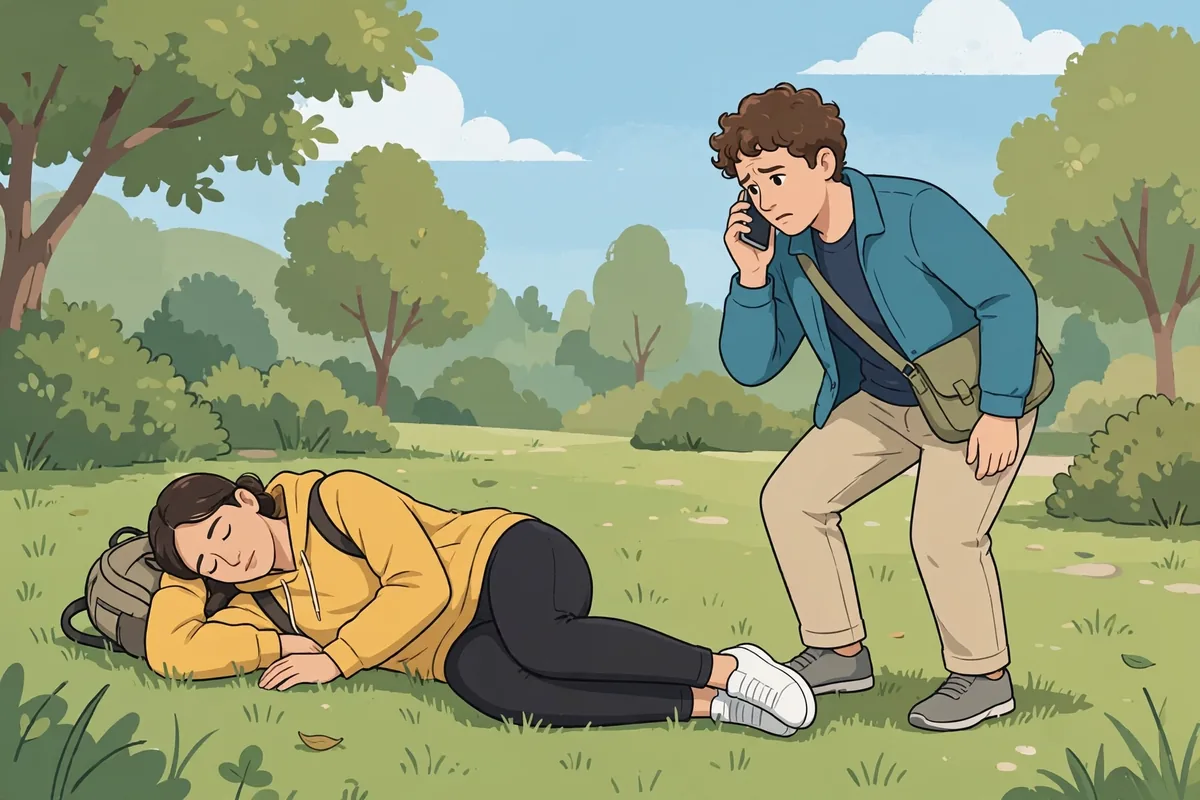
Stay with the person until help arrives. Keep them lying down with legs raised if possible (sitting up if breathing is difficult). Watch closely for returning symptoms — that is the moment dose two becomes relevant. At the ER, the medical team will likely observe the person for several hours because of the biphasic-reaction risk, even if they feel fine.
Common second-dose mistakes to avoid #

- Dosing too early. Giving dose two at minute two “just in case” stacks too much epinephrine. Let the first dose do its work.
- Not calling 911. The most dangerous mistake of all. A second pen does not replace emergency care — people have died from rebound reactions at home after a single dose “fixed” things.
- Injecting in the wrong place. Never into a vein, finger, or hand. Outer thigh only.
- Reusing a spent pen. Each auto-injector is single-dose. Two injections require two devices.
- Waiting to see if “it gets really bad.” Guidelines are clear: epinephrine should be given at the first sign of a severe reaction, not after it escalates. Hesitation, not overuse, is the bigger risk.
- Forgetting the time. Write down dose times (phone notes, a scrap of paper) — the ER team needs them, and the 5–15-minute decision depends on them.
If you are ever unsure whether a sting reaction is mild or severe, learn the full red-flag list so the decision is easier next time: bite and sting warning signs.
Warning signs: when to seek care #
Call 911 immediately if there is trouble breathing or swallowing, swelling of the face, lips, tongue, or throat, widespread hives, dizziness or fainting, a racing heartbeat, or the person becomes confused or collapses. Use epinephrine right away at the first sign of these and then call 911 — do not wait to see if symptoms improve on their own. If a second dose is needed (symptoms persist or return after 5–15 minutes), give it while waiting for EMS.
See urgent care or your allergist soon after any reaction for which epinephrine was used, even if the ER discharged you — you may need your action plan updated, your prescription refilled, and possibly a referral for venom allergy testing. Any delayed symptoms hours later (returning hives, breathing trouble, nausea, abdominal pain) warrant an immediate ER visit for a possible biphasic reaction.
Frequently asked questions #
Can I give a third dose of epinephrine? #
In a hospital or ambulance, medical professionals can give additional epinephrine (including IV forms) as needed — the recommended medical dosing is 0.01 mg/kg up to 0.5 mg intramuscularly every 5–15 minutes. For a layperson with auto-injectors, two doses are the standard field protocol; after that, you are in EMS’s hands. Always get to emergency care regardless.
Can I give the second dose through clothing? #
Yes. Auto-injectors are designed to be used through a single layer of clothing — jeans included. Do not waste time removing pants during a severe reaction; place the device against the outer mid-thigh and press.
What if symptoms are completely gone after the first dose? #
Still call 911 and still go to the ER. Symptoms can return hours later in a biphasic reaction, and you cannot predict whether that will happen. Carry your second pen with you to the hospital in case symptoms rebound on the way.
Does the second dose have to be EpiPen, or can it be a different brand? #
Any epinephrine auto-injector of the correct dose can be used — EpiPen, Auvi-Q, or generic — as long as you know how to operate it. That is why practicing with each device you own matters: different brands have different grips and safety mechanisms.
Medical and editorial note #
This document is general information only and is not medical advice. Anaphylaxis is a medical emergency, and epinephrine dosing decisions should follow your doctor’s action plan and the instructions on your specific device. If you have a known sting or food allergy, review your emergency action plan with your allergist at least once a year — and if you have ever needed a second dose, mention it, because it may change your prescription.


