
Your child has a bug bite and now feels warm — and every parent’s mind jumps to the worst case. Here is the direct answer: fever after a bug bite in children when to worry depends on the pattern. A mild, short-lived low fever alongside a big, itchy bite reaction is often just the immune system doing its job. But a high fever, a fever that appears days after the bite, or a fever with spreading redness, streaks, or a sick-looking child needs prompt medical attention. The fever’s timing, height, and company tell you which situation you are in.
This guide explains what counts as a fever at each age, why bites can raise temperature, how to tell an immune response from an infection, what to do at home, and the exact signs that mean you should call the pediatrician or head to urgent care.
What Counts as a Fever in Children #
Not every warm forehead is a fever, and the threshold depends on age and how you measure. Getting this right prevents both panic and complacency.
| Age group | Fever threshold | Preferred measurement | Notes | |—|—|—|—| | Under 3 months | 100.4°F (38°C) or higher, rectal | Rectal | Any fever at this age needs immediate medical evaluation — no waiting | | 3-6 months | 100.4°F (38°C) or higher | Rectal or armpit (confirm with rectal if concerned) | Call the pediatrician the same day | | 6 months – 5 years | 100.4°F (38°C) or higher | Rectal, ear, or forehead per device instructions | Context matters most — behavior and other symptoms guide urgency | | Over 5 years | 100.4°F (38°C) or higher | Oral (once they can hold it under the tongue) | Older kids can usually describe how they feel, which helps assessment |
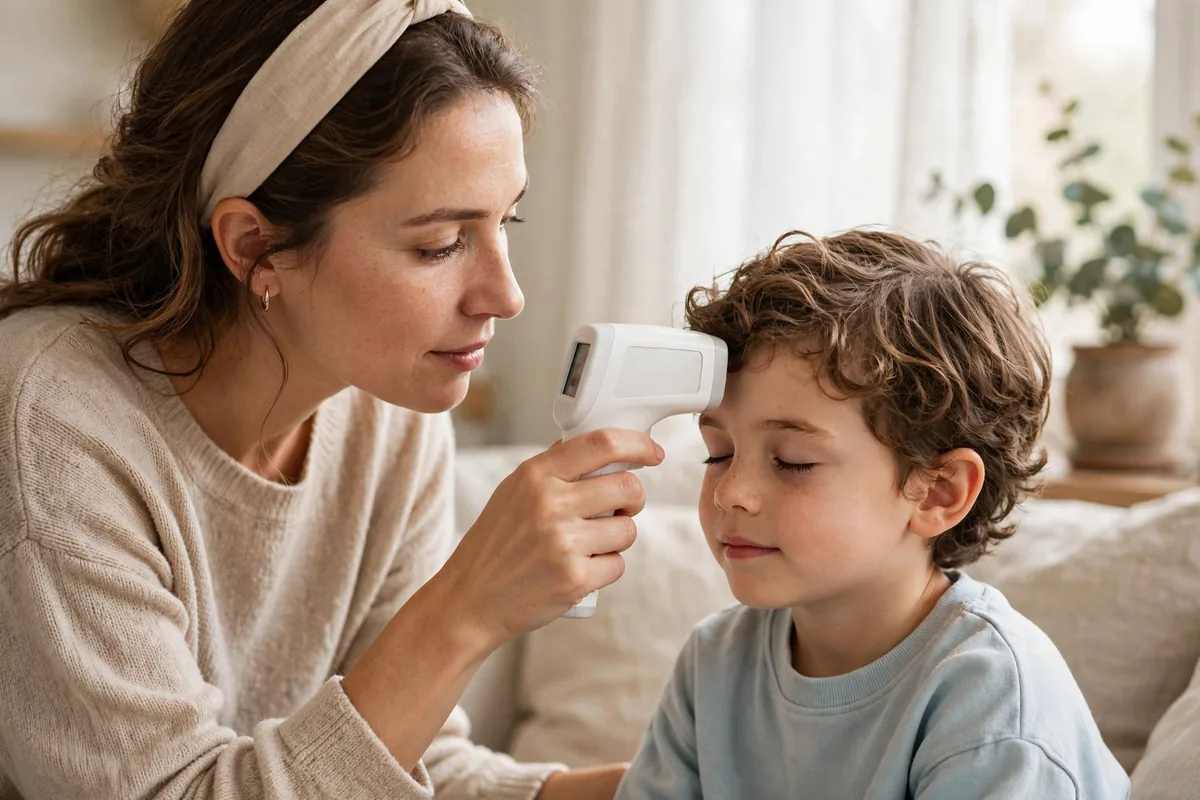
Measure, do not guess. Hands are unreliable thermometers — a child can feel warm from playing, crying, or being overdressed without having a fever. Use a digital thermometer and follow its instructions for the measurement site. Forehead and ear thermometers are convenient but can read slightly differently from rectal or oral; when a reading is borderline and your child seems ill, recheck or confirm with another method.
The under-3-month rule is absolute. Pediatric guidance is unambiguous: any infant younger than 3 months with a rectal temperature of 100.4°F (38°C) or higher needs to be evaluated by a doctor immediately, regardless of how the baby otherwise seems. Young infants have immature immune systems, and fever at this age is always taken seriously.
Fever height is not the whole story. A child with 101°F who is playing, drinking, and alert is generally less concerning than a child with 100.6°F who is lethargic, inconsolable, or refusing fluids. Behavior is a vital sign in pediatrics — trust what you see, not just the number.
Why Bug Bites Can Cause a Fever #
It helps to understand what a fever actually is: a deliberate immune response, not a malfunction. When the body detects a threat — an infection, or sometimes just a strong inflammatory trigger — immune messengers tell the brain to raise the body’s temperature set point. A slightly higher temperature makes the environment less hospitable to pathogens and speeds up immune activity.
How a bite triggers this. Insect saliva and venom contain foreign proteins. In most children, the reaction stays local: a red, itchy bump. But in some children — especially those with strong allergic responses to bites — the immune reaction is vigorous enough to nudge the whole system, producing a low-grade fever (typically 99.5-101°F) for a day or so alongside the local reaction.
Large local reactions and fever often travel together. Children who develop dramatic swelling from mosquito bites (the pattern sometimes called Skeeter syndrome) are the most likely to run a mild fever with it. The same outsized immune response that swells a whole forearm can raise the temperature a degree. This is uncomfortable but not dangerous in itself.
Fever can also mean the bite is infected. This is the alternative explanation you must keep in mind. If bacteria entered through scratched skin, the resulting infection (cellulitis) commonly produces fever — and this fever tends to appear 1-3 days after the bite, climb higher, and come with a bite site that looks worse, not better. Timing is the key differentiator, covered in the next section.
Coincidence is common. Children get viral illnesses constantly. A child can easily have a mosquito bite and an unrelated cold or stomach bug at the same time. If the fever comes with runny nose, cough, sore throat, vomiting, or diarrhea — symptoms no bite explains — the bite is probably an innocent bystander.
Reading the Pattern: Immune Response or Infection? #
This is the central judgment call. Use the bite’s appearance, the fever’s timing, and your child’s behavior together.
| Feature | Likely immune response | Likely infection — seek care | |—|—|—| | Fever timing | Within 24 hours of the bite, alongside peak swelling | 1-3+ days after the bite, as the bite should be improving | | Fever height | Low-grade (under 101-102°F), brief | Higher, persistent, or climbing | | Bite appearance | Big, red, swollen, itchy — but stable or improving | Redness spreading, hotter, more painful, streaks, increasing pus | | Child’s behavior | Playing, eating, drinking normally between fever spikes | Lethargic, inconsolable, refusing fluids, unusually sleepy | | Response to fever reducers | Fever comes down, child perks up | Fever barely budges, child still looks ill |
The 48-hour trend test #
When you are unsure, the trend over 48 hours is your best diagnostic tool. An immune-response fever with a big bite reaction follows this arc: bite swells impressively on day 1, mild fever appears, then both the swelling and the fever ease on days 2-3. An infection follows the opposite arc: the bite looks a little worse each day, the fever appears or climbs as the bite should be fading.
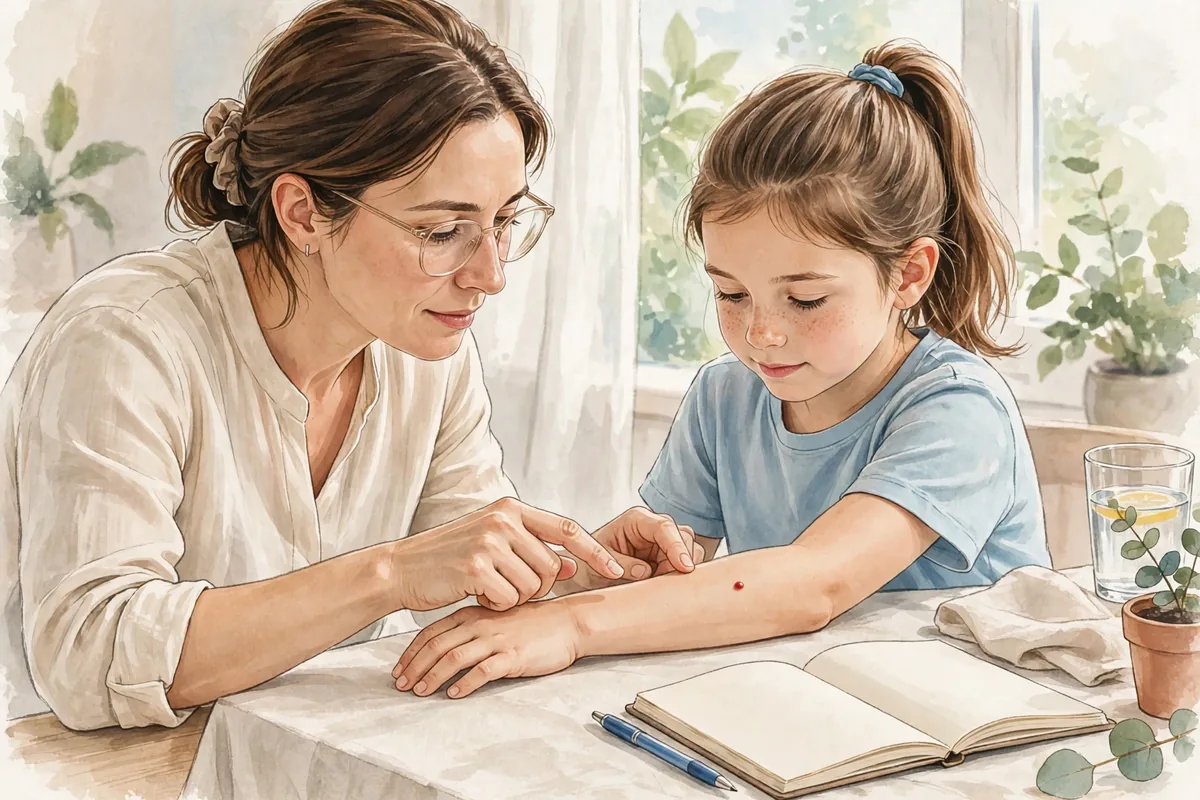
Mark and photograph. Outline the edge of the redness with a pen and photograph the bite daily. If the redness crosses your mark, that is objective spread — bring the photos to the appointment. Parents’ memories of “how red it was yesterday” are unreliable; photos are not.
Tick bites deserve special attention #
Fever after a tick bite follows different rules than fever after a mosquito bite. Tick-borne illnesses — including Rocky Mountain spotted fever and ehrlichiosis — typically cause fever starting days to about two weeks after the bite, often with headache, muscle aches, or rash. The CDC notes that fever from Rocky Mountain spotted fever generally begins within about 2 weeks of the tick bite.
What this means practically: if your child had a tick bite and develops fever days later — especially with a rash, headache, or just looking unwell — do not attribute it to a simple bite reaction. Call the pediatrician and mention the tick bite explicitly, including when it happened and how long the tick was attached, if you know. Tick-borne illnesses are very treatable when caught early, which is exactly why the fever-timing connection matters.
Save the tick if you can. If you removed a tick, save it in a sealed bag or container with the date. Identification of the tick species helps the doctor assess risk. Do not crush it with bare fingers.
Skeeter Syndrome and Fever in Children #
Some children react to mosquito bites with swelling that alarms every parent who sees it: a single bite balloons into a hot, red, swollen area the size of a palm, sometimes with blistering. This pattern — a large local allergic reaction to mosquito saliva, often called Skeeter syndrome — is most common in young children, particularly toddlers and preschoolers whose immune systems are encountering mosquito proteins with full force.
Why it happens. Young children have had less lifetime exposure to mosquito saliva, so their immune systems can mount an outsized first response. Many children outgrow the worst reactions as they get older and their immune systems learn to tolerate the proteins.
The fever connection. Children with large local reactions are the group most likely to develop a mild fever alongside the bite — the same vigorous immune response, expressed systemically. The fever is typically low-grade and short-lived, arriving with the peak swelling and fading as the swelling recedes.
How to handle it. Cold compresses for 10-15 minutes at a time reduce swelling and itching. An oral antihistamine per label directions (check with your pharmacist for the right product and dose for your child’s age and weight) can calm the allergic component. Keep the child from scratching — trim nails, and consider covering the area. Mark the swelling’s edge and watch the trend: Skeeter syndrome swelling is dramatic but should stabilize within 48 hours and then recede over the following week.
When it is not Skeeter syndrome. If the swelling keeps expanding past 48 hours, develops red streaks, becomes increasingly painful rather than itchy, or comes with a climbing fever, treat it as a possible infection instead. Dramatic is not the same as dangerous — but expanding and worsening is a different story.
Home Care: Monitoring Your Child After a Bite #
For a child with a bite and a mild fever who is otherwise acting normally, careful home monitoring is appropriate. Here is a structured approach.
Take a baseline. Record the temperature, photograph the bite with a size reference, note the time, and write down what your child ate and drank recently. This baseline makes every later comparison meaningful.
Manage comfort, not just the number. A mild fever that does not bother the child does not necessarily need treatment. If your child is uncomfortable, an age-appropriate fever reducer per label directions can help — check with your pharmacist about the right product for your child’s age and weight, and never give aspirin to children. Dress the child lightly, offer plenty of fluids, and let them rest without forcing it.
Care for the bite itself. Wash it gently with soap and water. Apply cold compresses for itching and swelling. Discourage scratching — for young children, this may mean mittens or socks on hands at night, and keeping nails trimmed short. Do not apply adult-strength creams, essential oils, or home remedies to children’s skin without checking with the pharmacist or pediatrician.
Recheck on a schedule. Take the temperature every 4-6 hours while the fever persists. Photograph the bite once or twice a day. Note fluid intake and wet diapers or bathroom trips — hydration is one of the most important things to track in a febrile child.
Keep a simple log. Time, temperature, bite appearance, fluids, behavior — a few lines on your phone’s notes app. If you end up calling the pediatrician or visiting urgent care, this log answers their first five questions instantly and gets your child better care faster.
Know your child’s baseline. Children with asthma, immune conditions, or other chronic illnesses may need a lower threshold for calling the doctor. If your child has a care plan, follow it — and when in doubt, the pediatrician’s nurse line exists for exactly these questions.
Age-Specific Guidance: Babies, Toddlers, and Older Kids #
Babies under 3 months #
The rule is simple and non-negotiable: rectal temperature of 100.4°F (38°C) or higher means immediate medical evaluation. Do not try home care first, do not wait to see if it passes. Call your pediatrician or go to the emergency department. This applies whether or not there is a visible bite — at this age, fever is always evaluated promptly.
Babies 3-12 months #
Call the pediatrician the same day for any fever of 100.4°F or higher. Babies this age cannot tell you how they feel, so you watch behavior closely: poor feeding, unusual sleepiness, inconsolable crying, fewer wet diapers, or a bulging soft spot on the head are all reasons to seek care urgently rather than waiting for a callback.
Toddlers and preschoolers (1-5 years) #
This is the peak age for dramatic bite reactions and Skeeter-syndrome-type swelling. A mild fever with a big, stable bite reaction in an otherwise playful toddler can be monitored at home with the approach above. Call the pediatrician if the fever exceeds 102°F, lasts more than 2-3 days, or if the bite is worsening. Any febrile seizure — shaking or stiffening during a fever — needs emergency evaluation, though febrile seizures are usually brief and not dangerous in themselves.
School-age children and teens #
Older children can describe their symptoms, which makes assessment easier. Ask about headache, muscle aches, sore throat, and how the bite feels. A teen with a tick bite and a fever days later needs the tick-borne-illness consideration from the earlier section. Older kids are also more likely to have scratched bites open during sports or play — check whether the bite site shows infection signs.
Warning signs: when to seek care #

Call 911 immediately if your child has trouble breathing or swallowing; swelling of the face, lips, tongue, or throat; widespread hives; dizziness, fainting, or unresponsiveness; or a racing heartbeat. If your child carries epinephrine, use it first, then call 911. These are signs of a severe allergic reaction (anaphylaxis), which is a medical emergency at any age.
Seek same-day or urgent care if: the bite’s redness is spreading or streaking; the bite is hot, increasingly painful, or producing more pus; your child has a fever over 102°F or a fever lasting more than 2-3 days; your child is lethargic, inconsolable, refusing fluids, or has markedly fewer wet diapers; a rash appears along with the fever days after a tick bite; the bite is near the eye, on the face with significant swelling, or in the mouth; or your instincts say something is wrong — parental concern is itself a valid reason to call. For bite-specific first aid steps, see fire ant stings in children: warning signs and our bite and sting warning signs reference.
Frequently asked questions #
Can a mosquito bite alone cause a fever in a child? #
Yes, occasionally. A strong local allergic reaction to mosquito saliva can produce a mild, short-lived fever — typically low-grade and lasting a day or so — alongside dramatic swelling. This is most common in young children having big reactions. However, fever plus a bite that is getting worse (spreading redness, increasing pain, streaks) points to infection rather than allergy, and fever appearing days after a tick bite raises the question of tick-borne illness. The pattern matters more than the mere presence of fever.
My toddler’s whole forearm swelled from one mosquito bite and she has a slight fever. Is this an emergency? #
Probably not, but it deserves watching. Dramatic swelling from a single bite with a mild fever in an otherwise happy, active toddler fits the large-local-reaction pattern (Skeeter syndrome), which is alarming to look at but not dangerous in itself. Use cold compresses, an age-appropriate antihistamine per label directions, and monitor the trend. It becomes urgent if the swelling keeps expanding past 48 hours, red streaks appear, the fever climbs, or your toddler becomes lethargic or inconsolable. When in doubt, call your pediatrician’s nurse line — describing the pattern usually gets you a clear answer quickly.
How do I tell if the fever is from the bite or from a coincidental illness? #
Look at the company the fever keeps. Fever with runny nose, cough, sore throat, vomiting, or diarrhea is almost certainly an unrelated viral illness that happened to coincide with the bite. Fever with a bite that is stable or improving, no other symptoms, and a child who is otherwise well fits a bite-related immune response. Fever with a bite that is worsening — more red, more painful, streaking — suggests the bite is infected. When both a cold and a bite are present, treat them as separate issues and monitor each.
Should I give my child Benadryl for a bite with fever? #
An oral antihistamine can help with the itching and swelling of a bite reaction, but it does not treat fever and is not a substitute for evaluating why the fever is there. Use age-appropriate products per label directions, and check with your pharmacist about the right choice for your child’s age and weight. For the fever itself, use an age-appropriate fever reducer per label directions if your child is uncomfortable — and never give aspirin to children or teens. If you are unsure about any medication for your child, the pharmacist or pediatrician’s nurse line can advise in minutes.
When should I take my child to the emergency room versus waiting for the pediatrician? #
Go to the emergency room for any anaphylaxis signs (breathing difficulty, face/throat swelling, widespread hives, fainting), any fever in an infant under 3 months, a febrile seizure, signs of dehydration (no tears, very few wet diapers, sunken eyes), or a child who is difficult to wake or inconsolable. Call the pediatrician the same day for spreading bite redness, persistent fever over 2-3 days, fever after a tick bite, or a bite near the eye. For a mild fever with a stable bite in a well-appearing child, home monitoring with a call to the nurse line for guidance is usually the right middle path.
Medical and editorial note #
This guide provides general information about fever and bug bites in children and is not medical advice. Children, especially infants, can become seriously ill quickly, and only a healthcare professional can evaluate your child’s specific situation. When in doubt, contact your pediatrician, call a nurse advice line, or seek urgent care — parental concern is always a valid reason to get a child checked.


