
Finding a yellow jacket ground nest in yard safety terms means one thing first: do not disturb it. Yellow jackets nest underground in old rodent burrows, hollow stumps, and wall voids, and they defend the entrance aggressively — most yard stinging incidents happen when someone mows, digs, or steps near the hole without knowing it is there. Here is how to handle it safely.
How to confirm it is a yellow jacket nest #
Ground nests are easy to misidentify, and the treatment differs by insect. Look for these signs:
- A single busy entrance hole in the ground, often with a steady stream of wasps flying in and out during the day. The hole may be no wider than a quarter.
- Yellow-and-black striped wasps moving fast and purposefully — not the fuzzy, slower bumble bees (which also nest in the ground but are far less aggressive).
- Location clues: along fence lines, under shrubs, in compost piles, near woodpiles, or in bare patches of lawn. Mowing near one of these spots and getting swarmed is the classic discovery story.
Watch from a safe distance — 15 feet or more — and note exactly where the entrance is. Mark it during the day from afar (a flag or stick placed several feet to the side, not in the flight path) so you can find the spot after dark. Multiple entrance holes are possible, so watch long enough to be sure you have found them all. If you want to get better at spotting hidden nests before you find one the hard way, see our guide on how to find a wasp nest.
Immediate safety: while the nest is active #
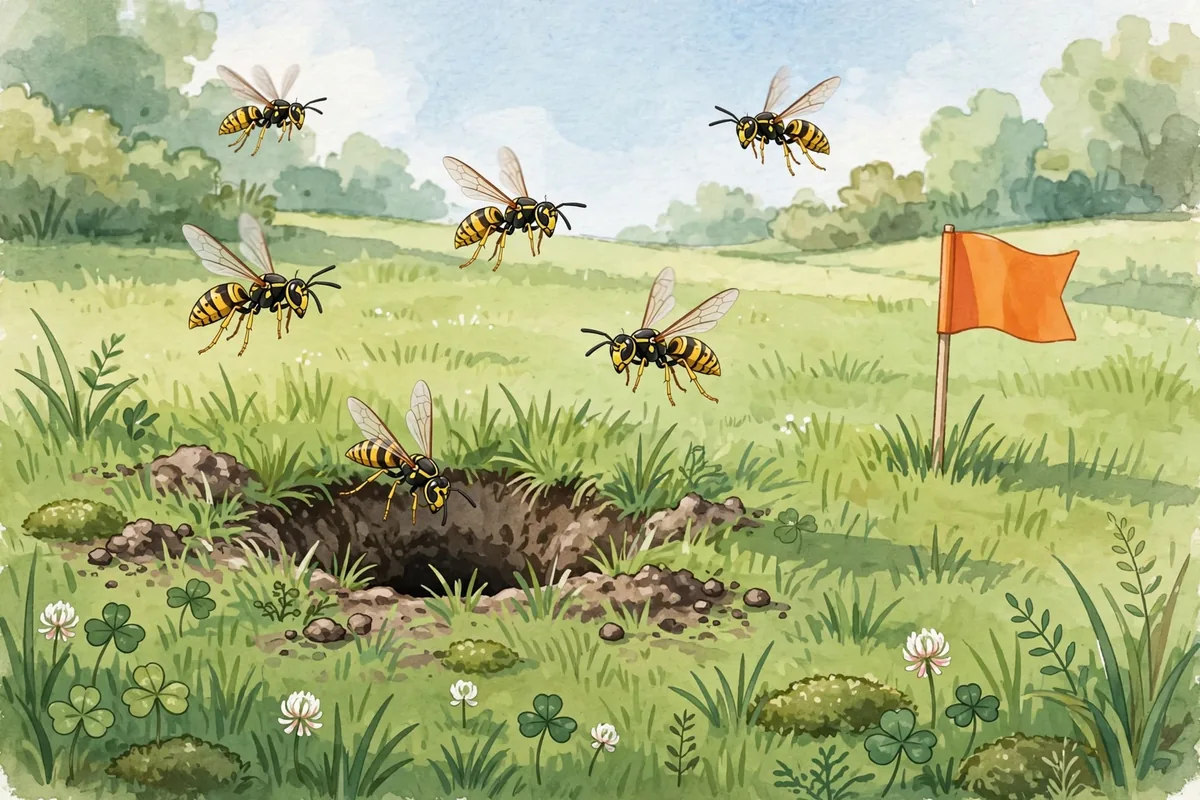
Until the nest is dealt with, treat the area as a hazard zone:
- Keep people and pets away. Rope off or mark a perimeter around the entrance. Yellow jackets become more aggressive as summer wears on and the colony grows.
- Do not mow, trim, or dig near it. Vibrations are a major trigger. If the nest is in the lawn, mow a wide berth around it or leave that section unmowed.
- Do not plug the hole during the day. Trapped wasps will chew new exits — possibly into your house if the nest connects to a wall void — and you will be standing right there when they come out angry.
- Do not pour gasoline or flammable liquids into the hole. This is a fire and soil-contamination hazard and is not an approved method.
- Keep food and trash sealed. Fall foraging yellow jackets are strongly attracted to protein and sweets; open garbage near the nest draws more traffic through your yard.
If someone is stung while you are sorting this out, prompt first aid matters — see our guide on what to do for a yellow jacket sting.
Treating the nest yourself: the night method #
If the nest is in a low-traffic corner and you are comfortable doing it yourself, timing and preparation are everything. University extension guidance is consistent on this: treat at dusk or after dark, when the colony is home and least active.
- Locate the entrance in daylight so you know exactly where to aim after dark.
- Wait until about two hours after sunset (or just before dawn). The wasps are sluggish and nearly the whole colony is inside.
- Dress for it: long sleeves, long pants tucked into socks, gloves, and ideally a hat with a veil or at least a hood. Cover every gap.
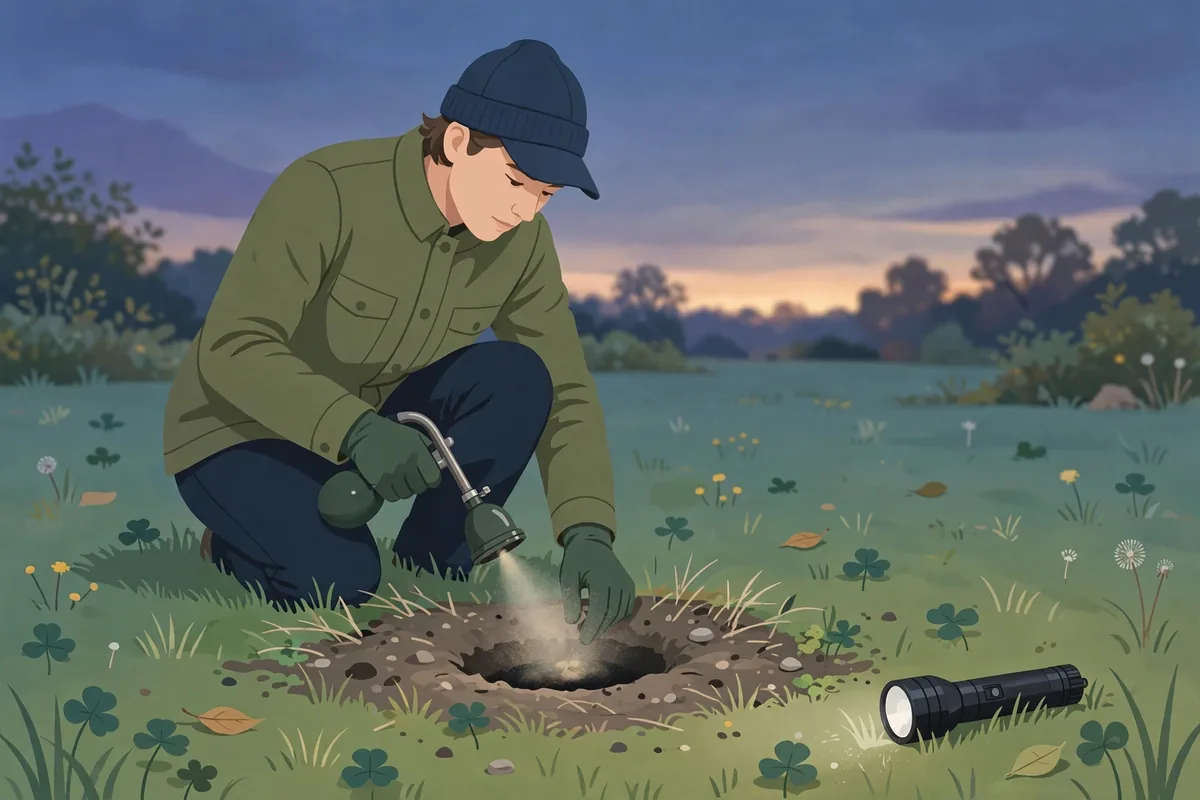
- Use a red-tinted flashlight or set a white light on the ground aimed to the side — insects are less attracted to red light, and a light in your hand draws them toward your face.
- Apply a product labeled for wasps and hornets directly into the entrance — a jet-spray aerosol from 15–20 feet, or an insecticidal dust puffed into the hole (dusts work well for ground nests because workers track the particles deep inside). Follow the label directions exactly.
- Leave the area immediately after treating. Do not stand around to admire your work.
- Check after 24 hours from a safe distance. If traffic continues, repeat once. If it is still active after two treatments, call a professional.
Never treat in the middle of the day — that is when foragers are out, the colony is alert, and you will be stung. And if the nest is large, near a doorway or play area, inside a wall, or anyone in the household is allergic to stings, skip the DIY route and call a licensed pest professional from the start.
Keeping the yard safe afterward #
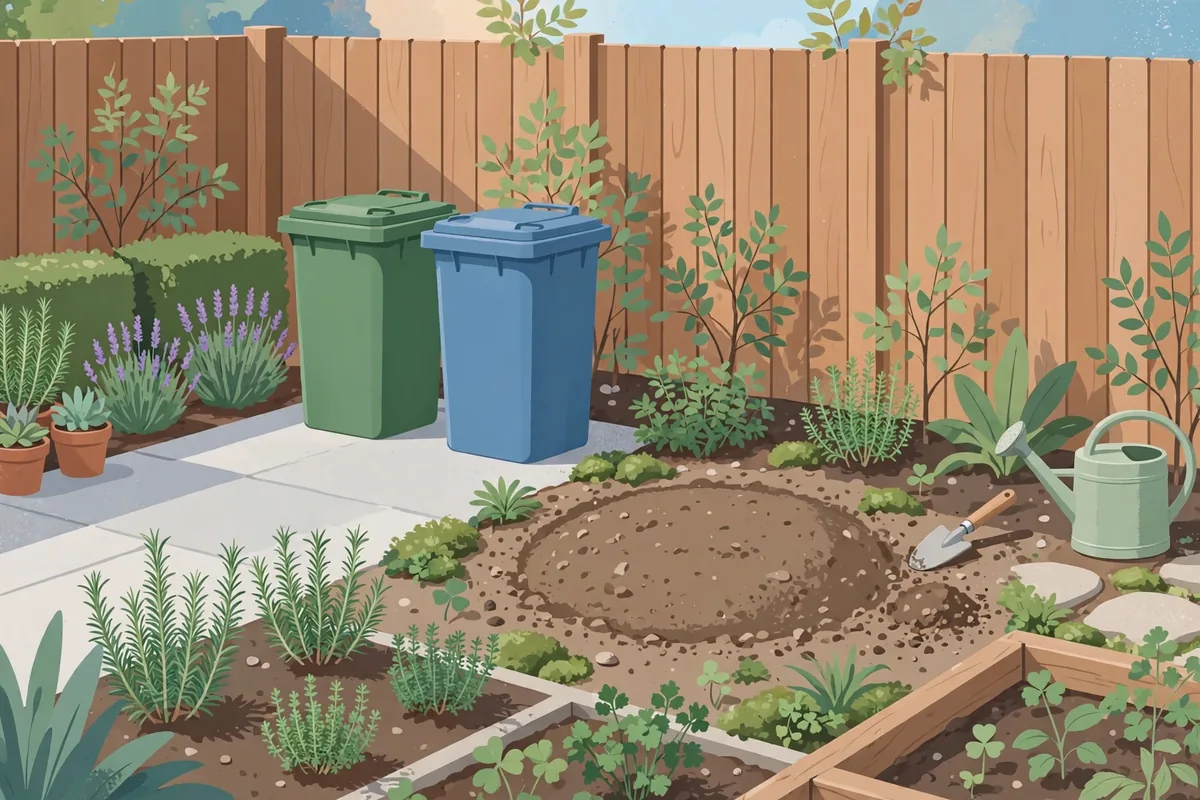
Once activity stops, seal the entrance with soil so a new colony does not reuse the tunnel system next season. Then reduce what draws yellow jackets to your yard in the first place:
- Keep outdoor trash cans covered with tight, wasp-proof lids.
- Pick up fallen fruit promptly and keep compost covered.
- Do not leave pet food, soda cans, or uncovered food outdoors.
- Fix gaps in siding and foundations where a future colony could nest in a wall void.
One more comfort: in regions with cold winters, yellow jacket colonies die off naturally after hard frosts — only mated queens overwinter, and they start new nests elsewhere in spring. A nest that is far from foot traffic can sometimes simply be left alone until cold weather ends it. In warm-winter regions, colonies can persist longer, so active treatment matters more.
Why ground nests appear in your yard #
Yellow jackets do not dig their own underground homes from scratch. A queen in spring looks for a ready-made cavity: an abandoned rodent burrow, a hollow stump, a gap under a shed, a crack in a retaining wall, or a compost pile with loose, dry material. Once she finds one, she builds paper comb inside it, and the colony expands through the summer into the space available. That is why ground nests cluster in particular kinds of yards. Lawns with bare patches, old tree stumps, woodpiles sitting directly on soil, dense shrubs against fences, and compost heaps are all prime real estate. A yard that had a rodent problem in winter may have the burrows a queen wants in spring, even if the rodents are long gone.
Understanding this changes prevention from guesswork into a checklist. Fill in abandoned burrows and holes in the lawn in early spring, before queens start house-hunting. Keep woodpiles raised off the ground and away from play areas. Clear dense ground cover along fence lines where a nest entrance could hide. Keep compost contained and turned, rather than letting loose piles sit undisturbed all summer. None of these steps guarantees a nest-free yard — a queen can still choose a spot you missed — but each one removes a ready-made cavity, and a queen that cannot find a cavity moves on to a neighbour’s yard instead. If you do find a nest, resist the urge to investigate it closely; confirm it from a distance, mark it from afar, and decide on treatment with the safety steps in this guide.
Season matters for prevention too. A ground nest is hardest to spot in spring, when traffic at the entrance is light, and easiest to spot in late summer, when dozens of wasps stream in and out — but also most dangerous then, because the colony is largest. The best time to walk your yard looking for entrance holes is a warm afternoon in early summer, from a safe distance, watching for steady wasp traffic at ground level. Teach children what a ground-nest entrance looks like — a small hole with wasps coming and going — and the rule that goes with it: stop, walk away calmly, and tell an adult. Most yard stinging incidents involving ground nests happen to someone who never saw the hole at all.
Professional removal vs. doing it yourself: how to decide #
Doing it yourself is reasonable only for a small, accessible, low-traffic nest when you have the right protective gear, a labelled wasp treatment, and a clear escape route — and even then, only at night, when most wasps are inside and less active. It is not reasonable when the nest is large, when you cannot see all the entrances, when the nest connects to a wall void or the house structure, when anyone nearby is allergic to stings, or when the nest sits in a high-traffic area like a path, playground, or driveway where a failed attempt puts others at risk. A professional pest controller brings protective equipment, professional-grade treatments, and experience judging colony size from entrance traffic — and, importantly, they carry the risk instead of you.
Cost is the usual reason people hesitate, but weigh it against the cost of a failed DIY attempt: multiple stings, a medical visit, or a colony that relocates into a wall void because the entrance was blocked incorrectly. If you call a professional, tell them the entrance location, how long you have noticed traffic, whether anyone has been stung, and whether the nest may connect to the house. After any treatment — DIY or professional — keep the area roped off for at least a day, watch for continued traffic, and do not assume a quiet entrance means an empty nest; some treatments take time to work through the colony. For the longer seasonal picture, see how long a wasp nest stays active, and if you are unsure whether the nest will be reused next year, do wasps reuse nests answers that directly.
Two related yard risks are worth fixing while you are at it. Yellow jackets are drawn to open trash and fallen fruit in autumn, so a nest near a bin area is worse than a nest in a quiet corner — our guide to yellow jackets in trash cans covers sealing and placement. And if someone is stung during the whole process, multiple stings need different handling from a single sting, covered in multiple wasp stings first aid. Deal with the nest first, the attractants second, and keep people and pets clear until both are done.
Decision table: DIY or professional? #
| Situation | DIY may be reasonable | Call a professional |
|---|---|---|
| Nest size and traffic | Light traffic, single visible entrance | Heavy traffic, multiple entrances, or unknown extent |
| Location | Quiet corner, away from paths and play areas | Path, playground, driveway, or near the house |
| Structure | Clearly a standalone ground cavity | Possibly connected to a wall void or foundation |
| People at risk | No known sting allergies nearby | Anyone allergic, plus children or pets in the area |
| Your gear | Full protective clothing and a labelled treatment | No proper gear, or no clear escape route |
Warning signs: when to seek care #
Call 911 immediately if anyone stung near the nest develops: trouble breathing or swallowing, swelling of the face, lips, tongue, or throat, widespread hives, dizziness or fainting, or a racing heartbeat. Use a prescribed epinephrine auto-injector first if available. Multiple stings — especially in children — warrant emergency evaluation even without allergic symptoms.
For non-emergency follow-up, see a clinician or urgent care if: a sting site shows spreading redness, red streaks, pus, or fever; swelling worsens after 48 hours; stings are near the eyes or inside the mouth; or the victim has a known sting allergy. Report the nest location to your household so everyone avoids the area until it is resolved.
Frequently asked questions #
Will yellow jackets reuse the same ground nest next year? #
Nests themselves are not reused — each colony starts fresh in spring. But the same attractive tunnel or cavity can host a new colony, which is why sealing the old entrance and removing attractants matters.
Can I just cover the hole with a bucket or board? #
No. Trapped yellow jackets chew new exits, sometimes into surprising places, and the colony stays aggressive. Covering also does nothing about the thousands of wasps already inside. Treat or call a pro instead.
How long does a ground nest stay active? #
Colonies grow through summer and peak in late summer and fall, when wasps become most aggressive and most visible around food. In cold-winter climates, the colony dies after hard frosts; only new queens survive winter to found next year’s nests.
Is it safe to let kids play in the yard with a nest present? #
Not near the nest. Keep play well away from the entrance and make sure children know not to approach the marked area. If the nest is anywhere near play zones, prioritize professional removal — a disturbed ground nest can sting a child many times before they get clear.
More questions, answered #
Can I just wait for winter and let the nest die on its own? #
In many climates, yes — a yellow jacket colony dies off naturally in late autumn or winter, and only new queens survive to start fresh nests in spring. Waiting is a valid option if the nest is in a low-traffic corner and you can rope it off and leave it alone until cold weather. It is not a good option if the nest is on a path, near a door, or in a play area, because the colony is most aggressive in exactly the late-summer weeks you would be waiting through. If you wait, still mark the area clearly so no one stumbles into it, and remove the empty nest material in winter if it is accessible, so the cavity is less attractive next spring.
What if the ground nest is under my deck or shed? #
Treat this as a professional job, not a DIY one. Nests under structures often have entrances you cannot see, and wasps disturbed under a deck can emerge through gaps in the boards or into the structure itself. Do not seal deck gaps or shed openings while the colony is active — trapped wasps will find another exit, sometimes indoors. Keep the area off-limits, note every entrance you can see from a safe distance, and give that information to the pest controller. After treatment, seal the gaps in winter when the colony is gone.
Do yellow jackets abandon a ground nest if I keep mowing around it? #
No — mowing around a nest does not drive the colony away, and mowing near it is one of the most common triggers for a mass stinging attack, because vibration is a strong defence trigger. Leave a wide unmowed buffer around a known nest, or stop mowing that section entirely until the nest is treated or dies off in winter. A patch of long grass for a few weeks is a small price for avoiding a swarm. The same rule applies to trimming, digging, and any powered yard tool near the entrance.
Medical and editorial note #
This guide is general information about yellow jacket ground nest safety, not medical or pest-control advice. Insecticide labels are legal instructions — read and follow the specific product label, and consider local regulations. If anyone in your household is allergic to stings or a nest is in a difficult location, professional removal is the safer choice.


