
One wasp sting hurts. Ten or more stings is a different situation entirely — and the first few minutes matter most. The direct answer on multiple wasp stings first aid: get away from the wasps first, then clean each sting site, apply cold to reduce swelling, ease pain without scratching, and watch closely for signs of a severe allergic reaction. Wasps, hornets, and yellow jackets can sting repeatedly — unlike honeybees, they do not leave a stinger behind and do not die after stinging. That means the priority is always distance first, treatment second.
Why multiple stings are more dangerous #
A single wasp sting delivers a small dose of venom that causes local pain, redness, and swelling in most people. Multiple stings multiply that dose. With enough venom — often described as dozens of stings, though there is no exact number that applies to everyone — even people with no allergy can develop systemic symptoms from the venom load itself: nausea, vomiting, headache, dizziness, and widespread swelling.
Separately, multiple stings raise the odds that an allergic person reacts severely. Anaphylaxis can follow any sting in a sensitized person, and more stings mean more chances for a dangerous reaction. Children and smaller adults face more risk from the same number of stings simply because the venom dose is larger relative to body size.
Multiple stings usually happen one way: someone disturbs a nest — stepping on a ground nest while mowing, bumping a branch with an aerial nest, or sealing a wall void the wasps use as an entrance. The wasps release alarm pheromone, and the whole colony defends. Knowing this matters because your first move must be escape, not first aid.
First aid steps for multiple stings #
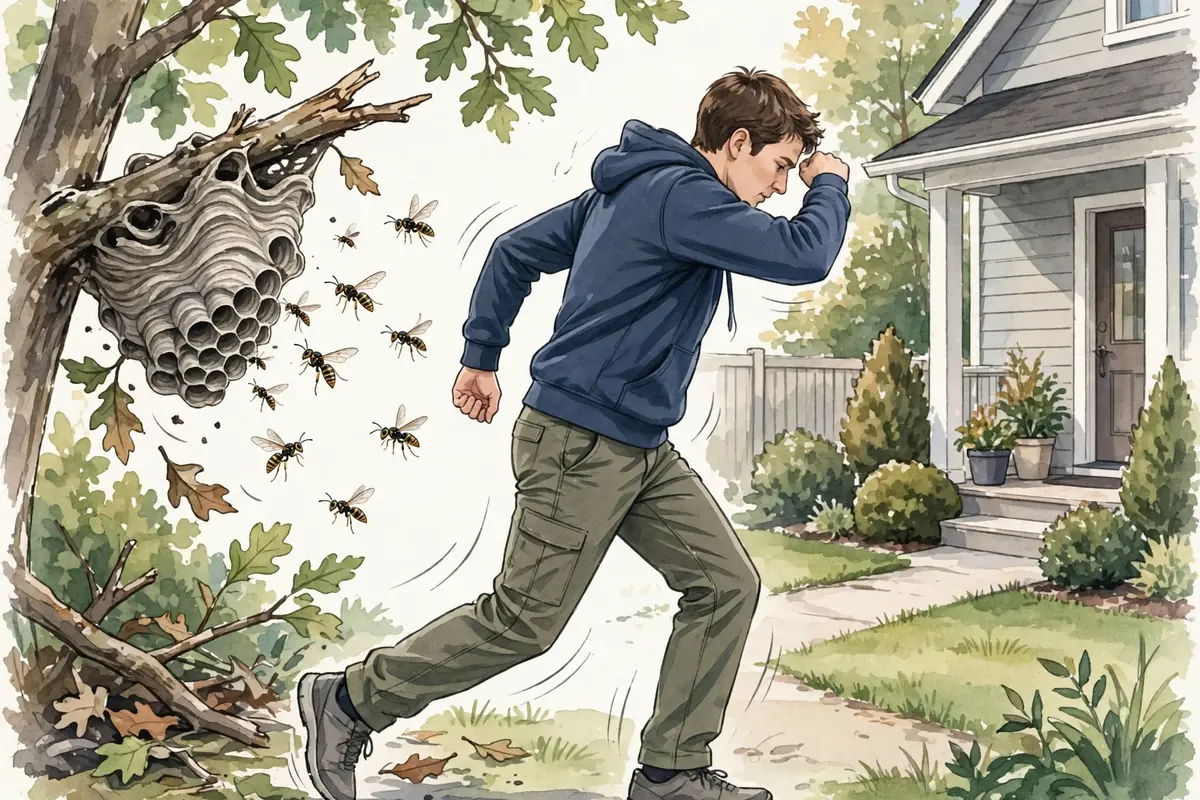
Step 1 — Get away. Run from the nest area, ideally indoors or into a vehicle. Do not swat — swatting releases more alarm pheromone and attracts more wasps. Cover your face and eyes with your hands or shirt as you move. Keep going until the wasps stop following; they usually give up within a few dozen yards.
Step 2 — Get everyone safe. Help children, elderly people, and pets out of the area. Pets that were stung repeatedly need a vet.
Step 3 — Remove yourself from the stinging zone, then assess. Once safe, count roughly how many stings there are and where. Stings on the face, mouth, throat, or eye need more urgent attention.
Step 4 — Clean every sting site. Wash with soap and lukewarm water. Since wasps do not leave stingers behind, there is usually nothing to scrape off — but check anyway, especially if honeybees might have been involved too. For a printable routine, see the bite and sting first aid checklist.
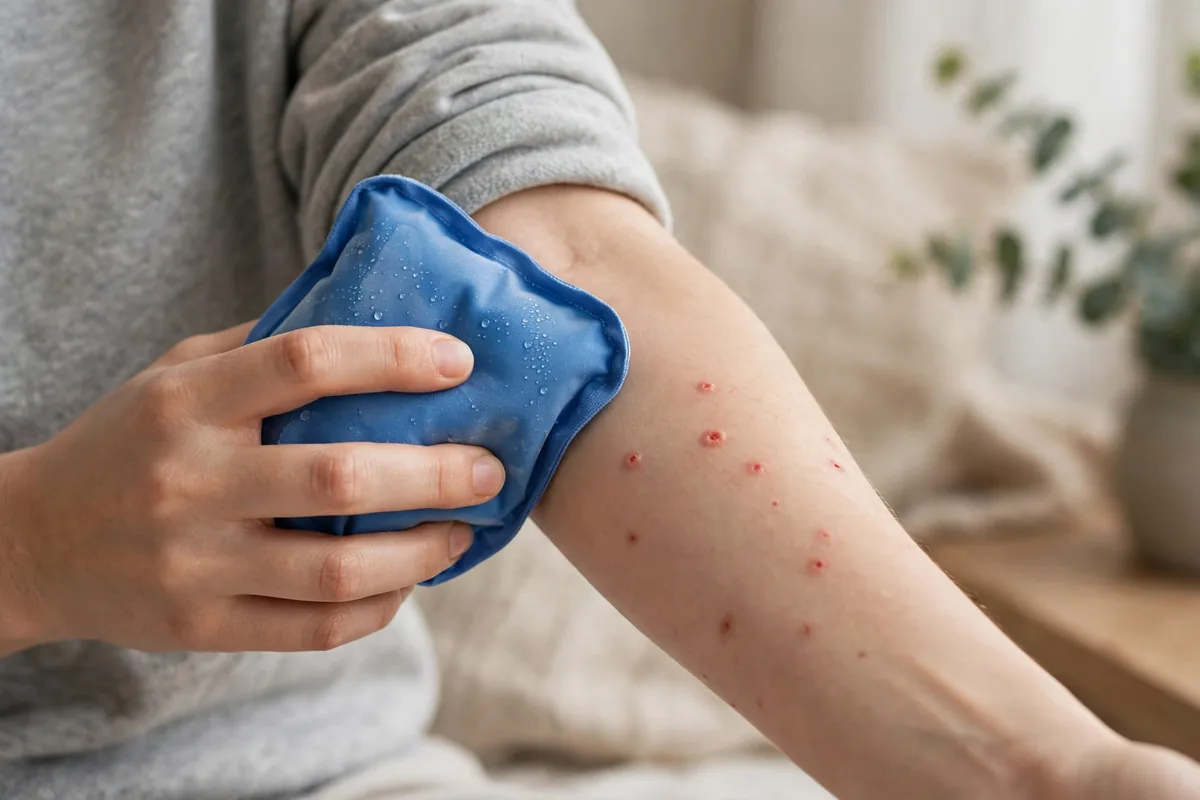
Step 5 — Apply cold. A cold compress or ice wrapped in a cloth, 10–15 minutes on, then off, reduces pain and swelling. Rotate between sting sites if there are many.
Step 6 — Ease pain and itch. An oral antihistamine taken per label directions can help with itching and swelling; ask a pharmacist if you take other medications. Avoid scratching — it worsens swelling and invites infection.
Step 7 — Watch for at least several hours. Serious allergic reactions usually start within minutes but can be delayed. Do not drive yourself to care if you feel dizzy or faint — call for help.
Watch for venom load symptoms #
Beyond allergy, a large number of stings can make anyone feel ill from the venom itself. Call a doctor or urgent care if you develop nausea or vomiting, headache, dizziness or lightheadedness, widespread swelling beyond the sting sites, or muscle aches after multiple stings — even if breathing seems fine. These symptoms can appear hours after the attack.
There is no home treatment for a large venom load. Clinicians can provide fluids, pain control, and monitoring. This is one of those situations where “I feel okay now” is not enough reason to skip care if you took dozens of stings — the delayed effects are real. If the person has a known sting allergy, the threshold is zero: any sting after a multiple-sting event means emergency evaluation, because the next sting could be the dangerous one. Learn the early signs in anaphylaxis sting warning signs.
Keep a simple log: approximate sting count, time of the attack, and when each symptom appeared. Hand it to the clinician — it speeds up their decisions.
Protect yourself from more stings #
The attack is over, but the nest is still there — and the area is now marked with alarm pheromone.
- Do not go back to the nest area the same day. The colony stays agitated for hours. Mark the location from a safe distance so a professional can find it.
- Shower and change clothes. Alarm pheromone clings to skin, hair, and fabric and can provoke more stings if you return near the nest.
- Do not try to destroy the nest yourself after a multiple-sting event. This is exactly the scenario that injures people. Call a pest professional, especially for ground nests or nests inside walls.
- Warn others. Tell family members, neighbors, and anyone who uses the yard where the nest is until it is removed.
- For mowing and yard work, scan for ground-nest activity first — wasps flying low in and out of one spot in the grass is the classic sign. Mow in the cool morning or evening when wasps are less active.
Warning signs: when to seek care #
Call 911 immediately if there is trouble breathing or swallowing, swelling of the face, lips, tongue, or throat, widespread hives, dizziness or fainting, or a racing heartbeat. Use epinephrine right away if it has been prescribed, then call 911 even if the person feels better.
After multiple stings, also seek urgent care for dozens of stings even without allergy symptoms, stings on the face, eye, mouth, or throat, nausea, vomiting, or dizziness developing hours later, swelling that keeps spreading, or any sting in a person with a known wasp allergy. Children who receive multiple stings should be evaluated promptly regardless of how they look.
Frequently asked questions #

Do I need to pull stingers out after wasp stings? #
Usually there is nothing to pull. Wasps, hornets, and yellow jackets keep their stingers and can sting again — only honeybees leave the stinger behind (and die doing it). If you see a small dark stinger in the skin, scrape it out sideways with a fingernail or card; do not squeeze it with tweezers, which can push in more venom.
How many wasp stings are dangerous? #
There is no single number. One sting can be life-threatening for someone with a severe allergy, while a non-allergic adult can often tolerate a handful with only local pain. Dozens of stings can cause systemic illness from venom load in anyone, and children are at risk from fewer stings. Treat the trend, not the count: worsening symptoms mean get care.
Should I go to the ER after multiple stings if I feel fine? #
If you received a large number of stings (dozens) or were stung on the face, mouth, or throat, yes — get evaluated even if you feel fine, because delayed venom effects and reactions happen. For a few stings with only local pain in a non-allergic adult, home care with close watching is usually reasonable.
Can wasps sting through clothing? #
Yes — thin fabrics offer little protection. A wasp can sting through a T-shirt easily. Thick denim, leather gloves, and layered clothing help, which is why professionals wear full suits for nest removal. If you must pass near a known nest, cover up and move calmly without lingering.
Medical and editorial note #
This article is general health information, not medical advice. Multiple stings can be serious even without an allergy, and this guide cannot assess your individual risk. If you have been stung multiple times or are worried for any reason, seek professional medical care promptly.


