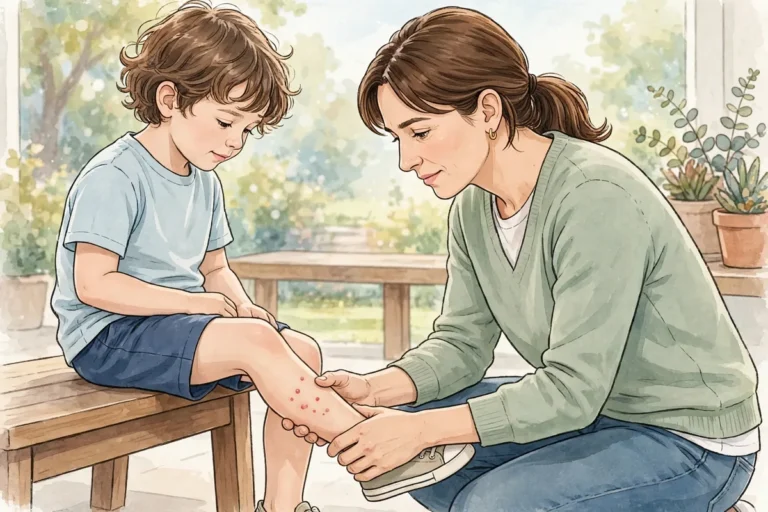
The tent is zipped, the kids are in sleeping bags, and somewhere in the dark a mosquito is already planning its night shift. Camping families know this scene well: you can be nearly bite-free all afternoon, then wake up covered in welts because a few mosquitoes slipped inside at dusk and fed while everyone slept.
The direct answer on mosquito bites camping tent night protection is that nighttime defense is a system, not a single product: tent setup (zip everything shut, check screens, camp away from standing water), what you wear and pack (EPA-registered repellent, permethrin-treated clothing and gear, a bed net where screens cannot keep up), and calm overnight bite care — especially for kids.
This guide covers why nighttime exposure is the real risk window, how to build a mosquito-proof tent, what to pack, how to care for bites after lights-out, and when swelling means you should see a doctor.
Why Nighttime in a Tent Is the Risk Window
Mosquitoes do not bite evenly through the day. Many of the species that trouble campers — including the Culex mosquitoes common across the US — feed most actively from dusk to dawn. They hunt by following carbon dioxide, body heat, and scent plumes, all of which concentrate beautifully inside a warm tent full of sleeping people.
That makes the tent a paradox: it feels like shelter, but a few entry mistakes turn it into a trap. Mosquitoes slip in during the in-and-out of sunset, ride in on clothing and gear, or exploit a torn mesh panel. Once inside, they have hours of uninterrupted access to sleeping targets — and a single mosquito can bite multiple times in one night.
The same logic sits at the center of public-health prevention messaging: CDC guidance issued during the Zika response emphasized staying in places with air conditioning or intact window and door screens to keep mosquitoes outside, treating clothing and gear with permethrin, and sleeping under a mosquito bed net where screens are absent. The same logic applies to any tent trip. Protection has to extend into the night — through tent discipline, treated gear, and nets — not just the evening campfire hour.
Building a Mosquito-Proof Tent
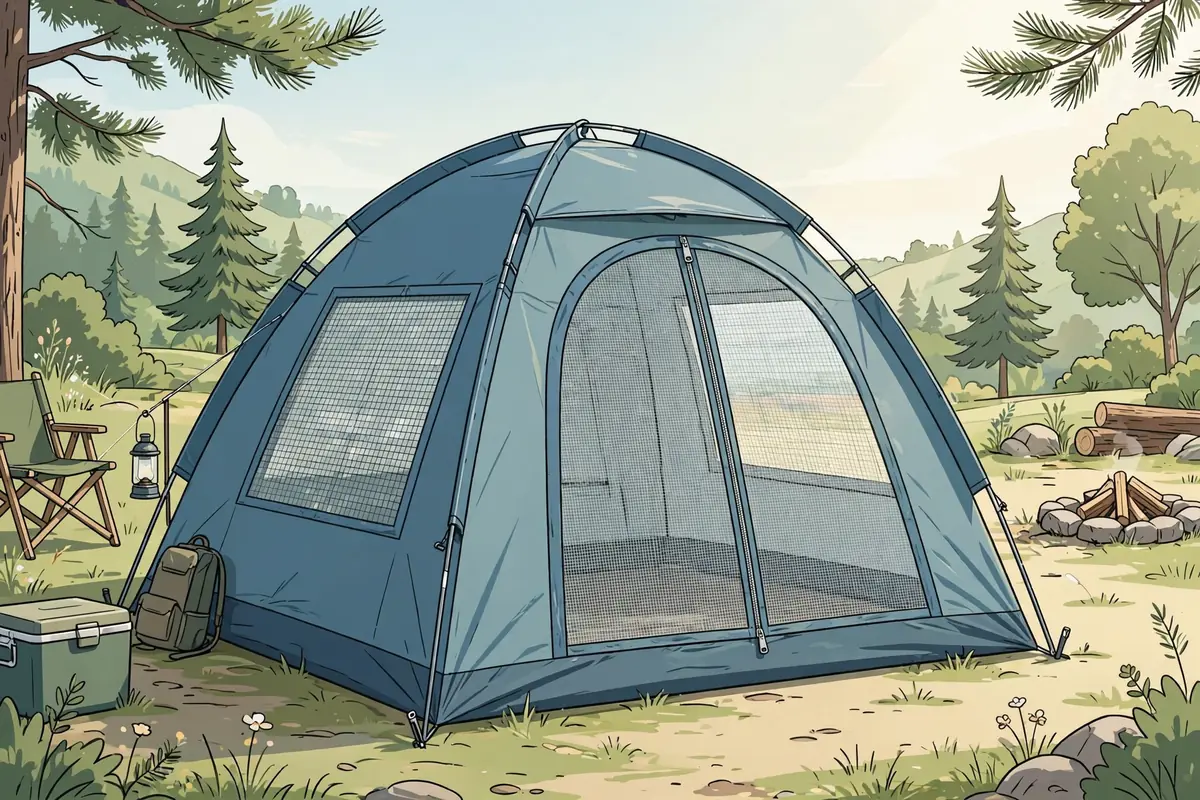
Your tent is your bedroom wall. Set it up like one.
Zip every opening, every time. Zipping up the tent keeps mosquitoes outside — the same barrier logic public-health guidance has long emphasized. Make it a house rule — doors and vestibules zipped fully shut at dusk, when everyone is shuttling gear and kids in and out. A “last call” routine (everything inside by a set time, then doors stay zipped) closes the highest-risk window.
Inspect the mesh before the trip. Set the tent up at home and check every screen panel, seam, and zipper for tears or gaps — hold it up to light to spot pinholes. Repair kits with mesh patches are cheap and light.
Choose your campsite defensively. Mosquitoes breed in standing water and rest in dense vegetation. Pitch on higher, drier ground away from marshes and pond edges. A breezy site is better — mosquitoes are weak fliers, and steady airflow disrupts their hunting.
Manage the inside of the tent. Shake out sleeping bags and clothing before bringing them inside — mosquitoes hitchhike. A quick headlamp sweep before lights-out catches stragglers resting on the tent walls.
Mind the rainfly and vestibule. A fully deployed rainfly with closed vestibules adds a buffer zone. On hot nights, keep at least the inner mesh doors zipped — the mesh is the barrier, not the fly.
Never burn repellent devices inside the tent. Candles, coils, and open-flame repellents are fire and carbon-monoxide hazards in an enclosed tent. The safety rule is absolute: nothing burning inside the sleeping area. If you use spatial repellent devices at the campsite, keep them at the picnic table, well outside the tent.
The Night-Protection Packing List
Pack for the night, not just the day. This list covers a family of four on a weekend tent trip:
- EPA-registered insect repellent. Look for DEET, picaridin, IR3535, or oil of lemon eucalyptus (OLE) / PMD. Always follow the label. Do not use OLE or PMD products on children under 3, and never apply repellent to a child’s hands, eyes, mouth, or irritated skin.
- Permethrin treatment for clothing and gear. Permethrin goes on fabrics — clothing, socks, the tent itself — never on skin. It lasts through several washings. Treat items well before the trip so they dry completely.
- Long sleeves and long pants for the evening. Lightweight, light-colored layers are the simplest physical barrier — and make ticks easier to spot.
- A bed net, just in case. For sleeping without intact screens — an open shelter, a damaged tent, or under the stars — pack a bed net, ideally permethrin-treated. Tuck the edges under the sleeping pad so there are no gaps.
- A headlamp with a red-light mode. White light draws night-flying insects toward the tent entrance; red light is less attractive and preserves night vision.
- After-bite care supplies. Soap, clean water or wipes, a reusable cold pack, adhesive bandages for bites kids will scratch, and any itch-relief product your pediatrician has already recommended. Pack these alongside whatever broader first-aid kit you carry on your trips.
Pack repellent where you can reach it at bedtime — a bottle buried in the car does no good at 11 p.m. when the tent zipper opens for a bathroom run. That midnight trip is a classic bite moment: apply repellent before unzipping, and re-zip immediately on return.
Treating the Tent and Campsite
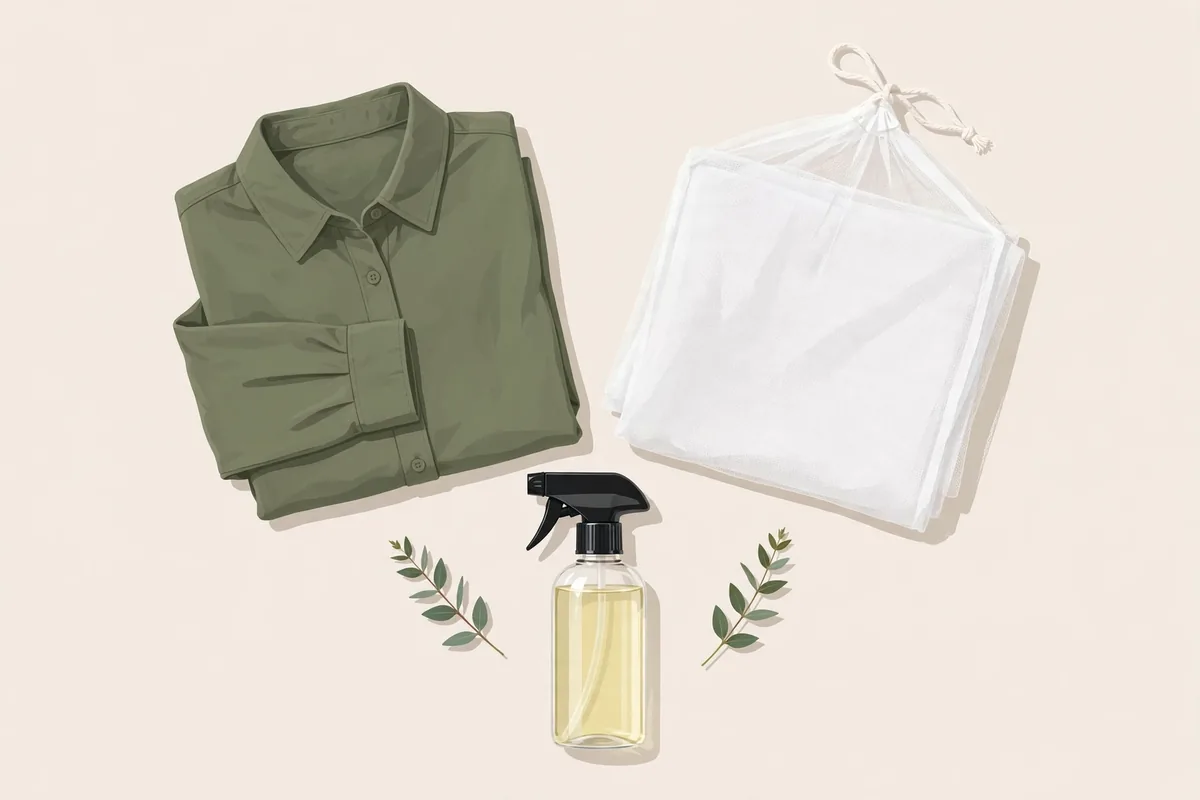
Two layers of chemical defense deserve their own explanation, because the labels matter.
Permethrin on gear, never on skin. Treat clothing, socks, sleeping bags, and the tent’s mesh doors with permethrin before the trip; do not apply permethrin products to skin. It bonds to fabric and keeps working through multiple washings. Let everything dry fully before packing.
Repellent on skin, reapplied on schedule. Apply EPA-registered repellent to exposed skin per the label, avoiding eyes, mouth, cuts, and irritated skin. On children, adults should apply it — spray into your hands first, then spread, rather than spraying a child’s face. Reapply as the label directs; one evening application rarely lasts until morning.
What about the campsite itself? Clear standing water from your site — the saucer under a cooler, a tarp fold collecting rain, a forgotten bucket. Keep the campfire area at a reasonable distance from the tents, and plan the evening routine around peak mosquito feeding time — typically dusk through dawn for the species that trouble campers — so the family is inside, zipped, and protected before it begins.
Caring for Kids’ Bites Through the Night
Kids react more dramatically to mosquito bites than adults do — bigger welts, more itching, more scratching, and occasionally a low-grade worry spiral at 2 a.m. when a bite looks alarming in flashlight beam. Here is the calm overnight protocol:
Clean first. Wash the bite with soap and clean water. At a campsite, bottled water and a clean cloth do the job. Cleaning removes surface bacteria and gives you a clear look at what you are dealing with.
Cool it down. A cold, damp cloth or a wrapped cold pack for 10 to 15 minutes reduces itching and swelling. This is the single most effective campsite intervention, and kids accept it readily. Reapply as needed through the night.
Cover what gets scratched. An adhesive bandage over the bite does two jobs: it keeps little fingernails off the welt, and it keeps dirt out. Keep nails trimmed short before the trip — shorter nails mean less skin damage when scratching happens anyway.
Resist the scratch cycle. Scratching feels good for a second and makes everything worse: it breaks skin, invites infection, and can prolong healing into a dark mark that lingers for weeks. Distraction works better than scolding with young kids — a story, a song, a cool cloth to hold. For more on what happens after the itch fades, see our guide to fading dark marks from bites.
Watch, don’t diagnose. Note the bite’s size when you first treat it so you can tell whether it is improving or worsening by morning. Marking the edge of redness with a pen helps track spread. Stick to cleaning, cooling, and covering — and talk to your pediatrician about itch-relief products before the trip, not at 2 a.m.
When to See a Doctor for a Bug Bite
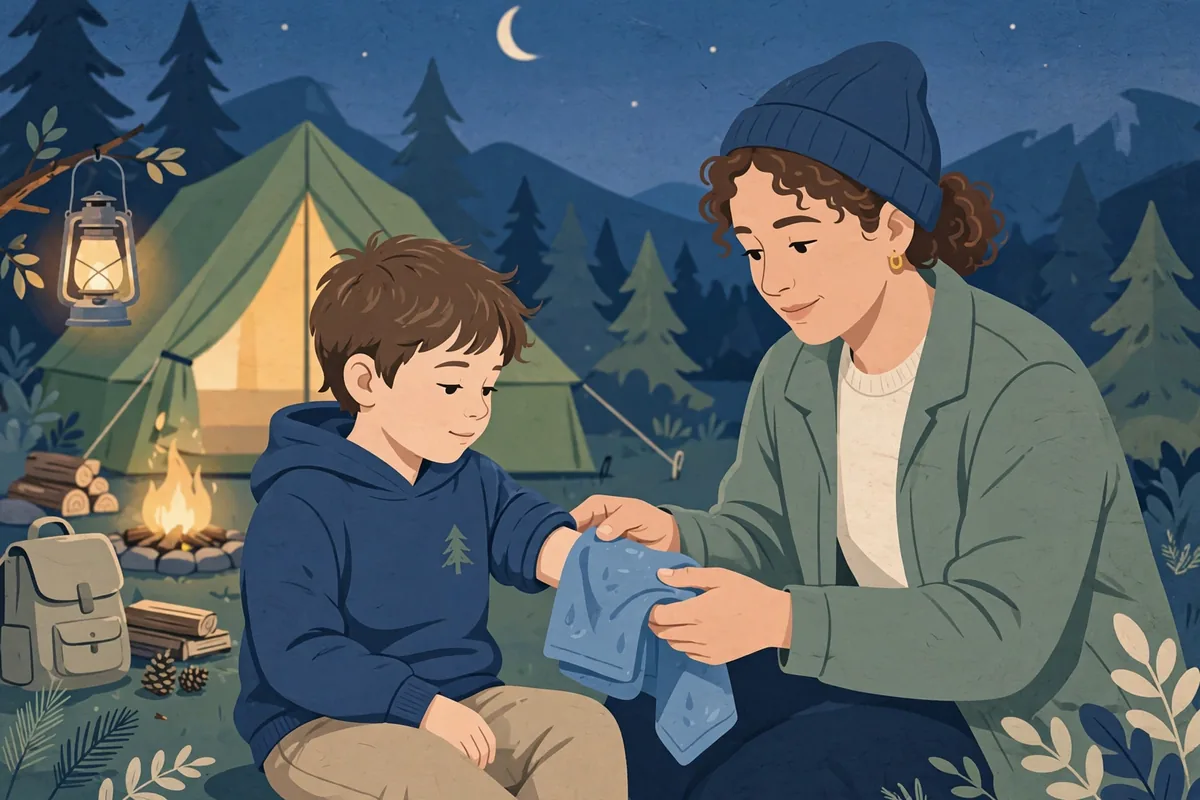
Most mosquito bites — even dramatic-looking ones on kids — resolve within a few days with basic care. Seek medical care if you notice any of the following:
- Call 911 immediately for signs of anaphylaxis: difficulty breathing or swallowing, throat tightness, dizziness, or swelling of the face, lips, or tongue. True anaphylaxis to mosquito bites is rare, but any breathing difficulty after a bite is an emergency. Know the anaphylaxis sting warning signs — the red flags overlap.
- Signs of infection (cellulitis): redness that spreads or streaks outward, increasing warmth, swelling that worsens after 48 hours, pus, or a bite that becomes increasingly painful rather than less so. Scratching is the usual gateway — broken skin plus campsite dirt is a classic setup.
- Fever, chills, body aches, or rash developing after the trip, especially after camping in an area with known mosquito-borne illness. Tell the doctor where and when you camped.
- Timeline violations: a bite that looks much worse on day three than day one, swelling that keeps expanding, or any bite not clearly improving within a week.
- Unusually large reactions: a hot, swollen reaction the size of a palm within hours of the bite, particularly in young children. This exaggerated immune response can mimic infection — a clinician should sort it out.
- Special cases: bites on or near the eyes, bites in very young infants, or a child who cannot describe symptoms clearly.
Frequently Asked Questions
Should I put mosquito repellent on my child before bed in the tent?
Only if mosquitoes are still a threat inside the tent, and only with a product labeled safe for your child’s age — never OLE or PMD under age 3. The better strategy is making the tent the barrier: zipped mesh, intact screens, permethrin-treated sleepwear. For the midnight bathroom trip, apply repellent before unzipping.
Can mosquitoes bite through a tent?
They cannot bite through intact tent fabric or mesh. They bite through open doors, torn mesh, and gaps around zippers — and they bite the camper who steps outside unprotected at night. If you are getting bitten “inside” the tent, look for the entry point: a door left unzipped at dusk, a mesh tear, or mosquitoes that rode in on gear and clothing.
Are mosquito coils or candles safe in a tent?
No. Anything that burns — coils, candles, lanterns — is a fire and carbon-monoxide hazard inside a tent and should never be used there. Use spatial repellents only in open-air areas like the picnic table, and rely on zipped mesh, treated fabrics, and skin repellent for the sleeping area.
What is the best repellent for kids at a campsite?
The CDC recommends EPA-registered repellents with DEET, picaridin, IR3535, or OLE/PMD, used exactly as the label directs. For children, an adult should apply a lower-concentration DEET or picaridin product — avoid OLE/PMD under age 3, and never apply repellent to hands, eyes, mouth, or broken skin. Ask your pediatrician if unsure.
How do I keep mosquitoes out when the kids go in and out at dusk?
Make dusk entry a drill: one door only, opened minimally, zipped immediately behind each person. Stage gear inside before sunset so the shuttling ends early. A “last call” time — everyone in, doors zipped — turns the highest-risk hour into a non-event. A headlamp sweep of the tent walls right after catches anything that slipped through.
Medically reviewed by Dr. Sarah Jones, MD.
This article is for informational purposes only and isn’t medical advice. If you’re worried about a bite or sting, talk to a healthcare professional.