
Your carpet beetle dermatitis treatment plan has two halves, and both matter equally: first calm the itchy red bumps on your skin, then remove the carpet beetle larvae causing them. Here is the key fact that changes everything — carpet beetles do not bite you. The rash comes from microscopic barbed hairs on the larvae, not from bites, which means no bug spray on your skin will fix this. Treat the skin, clean the home, and the cycle stops.
Carpet Beetles Do Not Bite – Here Is What Causes the Rash #
Let’s clear up the biggest misunderstanding first: no stage of a carpet beetle bites humans. Adult carpet beetles are small oval insects — about 1/16 to 1/8 inch long — that mostly feed on pollen outdoors and wander inside by accident. The troublemakers are the larvae: tiny, slow-moving, cigar-shaped grubs covered in bristly hairs. These larvae feed on natural fibers — wool, silk, fur, feathers, pet hair, leather, and even dead insects — quietly working through closets, carpets, upholstery, and stored clothing for months.
The skin reaction comes from specialized barbed hairs on the larvae called hastisetae. These spear-shaped hairs detach easily, float in household dust, and settle on bedding, clothing, and furniture. When they touch your skin, the barbed tips embed in the outer layer and trigger an allergic or irritant reaction — pruritic red papules (itchy little bumps) that look remarkably like insect bites. Dermatologists call this carpet beetle dermatitis, and it is a clinically recognized condition, not a folk diagnosis.
Why does one person in a household break out while others feel nothing? Sensitivity to the hairs varies. Some people’s immune systems react strongly; others barely notice. This is actually a useful clue — bed bugs, by contrast, bite everyone they can reach. If the “bites” keep appearing but only on you, carpet beetle larvae belong near the top of your suspect list.
The rash is often mistaken for bed bug bites, and that mistake costs people real money: they pay for bed bug heat treatments that do nothing, because the larvae are hiding in woolens and closet corners the treatment never reaches. If you have been “treated for bed bugs” and the bumps persist, read the comparison below before spending another dollar.
| | Carpet beetle dermatitis | Bed bug bites | Flea bites | |—|—|—|—| | What causes it | Allergic/irritant reaction to larval hairs — no bite | Nighttime blood feeding by the bugs | Blood feeding, usually near ankles | | Where marks appear | Covered skin: torso, neck, arms — where clothing or bedding pressed infested fabric against you | Exposed skin: face, arms, legs | Ankles, feet, lower legs | | Pattern | Scattered papules, sometimes linear clusters where fabric dragged across skin | Lines or clusters of welts (“breakfast, lunch, dinner”) | Clusters around sock lines | | Center puncture mark | None — there is no bite wound | Often a darker center spot | Tiny center spot | | Who reacts | Only sensitive individuals; others in the home may be fine | Nearly everyone bitten | Nearly everyone bitten | | Nighttime activity | No pattern — rash appears whenever exposure happened, onset often delayed hours | New welts appear overnight | Bites happen when near pets or infested areas | | Other clues | Shed larval skins (dry brown husks), fabric damage, fuzzy 4–8 mm larvae | Blood spots, rusty fecal spotting on mattress seams, live flat oval bugs | Pets scratching, flea dirt on pet bedding |
For more on telling real bites apart, see the bed bug bite vs flea bite comparison guide.
What Carpet Beetle Dermatitis Looks Like #
Carpet beetle dermatitis usually shows up as small red bumps or raised patches — itchy, sometimes intensely so, occasionally with a mild burning sensation. The bumps can look like mosquito bites, but with a few telling differences.
First, there are no puncture wounds. Under a magnifying glass, a real bite often shows a tiny central puncture; carpet beetle papules have none. Second, the rash favors covered skin — the torso under a sweater, the neck under a collar, the arms under long sleeves — because that is where infested fabric touched you. Bed bug bites, in contrast, cluster on exposed skin. Third, the onset can be delayed: you might notice the bumps hours after you wore the jacket or slept in the bedding, which makes tracing the source frustrating.
The rash sometimes forms in lines or streaks, especially where a sleeve or pant leg dragged the hairs across your skin. It can spread widely enough to look like hives, which is why the hives vs bug bites distinction is worth checking when you are unsure. Some people also develop redness with small blisters or swelling around the bumps, particularly with repeated exposure.
One more pattern worth noting: the rash keeps coming back in the same situations. Same sweater, same chair, same guest-room bed — and the bumps return. That repeatability is your strongest hint that an environmental irritant, not a biting pest, is behind it.
Treating the Skin Symptoms at Home #
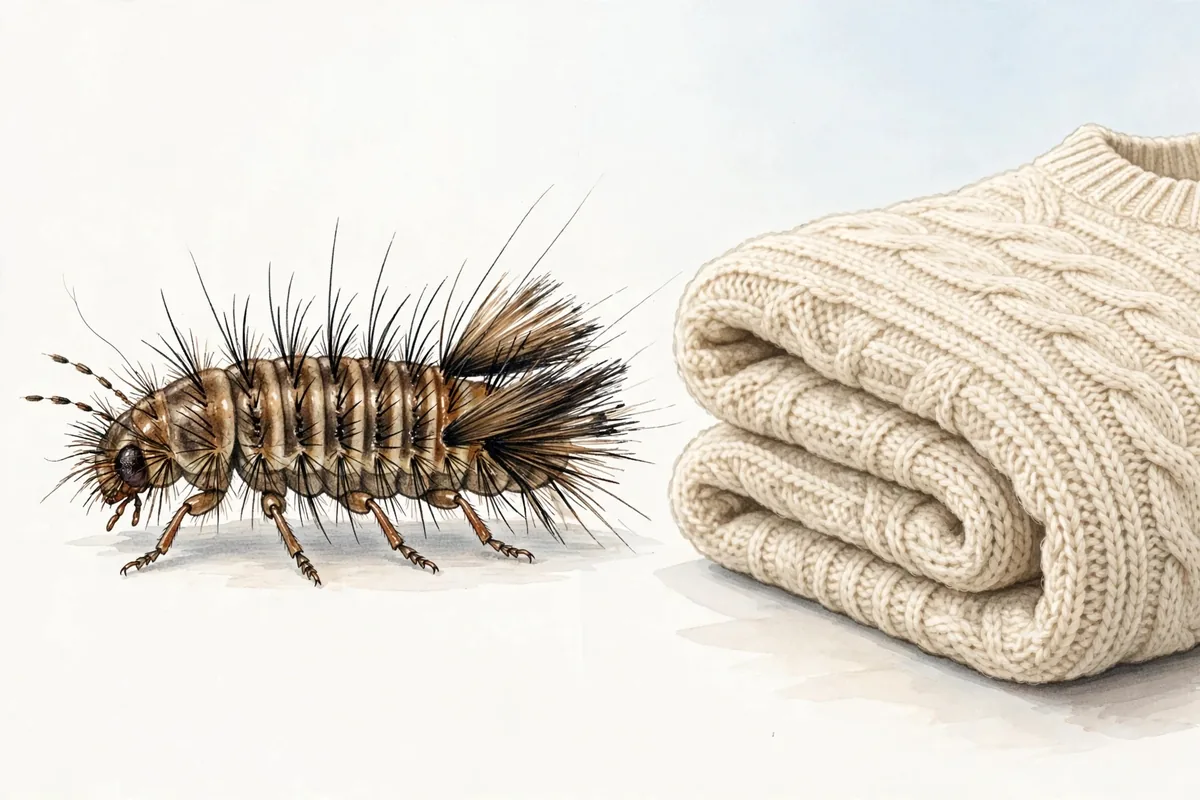
The skin treatment is straightforward: calm the inflammation, control the itch, and protect the skin while it heals. Dermatology sources describe carpet beetle dermatitis treatment as symptom-based — there is no special cream that targets the condition itself, because the “disease” is your skin’s reaction to the hairs. Remove the exposure, soothe the skin, and the rash fades.
Calm the itch and redness #
- Cool compresses first. A cool damp cloth on the rash for 10 to 15 minutes, repeated a few times a day, dulls itching without any medication. Keep the water cool rather than ice-cold directly on irritated skin.
- Lukewarm oatmeal baths. For widespread itching, a lukewarm bath with colloidal oatmeal can be soothing. Keep the water lukewarm — hot water intensifies itching.
- Over-the-counter hydrocortisone cream. A thin layer of 1% hydrocortisone cream per label directions can reduce redness and itch on the affected spots. Use it on the bumps, not on broken skin, and do not use it continuously for more than a week or so without asking a pharmacist or doctor.
- An oral antihistamine. If itching is disrupting your sleep or daily life, an oral antihistamine per label directions can help, especially one with sedating effects at night if your pharmacist or doctor agrees it suits you. Some people find antihistamines most useful for the nighttime itch that keeps them awake.
- Calamine lotion. Old-fashioned calamine can take the edge off itchy papules and is gentle enough for larger areas.
Protect the skin while it heals #
Keep your nails short and resist scratching — broken skin invites bacterial infection, which turns a self-limited rash into a problem needing antibiotics. Wash the affected areas gently with mild soap and lukewarm water; skip harsh scrubs, exfoliants, and heavily fragranced products while the skin is irritated. If the skin feels dry, plain fragrance-free moisturizer is fine. For areas you cannot stop touching, a loose breathable bandage or light clothing barrier helps.
Most people see the bumps start to calm within a few days of removing the exposure, with full clearing often within one to two weeks — though that timeline stretches if larvae are still in the environment. If the rash is spreading despite your efforts, that is a sign the source is still active, and the cleaning steps below become the priority.
Step-by-Step: Finding Carpet Beetle Larvae in Your Home #
You cannot treat what you cannot find. Carpet beetle larvae are small (roughly 3–6 mm), slow, and drawn to dark, quiet places near natural fibers. Grab a flashlight and work through these hotspots:
1. Closets and stored clothing. Pull out wool suits, cashmere sweaters, silk scarves, and feather-down jackets. Check shoulders and folds. Look for small irregular holes in the fabric — carpet beetle damage is patchy and scattered, unlike the clean holes moths leave.
2. Under beds and along baseboards. Larvae love the dust and pet hair that collects under furniture. Slide beds and dressers out and inspect the floor edges.
3. Rugs and carpets. Roll back area rugs and check the underside and the floor beneath, especially near walls. Wool rugs are prime real estate.
4. Upholstered furniture. Check seams, cushion crevices, and the underside of sofas and chairs — particularly older pieces with wool, horsehair, or feather stuffing.
5. Attics, basements, and storage boxes. Stored blankets, old taxidermy, wool insulation, and boxes of “maybe someday” clothes are classic reservoirs. Bird nests in vents or attics also harbor larvae, since feathers and dead insects are food.
6. Air ducts and vents. Dusty ducts collect the shed hairs that keep the rash going even after the larvae are gone.
What you are looking for: the larvae themselves (fuzzy, banded brown-and-tan, cigar-shaped), shed skins that look like dry brown husks, and fine granular debris. Adult beetles near windows in spring are a secondary clue — they are heading for the light, not for you. Finding even one larva with shed skins nearby confirms you are on the right trail.
Deep-Cleaning Plan to End the Rash for Good #
Skin treatment gives you relief; this section gives you the cure. Carpet beetle dermatitis does not resolve permanently until the larvae — and their shed hairs — are out of your living space. Plan for a thorough session, then a lighter repeat pass two to three weeks later to catch the life cycle’s stragglers, since eggs and pupae can survive a single cleaning.
The vacuum offensive #
Vacuum like you mean it. Use a vacuum with a HEPA filter and a crevice tool, and hit every hotspot from the inspection list: under and behind furniture, along baseboards, closet floors and shelves, under rugs, upholstery seams and cushions, and around vents. Empty the vacuum bag or canister into a sealed bag and take it outside immediately — do not let collected hairs redistribute through your home. Steam cleaning carpets and upholstery afterward adds a second kill mechanism and lifts embedded hairs.
Launder, dry clean, or isolate fabrics #
Wash infested or suspect clothing, bedding, and curtains in hot water and dry on high heat where the fabric allows — heat kills larvae and eggs. Wool, silk, and other delicate natural fibers that cannot take hot water should go to the dry cleaner; tell them you suspect carpet beetle larvae. Items you cannot treat right now — stored winter clothes, for example — go into sealed bags or airtight containers so larvae cannot spread to them. Heavily infested, low-value items (a ruined wool throw, a cheap infested rug pad) are often better discarded in sealed bags than salvaged.
Treat the reservoirs #
Pet bedding gets washed in hot water. Check and clean bird nests from vents and eaves. In attics with stored woolens, bag everything or move it to sealed bins. Wipe down closet shelves and drawer interiors with a damp cloth to pick up settled hairs — dry dusting just throws them back into the air. For persistent or heavy infestations, especially ones spanning multiple rooms, a licensed pest control professional can apply targeted treatments to cracks, crevices, and voids where larvae hide. Follow their prep instructions exactly so the treatment reaches the larvae.
The follow-up pass #
Set a reminder for two to three weeks out. Vacuum the hotspots again, re-check closets, and watch your skin. New bumps stopping entirely is the clearest sign the cycle is broken. If the rash continues at the same intensity after two thorough rounds, it is worth getting a professional inspection — and worth asking your doctor whether something else might be contributing.
How Long Does Carpet Beetle Dermatitis Last? #
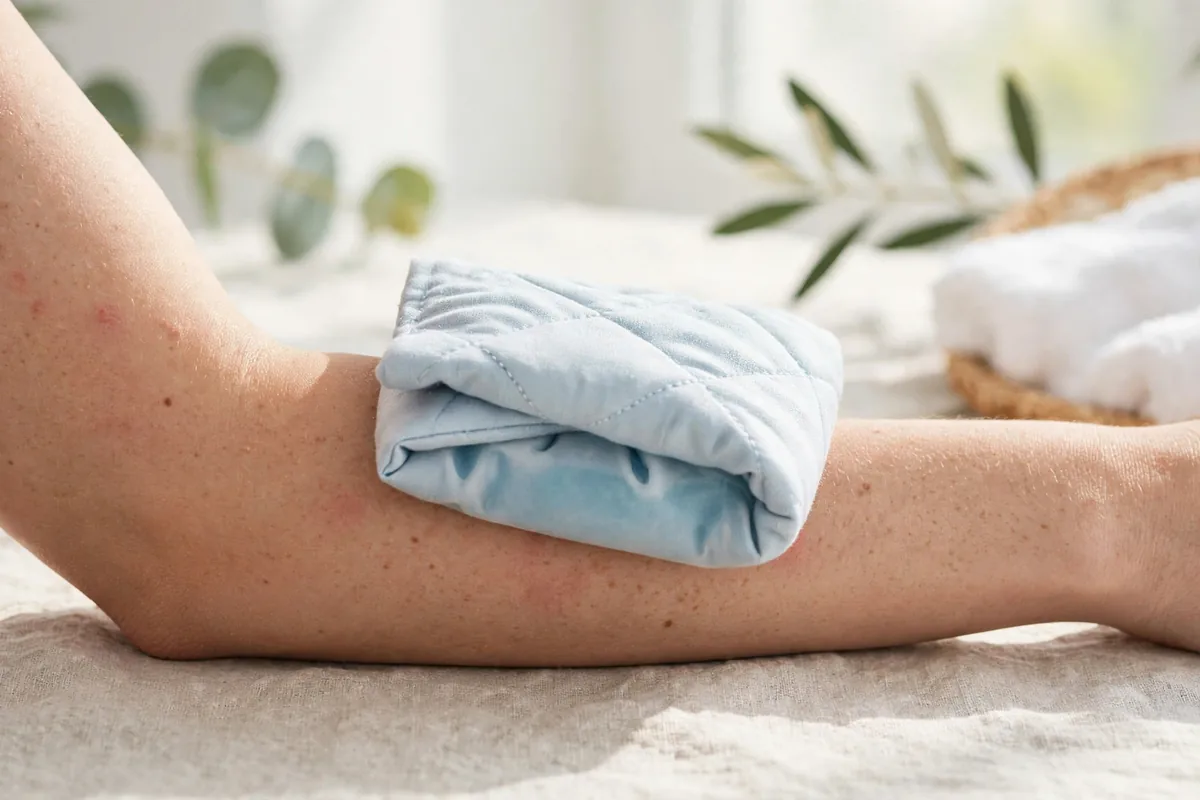
With the source removed and the skin treated gently, most people see improvement within days and full clearing within one to two weeks. That is an honest range, not a promise — heavier exposures and more sensitive skin take longer, and scratching delays healing.
What the rash does not do is run on a fixed clock of its own. As long as larval hairs keep reaching your skin, new bumps keep appearing, and the timeline restarts. That is why the “how long” question always has the same answer: the rash lasts as long as the exposure does. People who clean half-heartedly often report the rash “coming and going” for months — it is not one long episode, it is repeated fresh exposures.
Track your progress with a simple method: note the date of your deep clean, and note when new bumps stop appearing. A clear downward trend over one to two weeks means your plan is working. No improvement after thorough cleaning, or a rash that worsens and spreads despite everything, means it is time to involve a doctor — either the diagnosis needs confirming or the infestation needs professional help.
What Not to Do #
- Do not spray insecticide on your skin or bedding. Bug sprays are for insects, not for skin reactions, and applying them to your body or your sheets adds chemical irritation on top of the dermatitis.
- Do not pay for bed bug treatment to fix this. Heat treatments and bed bug insecticides target bed bugs, not dermestid larvae hiding in woolens and closets. Misdirected treatment wastes money and leaves the real cause untouched.
- Do not ignore the bedroom. People deep-clean the living room and skip the bedroom, then wonder why the rash persists. Bedding and mattress surroundings are often the main exposure site.
- Do not use harsh exfoliants, retinoids, or strong acids on the rash. Irritated skin needs gentleness, not resurfacing. Save the strong products for after the skin is fully calm.
- Do not scratch the bumps open. Broken skin can develop a bacterial infection that needs antibiotics — a completely avoidable complication.
- Do not assume one cleaning is enough. Eggs and pupae survive vacuuming, and missed reservoirs re-seed the problem. The follow-up pass is part of the treatment, not optional.
- Do not throw out your mattress on day one. Unlike bed bugs, carpet beetle larvae rarely live in the mattress itself — they live around it, in the fibers nearby. Clean first, replace later only if truly necessary.
Preventing a Recurrence #
Once the rash is gone, a few low-effort habits keep it from coming back:
- Store natural fibers sealed. Wool sweaters, down comforters, silk scarves, and feather pillows live in airtight bags or bins, not open closet shelves. Larvae cannot reach what they cannot smell.
- Vacuum on a schedule. A monthly pass with the crevice tool along baseboards, under beds, and in closets removes the dust and pet hair that feeds larvae before colonies establish.
- Manage pet hair. Regular brushing and washing of pet bedding removes one of the larvae’s favorite foods.
- Declutter storage areas. Fewer undisturbed boxes means fewer dark quiet harbors. When you do store textiles long-term, add cedar blocks or lavender sachets — they are mild deterrents, not cures, but they help in storage contexts.
- Screen and seal. Window screens, sealed cracks around baseboards, and door sweeps reduce the adult beetles wandering in from outside each spring.
- Inspect secondhand finds. Thrifted wool coats, vintage rugs, and used upholstered furniture get a thorough inspection — and a hot wash or professional clean — before they join your household.
- Check the attic yearly. One annual look at stored textiles and vents catches a new infestation while it is still small.
Warning signs: when to seek care #

Call 911 immediately if you notice any of these red flags: trouble breathing or swallowing, swelling of the face, lips, tongue, or throat, widespread hives, dizziness or fainting, or a racing heartbeat. Severe allergic reactions are uncommon with carpet beetle exposure, but any combination of these symptoms is an emergency regardless of the cause. If you carry an epinephrine auto-injector, use it as directed and go to the emergency department.
Carpet beetle dermatitis itself is usually not an emergency, but see a doctor or dermatologist if: the rash is severe, blistering, or covering large areas; itching is unbearable or disrupting sleep despite home treatment; you see signs of skin infection — increasing pain, warmth, swelling, pus, or red streaks; you develop a fever; the rash has not improved at all after two to three weeks of removing the exposure; or you develop respiratory symptoms like wheezing, persistent cough, or nasal congestion that tracks with the exposure, since airborne larval hairs can irritate airways in sensitive people. A dermatologist can confirm the diagnosis and rule out look-alikes such as scabies, eczema, or contact dermatitis from another cause.
Frequently asked questions #
Do carpet beetles bite humans? #
No — neither the adults nor the larvae bite. Adult carpet beetles feed on pollen outdoors. The larvae do not feed on people at all; they eat natural fibers. The rash people call “carpet beetle bites” is carpet beetle dermatitis, an allergic or irritant reaction to the larvae’s barbed hairs (hastisetae). There is no bite wound because no biting happened.
Is carpet beetle dermatitis contagious? #
No. You cannot catch it from another person, and you cannot spread it by touch. It is your skin’s individual reaction to the larval hairs. The reason it can seem contagious in a household is that everyone is exposed to the same infested environment — but only the sensitive people develop the rash.
How can I tell carpet beetle dermatitis from bed bug bites? #
Look at three things: who reacts, where the marks are, and what else you find. Carpet beetle dermatitis often affects only some people in the home, appears on covered skin where fabric pressed against you, and comes with clues like shed larval skins or fabric damage. Bed bug bites hit nearly everyone bitten, cluster on exposed skin in lines or groups, and come with blood spots or fecal spotting on the mattress. When in doubt, inspect for the actual pests — evidence beats guessing.
Can carpet beetle hairs affect breathing? #
In sensitive individuals, yes, potentially. The fine hairs can become airborne in house dust, and exposure has been linked to nasal and eye irritation and, less commonly, asthma-like symptoms in susceptible people. This is uncommon in typical home exposures and more often reported in occupational settings like museums or wool handling. If you develop wheezing, persistent cough, or significant nasal symptoms alongside the rash, see a doctor.
How long does carpet beetle dermatitis last? #
Once the larvae and their hairs are removed from your environment, most rashes calm within days and clear within one to two weeks. The rash persists as long as exposure continues, so a rash that “keeps coming back for months” usually means the source was never fully eliminated. If yours is not improving two to three weeks after thorough cleaning, get the diagnosis confirmed by a dermatologist.
Will the rash leave scars? #
Usually not. Carpet beetle dermatitis papules generally fade without scarring, though they can leave temporary darker marks (post-inflammatory hyperpigmentation) that fade over weeks, especially in darker skin tones. Scarring is most likely when bumps are scratched open and become infected — another reason to keep nails short and hands off.
Medical and editorial note #
This guide is general health information for quick reference, not medical advice. Skin reactions vary from person to person, and only a clinician who examines you can diagnose your rash. If you are worried about your symptoms, if the rash does not improve as described here, or if any warning signs appear, see a healthcare professional — a dermatologist is the best fit for persistent or uncertain rashes.


