Bug Bites on Babies and Toddlers: What You Can Safely Put on Them, by Age
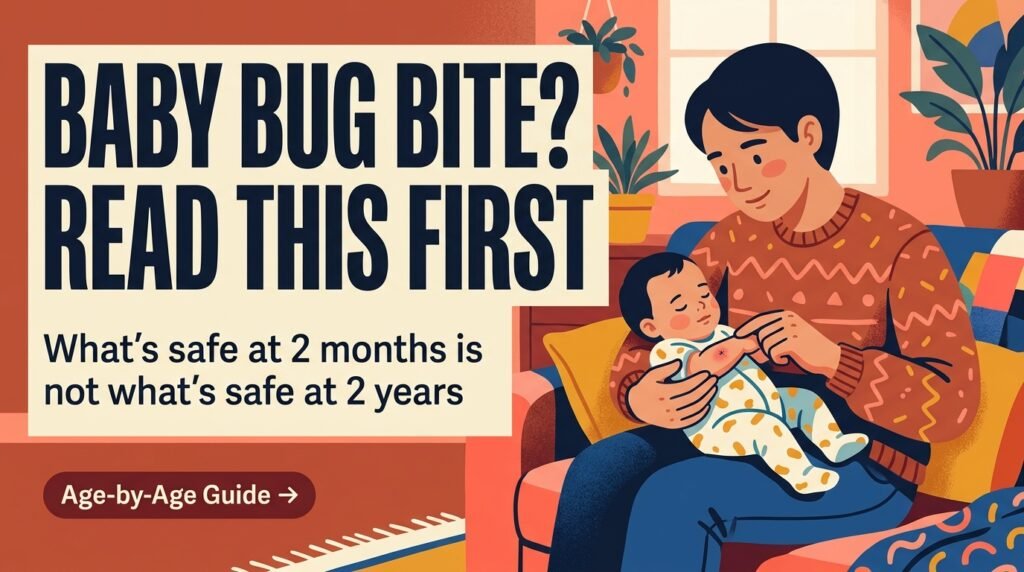
The fast answer: A bug bite on a baby looks worse than the same bite on you — bigger welts, more swelling, sometimes a blister in the center — and that’s usually normal. What’s safe to treat it with, though, depends sharply on age. Under 2 months: no insect repellent on skin at all, and relief means soap-and-water, a cool cloth, and your pediatrician’s advice before any cream. From 2 months, repellents with up to 30% DEET or picaridin become acceptable under American Academy of Pediatrics (AAP) guidance. Calamine and 1% hydrocortisone enter the picture as babies get older — with a pediatrician check first for children under 2. Oil of lemon eucalyptus products are off the table until age 3, and permethrin goes on clothing only, never skin. This guide walks through each age band, the swollen-eye scenario that terrifies parents (and is usually harmless), and the exact signs that mean “call the pediatrician today.”
Why write this at all? Because if you search this topic tonight, you’ll mostly find the same short symptom-checker text copied across dozens of clinic websites. It’s sound, but it isn’t organized the way parents actually think — my baby is 4 months old; what am I allowed to put on this bite? Here is that answer, band by band, kept deliberately conservative: when sources differ, this guide follows the more cautious advice and tells you to check with your pediatrician.
First, why baby bites look so dramatic
The bump from any bite is the body’s reaction to the insect’s saliva, and young children’s immune systems react bigger. What’s normal for babies and toddlers:
- A large, hive-like welt that would be a small bump on an adult — a big local reaction is not, by itself, an allergy
- A small water blister in the center of the bump — especially common in younger children
- Redness lasting around 3 days, and swelling that can last up to 7 days
- Itching for several days — and a baby who can’t scratch effectively but will rub, fuss, and sleep poorly
Redness alone doesn’t mean infection, and size alone doesn’t mean danger. The warning signs that do matter are listed in the “when to call” section below.
The swollen-eye scenario (read this before you panic)
The single most frightening baby-bite presentation: your child wakes up with one eye swollen shut after a bite on the forehead, scalp, or cheek. Pediatric care guides are reassuring on this specific scenario — bites of the upper face commonly cause dramatic swelling around the eye in young children, and it is usually harmless. Two features give it away: the swelling is typically worst in the morning, after lying flat all night, and it improves noticeably after your child has been upright for a few hours. The eye itself isn’t injured; the loose tissue around it simply collects fluid easily.
It stops being “the usual scenario” if the eye is painful, if your child has a fever, if the redness keeps expanding after the second day, if there’s discharge, or if the swelling came with trouble breathing or swelling of the lips or tongue — those are same-day (or emergency) problems, covered below.
Safe relief by age: the table
| 0–6 months | 6–24 months | 2 years and up | |
|---|---|---|---|
| First steps, all ages | Wash with soap and water; cool, wet cloth or wrapped ice for short periods; keep nails short (use baby mittens) to prevent scratching and infection. | ||
| Baking soda paste / oatmeal bath | Yes — gentle, drug-free options pediatric guides recommend | Yes | Yes |
| Calamine lotion | Ask your pediatrician first for young infants | Commonly used for itch — thin layer, not on broken skin | Yes |
| 1% hydrocortisone cream | Only if your pediatrician advises it | Widely used in pediatric care guides for itchy bites — but check with your pediatrician before using on a child under 2, use a thin layer, and only for a few days | Yes, per label directions |
| Oral antihistamine for severe itch | Only on your pediatrician’s direction — age limits apply and dosing is weight-based, so never guess | Only products your pediatrician confirms are age-appropriate; follow their dosing exactly | Per label and your pediatrician’s guidance |
| Insect repellent on skin | None under 2 months. From 2–6 months, only if needed: lowest effective concentration, applied sparingly (see repellent section) | DEET up to 30% or picaridin, once a day, applied by an adult | DEET up to 30% or picaridin; oil of lemon eucalyptus still not until age 3 |
| Prevention instead | Netting over stroller, carrier, and crib; light, covering clothing; permethrin on gear only (not skin) | Clothing + netting + repellent as above | Clothing + repellent; teach “hands off face” habits |
Age band by age band
0–6 months: barriers first, creams last
For the youngest babies, the rule is physical protection, not products. Pediatric guidance is firm that insect repellent should not be used on infants under 2 months old — instead, drape fine netting over the stroller, carrier, or crib, and dress baby in light clothing that covers arms and legs. For babies between 2 and 6 months, repellent becomes an option only when exposure is hard to avoid, and then sparingly: the lowest concentration that does the job, applied by you to exposed skin only, once, and washed off when you come inside.
For treating a bite in this age band, stay drug-free: wash the bite gently, use a cool wet cloth for swelling, and try a thin baking-soda paste for itch — measures straight from pediatric care guides. Skip adult anti-itch products entirely, keep nails trimmed short and use soft mittens so baby can’t scratch the bite open (scratching is how ordinary bites turn into skin infections in infants), and call your pediatrician before using any medicated cream on a baby under 6 months. Mosquito-specific prevention for this age is covered in our guide to mosquito bites on babies and prevention.
6–24 months: the toolbox opens — carefully
Repellents containing DEET (up to 30%) or picaridin are considered acceptable from 2 months onward under AAP guidance; in this band, use them once a day, applied sparingly to exposed skin. For itch relief, calamine lotion is a long-standing, gentle option (our detailed explainer: is calamine lotion safe for babies?), and colloidal oatmeal baths soothe multiple bites at once. Pediatric care guides do use 1% hydrocortisone cream for stubborn itchy bites — but product labels direct parents to consult a doctor for children under 2, so treat that as “with your pediatrician’s okay, thin layer, a few days only.” If itching is severe enough to wreck sleep, ask your pediatrician whether an oral antihistamine is appropriate at your child’s age and weight — this is one decision to never make from the internet, including this page, because dosing for little children is weight-based and products differ.
2 years and up: close to adult rules, with two exceptions
Toddlers and preschoolers can use DEET up to 30% or picaridin repellents, calamine, and 1% hydrocortisone per label directions. Two exceptions persist: oil of lemon eucalyptus (OLE/PMD) products remain off-limits until age 3, and permethrin is still clothing-and-gear only, never on skin — and skip permethrin-treated clothing for children young enough to suck or chew on the fabric. Big, dramatic reactions in this age group are often what’s called skeeter syndrome — an outsized local allergy to mosquito saliva; our guide to skeeter syndrome in children explains how to recognize it and when it’s more than that.
Repellent rules that apply at every age
- Concentration means duration, not strength: roughly, 10% DEET protects for about 2 hours and 30% for about 5–6 hours. Choose the lowest concentration that covers your outing; children should not use products above 30% DEET.
- An adult applies it: Spray or rub repellent onto your own hands first, then onto the child. Never apply to a child’s hands (they go straight into mouths), and avoid eyes, mouth, cuts, and irritated skin.
- Once a day is the ceiling for young children — don’t layer repeated applications the way adults casually re-spray.
- No combination sunscreen-repellent products: sunscreen needs reapplying far more often than repellent should be.
- Wash it off with soap and water when you come back inside, and wash treated clothing before it’s worn again.
- Permethrin is for fabric, not skin — it actually stops working properly on skin. Treat clothing, hats, and gear, and let them dry fully before use.
- Weak-evidence products: citronella, botanical oils, and repellent bracelets or patches offer little to no reliable protection, per pediatric sources — fine as extras, useless as the plan. Store all repellents out of children’s reach; they can be toxic if swallowed.
For the full repellent-by-age reference, see our guide to insect repellent safety for children.
Watch for infection — the complication that actually matters
The main real risk from baby bites isn’t the bite; it’s a bacterial infection introduced by scratching. Know the three patterns pediatric guides flag:
- Impetigo: sores with soft, honey-colored scabs and pus around a scratched bite. Needs medical care and usually an antibiotic ointment or medicine.
- Cellulitis: redness that spreads outward from the bite and is painful or tender to the touch, sometimes with fever.
- Lymphangitis: a red streak or line running up the arm or leg from the bite — the most urgent of the three, since the infection is traveling.
Timing is a clue: redness that first appears more than 48 hours after the bite, or redness still expanding after 72 hours, is not the normal pattern — normal redness peaks early and fades by about day 3.
When to call the pediatrician — and when to call 911
Call 911 or seek emergency care now for: trouble breathing or wheezing; a hoarse voice, throat tightness, or trouble swallowing; swelling of the lips or tongue; a child who is hard to wake or acting confused. Severe allergic reactions (anaphylaxis) are very rare with ordinary biting insects — they are a sting concern — but any breathing difficulty after any bite or sting is an emergency, full stop.
Call your pediatrician the same day for: hives or swelling all over the body; fever together with a bite that looks infected (spreading redness); a baby under 3 months with a bite that looks infected or who has any fever; or a child who looks or acts very sick.
Contact the pediatrician within 24 hours for: new redness starting more than 48 hours after the bite; redness still growing after 72 hours; a red area or streak larger than about an inch around the bite; severe pain not settling within a couple of hours after an age-appropriate pain reliever; or an infected-looking scab (pus, growing crust) that isn’t improving after a couple of days of care.
Frequently asked questions
What can I put on a bug bite for a 4-month-old?
Stick to the drug-free basics: gentle washing, a cool wet cloth, and a thin baking-soda paste for itch, plus mittens to prevent scratching. Don’t use insect repellent on skin before 2 months, and between 2 and 6 months use it only sparingly if exposure can’t be avoided. Ask your pediatrician before using any medicated cream at this age.
When can babies use bug spray?
From 2 months old, under AAP guidance: products with DEET up to 30%, or picaridin, applied by an adult to exposed skin, no more than once a day for young children. Under 2 months, use netting and clothing instead. Oil of lemon eucalyptus products wait until age 3.
My baby’s eye is swollen shut from a bite. Is that dangerous?
Usually not. Bites on the upper face commonly cause dramatic swelling around a young child’s eye; it’s typically worst in the morning and improves after a few upright hours. Get care promptly if there’s pain, fever, discharge, expanding redness after day 2, or any swelling of the lips/tongue or breathing trouble.
Is calamine lotion safe for babies?
Calamine is a gentle, long-used itch remedy and is commonly used in infancy — applied thinly and kept off broken skin. For very young infants, check with your pediatrician first. We have a full explainer on calamine safety for babies linked in the 6–24 month section above.
Can I give my toddler an antihistamine for a very itchy bite?
Sometimes — but the product, and whether it’s appropriate at all, depends on your child’s exact age and weight, and dosing is weight-based. This is a “call the pediatrician or pharmacist” decision, not a label-guessing one. Never use an adult dose cut down by eye.
How long do bug bites last on babies?
Most itch for several days. Redness usually lasts about 3 days and swelling can last up to 7 days — longer than the same bite on an adult, and still normal. Redness that starts after 48 hours or keeps spreading after 72 hours is the pattern that needs a call.
By Dr. Sarah Jones