It is the most common summer layering question in America: sunscreen or bug spray first? Get the order wrong and you either dilute your sun protection, drive more repellent chemicals into your skin than necessary, or end up reapplying both products on the wrong schedule. The direct answer, straight from the CDC: apply sunscreen first, let it absorb, then apply insect repellent over it. Never mix them together in one layer, and never put repellent on under your sunscreen.
This article explains why the order matters (there is a real absorption study behind it), how to time the layers, why combination products are a compromise, how to handle two different reapplication clocks, and the special rules for children and babies. Nothing here is guesswork — it follows current CDC and American Academy of Pediatrics guidance.
The Short Answer: Sunscreen Goes First
The CDC’s mosquito-bite prevention guidance states it plainly: “If you are also using sunscreen, apply sunscreen first and insect repellent second.” The CDC’s guidance for children gives the same order. The reasoning is straightforward once you think about what each product does. Sunscreen needs to form an even film on and just into the skin to absorb or block UV rays; it works best when it has direct contact with clean, dry skin. Insect repellent, in contrast, works by creating a vapor barrier above the skin that confuses host-seeking mosquitoes — it does its job sitting on top.
Put repellent on first and then cover it with sunscreen, and two bad things happen: the sunscreen cannot form its proper film on the skin, so UV protection drops, and the sunscreen’s solvents can carry more of the repellent’s active ingredient into the skin than the repellent’s own formulation intended. Put sunscreen on first, let it set, then layer repellent over it, and each product works the way it was designed. Knowing when mosquitoes bite most also helps you judge how much repellent you actually need for the outing.
Why the Order Matters: The DEET Absorption Finding
The order is not just expert preference — researchers measuring DEET absorption in human volunteers tested both layering orders. When volunteers applied bug spray first and then covered it with sunscreen, the amount of DEET absorbed into the body increased significantly. When they applied DEET-based repellent on top of sunscreen, dermal absorption did not significantly increase. The study’s conclusion matched the CDC order: sunscreen first, then repellent, with about a 15-minute interval between the two layers.
Why should you care about DEET absorption? At recommended concentrations and normal use, DEET has a long, well-established safety record — the EPA and CDC both consider it safe when used as directed. But “safe as directed” assumes the product behaves the way its label testing assumed. Sunscreen-first keeps repellent on the surface, doing its vapor-barrier job, instead of letting sunscreen act as a penetration enhancer. The principle holds for picaridin and other repellent actives too: the top layer is the repellent, always.
There is a second, simpler reason: sunscreen requires generous, even application to reach its labeled SPF, and most people already under-apply it. Anything that interferes with that film — including a layer of repellent underneath — moves you further from the protection you think you have. For the full picture on choosing a repellent in the first place, see our guide to insect repellent safety for children and pregnancy.
The 15-Minute Gap: How to Layer Properly
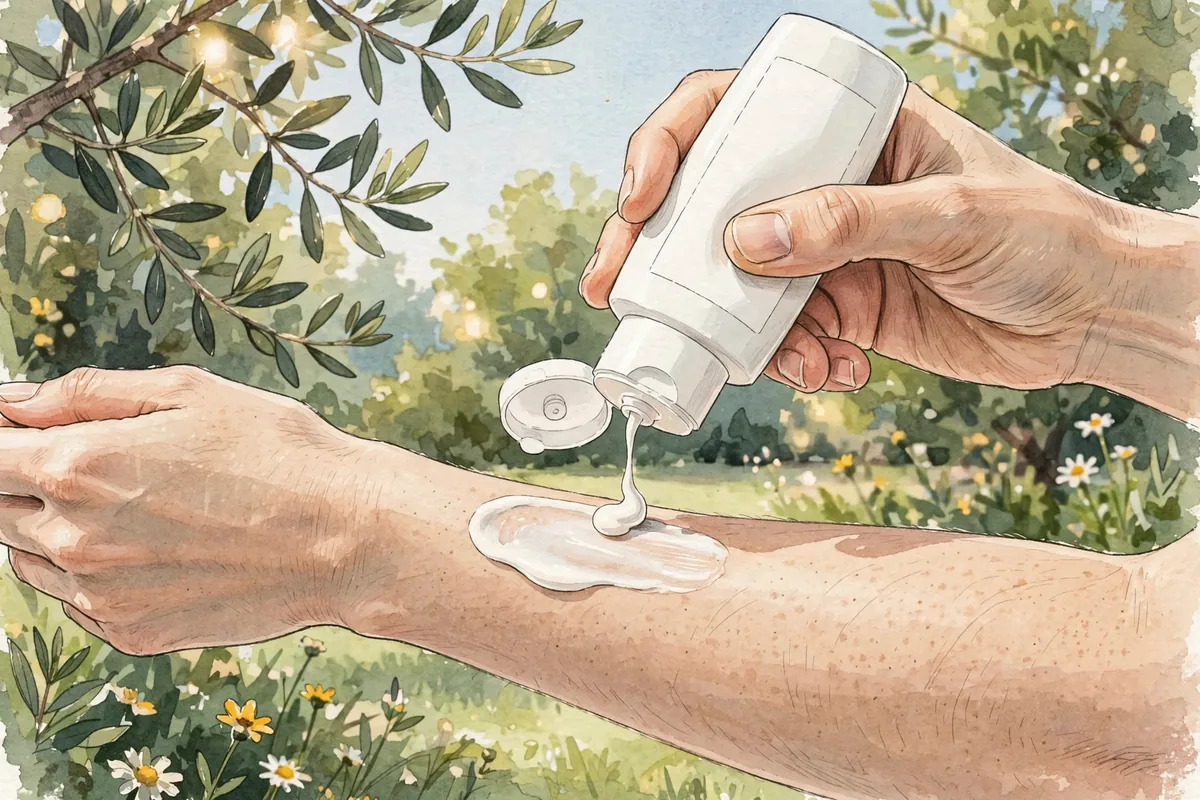
The correct technique has three steps and takes about fifteen minutes of patience:
- Apply sunscreen to clean, dry, exposed skin. Use enough — about a shot glass (one ounce) for full-body coverage — and do not miss ears, the back of the neck, and the tops of feet. Let it absorb and dry for about 15 minutes before the next step. This waiting period is what lets the UV filters settle into place.
- Apply insect repellent over the sunscreen. Use an EPA-registered repellent (DEET, picaridin, IR3535, oil of lemon eucalyptus, or 2-undecanone) and follow the label. Spray it onto your hands first, then apply to the face — never spray directly at the face. Do not apply repellent to skin that will be under clothing; dress first, then treat only the exposed skin.
- Do not mix the two products in your palm, in a bottle, or in a single combined rub. Pre-mixing throws off both formulations’ dosing, and you cannot reapply one without over-applying the other.
One thing people get wrong: applying extra-thick sunscreen “for the SPF” and then piling repellent on top. More sunscreen than needed does not meaningfully raise protection, but it does give the repellent a greasier, less even surface. Apply sunscreen normally, let it set, then repellent.
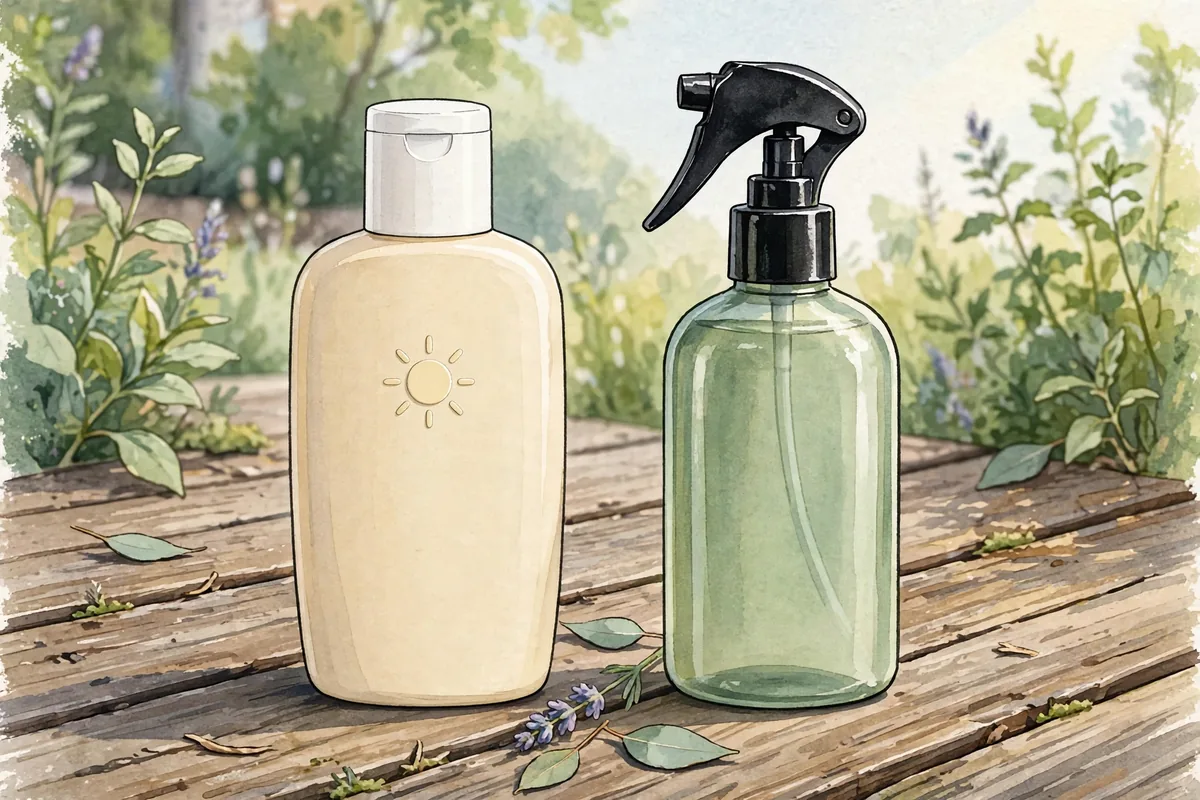
Combo Products: Why Two Bottles Beat One
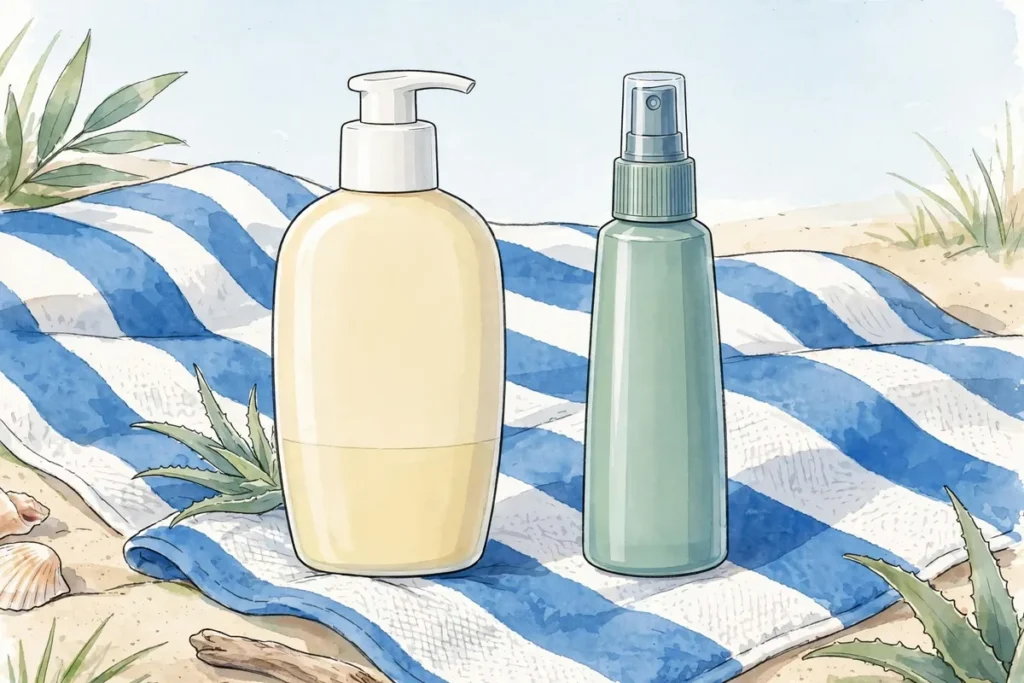
Sunscreen-plus-repellent combination products exist, and the CDC advises against relying on them — the agency’s guidance is to use separate products. The problem is reapplication math. Sunscreen needs reapplying roughly every two hours (and after swimming or heavy sweating), while a DEET repellent may protect for up to six hours or more. With a combo product, every sunscreen reapplication doses you with repellent you do not need — and every time you skip reapplication to avoid excess repellent, your sun protection lapses.
Separate products let each one run on its own clock. You can reapply sunscreen at the two-hour mark without touching the repellent, and you can top up repellent in the evening when the mosquitoes come out without adding another layer of SPF. Two bottles are slightly more hassle in the beach bag; they are meaningfully better protection on your skin. The same “separate and layer” logic applies on camping trips — pack both bottles as part of your full bite-prevention kit.
Reapplication: Two Clocks, Not One
This is where most people go wrong even with the right order. Sunscreen and repellent expire on different schedules:
- Sunscreen: reapply about every two hours, and immediately after swimming, sweating heavily, or toweling off. Water resistance is not waterproofing — no sunscreen survives a swim intact.
- DEET repellent: reapply per the label, typically every several hours depending on concentration; higher concentrations last longer but do not repel better. Picaridin follows a similar pattern.
- After swimming: reapply sunscreen first, wait for it to set, then reapply repellent — the full layering sequence again, not just one of the two.
A practical routine for a beach day: sunscreen at arrival (15 minutes before sun exposure ideally), repellent once the sunscreen has set, sunscreen again two hours later, repellent again in the late afternoon when mosquito activity ramps up. Do not automatically reapply both every time — check each product’s clock. And remember that shade, hats, and long sleeves reduce how much of either product you need in the first place.
Kids, Babies, and Special Cases
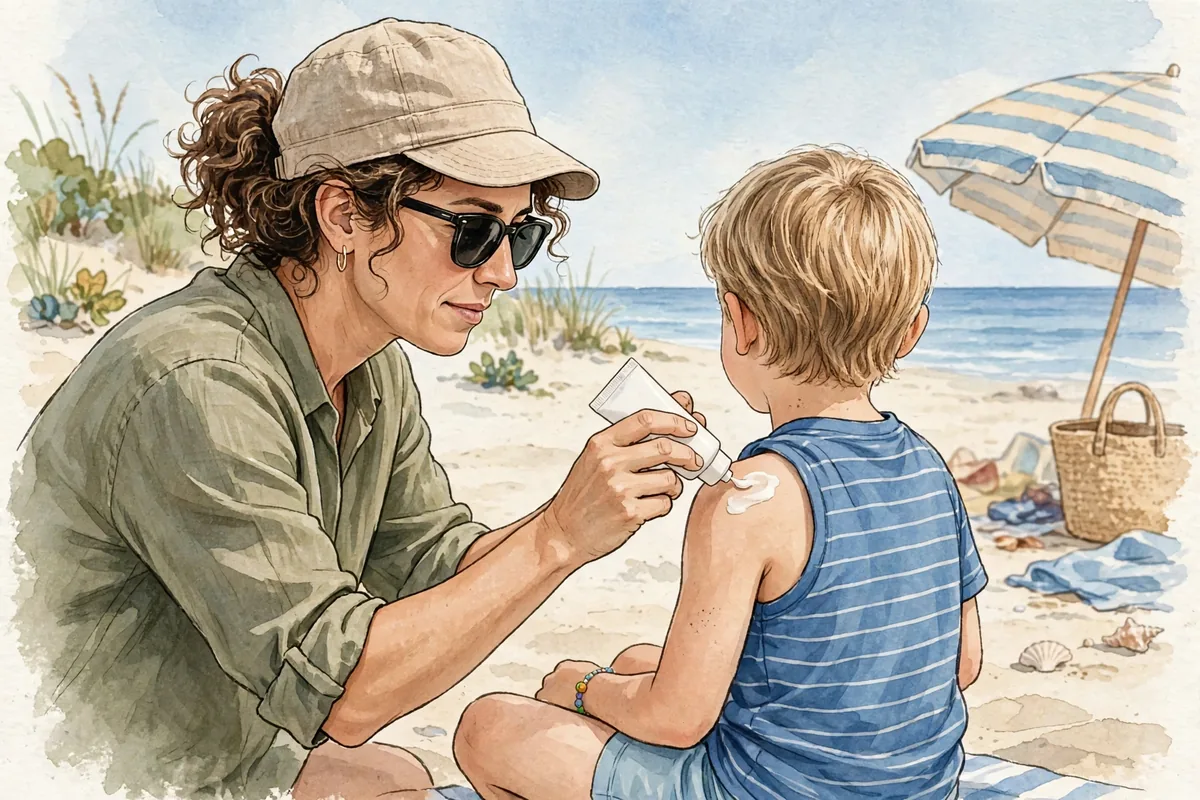
Children need the same order — sunscreen first, repellent second — with a few extra rules from the CDC and AAP:
- DEET concentration for children: the American Academy of Pediatrics recommends repellents with no more than 30% DEET for children. Higher concentrations last longer but do not repel better, so choose the lowest concentration that covers the planned time outdoors.
- Babies under 2 months: no insect repellent at all. Protect infants with clothing, mosquito netting over carriers and strollers, and shade.
- Children under 3 years: do not use products containing oil of lemon eucalyptus (OLE) or PMD.
- Application: adults should spray repellent onto their own hands and then apply it to the child’s face, ears, and neck. Never spray directly toward a child’s face.
- Avoid children’s hands (they go in mouths), eyes, mouth, and any cut or irritated skin. Do not apply repellent under clothing.
- Combination sunscreen-repellent products are especially discouraged for children, because the mismatched reapplication schedules lead to either too much repellent or too little sunscreen.
For pregnant people, EPA-registered repellents used as directed are considered safe by the CDC — and preventing mosquito-borne infections during pregnancy matters more than avoiding the repellent. Our repellent safety guide linked above goes deeper on this.
One more special case: if you are using permethrin-treated clothing (an excellent tick and mosquito strategy), remember that permethrin goes on clothing and gear only — never on skin. It complements the sunscreen-then-repellent routine rather than replacing it.
When to See a Doctor for a Bug Bite
Proper layering prevents most bites, but no system is perfect. Seek care if:
- You notice anaphylaxis signs — trouble breathing, facial swelling, widespread hives, dizziness — call 911 immediately.
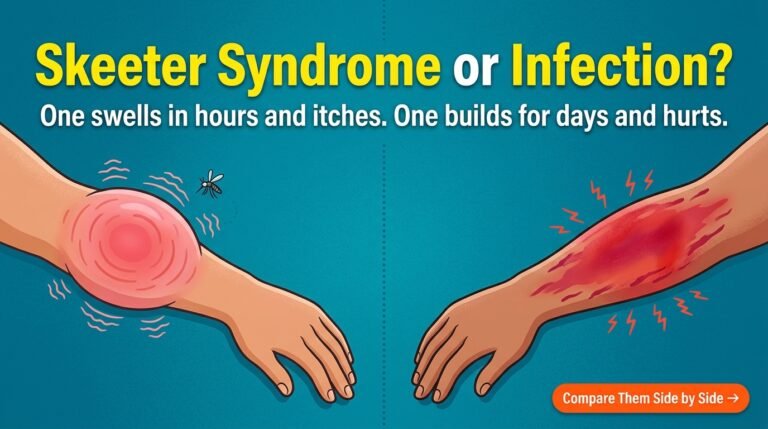
- A bite develops spreading redness, red streaks, warmth, increasing pain after 48 hours, or pus — possible skin infection.
- You develop fever, rash, headache, or body aches days after bites, especially after travel — tell your clinician about the trip.
- Bites on a baby under 2 months with significant swelling deserve prompt evaluation.
Frequently Asked Questions
Can I just mix sunscreen and bug spray together in my hand?
No. Mixing throws off the dosing of both products, prevents the sunscreen from forming its proper film, and can increase absorption of the repellent’s active ingredients into your skin. Always apply them as separate layers: sunscreen first, then repellent.
How long should I wait between sunscreen and bug spray?
About 15 minutes. That gives the sunscreen’s UV filters time to absorb and set on the skin. Applying repellent immediately over wet sunscreen can disturb the film and reduce sun protection.
Does the order matter if I use a “natural” repellent?
The order principle still applies — sunscreen first, repellent second — because it is about how sunscreen works, not which repellent you use. But note that the CDC recommends EPA-registered repellents for reliable protection; the effectiveness of non-EPA-registered natural repellents is not established, and evidence for options like citronella candles is thin.
Which sunscreen should I use under repellent?
Any broad-spectrum sunscreen of SPF 30 or higher that you will actually apply generously works. Lotion formulas tend to layer more evenly under repellent sprays than spray sunscreens do. The best sunscreen is the one you reapply on schedule.
Do I need to reapply both after every swim?
Reapply sunscreen after every swim, no exceptions. Reapply repellent only if its own protection window has expired or the label says to reapply after swimming — and when you do, repeat the order: sunscreen first, let it set, then repellent.
Authoritative Sources
- CDC — Protect yourself and your family from mosquito bites (order of application: sunscreen first, insect repellent second; children rules; OLE/PMD under 3)
- CDC — Protecting children from Zika / bite prevention guidance (sunscreen first, repellent second; no repellent under 2 months)
- Dermal absorption study of DEET and oxybenzone layering order (Environmental Science and Pollution Research, 2015 — human urinary-metabolite measurements)
- University of Florida — Researchers caution against sunscreen-DEET combinations (AAP guidance on combo products for children)
Medically reviewed by Dr. Sarah Jones, MD.
This article is for informational purposes only and isn’t medical advice. If you’re worried about a bite or sting, talk to a healthcare professional.