
Your toddler’s mosquito bite ballooned into a hot, swollen patch the size of an orange — and now you are wondering if it is an infection. It may be skeeter syndrome in children: a large local allergic reaction to mosquito saliva that is most common in young kids. It looks alarming, it is frequently mistaken for cellulitis, but it is usually not dangerous and it does not predict a future anaphylactic reaction. Here is how to recognize it and care for it calmly.
What Skeeter Syndrome Actually Is #
Skeeter syndrome is not a disease carried by mosquitoes — it is your child’s immune system overreacting to proteins in mosquito saliva. Young children are the most susceptible because their immune systems are still learning what to ignore. Most kids gradually develop tolerance as they get more bites over the years, which is why skeeter syndrome is far more common in toddlers and preschoolers than in older children or adults.
It helps to understand what it is not. It is not an infection — there are no bacteria to kill, so antibiotics do not treat it. It is not anaphylaxis — it stays local to the bite area rather than becoming a whole-body emergency. And it does not mean your child is “allergic to mosquitoes” in the life-threatening sense. It is a big local reaction, and big local reactions, while dramatic, are a known and usually harmless category of bite response.
That said, a first episode can be frightening precisely because it looks so different from a normal bite. The key is knowing the pattern, which the next section walks through step by step.
Symptoms: What the Reaction Looks Like #
Skeeter syndrome follows a fairly predictable script:
- Timing. Swelling and redness develop within hours of the bite and typically peak at 24 to 48 hours. The whole episode usually resolves over 3 to 10 days.
- Size. The swollen area can reach several inches across — sometimes covering most of a forearm or calf. Size alone does not mean infection.
- Look and feel. The area is red, warm, swollen, and firm. It may look bruise-like as it evolves. The defining sensation is intense itching — children will scratch at it constantly if allowed.
- Systemic extras. Some children develop a low-grade fever or general fussiness along with the swelling. These tend to track with the local reaction and fade as it fades.
- What is missing. True skeeter syndrome usually lacks red streaks radiating outward and lacks spreading, worsening pain after the peak — those features point more toward infection.
Because the swelling can distort little faces and limbs so dramatically, parents often head straight to urgent care. That is a reasonable instinct the first time — a clinician can confirm the diagnosis and rule out cellulitis, which matters because the treatments are completely different.
Skeeter Syndrome vs Cellulitis: Telling Them Apart #
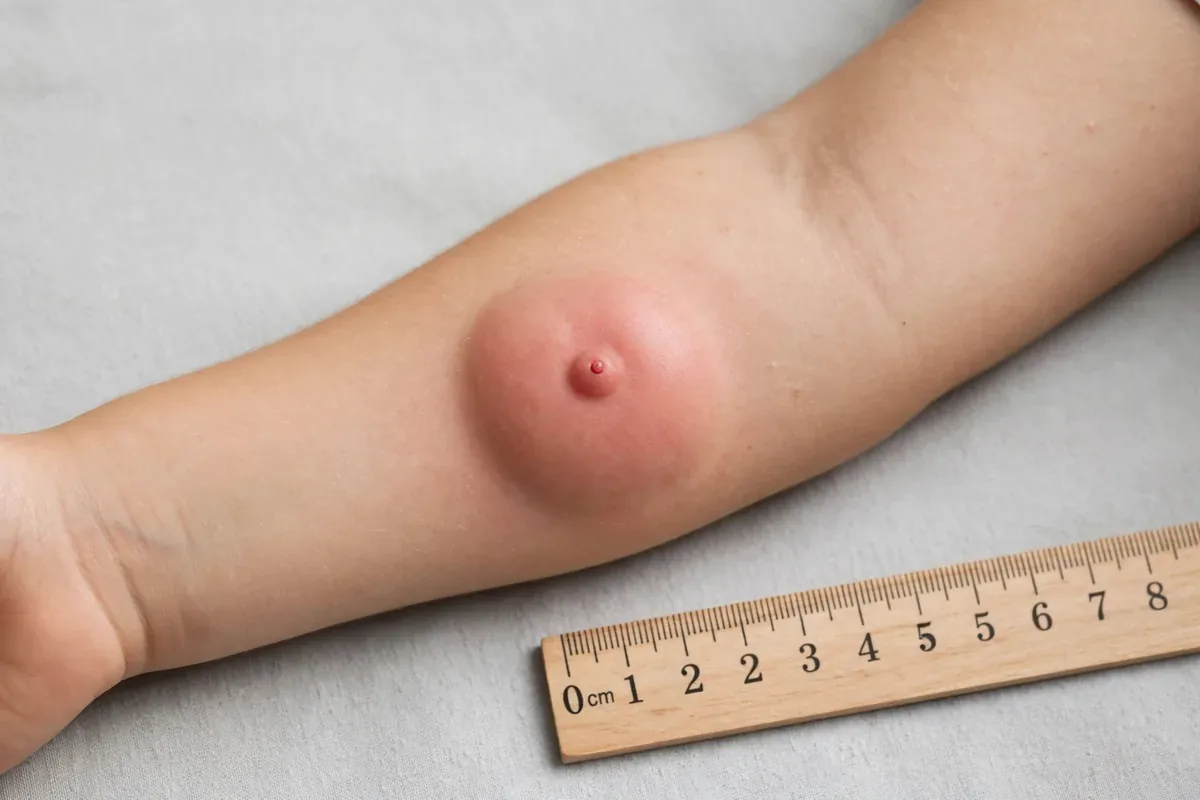
This is the distinction that matters most, because skeeter syndrome is commonly misdiagnosed as cellulitis — a bacterial skin infection that genuinely needs antibiotics. Here is how they differ:
| Feature | Skeeter syndrome | Cellulitis | |—|—|—| | Onset | Hours after a known bite | Often no clear bite; can start from a scratch or appear spontaneously | | Itch | Intense, dominant symptom | Usually mild or absent; pain dominates | | Red streaks | Typically absent | Red streaks spreading outward are common | | Pain | Sore but bearable; itch is worse | Increasing, throbbing pain | | After 48 hours | Starts improving | Keeps spreading or worsening | | Fever | Possible low-grade fever | Fever more likely and higher | | Response to antihistamines | Often improves itch and swelling | No meaningful effect |
The honest caveat: the two can coexist. A child can have skeeter syndrome AND develop a secondary infection from scratching. If a bite that was improving suddenly gets more painful, develops streaks, or the child spikes a real fever, the diagnosis deserves a second look — do not assume it is “just the allergy” anymore. For a related comparison, see large local reaction vs anaphylaxis.
Soothing Your Child: Care Checklist #
You cannot make the reaction vanish, but you can make your child dramatically more comfortable while it runs its course.
- Cold first. A cold compress or a bag of frozen peas wrapped in a thin towel, applied for 10 to 15 minutes several times a day, reduces swelling and numbs the itch.
- Tame the itch. An oral antihistamine per label directions (check the pediatric labeling or ask your pharmacist for the right product for your child’s age) is the single most helpful medication for skeeter syndrome, because the problem is histamine-driven. A thin layer of 1% hydrocortisone cream or calamine lotion on the area can help too.
- Protect the skin. Keep fingernails short. Consider loose cotton sleeves or pants over the area, and cover the worst spots loosely at night. Broken skin from scratching is how a harmless reaction becomes an infected one.
- Mark the border. Draw a light line with a washable marker around the edge of the redness. If the redness expands past the line over the next day, that is useful information for your clinician.
- Comfort measures. A cool bath, loose clothing, and distraction go a long way with an itchy, miserable toddler. Elevating a swollen limb on a pillow can reduce throbbing.
- When to call. If this is the first episode, a call to your pediatrician is worthwhile — partly for confirmation, partly so the reaction is on record for next time.
For mosquito-bite-specific swelling guidance, see our guide on mosquito bite swelling in children.
Will It Happen Again? Outlook and Prevention #

The encouraging news: most children outgrow skeeter syndrome. As the immune system encounters mosquito saliva repeatedly over childhood, the outsized reactions typically shrink until bites look ordinary. The condition does not predict anaphylaxis and does not mean your child needs an epinephrine auto-injector — though any history of whole-body symptoms (trouble breathing, widespread hives) is a different matter and deserves an allergist’s evaluation.
Until tolerance builds, prevention is the best medicine:
- Dress kids in long sleeves and pants for dawn and dusk outdoor play.
- Use a pediatrician-approved insect repellent on exposed skin, following the label exactly.
- Keep window screens intact and use bed nets when camping.
- Dump standing water around the home where mosquitoes breed.
Keep a simple log of episodes — date, bite location, how big the swelling got, how long it lasted. A shrinking trend over the seasons is reassuring evidence that your child is outgrowing it, and the log is gold for the pediatrician if you ever need to discuss it.
Warning signs: when to seek care #
Call 911 immediately if your child develops trouble breathing or swallowing, swelling of the face, lips, tongue, or throat, widespread hives, dizziness or fainting, or a racing heartbeat after any insect exposure. If your child has an epinephrine auto-injector, use it at the first sign of a severe reaction.
Seek prompt or urgent care if the swelling involves an eye, if red streaks spread from the bite, if pain is increasing after 48 hours, if pus appears, if fever rises, or if your child seems unusually ill or lethargic. Any bite that keeps worsening instead of peaking and fading deserves an in-person look.
Frequently asked questions #

Does skeeter syndrome mean my child will have anaphylaxis? #
No. Skeeter syndrome is a large local reaction, not a systemic one. It does not predict anaphylaxis to future mosquito bites. Whole-body symptoms are a separate concern — discuss those with your pediatrician or an allergist.
Should my child take antibiotics for it? #
Antibiotics do not treat skeeter syndrome because there is no bacterial infection — it is an allergic reaction. Antibiotics are only appropriate if a clinician diagnoses a secondary skin infection.
At what age do kids outgrow it? #
There is no fixed age. Many children show milder reactions within a few bite seasons as their immune systems build tolerance. Some remain sensitive longer, and that is still within the normal range.
Can I prevent it with antihistamines before mosquito exposure? #
Some parents give an antihistamine before known high-exposure outings, but routine pre-dosing is a decision to make with your pediatrician, who can weigh your child’s history and the right product and timing.
Medical and editorial note #
This guide is general information about skeeter syndrome in children, not medical advice. Every child reacts differently, and a severe-looking bite deserves an in-person evaluation the first time it happens. If you are worried about your child’s symptoms, contact your pediatrician or seek urgent care.


