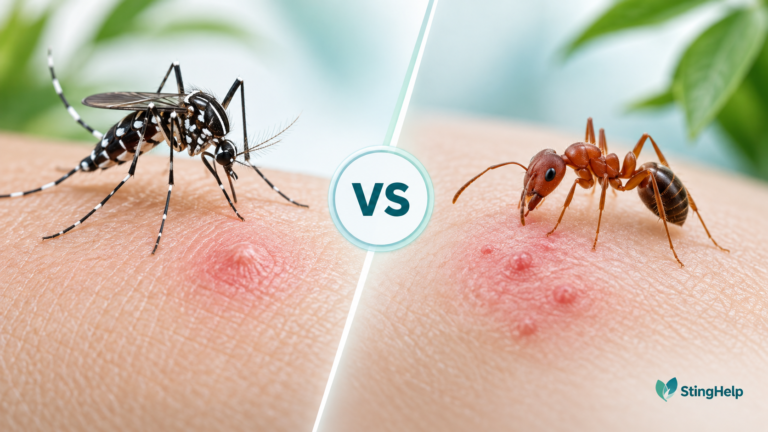
Direct answer: The main asian tiger mosquito bite vs dog flea bite treatment differences are exposure pattern and source control. Asian tiger mosquitoes bite outdoors, then fly away; dog fleas can keep biting when pets, bedding, carpets, or resting areas are infested. The skin marks can overlap, so the insect, setting, and repeated-bite pattern matter more than the bump alone.
Asian tiger mosquitoes and dog fleas are both blood-feeding insects, but they behave very differently. A single red itchy bump rarely identifies the culprit with certainty. Instead, compare where the bite happened, whether bites keep appearing indoors, whether a pet has fleas, whether you saw a black-and-white mosquito, and whether the pattern improves after environmental control.
Fastest practical clue
A mosquito bite usually follows a brief outdoor feeding event. Flea bites are more suspicious when new itchy spots recur around ankles or lower legs, especially in a home with an infested dog, pet bedding, carpets, upholstered furniture, or wildlife exposure.
Asian tiger mosquito bite vs dog flea bite: quick comparison
| Clue | Asian tiger mosquito | Dog flea |
|---|---|---|
| Insect | Aedes albopictus, a small black mosquito with conspicuous white markings | Ctenocephalides canis, a tiny wingless flea adapted for jumping |
| Typical encounter | Outdoor yards, gardens, shaded vegetation, container-water habitats | Infested pets, pet bedding, floors, carpets, upholstery, animal resting areas |
| What happens after feeding? | It flies away | Adults remain associated with hosts or the infested environment; repeated bites can continue |
| Common skin pattern | One or several itchy bumps on exposed skin | Small itchy papules, often multiple; lower legs and ankles can be involved |
| Best identification clue | Seeing the black-and-white mosquito | Finding fleas or flea dirt on a pet or in the home |
| Main next step | Relieve symptoms and prevent more mosquito bites | Relieve symptoms plus treat the pet/home infestation |
The table is a guide, not a diagnosis. Flea bites can occur above the ankles, mosquito bites can cluster, and different people react very differently to the same insect.
What an Asian tiger mosquito looks like
The Asian tiger mosquito, Aedes albopictus, is a dark mosquito with bright white bands on the legs and a white stripe on the upper body. It is strongly associated with artificial containers and other small collections of standing water around homes and neighborhoods. If you actually watched a black-and-white mosquito land and feed, that observation is much more useful than the appearance of the skin afterward.
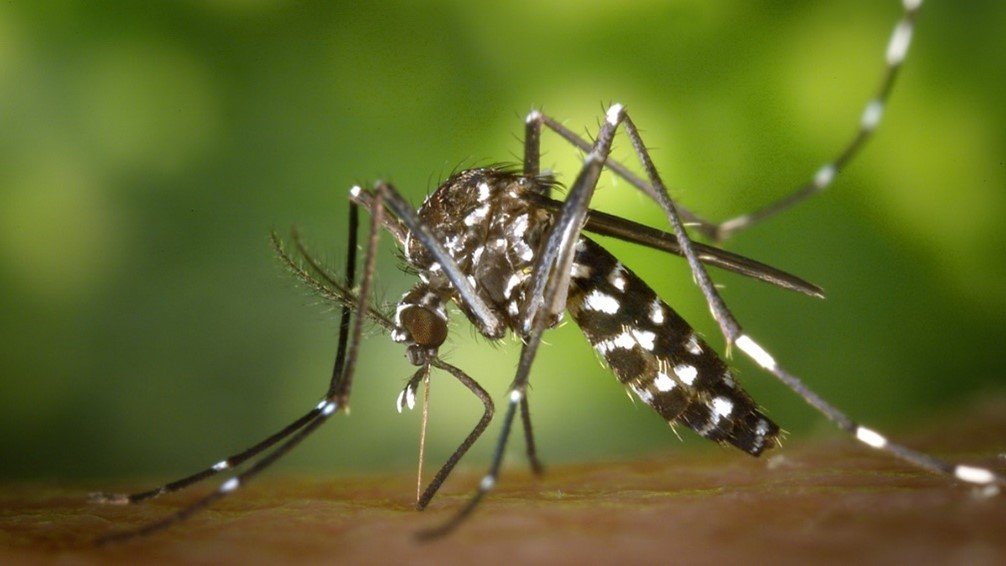
Asian tiger mosquitoes can transmit viruses including dengue, chikungunya, and Zika where infected mosquitoes and local transmission are present. A bite by itself does not mean disease transmission occurred. Geography, season, travel, and local public-health activity all change the actual risk.
What is a dog flea?
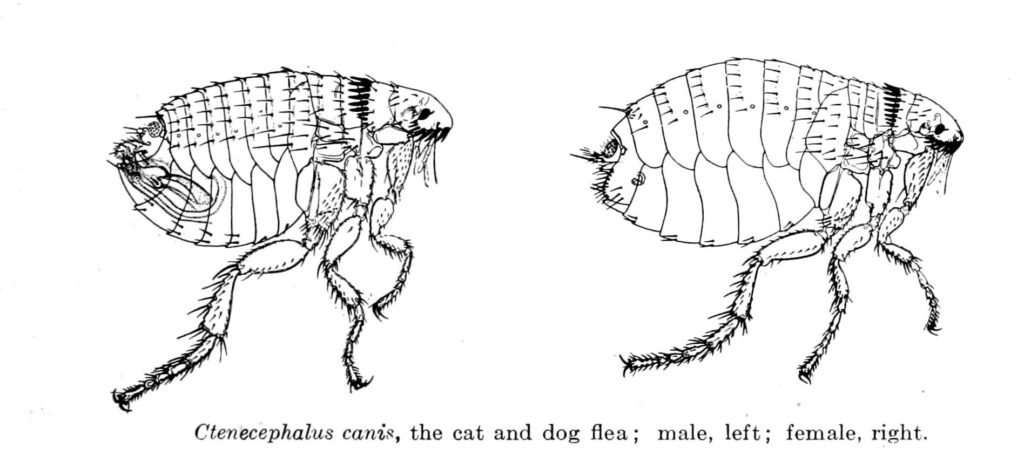
The dog flea, Ctenocephalides canis, is a small, wingless, laterally flattened flea. CDC includes the dog flea among flea species that can affect human health, and CDC parasitology guidance notes that both dog fleas and cat fleas may feed on people. The species name matters because a flea found on a dog is not automatically a dog flea; close identification generally requires seeing the flea itself under magnification.
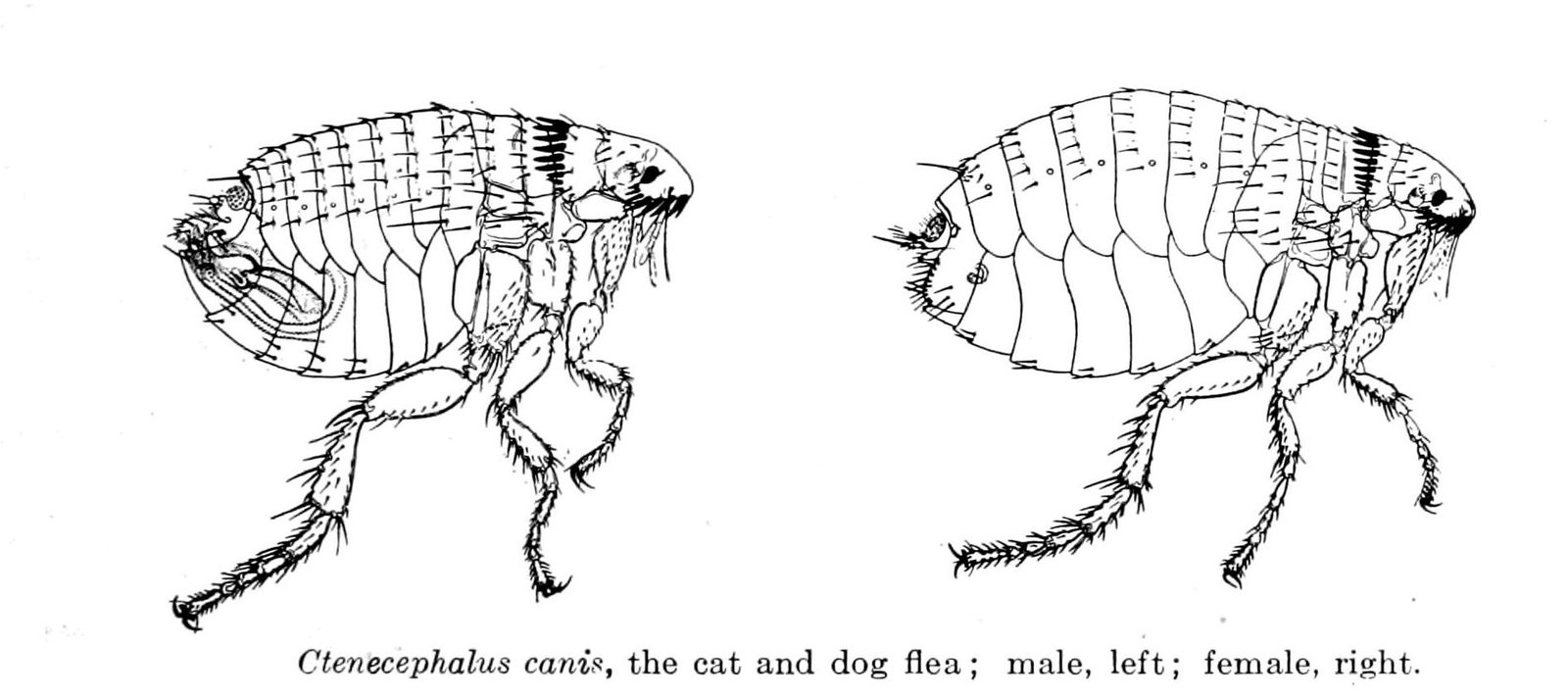
For Europe, ESCCAP reports Ctenocephalides canis as common and more dog-associated, with the species predominant in some countries including Ireland, France, and Greece. That makes European pet and veterinary context especially relevant when someone is trying to identify a household flea problem.
Can dog fleas bite humans?
Yes. Fleas prefer animal hosts, but people can be bitten when they share space with infested animals or when fleas are abundant in the environment. A dog flea bite can cause itching and localized skin irritation. The bite itself is usually not enough to determine whether the flea was C. canis, C. felis, or another flea species.
If a household dog is scratching, chewing, or grooming excessively, inspect the coat and common resting areas. Flea dirt can look like dark pepper-like specks in the fur or on bedding. A veterinarian can help identify and treat a pet infestation safely, especially when more than one animal lives in the home.
Where on the body do flea bites usually appear?
Flea bites are often noticed on the ankles and lower legs because fleas can jump from floors, rugs, pet bedding, or low furniture. They may also appear elsewhere if a person lies or sits in an infested area. The spots can be very itchy and may occur in small groups, but neither a line nor a cluster proves fleas.
Mosquitoes, bed bugs, biting midges, mites, and other insects can produce overlapping skin reactions. That is why the What Bit Me? identification guide emphasizes exposure history and the insect itself rather than relying on a single photo of the skin.
Pattern check: what happened during the next 24–48 hours?
- More consistent with mosquito exposure: bites followed time outdoors; no new bites appear after going inside; a striped mosquito was seen.
- More consistent with flea exposure: new bites continue at home; a pet is scratching; fleas or flea dirt are found; bites recur after contact with pet resting areas.
- Still uncertain: no insect was seen and the rash is spreading, painful, blistering, infected-looking, or accompanied by fever.
Asian tiger mosquito bite vs dog flea bite symptoms
Both can cause itching, redness, small raised bumps, and localized swelling. Reactions vary by person, previous exposure, scratching, and skin sensitivity. Some people develop only tiny spots; others develop larger itchy welts.
Typical mosquito-bite pattern
A mosquito bite may feel like a small prick or may go unnoticed while feeding. Itching and swelling often become more noticeable later. Exposed arms, legs, neck, and other uncovered areas are common sites. Multiple bites can occur when mosquitoes are abundant.
Typical flea-bite pattern
Flea bites often cause small, intensely itchy papules. Repeated household exposure can make the pattern seem to “keep coming back” because the source remains active. Scratching can damage the skin and increase the chance of secondary irritation or infection.
Do not assume that every lower-leg bite is a flea bite or every larger wheal is a mosquito bite. Skin appearance alone has limited specificity.
Asian tiger mosquito bite vs dog flea bite treatment differences
For a mild reaction, the skin-care steps overlap: wash gently, use a cool compress, avoid scratching, and use an appropriate over-the-counter anti-itch treatment only if it is safe for you and used according to the label. The major difference is what happens outside the skin.
For a likely Asian tiger mosquito bite
- Wash the area with soap and water.
- Use a cool compress for swelling or itching.
- Avoid scratching; keep broken skin clean.
- Prevent additional bites with EPA-registered repellent, protective clothing, screens, and standing-water control.
- Pay attention to fever or systemic illness if there is relevant travel or local mosquito-borne disease activity.
For a likely dog flea bite
- Use the same basic skin care for the bite itself.
- Check pets and pet resting areas for fleas or flea dirt.
- Talk with a veterinarian about an appropriate flea-control plan for every pet in the household.
- Wash pet bedding and household textiles as appropriate, vacuum floors and carpet edges, and keep cleaning consistent.
- Continue environmental control long enough to interrupt the flea life cycle; seeing fewer adult fleas does not always mean immature stages are gone.
CDC emphasizes that the best way to prevent flea bites in people is to keep pets free of fleas. If a household infestation is moderate or severe, source control usually requires treating the animal and the environment together rather than treating human bites alone.
Dog flea vs cat flea: why the name can be misleading
People often assume “the dog has fleas, so they must be dog fleas.” That is not a reliable species identification. The closely related cat flea, Ctenocephalides felis, commonly infests companion animals and can also bite people. If species identification matters, the flea itself—not the host name—is the key evidence.
If you are specifically comparing flea species, see the related Asian tiger mosquito bite vs cat flea bite guide. For most households, however, the immediate practical priorities are the same: protect the person from additional bites, treat pets appropriately, and control the environmental infestation.
Could a dog flea bite transmit disease?
Fleas as a group can be involved in human disease, but the risk depends strongly on flea species, infected animal reservoirs, geography, and the pathogen. CDC lists the dog flea among fleas relevant to human health, but many well-known U.S. flea-borne infections are associated more specifically with other flea species.
One important distinction involves Dipylidium caninum, the dog-and-cat tapeworm. CDC’s 2026 guidance explains that people become infected by accidentally swallowing an infected flea, not simply because a flea bites the skin. Most reported human cases occur in children. Flea control is therefore important for both pet health and household prevention, but a typical itchy flea bite does not mean a person has a tapeworm infection.
USA vs Europe: what changes?
In the United States, CDC advises that most fleas prefer animal hosts but people are sometimes bitten when they share space with an infested animal. Household pet control is central to prevention. The dog flea exists in the U.S., but visually distinguishing it from other pet fleas is not something a bite mark can accomplish.
In Europe, ESCCAP specifically lists C. canis as common throughout Europe and notes that it is more dog-associated and predominant in some countries. That makes local veterinary surveillance and pet history useful context. Regardless of region, do not infer flea species solely from the fact that the pet is a dog.
Decision guide: what should you do next?
One or two mild itchy bumps after outdoor exposure: basic bite care + mosquito prevention may be enough.
New bites continue inside the home: inspect pets and the environment for fleas and start source control.
Pet has fleas: treat all pets using veterinarian-recommended products and clean resting areas.
Fever, spreading rash, drainage, severe swelling, breathing trouble, facial/throat swelling, fainting, or rapidly worsening symptoms: seek medical evaluation; emergency symptoms need urgent care.
When should you seek medical care?
Most uncomplicated mosquito and flea bites improve with home care. Medical evaluation is more appropriate when redness is rapidly expanding, pain is increasing instead of improving, pus or drainage appears, a fever develops, or the person feels systemically unwell.
Seek emergency care for difficulty breathing, throat tightness, swelling of the lips, tongue, or face, fainting, severe dizziness, or a rapidly worsening widespread reaction. Those symptoms can represent a serious allergic reaction and should not be managed as a routine bite.
If fever, rash, severe headache, marked joint pain, unusual bleeding, or other significant illness follows a mosquito bite—especially after travel or during known local transmission—tell the clinician about the location and timing of the exposure.
How to prevent Asian tiger mosquito bites
Reduce standing water around the home, including buckets, plant saucers, toys, tires, gutters, and other containers. Use EPA-registered insect repellent, wear protective clothing when practical, and maintain window and door screens. Asian tiger mosquitoes can use surprisingly small water-holding containers, so frequent checks are more useful than a one-time cleanup.
How to prevent dog flea bites
CDC recommends keeping pets free of fleas, checking pets regularly, and working with a veterinarian on flea prevention. If fleas are found, household cleaning should focus on pet bedding, rugs, carpets, floors, wall edges, upholstery, and places where animals spend time. Every pet in the home should be considered in the control plan.
Because fleas have egg, larval, pupal, and adult stages, control may take time. Continue prevention and sanitation even after adult fleas seem to disappear. Stopping too early can allow newly emerging adults to restart the infestation.
For broader care steps, use the StingHelp bite and sting first-aid guide. If you are unsure whether a tick was attached rather than a flea present, compare the blacklegged tick comparison. If the bite was immediately painful outdoors, the deer fly comparison may be more relevant.
Frequently asked questions
How can you tell an Asian tiger mosquito bite from a dog flea bite?
Look at the exposure, not just the bump. A mosquito bite often follows outdoor exposure and the insect leaves after feeding. Flea bites are more likely when bites keep recurring indoors, especially with an infested pet, flea dirt, or activity around bedding, carpets, and lower legs.
What are the most useful differences to compare?
Compare the insect seen, location of exposure, whether bites recur in the home, whether a pet has fleas, body distribution, and whether source control stops new bites. Skin appearance alone is usually too nonspecific for confident identification.
Which warning signs matter most?
Get medical help for rapidly worsening swelling, spreading redness, pus, fever, severe headache, systemic illness, or symptoms that are not improving. Breathing difficulty, facial or throat swelling, fainting, or severe dizziness are emergency warning signs.
What should you do if you are unsure what caused the bite?
Use gentle first aid, avoid scratching, photograph any insect you find, and watch the exposure pattern. Check pets and bedding if fleas are possible. If symptoms are significant or the diagnosis matters because of travel, infection risk, or allergy history, seek professional evaluation.
Can dog fleas live on people?
Fleas may bite people, but companion-animal fleas are adapted to animal hosts. Human bites often occur because people share an infested environment. The long-term solution is usually pet and environmental flea control rather than treating the human skin alone.
Can a dog flea bite give you dog tapeworm?
Not from the bite itself. CDC explains that human Dipylidium caninum infection occurs when a person accidentally swallows an infected flea. Flea control reduces this risk, particularly for young children who spend time close to floors and pets.
Authoritative references
- CDC — About Fleas
- CDC — Preventing Fleas
- CDC — About Dog or Cat Tapeworm Infection (updated 2026)
- ESCCAP — Ectoparasites: Ctenocephalides canis
- CDC — Asian Tiger Mosquito
Bottom line
The practical asian tiger mosquito bite vs dog flea bite treatment differences are bigger than the skin reaction. A likely mosquito bite mainly needs symptom care and protection from more mosquito exposure. A likely flea bite also requires pet and household source control. Use the insect, environment, repeated-bite pattern, and geography—not the red bump alone—to decide what to do next.
Educational information for a U.S.- and Europe-focused audience. This article cannot diagnose an insect, allergic reaction, infection, or vector-borne disease from a photograph and does not replace professional medical care.