Two scorpions share the same genus, overlap across Texas, Arizona, and New Mexico — and could hardly be more different in what their stings mean. The direct answer to arizona bark scorpion vs striped bark scorpion: the Arizona bark scorpion (Centruroides sculpturatus) is the most venomous scorpion in North America and the only US scorpion considered a serious hazard to humans, while the striped bark scorpion (Centruroides vittatus) delivers a sting most people compare to a bee or wasp sting. Telling them apart matters — and the rules for staying safe around both start the same way: never handle any scorpion.
This guide covers identification, sting effects, first aid, and exactly when to call 911 or poison control. Read the safety sections carefully — with the Arizona bark scorpion, the difference between a painful night and a medical emergency can come down to who was stung.
Telling Them Apart: Stripes, Color, and Build
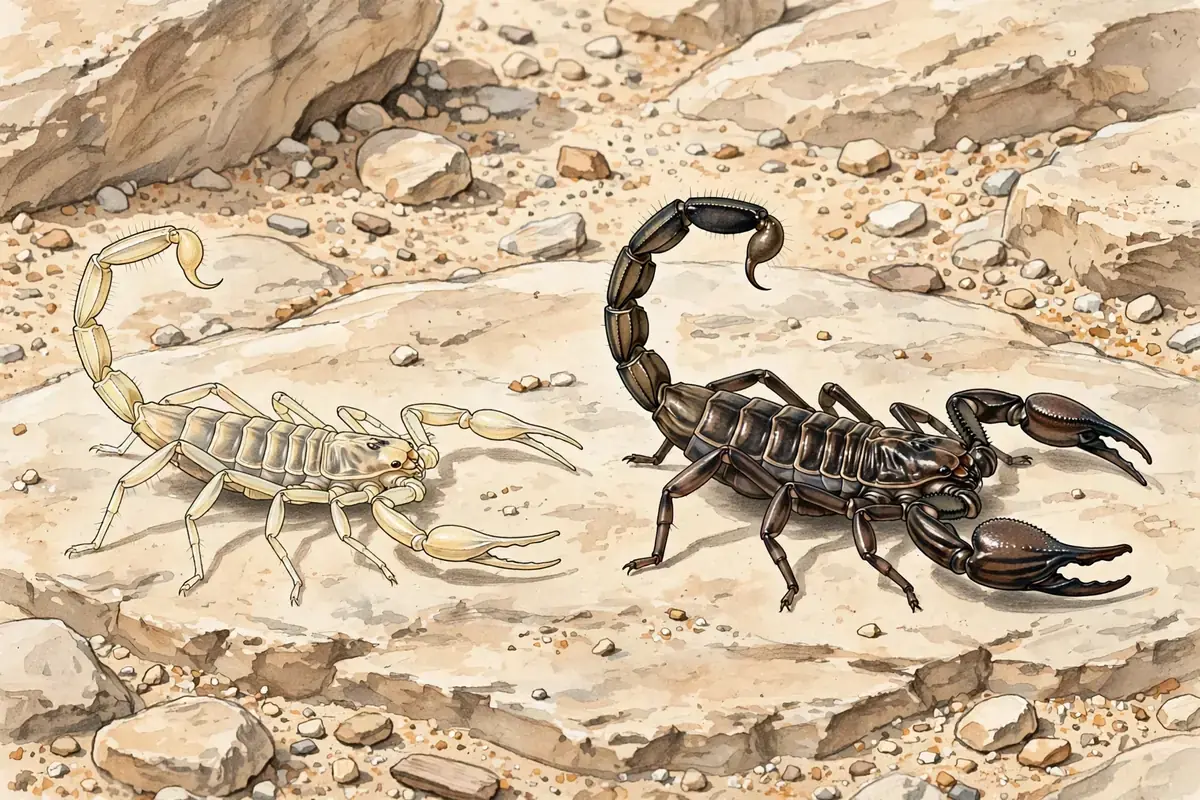
Both are slender “bark” scorpions in the genus Centruroides — thin pincers, long tails, built for climbing rather than burrowing. Here’s how they differ:
Arizona bark scorpion (Centruroides sculpturatus). Uniform pale straw-yellow to tan, with no striping — adults run about 2 to 3 inches long. The body is notably slender and delicate-looking. Its signature trait is climbing: unlike ground-dwelling desert scorpions, bark scorpions scale stucco walls, block fences, tree bark, and even interior walls and ceilings. They shelter in crevices as narrow as about half an inch — shoes, folded towels, bedding, wall voids. Core range: Arizona and Sonora, Mexico, reaching into edges of California, Nevada, Utah, and New Mexico. (Older sources may call it Centruroides exilicauda — taxonomy was revised in 2004, and C. sculpturatus is the current name for the Arizona species.)
Striped bark scorpion (Centruroides vittatus). The giveaway is in the name: two dark longitudinal stripes run down its back, often with a dark triangular mark near the head, set against a yellowish-tan base. Slightly smaller and stockier on average. It’s the most commonly encountered scorpion in the US, especially abundant in Texas, and ranges across Oklahoma, Kansas, New Mexico, Arizona, and northern Mexico. Thousands of people are stung by this species every year — usually barefoot encounters at night or accidental contact indoors.
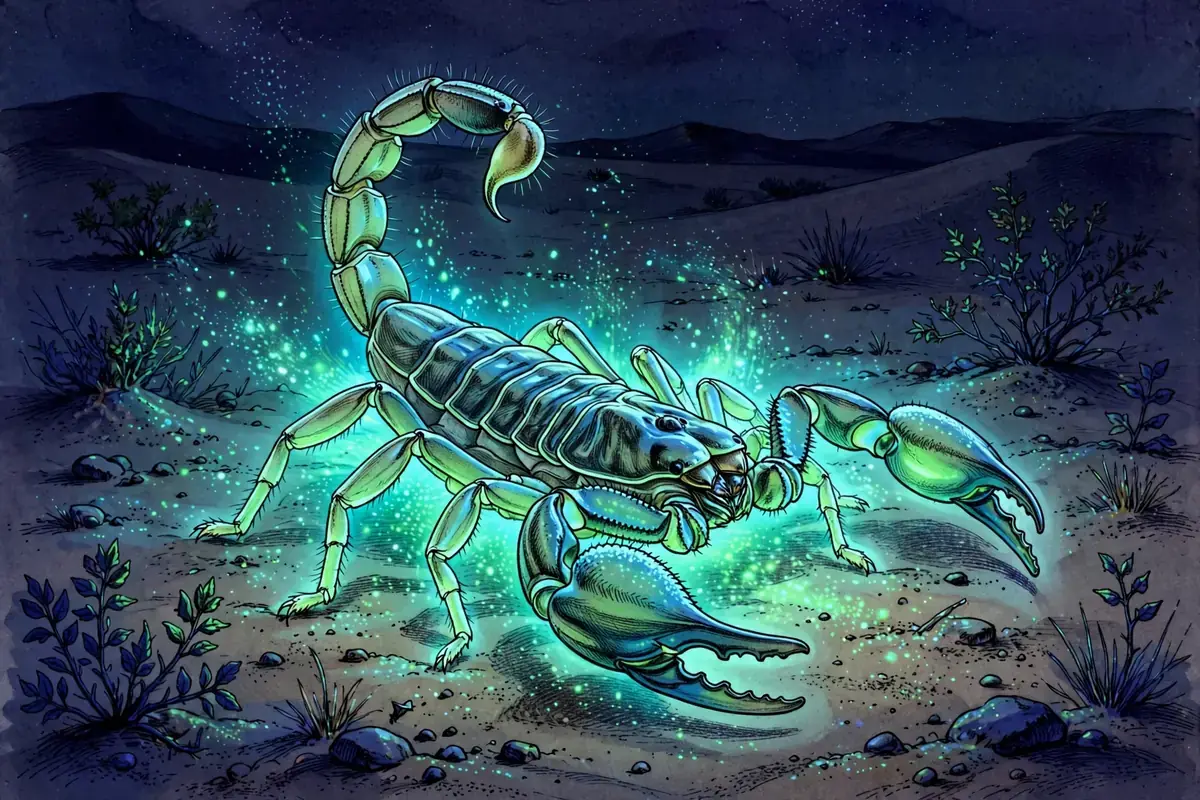
The UV trick. All scorpions fluoresce under ultraviolet light, glowing a vivid blue-green. A handheld UV flashlight at night is the standard detection tool in scorpion country — it reveals scorpions on walls, patios, and floors that are invisible in normal light. It won’t tell the species apart (both glow), but it’s the best way to confirm whether scorpions are active around your home.
One caution: don’t try to get close enough to check for stripes on a live scorpion. Identification is for the aftermath or for a safely contained specimen — never lean in for a better look at a free-roaming one.
Sting Comparison: Why One Is Far More Serious

Striped bark scorpion sting. Painful but typically not dangerous. Most people describe a sharp prick followed by burning or tingling, roughly comparable to a bee or wasp sting, with local redness and swelling. Symptoms usually stay local and fade within hours. Severe reactions are rare and generally limited to the very young, the elderly, or people with significant allergies — though any sting deserves monitoring. Fatalities from this species are exceedingly rare.
Arizona bark scorpion sting. A different category. The venom is strongly neurotoxic — it attacks the nervous system rather than just the local tissue. Victims describe immediate, intense pain often likened to electric jolts, with numbness and tingling that can spread. In adults, severe pain lasting 24 to 72 hours is typical, sometimes with temporary dysfunction of the stung limb. In children and small pets, the picture can escalate: uncontrolled jerking movements, drooling, difficulty swallowing, vision disturbances, restlessness, and in the worst cases, breathing difficulty. This is the only US scorpion linked to human fatalities — deaths are rare (a handful in Arizona over recent decades) and concentrated in small children, the elderly, and people with compromised health, but the risk is real and documented.
The key clinical distinction: a striped bark scorpion sting is a local event; an Arizona bark scorpion sting can become a systemic one, especially in children. That is why the emergency guidance differs so sharply between the two.
First Aid: What to Do in the First Minutes
For any scorpion sting, start here:
- Stay calm and call for help if needed. If the victim is a young child, an older adult, or anyone developing symptoms beyond local pain — call 911 or Poison Control (1-800-222-1222) immediately. Don’t wait to see how it develops in high-risk victims.
- Clean the sting site with soap and water.
- Apply a cool compress — 10 minutes on, 10 minutes off. Cold helps with local pain for both species; see our cold compress guide.
- Keep the stung limb still and at rest. Limit movement, which can spread venom faster.
- Watch closely for at least a few hours. Arizona bark scorpion venom can take time to declare its full severity — symptoms often peak around 5 hours. Monitoring matters more than any home remedy.
- Don’t try folk remedies. No cutting, no sucking, no tourniquets, no alcohol poured on the wound. None of these help with neurotoxic venom and some cause harm.
About antivenom: Anascorp — an FDA-approved scorpion antivenom (approved 2011) — exists specifically for Centruroides envenomation and is stocked at hospitals in affected regions. It is administered in a hospital setting for severe cases, and Arizona poison control data shows it can resolve symptoms within hours. This is a hospital decision, not a home one — another reason to get severe stings evaluated rather than toughing them out.
Never handle scorpions. This bears repeating as the single most important rule: don’t pick one up with a cup, don’t sweep it with a broom, don’t try to relocate it. Use a long-handled tool from a distance only if you must move one, or call pest control. Every year, a meaningful share of stings happen to people who were trying to catch the scorpion.
When to Call 911 or Poison Control
Call 911 immediately for:
- Any scorpion sting in a child under about 9 years old, an elderly person, or someone with serious health conditions — Arizona poison control guidance treats these as serious by default.
- Systemic symptoms: uncontrolled muscle jerking or twitching, drooling or trouble swallowing, difficulty breathing, vision changes, severe restlessness, or confusion.
- Signs of anaphylaxis (possible with any sting): trouble breathing, swelling of the face or throat, dizziness, widespread hives. Know the anaphylaxis sting warning signs.
Call Poison Control (1-800-222-1222) for:
- Any Arizona bark scorpion sting in an adult with more than local pain — they will triage whether hospital evaluation is needed.
- Any sting where you’re unsure of the species and symptoms are spreading beyond the sting site.
- Guidance on monitoring: poison control staff routinely follow up on scorpion exposures and will tell you what to watch for over the coming hours.
For a striped bark scorpion sting in a healthy adult with only local pain, home monitoring with the first-aid steps above is usually sufficient — but when in doubt, the call is free and the advice is expert. Our bite and sting first-aid checklist covers the general sequence for any envenomation.
Keeping Scorpions Out of Your Home
Bark scorpions are climbers and crevice-dwellers, so prevention focuses on denying entry and shelter:
- Seal entry points. Weather-strip doors, seal gaps around pipes and cables, repair window screens, and close gaps under garage doors. Bark scorpions need only a half-inch crevice.
- Clear the perimeter. Remove woodpiles, rock piles, dense ground cover, and debris against the house. Trim tree branches and shrubs touching walls and roofs — they’re scorpion highways.
- Reduce their food. Scorpions eat insects and spiders; cutting down the prey population (outdoor lighting attracts insects — consider yellow “bug” bulbs or motion lights) makes your home less attractive.
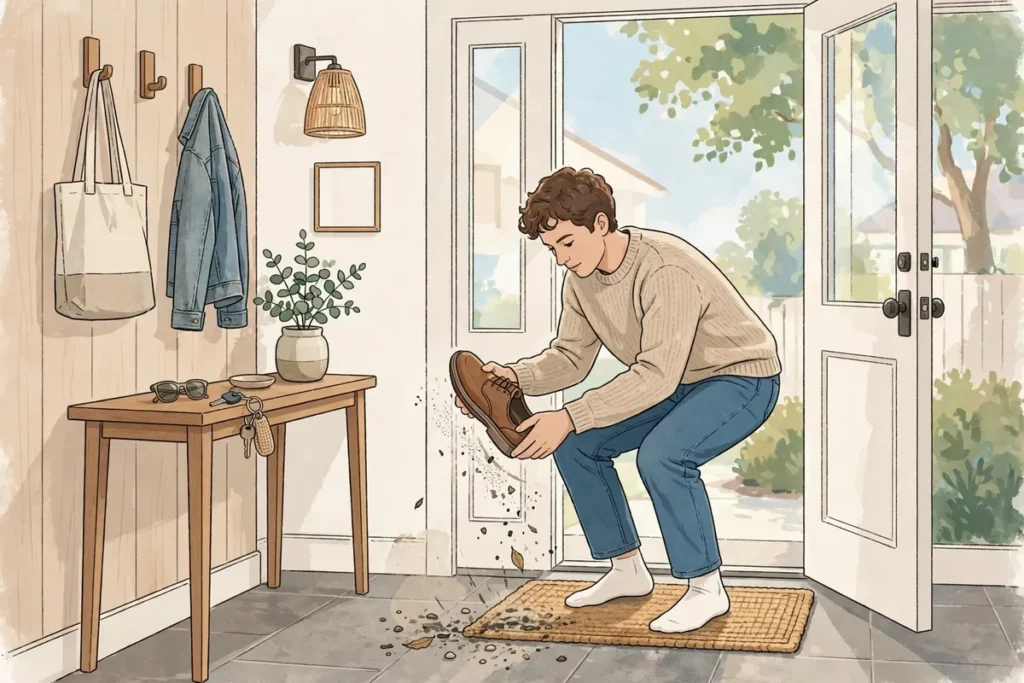
- Shake and check. In scorpion country, make it habit: shake out shoes, clothing, and towels before use; check bedding; don’t leave clothes piled on the floor.
- Use UV checks. Sweep patios, walls, and entryways with a UV flashlight on warm nights to find activity hotspots.
- Consider professional help. Persistent indoor scorpions warrant a pest professional experienced with bark scorpions — they behave differently from ground scorpions and need targeted treatment.
Black lights and good sealing do more than most people expect. The goal isn’t a scorpion-free desert (impossible) — it’s a scorpion-free bedroom.
When to See a Doctor for a Sting
Beyond the 911/poison-control triggers above, see a clinician promptly for:
- Pain or numbness that is worsening rather than improving after several hours.
- Spreading redness, increasing swelling, or signs of secondary infection at the sting site.
- Any sting in a person with a known venom allergy or on immune-suppressing medication.
- Stings to the face, eyes, or inside the mouth.
When you go, bring details: when and where the sting happened, a description or photo of the scorpion if safely obtained, the victim’s age and health conditions, and a timeline of symptoms. That information shapes treatment decisions, including whether antivenom is indicated.
Frequently Asked Questions
How can I tell an Arizona bark scorpion from a striped bark scorpion?
The Arizona bark scorpion is uniformly pale straw-yellow to tan with no stripes; the striped bark scorpion has two dark stripes down its back. Range helps too: the Arizona species centers on Arizona and Sonora, while the striped species dominates Texas and the southern plains. Never get close to a live scorpion to check — identify from a safe distance or a photo.
Is the Arizona bark scorpion deadly?
It is the most venomous scorpion in North America and the only US scorpion considered a serious hazard to humans. Fatalities are rare and concentrated in small children, the elderly, and people with compromised health — but its neurotoxic venom can cause severe systemic symptoms, which is why stings in vulnerable people are treated as emergencies.
What does a striped bark scorpion sting feel like?
Most people compare it to a bee or wasp sting: a sharp prick followed by burning or tingling, with local redness and swelling that fades within hours. Severe reactions are uncommon in healthy adults.
Should I try to catch the scorpion for identification?
No — never handle a scorpion. A photo from a safe distance is useful for identification, but don’t risk a second sting trying to get one. Describe what you saw (color, stripes, size, location) to poison control or the ER staff instead.
Does antivenom exist for bark scorpion stings?
Yes. Anascorp, FDA-approved in 2011, treats Centruroides scorpion envenomation and is used in hospitals in affected regions for severe cases. It’s a hospital-administered treatment — getting the patient evaluated promptly is what makes it available.
Medically reviewed by Dr. Sarah Jones, MD.
This article is for informational purposes only and isn’t medical advice. If you’re worried about a bite or sting, talk to a healthcare professional.