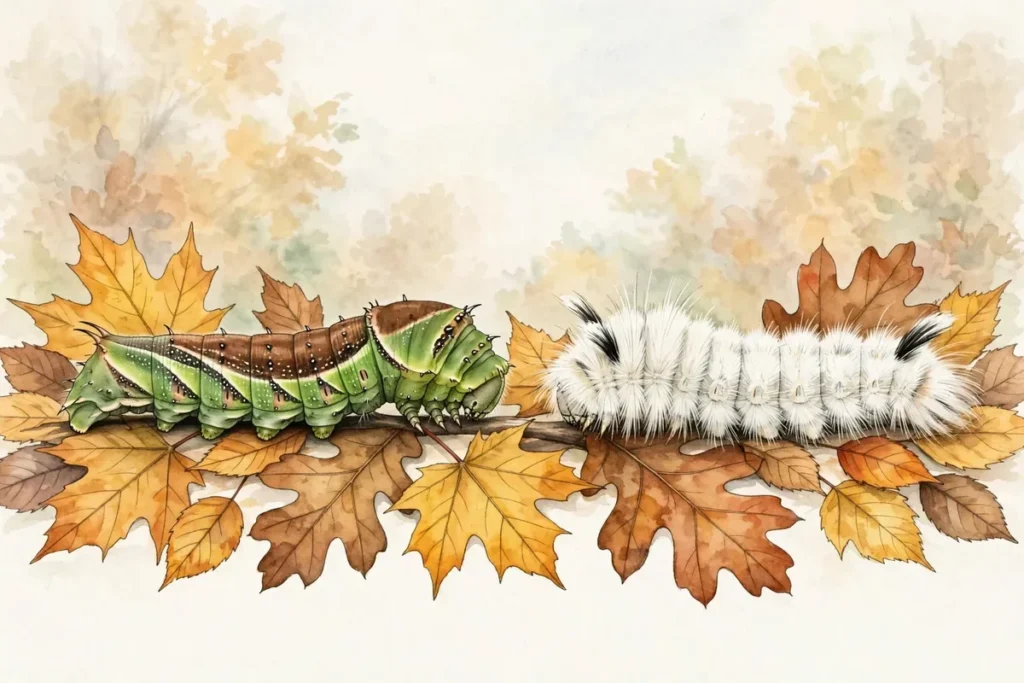
Your child comes in from the yard clutching a caterpillar they thought looked cool, and now their hand is burning. Or you brush a branch while raking leaves and your forearm erupts in an itchy red rash. In the eastern United States every fall, two caterpillars cause most of these encounters: the saddleback and the hickory tussock. Both are at their largest and most numerous in autumn, and children are the most common victims because the insects are bright, slow, and tempting to touch.
This guide covers saddleback caterpillar vs hickory tussock caterpillar from a health-first angle: how to tell them apart instantly, why one delivers a genuinely venomous sting and the other causes a different kind of skin reaction, what first aid each one needs, and exactly when a caterpillar encounter should send you to a clinician. The short version: the saddleback injects venom through spines and needs prompt spine removal plus monitoring for systemic symptoms, while the hickory tussock sheds irritating hairs that cause a contact rash, usually without venom.
The Short Answer: Real Venom vs Irritating Hairs
The saddleback caterpillar (Acharia stimulea) is one of North America’s most potent stinging caterpillars. Its fleshy, horn-like spines are connected to venom glands, and contact delivers an immediate, intensely painful sting with a swollen red rash. In some people the venom causes systemic symptoms such as nausea, vomiting, headache, migraine, or asthma complications, and documented allergic reactions, while uncommon, do occur.
The hickory tussock caterpillar (Lophocampa caryae) works differently. It does not inject venom the way the saddleback does. Instead, its fluffy coat carries urticating hairs that break off on contact and irritate the skin, producing a burning, itchy contact dermatitis with redness and swelling. The rash typically lasts about a day, sometimes with headache or nausea, and then resolves.
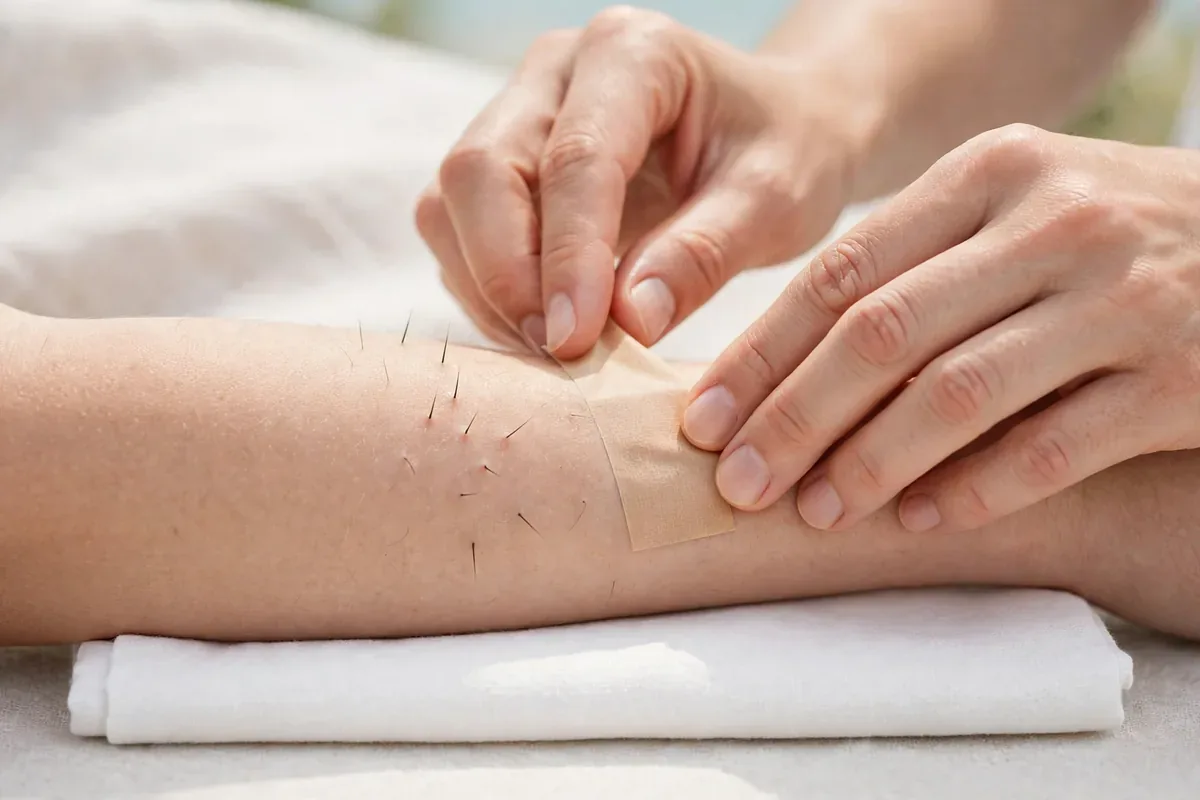
Both need the same first move: get the spines or hairs off the skin with adhesive tape or a lint roller, then wash with soap and water. From there the paths diverge, because a venomous sting needs monitoring for spreading symptoms that a hair rash rarely produces. The identification details below matter because the treatment follows the insect.
Identifying the Saddleback Caterpillar
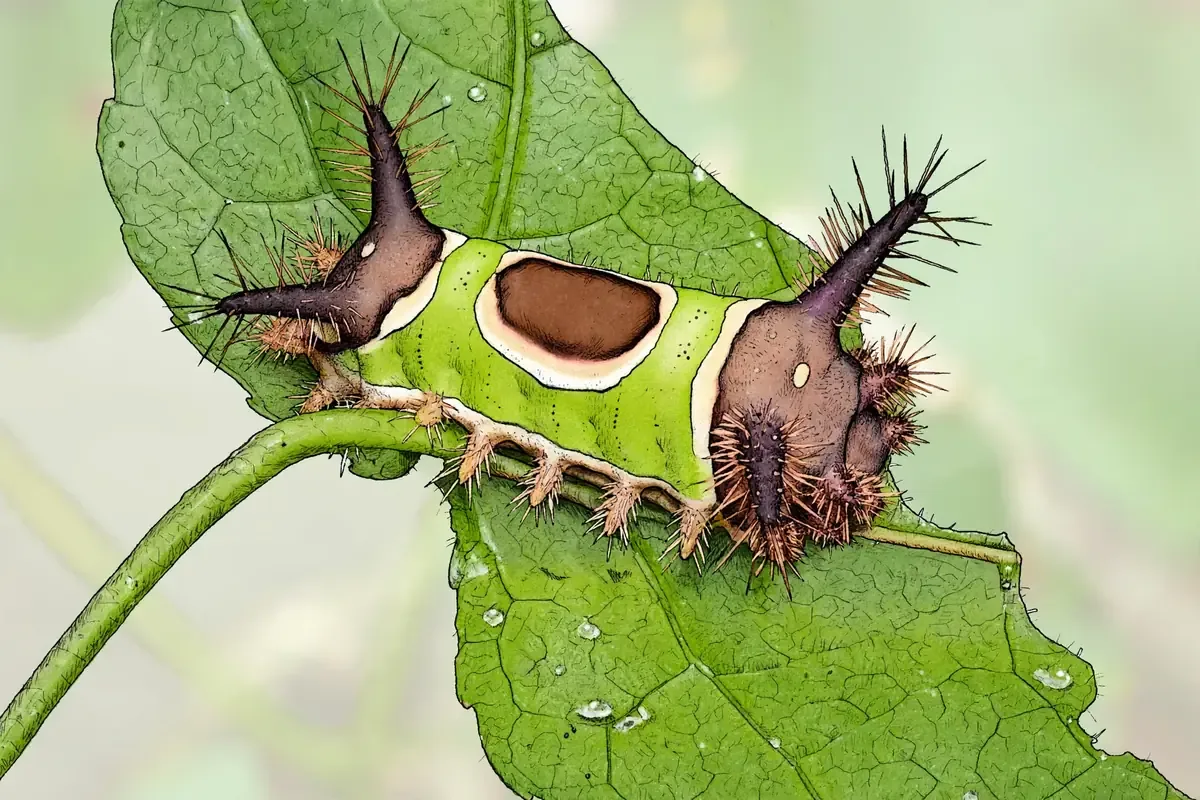
The saddleback is small, vivid, and unmistakable once you have seen one. The mature caterpillar is about an inch long with a slug-like body: bright green in the middle with brown at both ends. On its back sits the namesake marking, a brown oval “saddle” ringed in white, set against the green. At each end of the body are clusters of fleshy, horn-like spines, and these spines are the weapon. Each hollow spine connects to a venom gland beneath the skin, so even a light brush can snap spines off into your skin and release toxin.
Saddlebacks belong to the slug caterpillar family Limacodidae, and they are solitary feeders found on a wide range of plants across the eastern United States, from Florida to New York and west to Texas, Indiana, and Kansas. Host plants include apple, cherry, oak, maple, elm, dogwood, and even corn. They are most often encountered in midsummer through early fall, which is when gardeners pruning shrubs or children exploring low branches get surprised. One more identification trick: the caterpillar’s rear end carries two pale dots that look like a false face, a defensive mimicry meant to startle predators. Do not be fooled into thinking the marked end is the head; both ends have spines.
Because the spines are fragile and can shed onto leaves, some people report being stung without ever touching the caterpillar, simply from handling foliage it crawled across. If you garden in saddleback territory, gloves are cheap insurance.
Identifying the Hickory Tussock Caterpillar
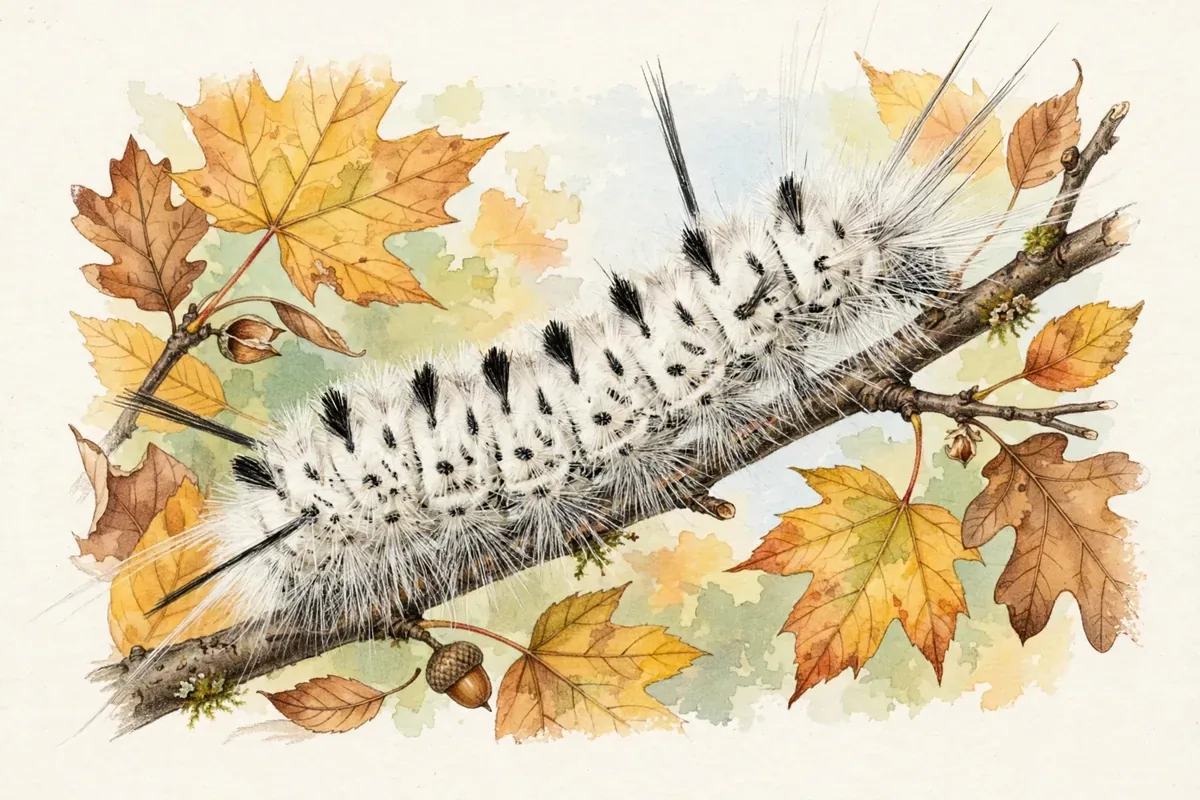
The hickory tussock looks like a tiny white powder puff with attitude. The body is densely covered in soft white hairs, interrupted by a chain of black markings running down the back and finished with long black hair tufts at both ends. It is a fuzzy, high-contrast caterpillar, and in the fall it is frequently seen wandering on sidewalks, decks, and the trunks of hickory, walnut, and other hardwood trees. The fuzz is the hazard: the hairs are urticating, meaning they detach easily and carry irritants that inflame human skin on contact.
Unlike the saddleback, the hickory tussock has no venom-injecting spines. Its defense is mechanical and chemical irritation from the hairs themselves, more like fiberglass exposure than a bee sting. That distinction explains why the reaction is usually a spreading itchy rash rather than a single point of sharp pain. The caterpillar’s hairs can also become airborne or transfer from clothing and pet fur, so people sometimes develop the rash without remembering any direct contact. For a deeper look at this reaction specifically, see our guide on hickory tussock caterpillar rash.
Confusion With Other Fuzzy Caterpillars
Several fuzzy fall caterpillars look similar at a glance, including the banded woolly bear, which is harmless. The hickory tussock’s tell is the white coat with black chain-like dorsal markings and the prominent black tufts fore and aft. If the caterpillar is mostly brown and black bands with no white fluff, it is probably a woolly bear, not a tussock. When identification is uncertain, the safe move is the same regardless: do not touch it with bare skin.
What Each One Does to Your Skin
Understanding the mechanism explains the symptoms and the treatment. A saddleback sting is a true envenomation: spines puncture the skin and pump toxin in. Pain is immediate and often described as intense burning, sometimes radiating from the sting site toward nearby lymph nodes. The site develops a swollen, red rash, sometimes with raised blotches where spines entered. Without blistering, the local pain usually subsides within two to eight hours, according to LSU AgCenter guidance, though sensitivity varies widely. Some people feel little more than a red rash; others experience throbbing pain for hours.
Systemic symptoms are the reason a saddleback sting deserves respect. Documented reactions include headache, migraine, nausea, vomiting, gastrointestinal upset, asthma complications, conjunctivitis if the eyes are involved, and in rare cases severe allergic responses. Some people do not feel the pain until several minutes after contact, so a delayed reaction does not rule out a saddleback encounter.
The Hickory Tussock Reaction
Hickory tussock hairs produce contact dermatitis: burning, itching, redness, and swelling where the hairs touched. The rash can look dramatic, with raised red patches, but it is a surface irritation rather than an injection of venom into tissue. Reactions typically last about a day, occasionally with headache or nausea, and then fade. Because hairs can spread across a larger skin area, the rash is often more diffuse than a saddleback sting site, covering a forearm or hand rather than a single point.
Side-by-Side Comparison
| Feature | Saddleback Caterpillar | Hickory Tussock Caterpillar |
|---|---|---|
| Scientific name | Acharia stimulea (family Limacodidae) | Lophocampa caryae |
| Appearance | Green middle, brown ends, white-ringed brown saddle spot, horned spines at both ends | White fluffy coat, black chain-like back markings, long black hair tufts |
| Size | About 1 in long | Similar, about 1 to 1.5 in |
| Weapon | Venom-injecting spines connected to glands | Urticating hairs that break off on contact |
| Pain onset | Immediate intense burning, sometimes delayed minutes | Burning and itching developing over minutes to hours |
| Local reaction | Swollen red rash, sometimes radiating pain | Diffuse itchy red rash, swelling |
| Systemic risk | Nausea, vomiting, headache, migraine, asthma complications; rare severe allergy | Usually none; occasional headache or nausea |
| Typical duration | Pain often subsides in 2 to 8 hours | Rash typically lasts about a day |
| Peak season | Midsummer through early fall | Fall |
First Aid for a Saddleback Sting
Speed matters because embedded spines keep delivering venom. If the caterpillar is still on the skin, brush or flick it off with a stick, leaf, or gloved hand, never with bare fingers. Then remove the spines: press adhesive tape, packing tape, or a lint roller firmly over the area and lift it away, using a fresh piece for each pass. This is the single most effective step, and extension sources recommend it specifically. Do not dig at the spines with tweezers or fingernails, which can push them deeper or break them.
Wash the area thoroughly with soap and water and let it air dry. Apply a cold compress for 10 to 15 minutes at a time to ease pain and swelling; our guide to cold compresses for bites and stings has the technique details. An oral antihistamine can help with itching and swelling, following package directions. Some clinicians also use topical or oral antihistamines and, in more severe cases, corticosteroids, but those are decisions for a medical professional, not home improvisation.
Monitoring After the Sting
Because systemic symptoms can develop, watch the person for several hours after a saddleback sting. Note any headache, nausea, vomiting, stomach upset, wheezing, or breathing difficulty. Keep a simple mental log: when the sting happened, what symptoms appeared, and whether they are getting better or worse. Our bite and sting first-aid checklist is a useful reference for working through the steps in order. If anything beyond local pain and redness appears, treat it as a reason to call a clinician rather than waiting it out.
First Aid for a Hickory Tussock Rash
The opening move is the same: lift the hairs off with adhesive tape or a lint roller, using fresh pieces until no more hairs come away. Then wash the area with soap and water as soon as possible, because prompt washing limits how much irritant stays on the skin. This is one case where speed genuinely reduces the rash. After washing, a cold compress or ice pack calms the burning, and calamine lotion can soothe the itching. Oral antihistamines help some people with the itch, following package directions.
What Not to Put on the Skin
Well-meaning home remedies can make things worse. Do not apply bleach, rubbing alcohol, nail polish, or other harsh chemicals to the rash. These irritate already inflamed skin and can cause chemical burns or contact reactions of their own. Ammonia, toothpaste, and meat tenderizer pastes also appear in folk advice for caterpillar stings, but they are not supported by extension guidance and can aggravate the skin. Tape, soap and water, cold, and calamine are the supported steps. If hairs got into the eyes, rinse the eyes gently with clean water and seek medical care rather than trying to remove them yourself.
Managing the Itch Over the Next Day
The rash usually peaks within hours and fades over about a day. Keep the area clean, avoid scratching, and trim fingernails short if the itch is hard to resist, especially in children. Wash any clothing or bedding that may carry stray hairs, since the hairs can re-contact skin from fabric. If the rash spreads dramatically, blisters, or shows signs of infection such as increasing warmth, swelling, pus, or red streaking, have a clinician evaluate it; our page on bug bite infection and cellulitis explains what infected skin looks like.
When to See a Doctor for a Sting
Call 911 immediately for any sign of anaphylaxis after a caterpillar sting: difficulty breathing or wheezing, swelling of the lips, tongue, or throat, widespread hives, dizziness or fainting, or a rapid heartbeat. Allergic reactions to saddleback stings are documented, and anyone with a known insect-venom allergy should treat a sting as an emergency. Learn the full warning signs in our guide to anaphylaxis sting warning signs.
- Systemic symptoms after a saddleback sting: nausea, vomiting, severe headache or migraine, abdominal pain, or asthma flare
- Eye exposure to either caterpillar’s spines or hairs
- A sting or rash in an infant, small child, or person with asthma or immune-compromising conditions
- Rash or swelling that keeps spreading after 24 hours, blistering, or signs of infection (increasing pain, warmth, pus, red streaks, fever)
- Symptoms that worsen instead of improving after the expected window: beyond about 8 hours for saddleback pain, beyond a day or two for a tussock rash
- Any sting where you are unsure which caterpillar was involved and symptoms are more than mild
Frequently Asked Questions
Which is worse, a saddleback caterpillar sting or a hickory tussock rash?
The saddleback sting is generally worse. It is a true venomous sting with immediate intense pain and a risk of systemic symptoms such as nausea, headache, and asthma complications. The hickory tussock causes a contact rash from irritating hairs, which is uncomfortable and can look dramatic but usually resolves in about a day without systemic effects. A Columbus-area naturalist put it plainly when contrasting the tussock’s rash with the saddleback’s much more painful venomous sting.
How do I get caterpillar spines or hairs out of skin?
Press adhesive tape, packing tape, or a lint roller firmly over the affected area and lift it away, using a fresh piece for each pass. This works for both saddleback spines and hickory tussock hairs. Do not use tweezers or fingernails to dig at them, and do not apply bleach, rubbing alcohol, or nail polish to the skin.
Can a saddleback caterpillar sting cause an allergic reaction?
Yes, allergies to saddleback stings have been documented, and rare severe reactions including anaphylactic-type responses are reported in the literature. Anyone who develops breathing difficulty, widespread hives, swelling of the face or throat, dizziness, or vomiting after a sting should seek emergency care. People with known insect-venom allergies should be especially cautious around all stinging caterpillars.
How long does a hickory tussock rash last?
Typically about a day, though it varies by person and by how many hairs made contact. Burning and itching usually peak within a few hours of exposure and then fade. If the rash is still spreading or worsening after 24 hours, or if you notice signs of infection such as increasing warmth, swelling, pus, or red streaks, have a clinician take a look.
Should I kill caterpillars I find in my yard?
Not necessarily. Both species are native insects and part of the local ecosystem, and neither is aggressive. The practical approach is avoidance: teach children not to touch unfamiliar caterpillars, wear gloves when gardening or handling firewood in the fall, and shake out clothing left outdoors. If a nest of stinging caterpillars is in a high-traffic area, contact your local cooperative extension office for advice rather than improvising with chemicals.
This article is for informational purposes only and isn’t medical advice. If you’re worried about a bite or sting, talk to a healthcare professional.