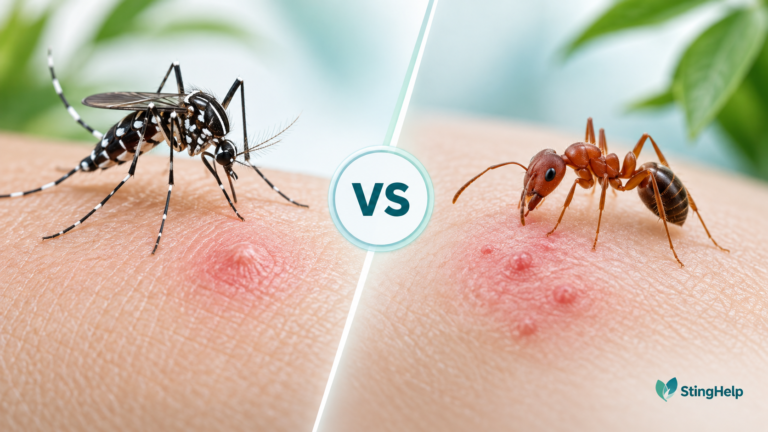
Direct answer: Asian tiger mosquito bites are often mild at the moment of feeding and become itchy afterward, while deer fly bites are usually noticed immediately because female deer flies cut the skin to obtain a blood meal, producing a sharper, more painful bite that can bleed. Exposure setting, pain timing, the actual insect, and later symptoms are more useful than the skin mark alone.
When comparing asian tiger mosquito bite vs deer fly bite treatment differences, the most practical distinction is the type of injury. A mosquito pierces the skin with a slender proboscis and leaves saliva that commonly triggers itch and swelling. A female deer fly uses cutting mouthparts, so the bite may feel more like a sudden painful nick and can leave a small bloody or tender area.
This U.S.- and Europe-focused guide compares pictures, insect identification, pain timing, habitat, first aid, tularemia context, mosquito-borne disease risk, warning signs, and prevention. It also separates U.S. and European disease context so a rare infection is not presented as if every deer fly bite carries the same risk.
Asian tiger mosquito bite vs deer fly bite: quick comparison
| Clue | Asian tiger mosquito bite | Deer fly bite |
|---|---|---|
| Typical insect | Small black-and-white Aedes albopictus mosquito. | Stockier Chrysops fly, often with patterned eyes and dark patches or bands on the wings. |
| Who bites? | Female mosquitoes take blood meals. | Female deer flies take blood meals; males feed mainly on pollen and nectar. |
| Feeling at the moment | May be a mild prick or may go unnoticed. | Often immediately painful, sharp, or burning. |
| Bleeding | Usually little or no visible bleeding. | A small amount of bleeding can occur because the skin is cut. |
| Common reaction | Itchy red bump or wheal with variable local swelling. | Pain, redness, tenderness, swelling, and later itch may occur. |
| Typical setting | Yards, gardens, vegetation, container-breeding mosquito habitats, travel destinations. | Wooded, damp, wetland, pond, stream, or lake-edge environments; active outdoor settings. |
| Important disease context | Can transmit dengue, Zika, and chikungunya when infected and where transmission is occurring. | Some deer flies can transmit tularemia; CDC specifically documents deer-fly transmission in the western United States. |
What does an Asian tiger mosquito look like?
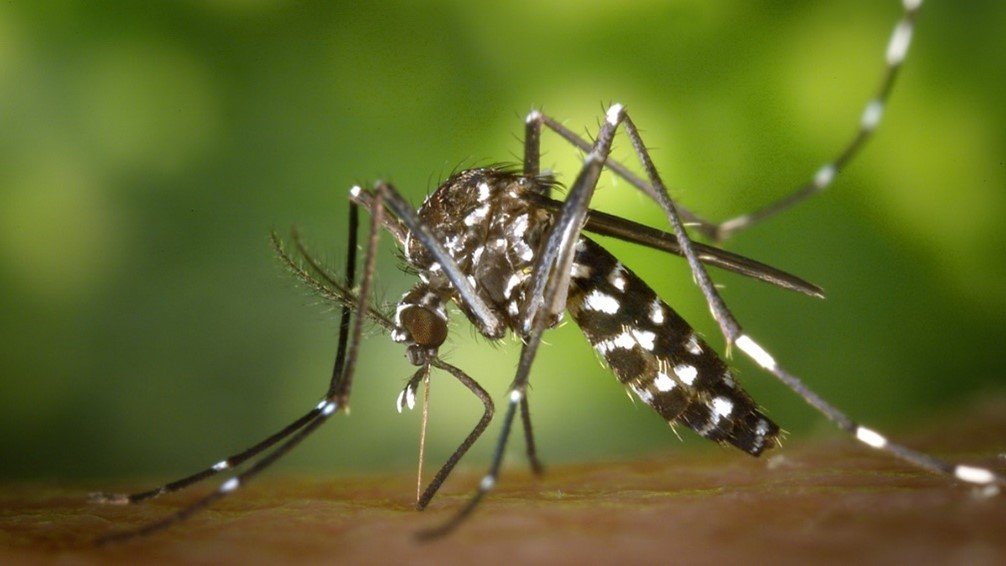
The Asian tiger mosquito, Aedes albopictus, is a small dark mosquito with conspicuous white markings. CDC describes it as black with white bands on the legs and white markings on the body. It has the slender body, long legs, wings, and narrow proboscis typical of a mosquito.
The species commonly breeds in small water-holding containers around human environments. Buckets, plant saucers, discarded tires, toys, clogged gutters, and similar containers can support immature mosquitoes. Because this mosquito can bite in daylight, a bite during daytime outdoor activity does not rule it out.
What does an Asian tiger mosquito bite feel like?
The feeding event can feel like a small prick or may be missed. Itch often becomes more obvious after the mosquito has left. The skin may develop a puffy reddish bump within minutes or a firmer itchy bump later. The size of the reaction varies widely and cannot identify the mosquito species by itself.
What is a deer fly?
Deer flies belong to the genus Chrysops in the horse-fly family Tabanidae. University of Maryland Extension describes deer flies as smaller than many horse flies, often black or brownish, with dark areas on the wings and patterned eyes. Females are blood feeders and can inflict a painful bite.
Deer fly larvae are associated with damp or wet habitats. Adults are often encountered near wooded wetlands, ponds, streams, marshy areas, or other places where larval development can occur. They are strong fliers and may repeatedly circle or follow moving people and animals.
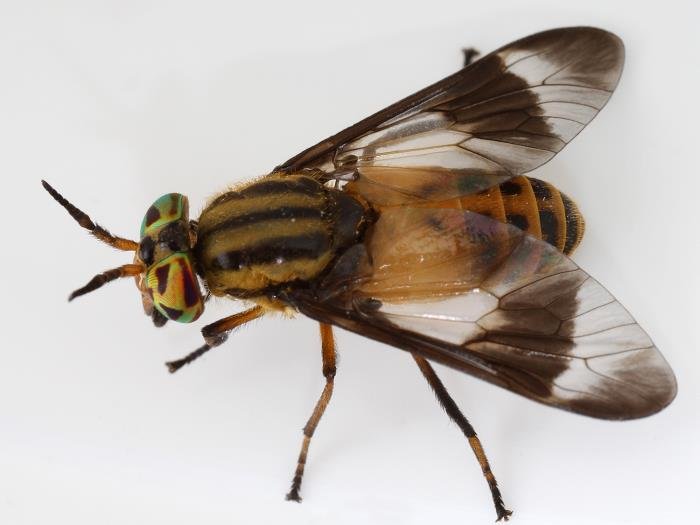
Why a deer fly bite can hurt more immediately
Female deer flies do not feed the same way mosquitoes do. Their mouthparts create a small cut in the skin and blood pools at the surface for feeding. That mechanical injury helps explain why people often notice a deer fly bite immediately and may see a small spot of blood afterward.
The sudden pain can make the exposure easier to remember than a mosquito bite. If a stocky fly with patterned wings struck exposed skin near a wetland and the bite was instantly painful, that history is more informative than whether the resulting red area looks circular.
Original StingHelp pain-timing guide
Asian tiger mosquito: feeding may be mild or unnoticed → itch and swelling become more noticeable afterward.
Deer fly: sudden bite is often immediately painful → local tenderness, redness, swelling, and itch may follow.
Important: pain timing helps organize the history, but it cannot identify a species without other exposure evidence.
Pictures: why the insect matters more than the bite
For asian tiger mosquito bite vs deer fly bite pictures, compare the insects first. They are visually very different. An Asian tiger mosquito is small, slender, long-legged, and black-and-white. A deer fly is a more robust fly with a larger head and compound eyes, and many species show dark wing markings.
The skin reactions overlap. Both can produce redness, swelling, itch, and tenderness. A deer fly bite may show a tiny blood spot or more immediate inflammation, but that is not reliable enough to diagnose the insect from a close-up photo.
Habitat clues: yard containers versus wetland edges
Asian tiger mosquitoes can thrive around residential areas because they use small containers that hold water. A person may be bitten in a backyard, patio, garden, cemetery, park, or urban green area without being near a large natural body of water.
Deer flies are often associated with damp wooded areas, ponds, streams, marshes, and other wet habitats. A painful bite while hiking beside a pond or walking through a wetland in warm weather is more consistent with deer-fly exposure than a bite acquired indoors hours later.
Asian tiger mosquito bite vs deer fly bite treatment differences
For a mild reaction, the first-aid steps are similar: wash the skin, use a cool compress, protect the area from scratching, and use appropriate over-the-counter symptom relief when safe. A deer fly bite may need a little more attention to the small cut because it can bleed. The later disease questions are also different.
Basic care after a mosquito bite
- Wash the area gently with soap and water.
- Apply a cool compress for itching and swelling.
- Avoid scratching and keep broken skin clean.
- Use an appropriate over-the-counter anti-itch product only when safe for you and according to label directions.
- Monitor for systemic illness, particularly after travel or during known local mosquito-borne disease activity.
Basic care after a deer fly bite
- Move away from the area if flies continue attacking.
- Wash the bite with soap and water.
- If there is minor bleeding, apply gentle clean pressure until it stops.
- Use a cool compress for pain and swelling.
- Avoid scratching and monitor the wound for spreading redness, drainage, or increasing pain.
- Seek medical advice if fever, an ulcer, swollen lymph nodes, or significant systemic illness develops after a compatible deer-fly exposure.
AAD notes that many uncomplicated bug bites can be treated at home with cold therapy and appropriate anti-itch medication. The key is to recognize when the reaction is no longer a simple local bite.
Tularemia: what deer fly exposure means in the United States
Tularemia is a potentially serious illness caused by Francisella tularensis. CDC’s current tularemia guidance identifies tick and deer fly bites as recognized routes of infection and states that Chrysops deer flies have been shown to transmit tularemia in the western United States.
That does not mean a typical deer fly bite is likely to cause tularemia. The disease is rare, and transmission requires exposure to the bacterium. The warning pattern after an infected bite can include fever, a skin ulcer at the entry site, and swollen regional lymph nodes. CDC describes this as ulceroglandular or glandular tularemia.
Original StingHelp deer-fly follow-up guide
Typical local bite: pain, small cut, redness, swelling, itch → basic wound care and observation.
Contact a clinician: fever after deer-fly exposure, a persistent ulcer at the bite site, swollen nearby lymph nodes, or significant systemic illness.
Tell the clinician: where the bite occurred, when it happened, whether deer flies were present, and whether you had contact with rabbits, hares, rodents, or untreated surface water.
Europe: deer flies and tularemia need more cautious wording
ECDC describes tularemia as a northern-hemisphere zoonosis with several transmission routes. In Europe, water, ticks, mosquitoes in some northern regions, animal contact, and other routes vary in importance by location. ECDC notes that deer flies have occasionally been reported as possible mechanical carriers or vectors in certain wetland or floodplain settings, particularly during intense animal outbreaks.
That evidence is not the same as the clearer western-U.S. deer-fly transmission statement from CDC. European readers should therefore rely on country-specific public-health guidance rather than assuming every Chrysops bite has the same epidemiologic significance.
Mosquito disease risk is a different pathway
Asian tiger mosquitoes can transmit viruses such as dengue, Zika, and chikungunya when infected. The bite itself does not reveal whether transmission occurred. Risk depends on geography, season, travel, and current circulation of the pathogen.
Fever, rash, severe headache, marked joint pain, unusual bleeding, or neurologic symptoms after mosquito exposure should be evaluated in the context of travel and local transmission. Do not assume that a large itchy welt means a virus was transmitted.
When should you worry about a deer fly bite?
Most deer fly bites cause a local painful reaction. Seek medical advice for worsening redness, increasing warmth, pus, red streaking, severe or persistent pain, a wound that is not improving, or fever. After a compatible deer-fly exposure, fever with a skin ulcer or swollen nearby lymph nodes deserves particular attention because those are classic tularemia features described by CDC.
Emergency care is appropriate for difficulty breathing, swelling of the lips, tongue, face, or throat, fainting, severe dizziness, or another rapidly worsening whole-body allergic reaction after any insect bite.
What if the bite keeps bleeding?
A small amount of bleeding immediately after a deer fly bite can occur because the skin was cut. Gentle pressure with clean gauze or cloth should stop minor bleeding. Persistent bleeding, a deep-looking wound, use of anticoagulant medication, or unusual bruising deserves medical advice.
How to prevent deer fly bites
CDC’s tularemia prevention guidance recommends EPA-registered insect repellent and protective clothing when hiking, camping, or working outdoors. Long pants, long sleeves, and long socks reduce exposed skin. University extension guidance also notes that deer flies are difficult to control broadly because they are strong fliers and their larval habitats are dispersed.
Repellent effectiveness against deer flies can be less predictable than against mosquitoes, so physical coverage matters. Moving away from a heavily infested wetland edge may be more effective than repeatedly swatting at attacking flies.
How to prevent Asian tiger mosquito bites
Use EPA-registered insect repellent, wear protective clothing when practical, maintain window and door screens, and remove standing water from containers around the home. Empty and scrub objects that collect water because Aedes mosquitoes can use surprisingly small containers.
What if you did not see the insect?
Keep the diagnosis open. A painful bite can come from horse flies, stable flies, wasps, ants, or other biting arthropods. An itchy bump can come from mosquitoes, fleas, mites, or a non-insect skin condition. If the insect was not seen, use the timing, location, activity, body site, and progression of symptoms as supporting clues rather than certainty.
Related StingHelp guides
Use the What Bit Me? identification guide when the culprit is uncertain. For symptom care, see the bite and sting first-aid guide. Review emergency warning signs, the prevention hub, and the mosquito bites hub. More comparison articles are available in the StingHelp guide library.
Frequently asked questions
How can you tell an Asian tiger mosquito bite from a deer fly bite?
The most useful clue is the exposure. Asian tiger mosquito feeding may be mild and is commonly followed by itch. A deer fly bite is often immediately painful because the female fly cuts the skin. Seeing the insect and knowing the habitat are more reliable than the skin mark alone.
Do deer fly bites bleed?
They can. Female deer flies cut the skin to obtain blood, so a small amount of bleeding may be visible. Minor bleeding usually stops with gentle clean pressure.
Can a deer fly bite transmit tularemia?
Yes, but the risk is context-dependent. CDC states that deer flies have been shown to transmit tularemia in the western United States. A routine deer fly bite does not automatically mean infection occurred.
What symptoms after a deer fly bite should prompt medical care?
Seek medical advice for fever, a persistent ulcer at the bite site, swollen nearby lymph nodes, spreading redness, drainage, worsening pain, or significant systemic illness. Tell the clinician about the deer-fly exposure and location.
Can Asian tiger mosquitoes transmit disease?
Yes. Infected Aedes albopictus mosquitoes can transmit dengue, Zika, and chikungunya. Actual risk depends on active transmission, geography, season, and travel history.
Are deer flies a tularemia risk in Europe?
ECDC reports that deer flies have occasionally been described as possible mechanical carriers or vectors in certain European wetland or floodplain settings, but the importance of transmission varies by region. Use country-specific public-health guidance rather than assuming U.S. risk patterns apply directly.
Authoritative references
- CDC — About Tularemia
- CDC — Signs and Symptoms of Tularemia
- CDC — Preventing Tularemia
- American Academy of Dermatology — When Bug Bites Need Medical Attention
- ECDC — Factsheet on Tularaemia
Bottom line
The key asian tiger mosquito bite vs deer fly bite treatment differences start with the injury itself. Mosquito bites often become itchy after a relatively subtle feeding event; deer fly bites are more likely to be immediately painful and may bleed because the skin is cut. Use the insect, habitat, pain timing, geography, and later symptoms together, and seek medical care for infection signs, severe allergy symptoms, fever with an ulcer or swollen lymph nodes, or other significant systemic illness.
Educational information for a U.S.- and Europe-focused audience. This article cannot diagnose an insect, infection, allergic reaction, tularemia, or mosquito-borne illness from a photograph and does not replace professional medical care.