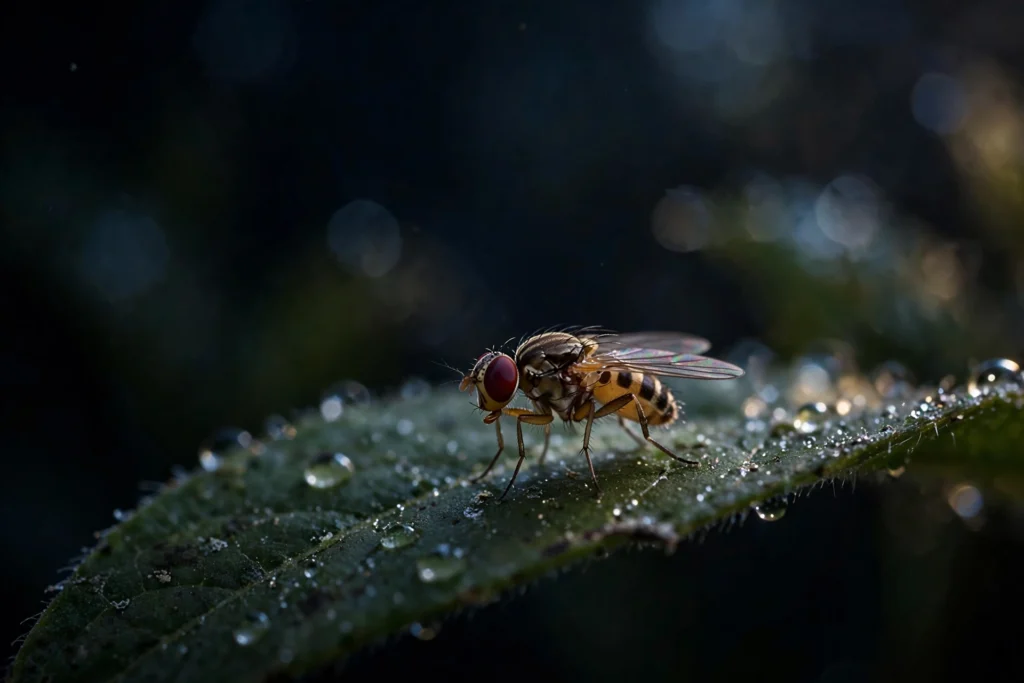
Here is a sentence that sounds like science fiction but comes from a peer-reviewed study published this week: a protein that helps fruit flies sleep can be cut into tiny fragments that kill antibiotic-resistant bacteria from the inside. The work, published in Nature Communications on October 29, 2026, and reported on October 30, reveals an unexpected link between sleep, immunity, and the fight against drug-resistant microbes — and it starts with a humble laboratory insect that has been teaching scientists about human biology for more than a century.
The protein is called Nemuri, named after the Japanese word for sleep. It was first identified by a team led by Amita Sehgal at the University of Pennsylvania and reported in the journal Science in 2019. Flies given extra Nemuri slept roughly 17 to 20 hours a day, compared with about 11 hours for typical flies, and they survived infections better. Nemuri levels rose when flies were sick or deprived of sleep, and the protein itself could kill microbes. The new study answers the question that finding left open: what exactly does Nemuri do to bacteria? The answer turns out to be stranger, and more promising, than researchers expected.
This article explains the study in plain language, how the new peptides differ from most germ-killing peptides, which bacteria were tested, what the findings do and do not mean for human health, and why scientists study fruit flies to understand sleep and immunity at all. This is general science information, not medical advice. Nothing in this article is a treatment recommendation, and the peptides described here are laboratory research findings, not available medicines.
What the New Study Found
The core discovery is about mechanism — how the killing happens. Most antimicrobial peptides, the small germ-fighting molecules found across nature, work by puncturing the bacterial membrane, essentially punching holes in the microbe’s outer envelope until it falls apart. The peptides cut from Nemuri work differently. Rather than attacking the membrane, they slip inside the bacterial cell and interfere with the machinery that builds proteins, clumping bacterial ribosomes and stalling protein production. Ribosomes are the cell’s protein factories; without working ribosomes, a bacterium cannot make the proteins it needs to grow, repair itself, or survive.
The researchers found that Nemuri is cut into short peptides rich in two amino acids, arginine and glycine, and that it is these fragments that do the killing. In laboratory tests, the peptides worked against a wide range of microbes, including two bacteria that are notoriously hard to treat because they resist common antibiotics: methicillin-resistant Staphylococcus aureus (MRSA) and vancomycin-resistant enterococci (VRE). Both are on the radar of hospitals and public health agencies worldwide because infections caused by them leave doctors with fewer effective options.
| Key fact | Detail |
|---|---|
| Protein | Nemuri, named after the Japanese word for sleep |
| Organism studied | Fruit fly (Drosophila) |
| First identified | 2019, team led by Amita Sehgal, University of Pennsylvania, reported in Science |
| New study | Published in Nature Communications, October 29, 2026 |
| Active agents | Short peptides cut from Nemuri, rich in arginine and glycine |
| Mechanism | Clump bacterial ribosomes and stall protein production, from inside the cell |
| Resistant bacteria tested | MRSA and VRE, among a wider range of microbes, in laboratory tests |
| Stage of research | Laboratory experiments only; no animal or human testing reported yet |
Sleep and Immunity: Why One Protein Does Both Jobs
The most fascinating part of the Nemuri story is that it ties two systems together. In fruit flies, Nemuri drives sleep, particularly when a fly is fighting an infection. Its levels rise when flies are sick or sleep-deprived, and flies with extra Nemuri sleep far longer than usual and survive infections better. That pattern mirrors something familiar in humans: when you are ill, you feel sleepy, and sleep is widely understood to support immune function. The fly research gives scientists a precise molecular handle on that connection — a single protein that both promotes sleep and attacks microbes.
This is not a coincidence of evolution so much as an efficiency. For a small animal with limited resources, mounting an immune response and sleeping more at the same time makes sense: rest conserves energy while the immune system works, and a molecule that helps on both fronts is doubly useful. Scientists have long suspected that sleep and immunity are deeply intertwined, and Nemuri provides one of the clearest examples of that link operating through a single molecule.
How This Compares With Most Antimicrobial Peptides
Antimicrobial peptides are part of the innate immune system in animals from insects to humans. They are among nature’s oldest antibiotics, and researchers have studied them for decades as potential alternatives to conventional drugs. The classic mechanism — membrane disruption — is effective but has limitations: it can be hard to make membrane-attacking peptides selective enough to harm bacteria without affecting human cells, and bacteria can sometimes adapt their membranes.
| Feature | Most antimicrobial peptides | Nemuri-derived peptides |
|---|---|---|
| Main target | Bacterial membrane (outer envelope) | Bacterial ribosomes (protein factories) inside the cell |
| How they kill | Puncture the membrane until the cell fails | Clump ribosomes and stall protein production |
| Entry | Act at the surface | Slip inside the cell first |
| Why it matters | Well-studied, but selectivity is a challenge | A different mechanism may bypass some resistance strategies |
The Nemuri peptides’ inside-the-cell mechanism is what makes the study noteworthy. A new mechanism does not automatically mean a new medicine — most laboratory discoveries never become drugs — but it does give researchers a fresh direction in a field that badly needs one, as antibiotic resistance continues to grow.
MRSA and VRE: Why These Two Names Matter
MRSA and VRE are not exotic threats; they are everyday problems in hospitals and care facilities. MRSA is a strain of Staphylococcus aureus that resists methicillin and related antibiotics, and it can cause skin infections, pneumonia, and bloodstream infections that are difficult to treat. VRE are enterococci that resist vancomycin, an antibiotic often used when others fail. Both spread in healthcare settings and both force doctors toward a shrinking list of remaining options, sometimes with more side effects or higher costs.
That context is why a laboratory result against MRSA and VRE attracts attention. It does not mean a cure is near — the gap between killing bacteria in a dish and safely treating an infection in a person is enormous — but it does mean the peptides cleared a meaningful first hurdle. Researchers test against resistant strains early precisely because a compound that only works on easy targets is of limited interest in an era of rising resistance.
Why Fruit Flies? The Case for a Tiny Lab Animal
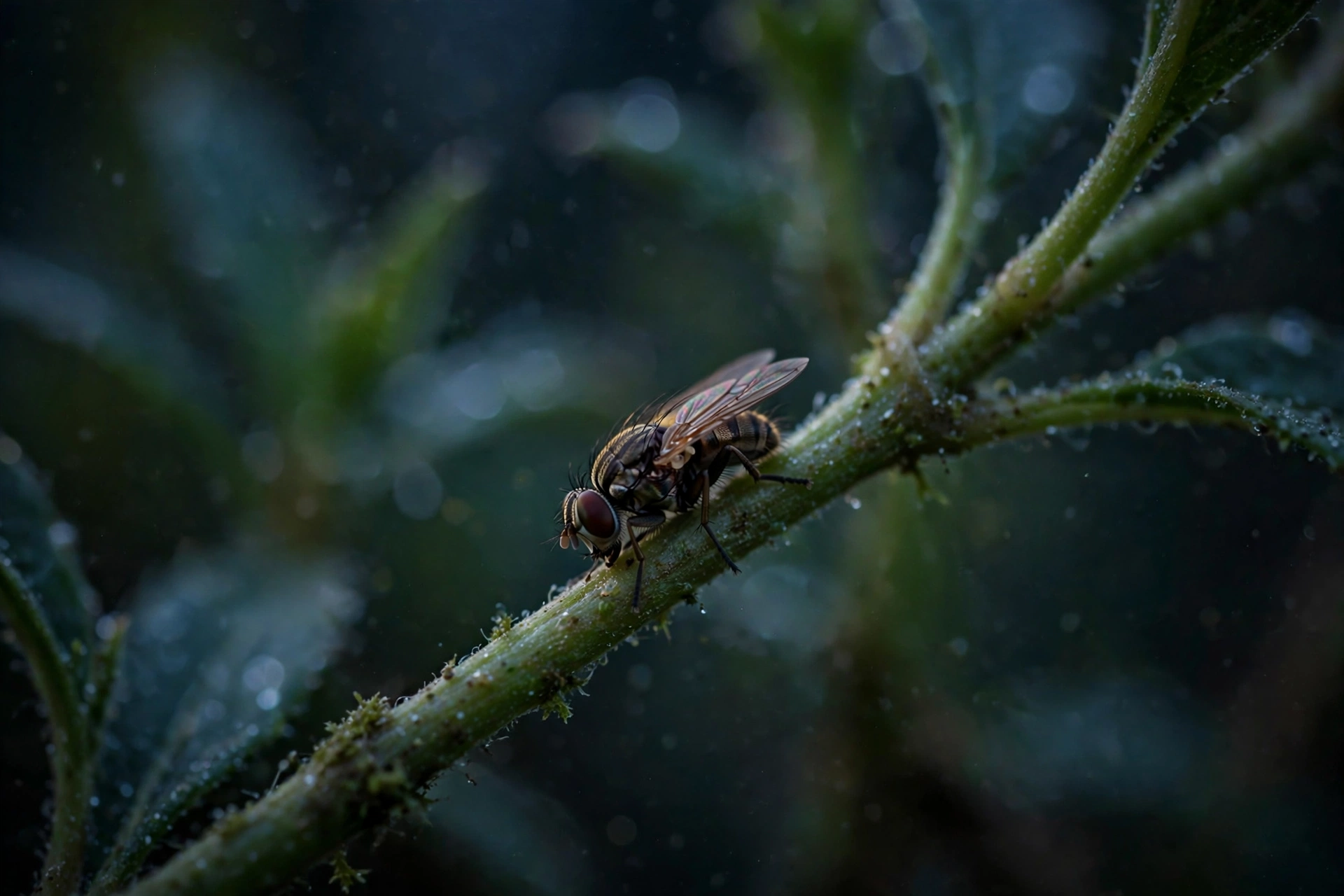
Readers sometimes wonder why scientists study a fruit fly to learn about human sleep or immunity. The answer is practical and powerful. Fruit flies share many fundamental biological pathways with humans, including core sleep-regulating genes and innate immune mechanisms, yet they are small, fast-breeding, and easy to study genetically. A fly generation takes about ten days, which lets researchers test ideas in weeks that would take years in mice and decades in people. The 2019 Nemuri discovery itself illustrates this: by boosting Nemuri in flies, researchers could directly measure changes in sleep duration and infection survival.
There is also a pleasing symmetry with this week’s other insect-sleep news. A separate study of Australian jumping spiders, published in the Proceedings of the National Academy of Sciences, found that the spiders show REM-like sleep stages and catch up on lost sleep after a disturbed night — evidence that regulated, two-stage sleep exists even in animals with tiny brains. Together, the spider and fly studies paint a consistent picture: sleep is ancient, widespread, and deeply connected to survival, not a luxury of large-brained animals.
What This Does Not Mean — Yet
Enthusiasm about the Nemuri findings should be balanced with the study’s own limits, which the reporting makes clear. All of the evidence so far comes from laboratory experiments. Whether the peptides work in an infected animal, how they could be delivered to an infection site, whether they are safe for human cells at effective doses, and whether bacteria can become resistant to them are all questions for later studies. Many promising antimicrobial peptides have failed at exactly these stages: they worked in a dish but proved unstable in the body, toxic at needed doses, or too expensive to manufacture.
For readers, the practical takeaway is not a new remedy but a better understanding of why sleep matters when you are unwell. The Nemuri research adds molecular weight to familiar advice: rest supports recovery, and the body coordinates sleep and immunity rather than running them as separate programs. If you are dealing with an infection or a bite or sting reaction, standard care and professional medical advice remain the right route; no part of this study suggests a home remedy or a supplement.
| Question | Current answer |
|---|---|
| Do Nemuri peptides kill bacteria? | Yes, in laboratory tests, including MRSA and VRE |
| Do they work in animals or people? | Not yet tested or reported |
| How would they be delivered? | Unknown — a question for future research |
| Can bacteria resist them? | Unknown — a question for future research |
| Is there a product to buy? | No — this is basic research, not a medicine |
What Researchers Will Do Next
The logical next steps follow the standard path for antimicrobial discoveries. Researchers will likely test the peptides in infected animals to see whether they work outside a dish, study their stability and safety, and explore whether the mechanism can be improved or combined with existing antibiotics. They may also investigate how Nemuri is naturally cut into peptides inside the fly, since understanding that processing could reveal how the fly deploys its own defense. Each step takes time and can end in failure, which is normal in drug discovery — but even a failed candidate teaches researchers about the biology, and the Nemuri mechanism itself is now part of the field’s toolkit.
There is also a broader lesson for science watchers. Some of the most useful discoveries come from studying organisms and processes that seem unrelated to human medicine. A sleep protein in a fruit fly would not have been an obvious place to look for an antibiotic strategy, yet it yielded a mechanism that differs from most known antimicrobial peptides. That is why basic research — studying how living things work, without an immediate product in mind — continues to matter, and why findings like this one deserve attention even before any practical application exists.
Frequently Asked Questions
What is Nemuri?
Nemuri is a protein found in fruit flies that promotes sleep, especially when the fly is sick or sleep-deprived. It is named after the Japanese word for sleep and was identified by a team led by Amita Sehgal at the University of Pennsylvania in research reported in 2019.
How do Nemuri peptides kill bacteria?
Nemuri is cut into short peptides rich in arginine and glycine. Unlike most antimicrobial peptides, which puncture the bacterial membrane, these peptides slip inside the bacterial cell, clump its ribosomes, and stall the production of proteins the bacterium needs to survive.
Which resistant bacteria were tested?
In laboratory tests, the peptides worked against a wide range of microbes, including methicillin-resistant Staphylococcus aureus (MRSA) and vancomycin-resistant enterococci (VRE), two bacteria that resist common antibiotics.
Can this treat infections in people?
Not currently. All evidence so far comes from laboratory experiments. Animal testing, safety studies, and delivery research would all be needed before any human application could even be considered. This is general science information, not medical advice.
Why do scientists study fruit fly sleep?
Fruit flies share fundamental sleep and immune pathways with humans but breed in about ten days, making them ideal for genetic research. Discoveries in flies, like Nemuri, often reveal biological principles that also operate in larger animals, including people.
The Bottom Line
A fruit fly’s sleep protein has surprised scientists twice: first by linking sleep and immunity in a single molecule, and now by yielding fragments that kill drug-resistant bacteria through an unusual inside-the-cell mechanism. The new study, published in Nature Communications on October 29, 2026, is early-stage laboratory science, not a medicine — but it opens a genuinely new direction in the search for ways to fight resistant microbes, and it deepens our understanding of why rest and recovery belong together. For a tiny insect that most people notice only around overripe fruit, that is a remarkable contribution, and one worth watching as researchers take the next steps.