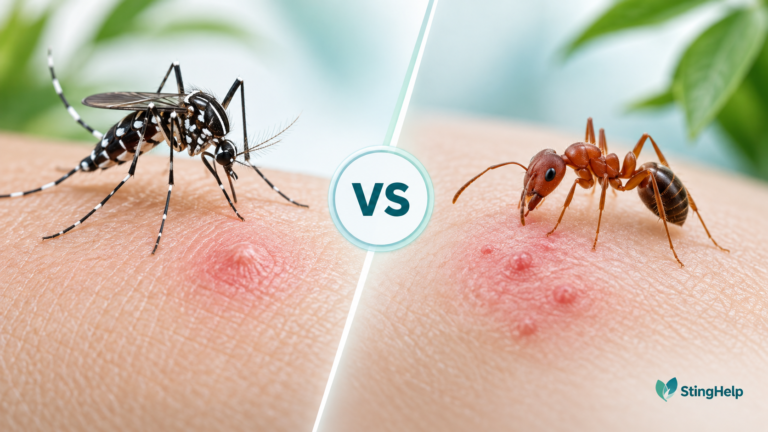
Direct answer: Asian tiger mosquito bites usually follow outdoor mosquito exposure and often become itchy soon after feeding, while cat flea bites are more strongly linked to flea-infested pets, bedding, carpets, furniture, or animal resting areas and commonly affect the lower legs and feet. The best clues are the insect, exposure setting, body location, and infestation evidence—not the red bump alone.
People comparing asian tiger mosquito bite vs cat flea bite treatment differences are often looking at similar itchy bumps and trying to identify the cause from a photo. That is unreliable. Both bites can produce redness, itching, swelling, and small raised papules. The practical difference is usually found in the environment: mosquitoes are winged insects that land and feed briefly, while fleas are wingless jumping parasites that often persist in a pet-and-home infestation cycle.
This U.S.- and Europe-focused guide compares pictures, bite location, timing, pet clues, disease context, safe first aid, infestation control, and warning signs. It also explains an important geographic point: the cat flea, Ctenocephalides felis, is medically relevant in the United States and is widely distributed across Europe.
Asian tiger mosquito bite vs cat flea bite: quick comparison
| Clue | Asian tiger mosquito bite | Cat flea bite |
|---|---|---|
| Culprit | Aedes albopictus, a small black-and-white winged mosquito. | Ctenocephalides felis, a small wingless, laterally flattened jumping flea. |
| Typical exposure | Outdoor or indoor mosquito exposure near vegetation, shade, containers, or standing water. | Contact with flea-infested cats, dogs, wildlife, bedding, carpet, upholstered furniture, or animal resting areas. |
| Common body location | Any exposed skin, including arms, legs, ankles, neck, or face. | Often lower legs and feet in people, although bites can occur elsewhere. |
| Pattern | One or several itchy bumps; pattern is variable. | Several small itchy bites may occur close together, but pattern alone is not diagnostic. |
| What happens to the insect? | The mosquito lands, feeds, and flies away. | Adult fleas can jump between hosts and the environment; eggs and immature stages can persist in the home. |
| Main control target | Prevent bites and reduce mosquito breeding sites. | Treat the pet appropriately and control the home environment at the same time. |
| Disease context | Infected Asian tiger mosquitoes can transmit dengue, Zika, or chikungunya where those pathogens are circulating. | Some fleas can carry pathogens; CDC lists cat fleas among fleas relevant to human health. |
What does an Asian tiger mosquito look like?
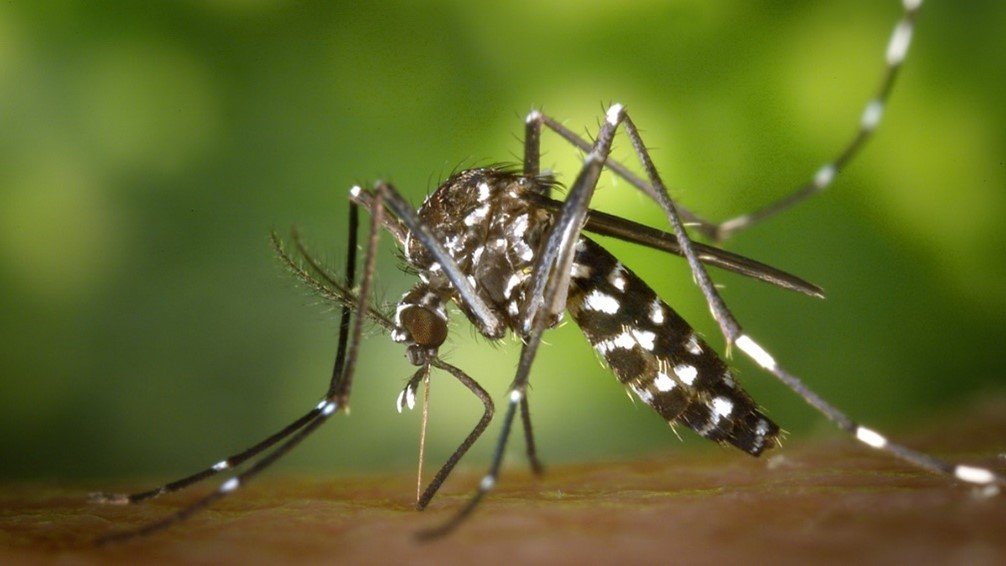
The Asian tiger mosquito is a small dark mosquito with conspicuous white markings. CDC describes Aedes albopictus as black with white bands on the legs and white markings on the body. It is a winged insect with long legs and a narrow proboscis used for blood feeding.
The species is closely associated with human environments because it can breed in small water-holding containers. Buckets, plant saucers, toys, clogged gutters, tires, and other objects that collect water can support immature mosquitoes. Bites can occur during daylight as well as around dawn and dusk, so mosquito prevention should not be limited to nighttime.
What does an Asian tiger mosquito bite usually feel like?
The feeding event may feel like a tiny prick or may not be noticed. Itching often becomes the dominant symptom afterward. A person may develop a puffy reddish bump within minutes or an itchy firm bump later. Some people react more strongly than others, so the size of the welt cannot identify the mosquito species.
What is a cat flea?
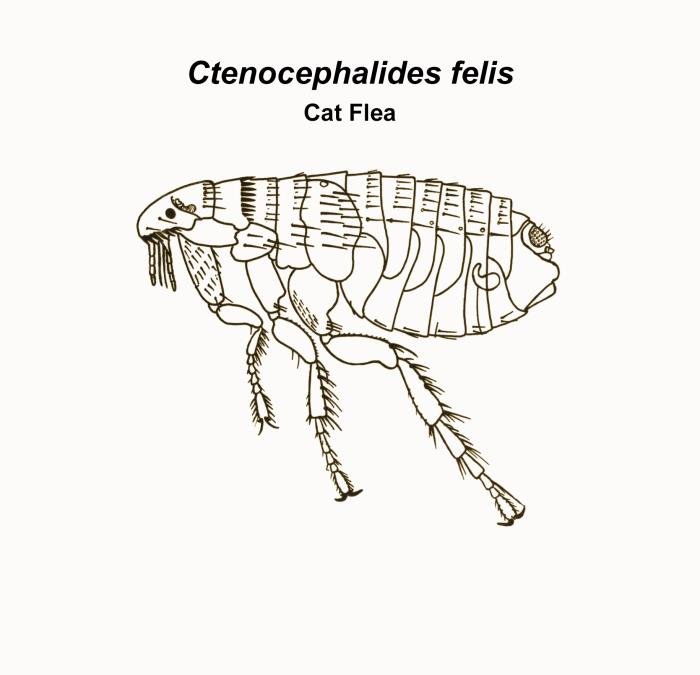
The cat flea, Ctenocephalides felis, is one of the flea species CDC identifies as important to human and animal health. Despite the name, cat fleas do not live only on cats. They also commonly infest dogs and may bite people who share space with infested animals. ECDC describes C. felis as the most common dog and cat flea worldwide and widely distributed across Europe.
Adult fleas are wingless and adapted for jumping. They feed on blood. CDC explains that fleas prefer animal hosts but can bite people when they share space with flea-infested animals or when preferred hosts are unavailable. In people, bites often occur on the lower legs and feet, making body location a useful—but not definitive—clue.
Why flea bites often point back to the pet and the home
A single itchy bump is weak evidence for fleas. Stronger evidence includes seeing fleas on a pet, finding flea dirt in the coat, noticing repeated bites around the ankles or lower legs, or discovering activity where pets sleep. The infestation is not limited to the adult fleas visible on the animal. Flea eggs, larvae, and pupae can develop in carpets, bedding, upholstered furniture, cracks, and other protected areas.
That biology explains why treating only the person’s bites does not solve the problem. It also explains why treating only the pet may not immediately end an established home infestation. EPA recommends environmental measures such as frequent vacuuming, cleaning pet bedding, and using flea-control products only as directed.
Original StingHelp evidence guide
Strong mosquito clue: a small black-and-white mosquito was seen landing and feeding on exposed skin, especially during outdoor activity.
Strong flea clue: a flea is found on a pet or in the environment, flea dirt is present, or repeated lower-leg bites occur alongside a confirmed pet/home infestation.
Weak clue: “three bites in a row,” a red center, or itch intensity by itself. Those features overlap with many arthropod bites and skin conditions.
Pictures: can you identify the cause from the skin?
For asian tiger mosquito bite vs cat flea bite pictures, a photograph of the insect or environmental evidence is usually more useful than a photograph of the skin. Both exposures can create small red itchy papules. Scratching can enlarge the reaction, create crusts, or cause secondary skin damage.
Online pattern rules are especially unreliable. Flea bites may occur in groups, but mosquitoes can also bite repeatedly. A person sleeping near fleas may have lesions in places other than the ankles, while a mosquito can bite the lower legs. Treat pattern as supporting context, not proof.
Body location: why ankles and lower legs matter for fleas
CDC specifically notes that flea bites often occur on the lower legs and feet. Fleas live near floor level, jump from carpet, bedding, pets, or resting sites, and may reach exposed ankles first. Long socks and pants can reduce exposure in an infested environment, but they do not replace source control.
Mosquitoes are less restricted by height because they fly. Asian tiger mosquitoes may bite any accessible exposed skin. If bites repeatedly occur around ankles while a pet is scratching and flea dirt is visible, flea exposure moves higher on the list. If a black-and-white mosquito was observed feeding on an arm outdoors, mosquito exposure becomes much more plausible.
Asian tiger mosquito bite vs cat flea bite treatment differences
For mild uncomplicated bites, the skin-care steps overlap. The biggest treatment difference is what must happen around the person. Mosquito care focuses on itch relief and preventing additional mosquito bites. Flea care requires symptom relief plus pet and environmental flea control so the exposure does not continue.
Basic care for a typical mosquito bite
- Wash the area gently with soap and water.
- Use a cool compress or wrapped ice pack for swelling and itch.
- Avoid scratching to reduce skin injury and infection risk.
- Use an appropriate over-the-counter anti-itch product only when safe for you and according to the label.
- Watch for fever, rash, severe headache, marked joint pain, unusual bleeding, neurologic symptoms, or other systemic illness.
Basic care for a typical flea bite
- Wash the skin gently with soap and water.
- Use a cool compress for itching and swelling.
- Avoid scratching and keep damaged skin clean.
- Use appropriate over-the-counter itch relief when safe and follow label directions.
- Check pets and the home for flea evidence instead of treating the skin repeatedly while the source remains.
- Contact a veterinarian for a safe, species-appropriate flea-control plan for pets.
AAD notes that many uncomplicated bug bites can be managed at home with cold therapy and appropriate over-the-counter itch treatment. Seek medical attention when a bite is associated with serious symptoms, extensive reactions, or signs of infection.
Flea control: why pet treatment must be species-appropriate
EPA emphasizes that flea and tick pesticides must be used according to the product label. A product formulated for a dog should not automatically be used on a cat, and age, weight, health status, and species restrictions matter. If you are unsure which product is appropriate, ask a veterinarian.
Do not apply household pesticides, essential-oil mixtures, insect repellents intended for human skin, or improvised chemicals to a pet. Pet treatment is veterinary and label-directed, not a do-it-yourself chemistry problem.
Original StingHelp flea-control cycle
1. Confirm the source: inspect the pet, bedding, sleeping areas, rugs, furniture, and floor edges.
2. Protect the pet: use veterinarian-recommended or properly labeled flea control for the correct species, age, and weight.
3. Clean the environment: vacuum carpets and upholstery, clean cracks and pet areas, and wash bedding.
4. Keep control consistent: flea life stages in the environment can outlast the first treatment, so one-day cleanup may not end an established infestation.
What diseases are associated with cat fleas?
Most flea bites cause local itch and irritation rather than serious disease. However, CDC lists the cat flea among flea species relevant to human health. In the United States, infected cat fleas can be involved in flea-borne typhus, particularly in areas where the pathogen is circulating. CDC also explains that the bacterium associated with cat scratch disease can be spread among cats by fleas, with people typically infected through scratches from a flea-infested cat rather than from a simple flea bite itself.
Fleas can also serve as intermediate hosts for tapeworms; infection occurs if an infected flea is accidentally swallowed. These disease pathways are different from the viral transmission associated with some mosquitoes, which is why exposure history and symptoms matter.
Mosquito-borne disease risk is a different question
CDC identifies Aedes albopictus as capable of transmitting dengue, Zika, and chikungunya. A mosquito must be infected for transmission to occur. The presence of Asian tiger mosquitoes in an area does not mean every bite carries disease.
Travel history and current local transmission are important. If significant systemic illness develops after a mosquito bite, tell the healthcare professional where the exposure occurred and where you have recently traveled. Do not try to diagnose dengue, Zika, chikungunya, or another infection from the size or color of the bite.
When should you worry about infection from scratching?
Repeated scratching can break the skin after either mosquito or flea bites. Increasing warmth, spreading redness, worsening pain, pus, drainage, red streaking, or fever may indicate secondary infection and deserves medical evaluation. The original insect may no longer be the main problem once the skin barrier is damaged.
When should you seek urgent or emergency medical care?
Seek emergency care for difficulty breathing, swelling of the lips, tongue, face, or throat, fainting, severe dizziness, or another rapidly worsening whole-body reaction. A severe allergic reaction is more important than identifying the exact insect.
Arrange medical evaluation for significant fever, widespread rash, body aches, severe headache, neurologic symptoms, a rapidly worsening local reaction, many bites, blistering, or signs of infection. After mosquito exposure, mention travel and local outbreak context. After flea exposure, mention pets, wildlife contact, and whether fleas were confirmed.
How to prevent Asian tiger mosquito bites
Use EPA-registered insect repellent, wear protective clothing when practical, maintain window and door screens, and remove standing water from containers around the home. Asian tiger mosquitoes can use small water-filled containers, so routine yard checks are useful.
Because the species can bite during daylight, repellents and protective clothing may be needed for daytime outdoor activity as well as dawn and dusk.
How to prevent cat flea bites
CDC states that the best way to prevent fleas on people is to keep pets free of fleas. Regular pet checks, veterinarian-guided prevention, prompt response to an infestation, and environmental cleaning all matter. EPA recommends frequent vacuuming of carpets, rugs, cushions, cracks, and baseboards during flea control, along with cleaning pet bedding.
Covering the lower legs can reduce bites while an infestation is being addressed, but clothing does not eliminate the source. If fleas persist despite appropriate pet and environmental measures, a licensed pest-management professional may be helpful.
USA vs Europe: what changes?
The basic identification and skin-care principles are similar in both regions. The cat flea is common in the United States and, according to ECDC and ESCCAP, is widely distributed across Europe. Disease epidemiology is not identical across countries, so local public-health guidance matters if systemic illness develops.
For mosquitoes, Aedes albopictus distribution and mosquito-borne virus activity also vary geographically. A travel-associated or outbreak-related exposure should be interpreted using current regional surveillance rather than a generic internet risk statement.
What if you have pets but cannot find a flea?
Absence of a visible flea during a quick inspection does not prove there is no infestation. Adult fleas can be difficult to catch, and immature stages develop away from the pet. Look for flea dirt and repeated pet scratching, examine bedding and favorite resting areas, and use a flea comb if appropriate.
At the same time, do not assume every unexplained itchy bump in a pet-owning household is a flea bite. Bed bugs, mosquitoes, mites, contact dermatitis, folliculitis, and other skin conditions can produce similar lesions. If the eruption persists without clear pest evidence, medical evaluation may be more useful than repeated pesticide use.
Related StingHelp guides
Use the What Bit Me? identification guide when the culprit is uncertain. For symptom care, see the bite and sting first-aid guide. Review emergency warning signs for severe reactions, the prevention hub for bite-reduction strategies, and the mosquito bites hub for mosquito-specific guidance. You can also browse more comparisons in the StingHelp guide library.
Frequently asked questions
How can you tell an Asian tiger mosquito bite from a cat flea bite?
Look at exposure rather than the welt. A witnessed black-and-white mosquito feeding outdoors supports mosquito exposure. Repeated bites on lower legs or feet plus fleas or flea dirt on pets and infestation evidence in bedding, carpet, or furniture supports flea exposure. Skin appearance alone cannot reliably identify either cause.
Do cat fleas bite humans?
Yes. CDC states that fleas prefer animal hosts but can bite people who share space with flea-infested animals or when preferred hosts are unavailable. Cat fleas are among the flea species relevant to human health.
Where do flea bites usually appear on people?
CDC notes that flea bites often occur on the lower legs and feet. This is a useful clue but not a diagnostic rule because fleas can bite elsewhere and other insects can also bite the ankles.
Can cat fleas spread disease to people?
Some cat fleas can carry pathogens. CDC describes cat fleas as involved in flea-borne typhus transmission in the United States and in the ecology of cat scratch disease. Most individual flea bites still cause only local irritation rather than serious illness.
Can Asian tiger mosquitoes spread disease?
Yes. Infected Aedes albopictus mosquitoes can transmit dengue, Zika, and chikungunya. Actual risk depends on whether infected mosquitoes and active transmission are present in the place and time of exposure.
What is the most important step if flea bites keep happening?
Address the source. Treat pets with veterinarian-recommended or label-appropriate flea control and clean the environment, including pet bedding, carpets, upholstery, cracks, and floor edges. Repeatedly treating the skin without controlling the infestation will not stop new bites.
Authoritative references
- CDC — About Fleas
- CDC — Preventing Fleas
- U.S. EPA — Controlling Fleas and Ticks Around Your Home
- American Academy of Dermatology — When Bug Bites Need Medical Attention
- ECDC — Fleas Factsheet for Health Professionals
Bottom line
The central asian tiger mosquito bite vs cat flea bite treatment differences are not in the color of the bump. Mosquito care focuses on itch relief, bite prevention, and awareness of region-specific mosquito-borne illness. Cat flea care adds a second requirement: control the flea source on pets and in the home. Use insect evidence, body location, pet clues, geography, and symptom severity together rather than diagnosing from a picture alone.
Educational information for a U.S.- and Europe-focused audience. This article cannot diagnose an insect, infestation, infection, allergic reaction, or vector-borne illness from a photograph and does not replace professional medical or veterinary care.