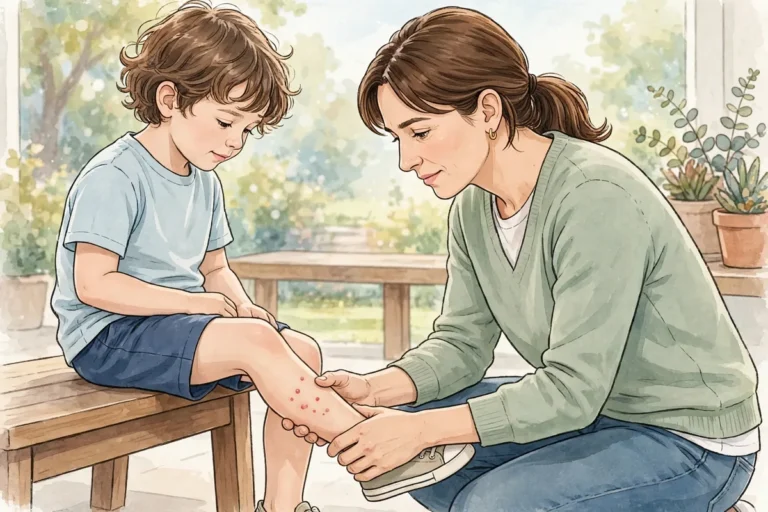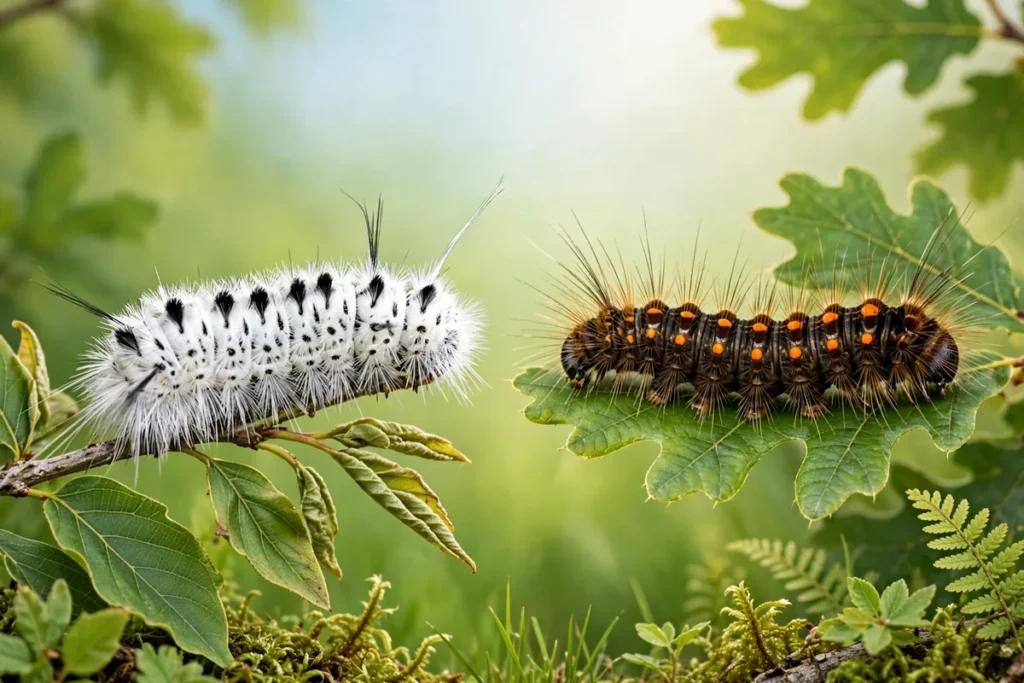
Every year, two fuzzy caterpillars generate two separate waves of alarm in the Northeast. In spring, Maine news outlets warn about the browntail moth, whose toxic hairs cause poison-ivy-like rashes across entire neighborhoods. In fall, the warnings shift to the hickory tussock moth caterpillar — a striking white-and-black creature that appears on sidewalks, siding, and leaf litter and leaves an itchy rash on anyone who handles it. Plenty of people conflate the two.
The direct answer to hickory tussock caterpillar vs browntail moth: they are different species with different hairs, seasons, and risk profiles. The hickory tussock (Lophocampa caryae) is a native caterpillar whose barbed hairs cause irritant contact dermatitis — uncomfortable and usually short-lived. The browntail moth (Euproctis chrysorrhoea) is an invasive species whose microscopic hairs contain an actual toxin, can become airborne, remain hazardous in the environment for one to three years, and can cause respiratory distress if inhaled.
This guide explains how to tell them apart, what each one’s hairs do to skin, when and where you will encounter them, what to do after contact, and how to reduce exposure around your home.
Meet the Two Rash Caterpillars
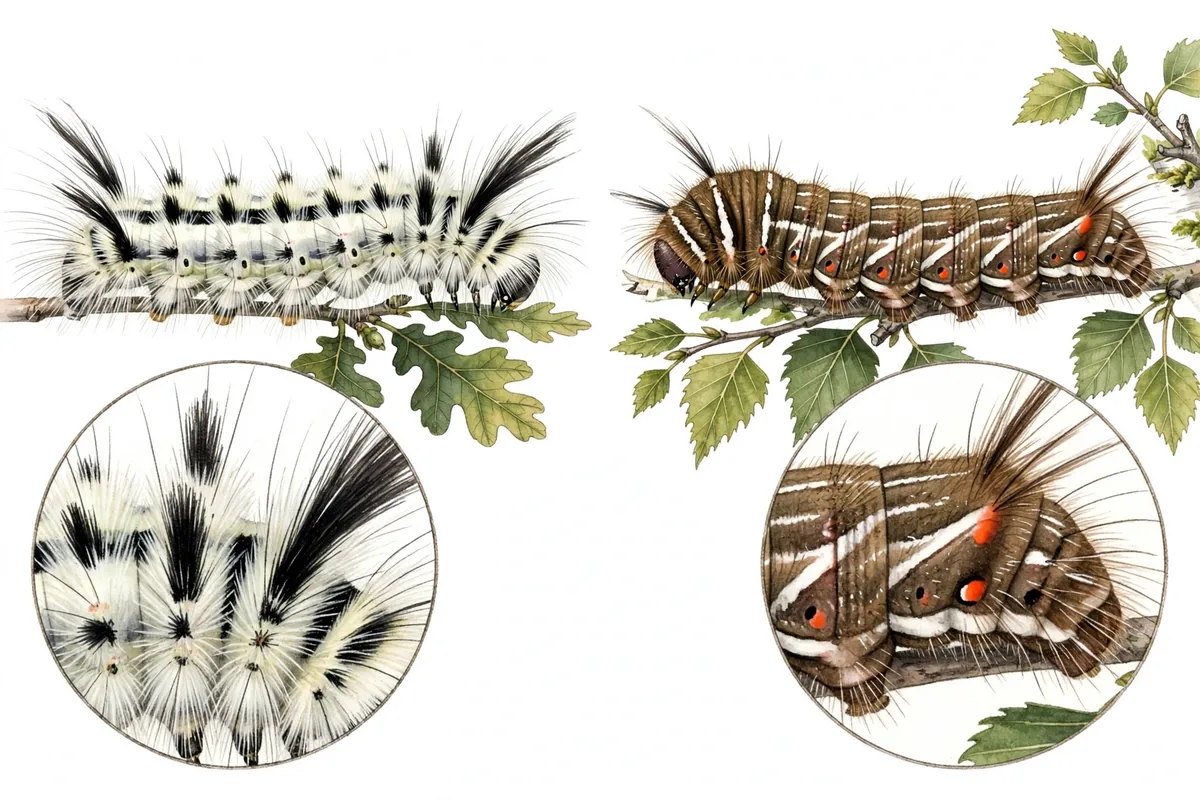
The hickory tussock moth caterpillar is the fall showpiece — a native insect found across northeastern North America, from Maine and New Brunswick south to North Carolina and west to Wisconsin and Illinois. It is unmistakable once you know it: up to 1.7 inches (about 4.5 cm) long, covered in long white and black hair tufts, with black tufts down the middle of the back, four long black “hair pencils” (two near the front, two near the rear), black spots along the sides, and a black head capsule. They are most visible from July through October, when older caterpillars leave host trees — hickory, walnut, oak, ash, elm, birch — to wander in search of cocoon sites. That wandering is when people meet them: on driveways, on siding, in leaf litter, on children’s clothing.
The browntail moth caterpillar is a different story. It is an invasive species, and Maine is currently the only US state dealing with widespread problems from it (it also occurs on Cape Cod). The caterpillar is dark brown and hairy, smaller than the hickory tussock, with two distinctive red-orange dots on its back and — on older caterpillars — two white stripes running head to tail. Browntail caterpillars feed from April to early July, pupate, and a second generation hatches in August, feeding until early October before entering communal winter webs in the treetops. Their range centers on southern and coastal Maine, though the Maine Forest Service has documented the moth in all sixteen counties.
The key difference: hickory tussocks are native insects appearing every year in modest numbers with little forest impact. Browntail moths are an invasive outbreak species whose hairs constitute a genuine public-health hazard. Do not treat them as interchangeable.
How to Tell Them Apart at a Glance
Color and pattern. Hickory tussock: bold white with black — white tufts overall, black tufts down the back’s middle, black spots on the sides. Browntail moth: dark brown overall with two red-orange dots on the back and two broken white stripes lengthwise on older caterpillars. The orange dots are the single best field mark. (Do not confuse browntail caterpillars with eastern tent caterpillars, which have a solid white stripe and no orange dots.)
Size and hair style. A full-grown hickory tussock reaches about 1.7 inches and looks substantial and shaggy, with long showy tufts and pencils. Browntail caterpillars are smaller and more compact, with shorter, less dramatic hairs — which is deceptive, because the danger lies in their microscopic barbed structure and toxin, not their appearance.
Season. A big fuzzy white-and-black caterpillar wandering on the ground in September or October is hickory tussock season. Small dark caterpillars with orange dots feeding in tree canopies in May or June mean browntail. Season alone separates most encounters.
Location. Hickory tussocks occur across the Northeast and into the Midwest. Browntail moths are a Maine (and Cape Cod) problem. In Ohio or Pennsylvania, a fall rash-causing fuzzy caterpillar is not a browntail moth. When in doubt, photograph from a safe distance and contact your state or county extension service — do not handle an unidentified fuzzy caterpillar to get a better look.
What Their Hairs Do to Your Skin
This is where the two species diverge most sharply.
Hickory tussock hairs are microscopically barbed and act as a mechanical irritant. Embedded in skin, they cause itchy rashes — irritant contact dermatitis — in many people, particularly those prone to allergies. The reaction can resemble poison ivy: redness, itching, sometimes hives. Despite some popular sources calling these caterpillars “venomous,” no venom has actually been isolated from this species; the reaction comes from the physical hairs, not a toxin. Penn State Extension notes there are no known cases of systemic allergic reactions to this species. In over 350 documented cases reviewed in the scientific literature, most people were symptom-free within 24 hours, and none involved anaphylaxis. Rarely, hairs transferred from hands to eyes can cause serious eye irritation — wash your hands after any caterpillar encounter and keep fingers away from your face.
Browntail moth hairs are a different class of hazard. The microscopic, barbed hairs contain a toxin and do not stay on the caterpillar — hairs shed from caterpillars, skins, and cocoons become airborne, settle on vegetation and surfaces, and get stirred up by mowing, raking, sweeping, or leaf blowers. The Maine CDC reports the hairs remain toxic in the environment for one to three years. Exposure causes a poison-ivy-like skin reaction: most people develop a localized rash lasting hours to days, while sensitive individuals can suffer a severe rash lasting weeks. More alarming: inhaled hairs can cause trouble breathing, including respiratory distress severe enough to require emergency care. This airborne, long-lived, respiratory dimension turns the browntail moth from a nuisance into a public-health advisory — and it has no parallel in the hickory tussock.
The practical upshot: a hickory tussock rash is a “wash it, soothe it, watch it” event. A browntail moth exposure — especially with breathing symptoms — is a “take precautions and consider medical care” event.
Timing and Geography: When and Where Each Shows Up
Hickory tussock: one generation per year. Adults fly in May and June; caterpillars are active July through October, with the big late-instar caterpillars wandering in late summer and fall as they seek cocoon sites. They overwinter as pupae in cocoons spun in leaf litter or under bark, incorporating their own irritating hairs into the cocoon silk — so the cocoons themselves can cause rashes. Range: northeastern North America, Maine to North Carolina, west to Wisconsin and Illinois.
Browntail moth: caterpillars emerge from winter webs in April and feed through early June or July — the peak human-exposure season, when Maine agencies issue annual advisories. Adults fly late June through early August (Maine guidance recommends keeping outdoor lights off at night during this window to avoid attracting egg-laying moths). Eggs hatch in August; young caterpillars feed until early October, then enter winter webs. Range: coastal and southern Maine primarily, documented statewide; also Cape Cod.
What to Do If You Touch One
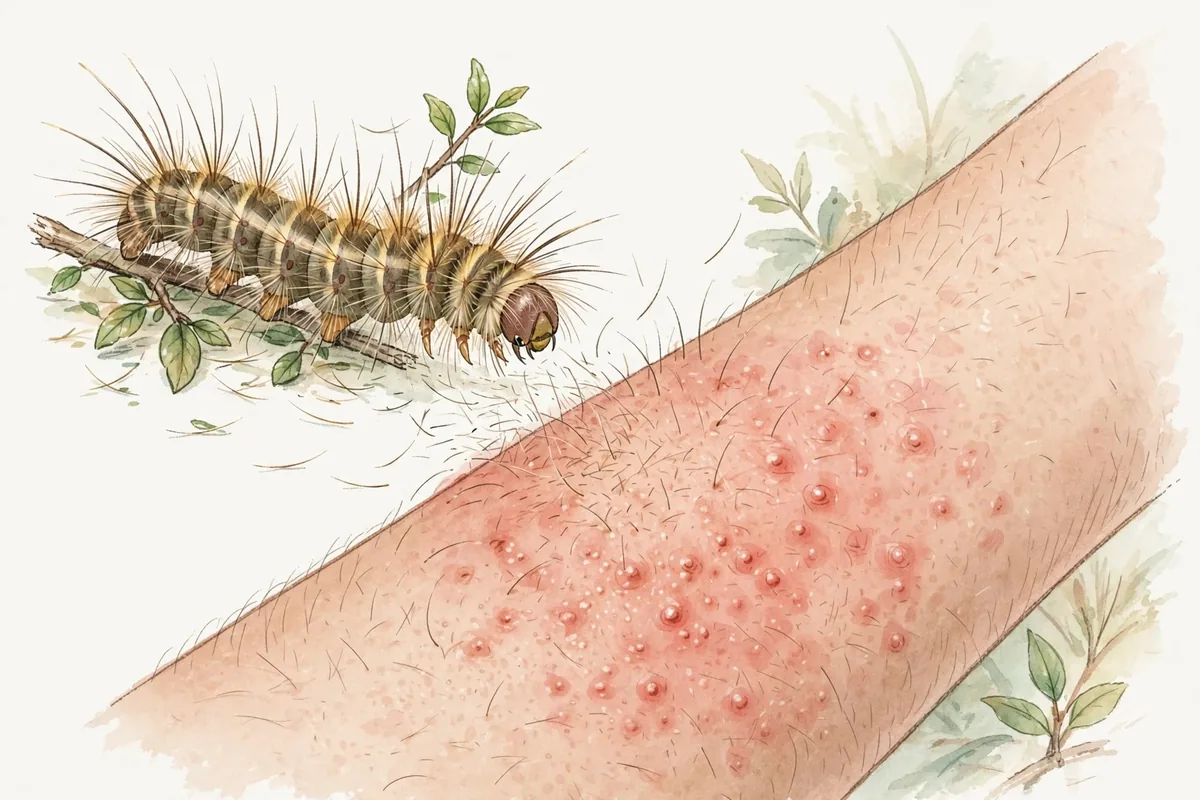
Hickory tussock contact: do not rub the area — rubbing drives the barbed hairs deeper. Wash with soap and water as soon as possible. For itching or swelling, extension sources suggest calamine lotion and cold compresses. Most rashes fade within hours to a day. Wash hands before touching your face, and launder clothing that may have picked up hairs. Children are more susceptible, largely because they pick the caterpillars up out of curiosity — teach kids to look, photograph, and not touch.
Browntail moth exposure: wash skin and take a cool shower promptly; wash clothes separately. For the rash, over-the-counter antihistamines or hydrocortisone cream used as the label directs can relieve itching. Do not scratch. If you inhaled hairs and develop coughing, wheezing, or difficulty breathing, seek medical care promptly. If a rash is severe, widespread, or lasts beyond a couple of weeks, see your doctor or a dermatologist.
For either caterpillar: watch for skin-infection signs in the days after exposure — increasing redness, warmth, swelling, pus, or fever. Hair-damaged skin is vulnerable to bacteria, especially if scratched. Our bug bite infection and cellulitis guide explains what infected skin looks like. If you are ever unsure what bit or stung you, our puss caterpillar vs tick bite comparison shows how caterpillar encounters get confused with other culprits.
Yard and Property Precautions for Both
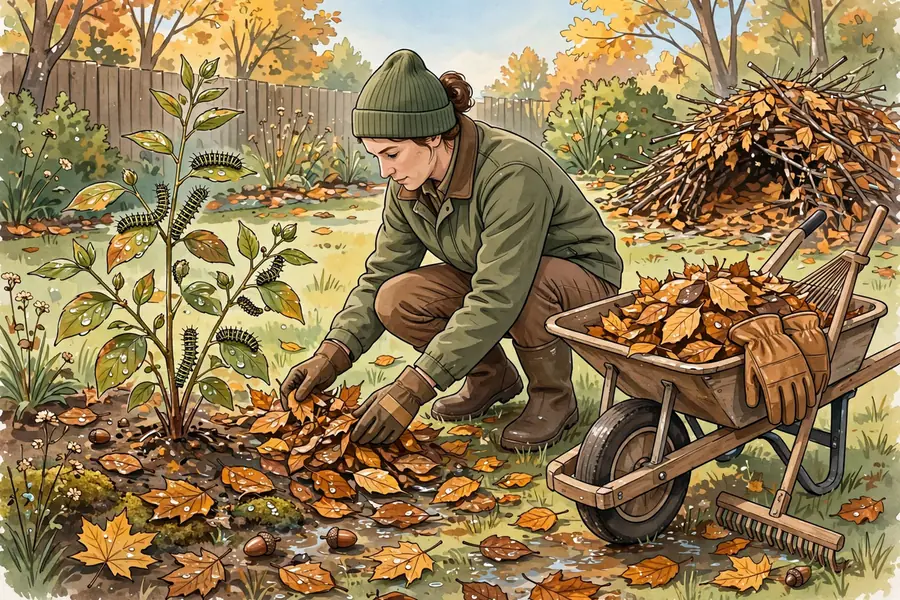
Against hickory tussocks: the risk zone is fall leaf litter, where wandering caterpillars and hair-laced cocoons sit. The Maine Forest Service advises caution raking leaves in years when caterpillar numbers were high. Wear gloves and long sleeves, consider a dust mask when handling leaf litter, and bag leaves rather than letting children play in the piles. No insecticide is needed — these native insects do little forest damage and are only around for a few months.
Against browntail moths: Maine agencies publish detailed seasonal guidance. The highest-impact homeowner actions: clip and destroy winter webs between October and mid-April, before caterpillars emerge; avoid mowing, raking, or leaf blowers on dry days in infested areas; do yard work on wet days or dampen vegetation first; wear long sleeves, long pants, goggles, a respirator or dust mask, a hat, and disposable coveralls in heavily infested areas; do not dry laundry outside where hairs settle; keep outdoor lights off from late June through early August. Pesticide treatments, if used, should be done before the end of May by a licensed applicator.
Never burn caterpillar webs or nests. Burning launches hairs into the air with the smoke and can cause severe respiratory exposure — the exact outcome you are trying to avoid.
When to See a Doctor for a Bug Bite
Caterpillar rashes are usually self-limited, but seek professional care for:
- Difficulty breathing, wheezing, or throat tightness after exposure (especially browntail hairs) — seek emergency care; call 911 if breathing is significantly impaired
- A rash that is severe, covers a large area, or lasts more than two weeks despite home care
- Eye exposure with ongoing pain, redness, or vision changes — see a doctor promptly
- Skin-infection signs: spreading redness, increasing warmth or swelling, pus, red streaks, or fever
- Any anaphylaxis signs after any bite or sting: hives spreading beyond the site, facial swelling, dizziness, fainting — call 911. Review the full list in our anaphylaxis sting warning signs guide
Frequently Asked Questions
Can hickory tussock caterpillars cause a rash if they are not venomous?
Yes. No venom is needed — the microscopically barbed hairs embed in skin and cause irritant contact dermatitis mechanically. No venom has been isolated from this species despite some popular claims. The reaction is real and can be quite itchy, but most cases resolve within about a day.
How can I tell a browntail moth caterpillar from other fuzzy caterpillars?
Look for the two red-orange dots on the back — the signature field mark. Older browntail caterpillars are dark brown with those dots plus two broken white stripes head to tail. Tent caterpillars, a common lookalike, have a solid white stripe and no orange dots. When in doubt, photograph from a distance and check with your local extension service.
How long do browntail moth hairs stay dangerous?
The Maine CDC reports the hairs remain toxic in the environment for one to three years, losing toxicity over time. That is why precautions matter even in low-population years: hairs shed during a previous outbreak can still cause rashes when yard work stirs them up.
I raked leaves in October and broke out in a rash. Which caterpillar was it?
October points strongly to the hickory tussock moth. Its caterpillars wander in fall, and their hair-containing cocoons sit in leaf litter — raking disturbs both. Browntail caterpillars are in winter webs by early October. Outside Maine, a fall leaf-raking rash is a hickory tussock encounter.
Medically reviewed by Dr. Sarah Jones, MD.
This article is for informational purposes only and isn’t medical advice. If you’re worried about a bite or sting, talk to a healthcare professional.