Every few years, a news story about Chagas disease sends people rushing to photograph any large brown bug on the porch — and the results turn out to be harmless leaf-footed bugs. The Arizona Cooperative Extension has noted exactly this pattern: an unusually high number of concerned citizens submitting pictures of insects asking whether the specimens were kissing bugs or not, with most inquiries turning out to be leaf-footed bugs (assassin bugs and milkweed bugs made up most of the rest). Both are large true bugs, both are brownish, and both show up around homes. But the leaf-footed bug vs kissing bug question has a clear answer: the flattened, leaf-shaped flare on the hind legs tells you almost instantly that you’re looking at a harmless plant feeder rather than a blood-feeding kissing bug.
This guide walks through the physical clues, the behavioral differences, and the real Chagas context so you can identify what you’re seeing calmly and know what to do next.
The Quick Visual Check: Leaf-Like Hind Legs vs. Straight Legs
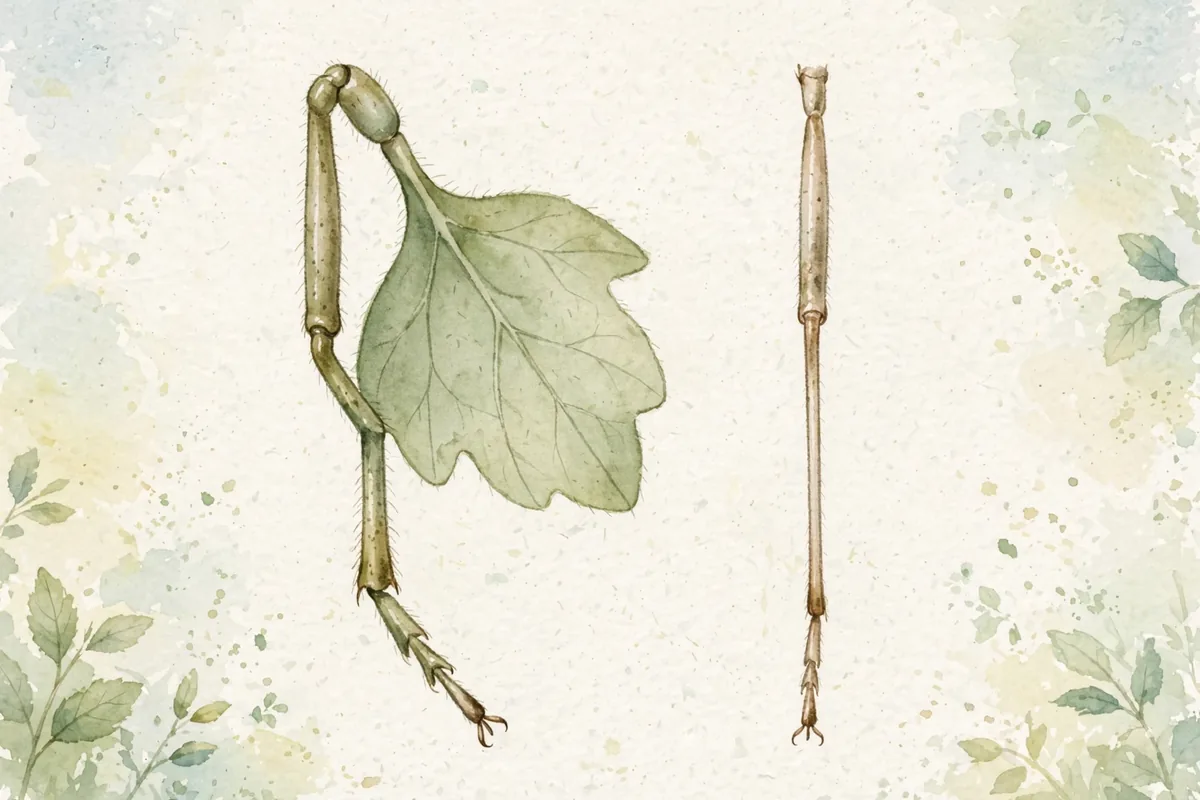
The single fastest clue is the hind legs. Leaf-footed bugs (family Coreidae, often the genus Leptoglossus) have a distinct flattened, leaf-like expansion on their hind tibiae — the segment looks like it has small paddles or fins. Kissing bugs (the triatomines, family Reduviidae) have thin, straight, unadorned legs with no flares at all. If the hind legs look like tiny flattened leaves, you almost certainly have a leaf-footed bug.
Kissing bugs’ legs look relatively slender compared with many assassin bugs, since they don’t need to grab prey. Leaf-footed bugs also have a four-segmented rostrum versus the kissing bug’s three — though counting segments needs a hand lens, so the leg flares remain the practical field mark.
Size overlaps, which is why photos cause so much confusion. Adult leaf-footed bugs run about three-quarters to one inch long, and kissing bugs run roughly half an inch to an inch and a half, so length alone settles nothing. If you’re working from a photo, our bite-sting clue checklist can help you organize what you’re actually seeing before jumping to conclusions.
Head and Body Shape: The Cone Nose vs. the Broad Head
The head is the second major tell. Kissing bugs are called “cone-nose” bugs for a reason: they have a noticeably elongated, cone-shaped head that tapers toward the front, where the straw-like rostrum emerges, and their antennae arise on the head in front of the eyes. Leaf-footed bugs have a broader, blunter head, and their antennae arise at the tip of the beak hinge under the head. Put side by side, a kissing bug’s head looks long and snout-like; a leaf-footed bug’s head looks short and wide.
Body shape adds another layer. Many kissing bugs are somewhat teardrop-shaped with a wide abdomen, and several species show flat banding around the abdomen’s edge — alternating darker and lighter markings, often orange, red, or yellow, which NC State experts describe as a common feature. Leaf-footed bugs are typically longer and narrower overall, and while some also have patterned edges, the combination of a broad blunt head, long narrow body, and flared hind legs points to the plant feeder.
Color is the least reliable clue. Both insects come in browns, grays, and near-black tones, and phone-photo lighting makes everything murkier. Work from legs first, head second, body shape third — that order matches what extension entomologists actually look for when they receive a “is this a kissing bug?” photo.
What Each Bug Actually Eats: Plants vs. Blood
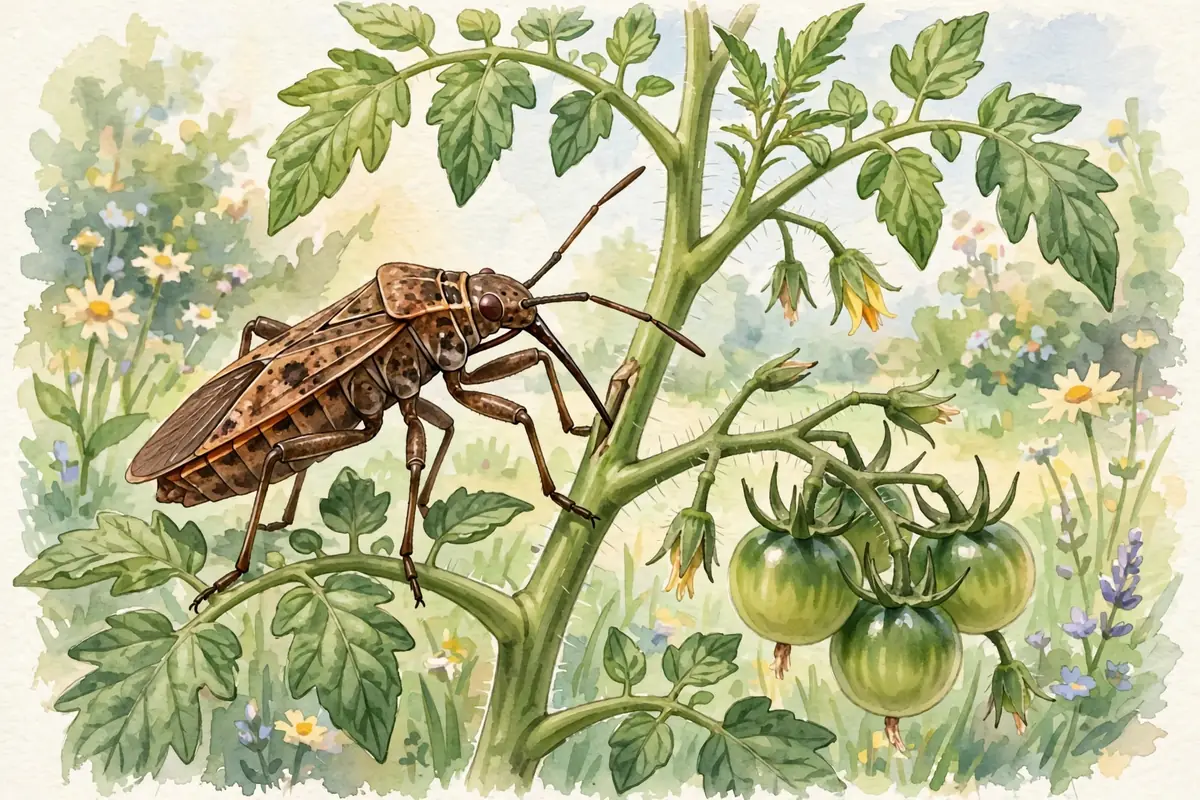
Behavior settles the comparison where looks get fuzzy. Leaf-footed bugs are plant feeders. They use their piercing-sucking mouthparts on fruits, seeds, nuts, and sap — tomatoes, pomegranates, citrus, and pecans are common targets in the Southwest. They do not feed on blood, do not bite people, and do not spread disease to humans. You’ll find them on garden plants, fruit trees, porch screens near vegetation, and gathering on warm sunny walls in fall. A cluster of big brown bugs on your tomatoes is ruining tomatoes, not hunting you.
Kissing bugs are the opposite: nocturnal blood feeders. They hide in cracks, walls, woodpiles, rock piles, dog houses, and chicken coops by day and come out at night to feed on sleeping people and animals. They are attracted to the carbon dioxide of breath and to light, and they tend to bite exposed skin — most famously around the mouth and eyes, which is where the “kissing bug” name comes from. Their bites usually don’t hurt at first but often become itchy and swollen later. A bug feeding at night on a person or pet indoors is a very different story from one sitting on a porch rail at noon.
The takeaway: leaf-footed bugs want your plants, kissing bugs want blood.
Chagas Disease: What the Risk Really Is
Chagas disease is caused by the single-celled parasite Trypanosoma cruzi, and it spreads through infected triatomine (kissing) bugs — but not the way most people assume. The bite itself doesn’t transmit the parasite. According to the CDC, after feeding, an infected bug passes the parasite in its feces, and infection happens when the feces are rubbed into the bite wound, an open cut, or the eyes or mouth — usually because the sleeper unknowingly scratches the area. Even with a genuine kissing bug, transmission requires a chain of events: the bug must be infected, and its feces must reach broken skin or a mucous membrane.
The CDC has reported locally acquired human T. cruzi infections in eight states (California, Arizona, Texas, Tennessee, Louisiana, Missouri, Mississippi, and Arkansas), but documented local cases remain uncommon — most US residents face very low risk. If you were bitten by a suspected kissing bug, our kissing bug bite treatment guide covers first-aid steps and what to tell your doctor.
What to Do If You Find a Suspected Kissing Bug
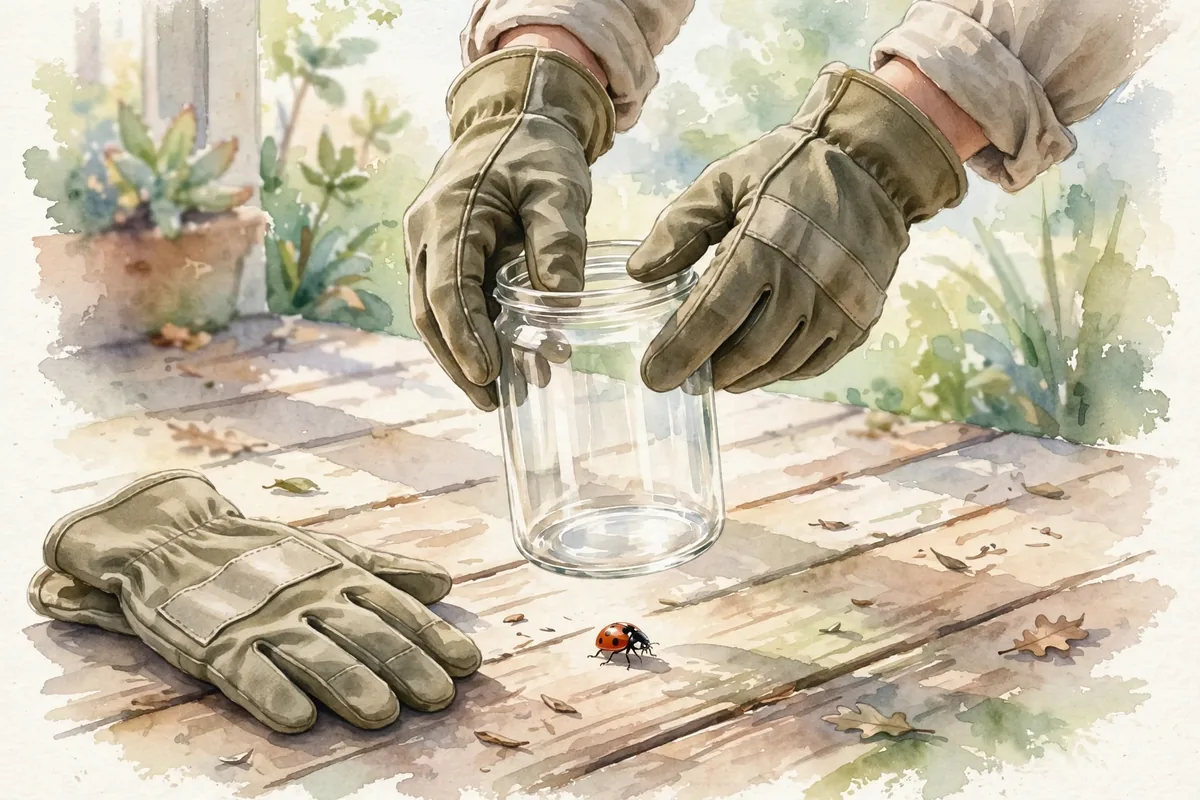
If the bug has thin straight legs, a cone-shaped head, and was found indoors at night — or near where people sleep — follow the CDC’s guidance: do not touch or squash it. Crushing the bug can smear feces onto your skin or surfaces, which is the exposure route that matters. Instead, place a container over the bug, slide it inside (the CDC suggests filling the container with rubbing alcohol, or freezing it if alcohol isn’t available), and bring it to your county Cooperative Extension center, local health department, or a university insect clinic for identification.
Wear gloves while handling it, and clean any surface the bug touched with a diluted bleach solution (about one part bleach to nine parts water).
If the bug has leaf-like leg flares, it’s a leaf-footed bug — leave it alone or relocate it outdoors. These insects don’t bite, don’t infest homes, and don’t need professional identification. If they’re damaging your garden, standard garden-pest advice applies, but that is a plant problem, not a health problem.
Common Myths That Keep People Worried
Myth: every big brown bug is a kissing bug. Reality: the vast majority of large brown true bugs around US homes are leaf-footed bugs, wheel bugs, masked hunters, or other harmless or garden-damaging insects. Size and color are nearly useless as identification features.
Myth: a kissing bug’s bite alone gives you Chagas disease. Reality: transmission happens through feces contamination, not the bite itself. This is why squashing a suspected bug with bare hands is counterproductive — you’d rather have the intact specimen for identification than feces smeared on your fingers.
Myth: if kissing bugs are in your state, your family is at risk. Reality: triatomine species have been found in many southern and southwestern states, but not every species is an efficient vector, not every bug is infected, and modern housing dramatically lowers exposure. Entomologists with the U.S. Army Public Health Center have said it is “very rare to get Chagas disease from a kissing bug in the U.S.” — a view consistent with the CDC’s low documented case counts.
Myth: you can identify a kissing bug from a blurry photo across the room. Reality: extension entomologists emphasize that the key characteristics — leg flares, head shape, abdomen banding — require good light and a reasonably intact specimen. Take a clear, close photo before doing anything else. For more reality checks on bite clues, see our bite-sting clue checklist on what photos can and can’t prove.
When to See a Doctor for a Bug Bite
Most bug encounters — including every leaf-footed bug encounter — need no medical attention at all. But certain warning signs mean you should seek care promptly:
- Call 911 immediately for signs of anaphylaxis: trouble breathing, wheezing, swelling of the lips, tongue, or throat, widespread hives, dizziness, fainting, a rapid or weak pulse. Anaphylaxis can begin within minutes of a sting or bite and is life-threatening. Review the anaphylaxis sting warning signs so you recognize them fast.
- See a doctor promptly for signs of skin infection or cellulitis: spreading redness, increasing warmth, swelling that keeps expanding after a day or two, red streaks radiating from the bite, pus, or fever. Scratching a bite until the skin breaks is the usual route to infection.
- Seek care if pain, swelling, or redness worsens after 48–72 hours instead of improving, or if the bite is on the face near the eye with severe swelling.
- Kissing-bug-specific note: if you were bitten by a bug an entomologist or health department confirmed or strongly suspects is a triatomine, report it to your county extension office or local health department and tell your doctor about the bite and your Chagas concern. The doctor can decide whether testing is warranted. A bite from a bug clearly identified as a leaf-footed bug carries no Chagas risk, so a clinician is not expected to order Chagas testing for it — ask your doctor to confirm if you want reassurance.
Frequently Asked Questions
Can a leaf-footed bug bite me?
No. Leaf-footed bugs are plant feeders with piercing-sucking mouthparts designed for sap, fruit, and seeds — not blood. They do not bite people, do not sting, and do not transmit diseases. If you felt a sharp sting from a large brown bug, it was almost certainly a predatory assassin bug (like a wheel bug defending itself when handled), not a leaf-footed bug.
I found a big brown bug in my bedroom at night. Is it a kissing bug?
Not necessarily — location alone doesn’t identify it. Check the hind legs first: flattened leaf-like flares point to a leaf-footed bug that wandered in through a screen or open window. Thin straight legs plus a cone-shaped head are the features that should raise concern. When in doubt, capture it safely and contact your county extension office or health department for identification rather than guessing.
Should I get tested for Chagas if I was bitten by a suspected kissing bug?
Only a healthcare professional can make that call. If a bug you were bitten by was identified by an extension office or health department as a triatomine, mention the bite and your Chagas concern to your doctor — they can assess whether testing is appropriate. There is no Chagas concern to act on for a bite from a bug that was clearly identified as a leaf-footed bug, but a clinician can confirm that if you want reassurance.
What’s the single fastest way to tell them apart from a photo?
Zoom in on the hind legs. Flattened, leaf-like flares on the hind tibiae mean leaf-footed bug — a plant feeder, not a biter. Thin, straight, unflared hind legs on a bug with a long cone-shaped head are what warrant a closer look and a call to your county extension office for identification.
How common are kissing bugs in the US, really?
More widespread than most people think, but most encounters are harmless. Eleven triatomine species live north of the Mexican border across the southern and southwestern states, and locally acquired Chagas cases have been documented in eight states. That said, US kissing-bug species are poor transmitters compared to their Latin American relatives, and the vast majority of the big brown bugs people submit for identification turn out to be leaf-footed bugs.
Sources
- CDC Emerging Infectious Diseases: “Chagas Disease, an Endemic Disease in the United States” — https://wwwnc.cdc.gov/eid/article/31/9/24-1700_article
- University of Arizona Cooperative Extension: “Leaffooted bugs want your vegis not your blood” — https://extension.arizona.edu/sites/extension.arizona.edu/files/attachment/leaffooted-bugs.pdf
- NC State College of Agriculture and Life Sciences: “How concerned should you be about kissing bugs?” — https://cals.ncsu.edu/news/how-concerned-should-you-be-about-kissing-bugs-heres-what-nc-state-experts-have-to-say/
- U.S. Army Public Health Center: entomologists on U.S. kissing bugs and Chagas risk — https://www.dvidshub.net/news/332826/army-public-health-center-entomologists-splash-cold-water-rumors-kissing-bug-invasion-south
Medically reviewed by Dr. Sarah Jones, MD.
This article is for informational purposes only and isn’t medical advice. If you’re worried about a bite or sting, talk to a healthcare professional.