Direct answer: The main asian tiger mosquito bite vs fire ant bite treatment differences are pain timing, skin evolution, and immediate action. Asian tiger mosquito bites are often noticed later because of itching, while fire ants can cause immediate burning pain and may sting repeatedly after gripping the skin. Fire-ant stings can later form distinctive white fluid-filled pustules.
These two exposures can both leave red, itchy bumps, but their behavior is very different. An Asian tiger mosquito lands, takes a blood meal, and leaves. A fire ant can bite with its jaws to anchor itself and then pivot to sting with its abdomen, sometimes more than once. That is why the insect seen, the moment of exposure, and what the skin does over the next 24–48 hours are usually more useful than a photo of the bump alone.
Fastest practical clue
A sudden burning or stinging sensation after stepping near or disturbing an ant mound—especially when several lesions develop on the feet or lower legs—raises suspicion for fire ants. A later itchy bump after outdoor mosquito exposure, without a mound or crawling ants, fits mosquito exposure better.
Asian tiger mosquito bite vs fire ant bite: quick comparison
| Clue | Asian tiger mosquito | Fire ant |
|---|---|---|
| Arthropod behavior | Winged mosquito lands, feeds briefly, then flies away | Ant may grip with jaws and sting repeatedly with the abdomen |
| Typical sensation | Tiny prick or unnoticed feeding; itching often becomes prominent later | Immediate burning, stinging, or sharp pain is common |
| Early skin finding | Itchy red bump or wheal | Red bump or welt after the sting |
| What may happen next | Bump usually remains itchy and gradually settles | A small white fluid-filled pustule can develop within about 1–2 days |
| Exposure clue | Yards, gardens, vegetation, container-water habitats | Ground nests or mounds, lawns, fields, landscaping, disturbed soil |
| Immediate next step | Basic bite care and prevention of more mosquito bites | Remove/rub off attached ants, leave the mound area, then provide sting care |
No single feature is perfect. Mosquito bites can burn briefly, fire-ant reactions vary, and other stinging insects can cause painful red bumps. Identification is strongest when the insect or exposure setting is known.
What an Asian tiger mosquito looks like
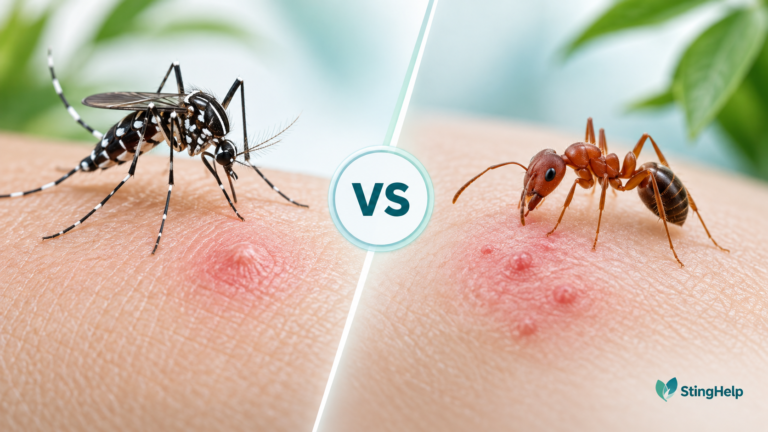
The Asian tiger mosquito, Aedes albopictus, is a small dark mosquito with striking white markings on the body and legs. It commonly uses small containers of standing water around homes and can be active around yards, gardens, shaded vegetation, and other outdoor spaces. If a black-and-white mosquito was actually seen feeding, that is stronger evidence than the later appearance of the skin.
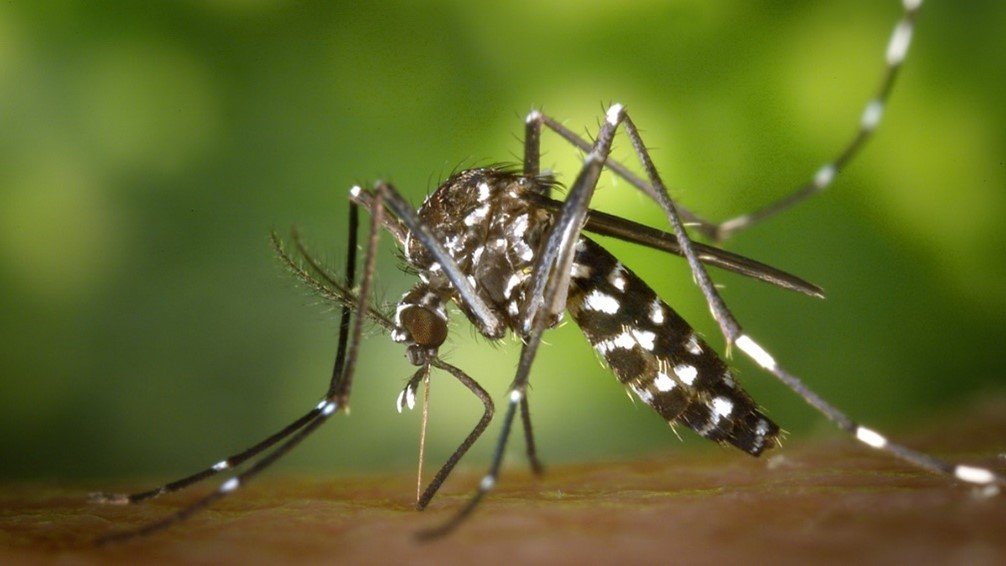
Asian tiger mosquitoes can transmit dengue, chikungunya, and Zika viruses when infected mosquitoes and transmission are present. A bite does not automatically mean infection. Geography, season, travel history, and local public-health activity determine whether mosquito-borne illness is a meaningful concern.
What is a fire ant?
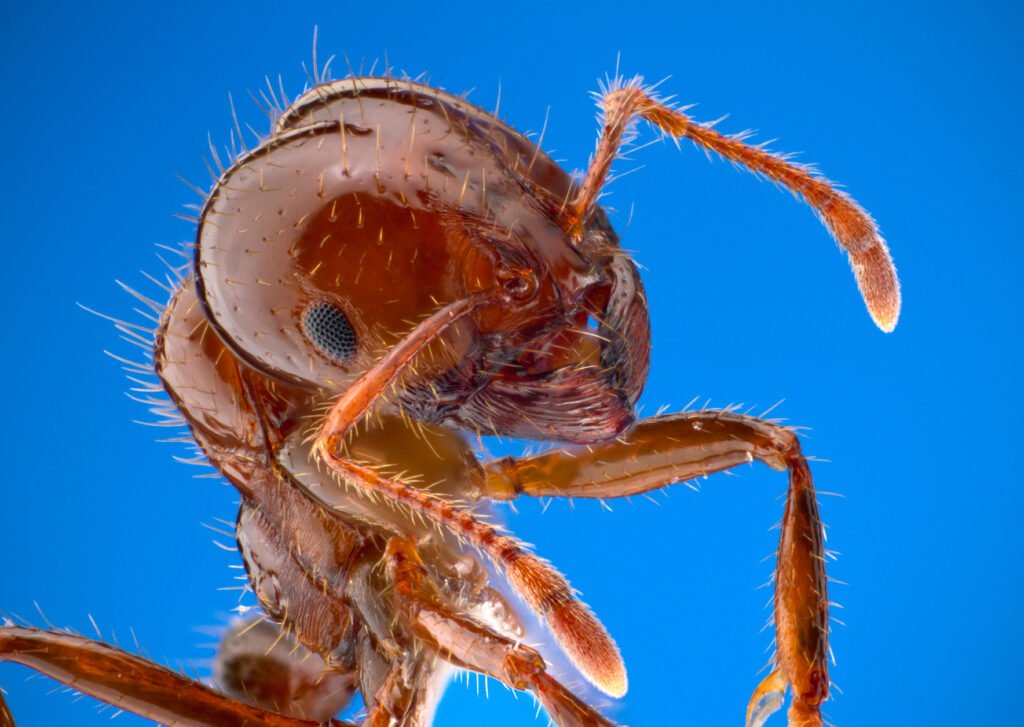
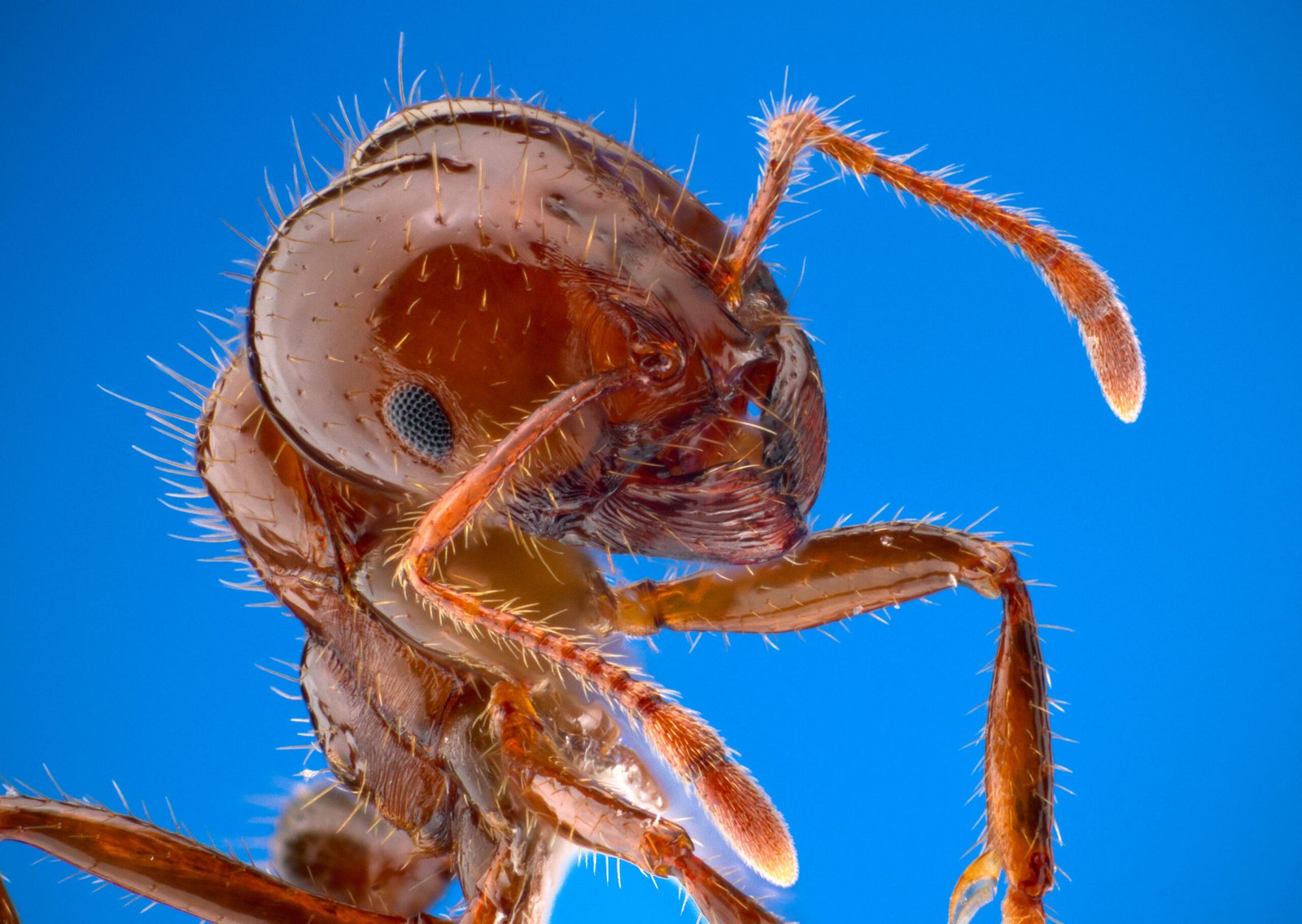
In the United States, the medically important imported fire ants include the red imported fire ant, Solenopsis invicta, and the black imported fire ant, Solenopsis richteri. USDA APHIS describes imported fire ants as invasive pests. They defend nests aggressively when disturbed, and an individual ant can sting repeatedly.
Is a fire ant injury really a bite or a sting?
Both actions can occur, but the venom injury is a sting. Fire ants can use their jaws to hold onto the skin and then sting with the abdomen. This distinction matters because a person may say “fire ant bite” even though the burning, venom-mediated skin reaction came from one or more stings.
CDC/NIOSH guidance for outdoor workers describes fire ants as biting and stinging. It also notes that they may remain attached while stinging, which is why briskly brushing or rubbing them off the skin can be important after exposure.
Typical fire-ant reaction timeline
Seconds to minutes: burning or sharp stinging pain; ants may still be on the skin.
Minutes to hours: redness, swelling, itching, or small raised lesions may develop.
Within about 1–2 days: CDC/NIOSH notes that white fluid-filled pustules can form at sting sites.
Afterward: uncomplicated lesions usually heal with time, but scratching or skin breakdown can increase irritation and infection risk.
Asian tiger mosquito bite vs fire ant bite symptoms
Both exposures can cause redness, itching, swelling, and raised bumps. The difference is often in when symptoms begin and how the lesions evolve.
Asian tiger mosquito bite symptoms
The feeding event can feel like a tiny prick or may be missed. Itching often becomes more noticeable after the mosquito has already left. A person may develop a small papule, a larger itchy wheal, or several scattered lesions on exposed skin.
Fire ant sting symptoms
Fire-ant stings are more likely to produce immediate burning or painful stinging. Several lesions may appear close together if multiple ants attack or one ant stings more than once. A white pustule that appears later is a useful clue, although it is not a substitute for professional evaluation when symptoms are severe or unusual.
A cluster around the ankles or feet after walking near a mound can fit fire-ant exposure, but location alone is not diagnostic. Fleas, biting flies, mosquitoes, and other arthropods can also affect the lower legs.
Pictures: can the skin tell you which one caused it?
Usually not with certainty. For asian tiger mosquito bite vs fire ant bite pictures, the most useful image is often the arthropod or exposure site rather than the skin. A mosquito photo can show the characteristic black-and-white markings. A fire-ant exposure may involve visible ants, a disturbed mound, and lesions that become pustular over time.
If you only have a photograph of red bumps, keep the differential diagnosis open. The StingHelp What Bit Me? identification guide can help organize clues without pretending a photograph can provide a definitive diagnosis.
Asian tiger mosquito bite vs fire ant bite treatment differences
For uncomplicated reactions, both can benefit from gentle cleansing, a cool compress, and avoiding scratching. The distinctive part of fire-ant care is getting away from the nest and removing attached ants promptly. For mosquito bites, the emphasis is symptom relief and avoiding additional mosquito exposure.
What to do after a likely fire-ant sting
- Move away from the mound or ant activity so additional ants cannot climb onto you.
- If ants are attached, brush or rub them off briskly rather than waiting for them to detach.
- Wash the affected skin gently with soap and water.
- Apply a cool compress for pain, itching, or swelling.
- Avoid scratching and keep any broken skin clean.
- Do not deliberately squeeze, cut, or open a pustule. Protect the area from friction and monitor for worsening redness, drainage, or increasing pain.
- An over-the-counter antihistamine or other itch-relief product may be appropriate for some people; use only if safe for you and follow the product label.
What to do after a likely Asian tiger mosquito bite
- Wash the area with soap and water.
- Use a cool compress for itching or localized swelling.
- Avoid scratching, particularly if the skin has broken.
- Use appropriate over-the-counter itch relief only when safe for you and according to the label.
- Prevent additional bites with EPA-registered repellent, protective clothing, screens, and standing-water control.
- If systemic illness develops after relevant travel or during local mosquito-borne disease activity, provide the exposure history to a healthcare professional.
For broader care principles, see the StingHelp bite and sting first-aid guide.
When is a fire-ant reaction an emergency?
Most reactions remain local, but severe allergic reactions can occur. Seek emergency care for trouble breathing, throat tightness or swelling, swelling of the lips or tongue, fainting, severe dizziness, rapidly spreading hives, collapse, or a rapidly worsening whole-body reaction.
CDC/NIOSH also tells workers to get emergency treatment for serious symptoms such as loss of breath, serious swelling, severe chest pain, nausea with systemic illness, heavy sweating, or slurred speech after insect or scorpion exposure. When symptoms are severe or progressing quickly, do not wait to see whether the skin reaction settles.
When should you seek non-emergency medical care?
Contact a healthcare professional when swelling is extensive or worsening, pain is increasing instead of improving, redness is spreading, drainage appears, fever develops, many stings occurred, the reaction involves sensitive areas such as the eyes or mouth, or you are unsure whether symptoms represent allergy, infection, or another condition.
People with a known history of severe insect-sting allergy should follow their clinician’s emergency plan. This article cannot determine individual anaphylaxis risk.
Disease risk: fire ants and Asian tiger mosquitoes are different
The public-health concern with Asian tiger mosquitoes includes transmission of viruses such as dengue, chikungunya, and Zika where those viruses are circulating. With imported fire ants, the primary medical concern is venom injury and allergic reaction rather than a mosquito-style vector-borne viral infection.
If fever, rash, severe headache, marked joint pain, unusual bleeding, neurologic symptoms, or other significant systemic illness follows mosquito exposure—especially after travel—seek medical advice and explain when and where the bite occurred.
USA: where are imported fire ants most relevant?
USDA APHIS reports imported fire ants throughout much of the Southern United States and in parts of California and Puerto Rico. CDC/NIOSH similarly describes them as primarily a concern in the Southeast, with more limited distribution in New Mexico, Arizona, and California.
This geographic pattern is useful but not absolute proof of identification. Ants can be transported in soil, plants, sod, equipment, and other materials, and local quarantine or pest-control information changes over time.
Europe: fire-ant risk is not evenly distributed
European readers should not assume that imported fire ants are widespread across the continent. Solenopsis invicta was documented as established in Sicily—the first established European population reported for this species. Current 2026 official Sicilian notices describe established populations in parts of the Syracuse area and more recent findings around Acireale in the province of Catania, with active control measures underway.
That means a painful ant sting in most of Europe should not automatically be labeled a red imported fire-ant sting. Local species, travel history, and regional invasive-species notices matter.
Decision guide: what should you do next?
Immediate burning + ants still on you: leave the area and brush/rub the ants off, then begin local sting care.
Itchy bump after seeing a black-and-white mosquito: use routine mosquito-bite care and prevent more bites.
White pustules develop the next day after a mound exposure: fire-ant stings become more likely; keep lesions clean and avoid scratching or opening them.
Breathing trouble, throat/facial swelling, fainting, rapidly worsening hives, or collapse: seek emergency care now.
How to prevent fire-ant stings
Avoid standing on or disturbing suspected fire-ant mounds. Wear closed-toe footwear and protective clothing when working in infested lawns, fields, landscaped areas, or disturbed soil. Workers should inspect areas before kneeling or placing equipment on the ground.
For property-level control, use current local extension, agriculture, or pest-management guidance. Imported fire-ant control is a regional pest-management issue, and treatment approaches should match local regulations and product labels.
How to prevent Asian tiger mosquito bites
Use EPA-registered insect repellent, wear protective clothing when practical, repair window and door screens, and remove standing water from containers around the home. Asian tiger mosquitoes can breed in small water-holding items, so regular checks of buckets, plant saucers, toys, gutters, tires, and similar containers are useful.
If the exposure was an ant but did not involve intense burning or later pustules, compare the related Asian tiger mosquito vs carpenter ant guide. If the outdoor bite was immediately painful but no ant was seen, the deer fly comparison may help organize other clues.
Frequently asked questions
How can you tell an Asian tiger mosquito bite from a fire ant bite?
Timing and exposure are the best clues. Mosquito bites are often dominated by itching after the insect leaves. Fire ants can cause immediate burning pain, may remain attached while stinging, and can produce white fluid-filled pustules within about one to two days.
What are the most useful differences to compare?
Compare whether an ant mound or black-and-white mosquito was seen, whether the sensation was immediately painful or mostly itchy later, whether several lesions appeared together, and whether small white pustules developed after the exposure.
Which warning signs matter most with a fire ant sting?
Breathing difficulty, throat or facial swelling, fainting, severe dizziness, widespread hives, collapse, or rapidly worsening systemic symptoms require urgent emergency evaluation. Extensive swelling, increasing pain, drainage, fever, or many stings also justify medical advice.
What should you do if fire ants are still attached?
Move away from the nest area and brush or rub the ants off promptly. Fire ants can hold on with their jaws while stinging, so waiting for them to detach can allow additional stings. Then wash the skin and begin local symptom care.
Are white pustules after a fire ant sting normal?
CDC/NIOSH notes that white fluid-filled pustules can form within a day or two after fire-ant stings. Do not deliberately open or squeeze them. Keep the area clean and seek medical advice if redness, pain, drainage, or fever is worsening.
When should someone seek medical care after a mosquito or fire ant exposure?
Seek emergency care for serious allergic symptoms. Seek routine medical evaluation for worsening local inflammation, signs of infection, many stings, unusual systemic illness, or mosquito-associated fever or other significant symptoms after relevant travel or local disease exposure.
Authoritative references
- CDC/NIOSH — Insects and Scorpions at Work (updated March 4, 2026)
- USDA APHIS — Imported Fire Ants (updated September 17, 2026)
- Official Sicily local notice — Solenopsis invicta control update, May 2026
- CDC — Asian Tiger Mosquito
- American Academy of Dermatology — When bug bites need medical care
Bottom line
The key asian tiger mosquito bite vs fire ant bite treatment differences are the immediate exposure response and what happens next. Mosquito bites mainly need symptom relief and prevention of additional bites. Fire-ant exposure may require promptly brushing attached ants off, then monitoring painful sting sites for pustules and allergic warning signs. Use the arthropod, timing, geography, and lesion evolution—not the bump alone—to guide the next step.
Educational information for a U.S.- and Europe-focused audience. This article cannot diagnose an insect, allergic reaction, infection, or vector-borne disease from a photograph and does not replace professional medical care.