Direct answer: The main asian tiger mosquito bite vs oak mite bite treatment differences are exposure pattern, timing, and disease risk. Asian tiger mosquito bites often follow outdoor mosquito activity and can transmit viruses in some settings. Oak leaf itch mite bites often appear hours after time beneath infested oaks, can be intensely itchy, and are not known to transmit disease.
Asian tiger mosquito bites and oak leaf itch mite bites can both create red, itchy bumps, but the culprit and exposure clues are very different. The Asian tiger mosquito is visible, black-and-white, and actively flies to people. The oak leaf itch mite, Pyemotes herfsi, is nearly invisible to the naked eye and may drop or blow from infested trees onto people below.
Fastest practical clue
Think oak mite when intensely itchy bumps appear hours after gardening, raking leaves, or spending time beneath an infested oak—especially in late summer or fall. Think Asian tiger mosquito when you saw a small black-and-white mosquito feeding or had obvious outdoor mosquito exposure.
Asian tiger mosquito bite vs oak mite bite: quick comparison
| Clue | Asian tiger mosquito | Oak leaf itch mite |
|---|---|---|
| Arthropod | Aedes albopictus, a visible black-and-white mosquito | Pyemotes herfsi, a microscopic-to-nearly-invisible predatory mite |
| Typical exposure | Yards, gardens, shaded vegetation, container-water habitats | Under infested oaks, raking leaves, handling infested plant material |
| When symptoms appear | Itching may become noticeable soon after or later the same day | Bites may not be felt; itching can become noticeable many hours later |
| Common skin pattern | Itchy red papule or wheal | Very itchy red papules, sometimes with a tiny blister-like center |
| Disease transmission | Can transmit dengue, chikungunya, Zika where infected mosquitoes circulate | Not known to transmit disease to humans |
| Best prevention clue | Repellent + remove standing water | Limit time beneath infested trees + shower and launder exposed clothing |
Neither pattern is diagnostic by itself. A person can react differently from one exposure to another, and many other insects, mites, plants, and skin conditions can cause itchy papules.
What an Asian tiger mosquito looks like
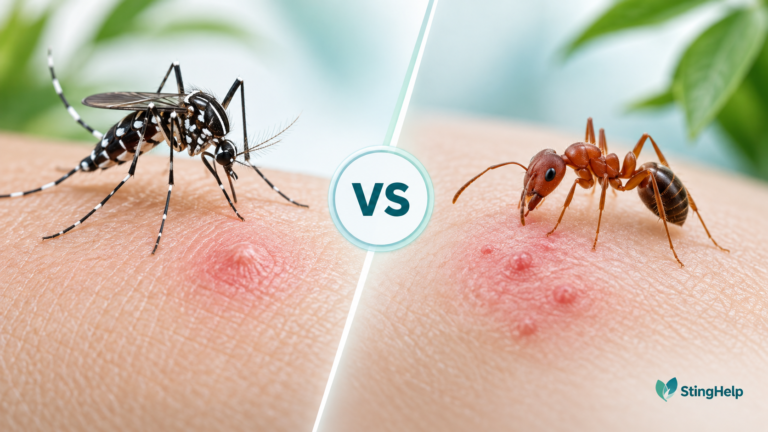
The Asian tiger mosquito, Aedes albopictus, is a small dark mosquito with bright white bands on the legs and a distinctive white stripe on the upper body. It commonly breeds in small containers of standing water and can be active around homes, yards, gardens, patios, and vegetation.
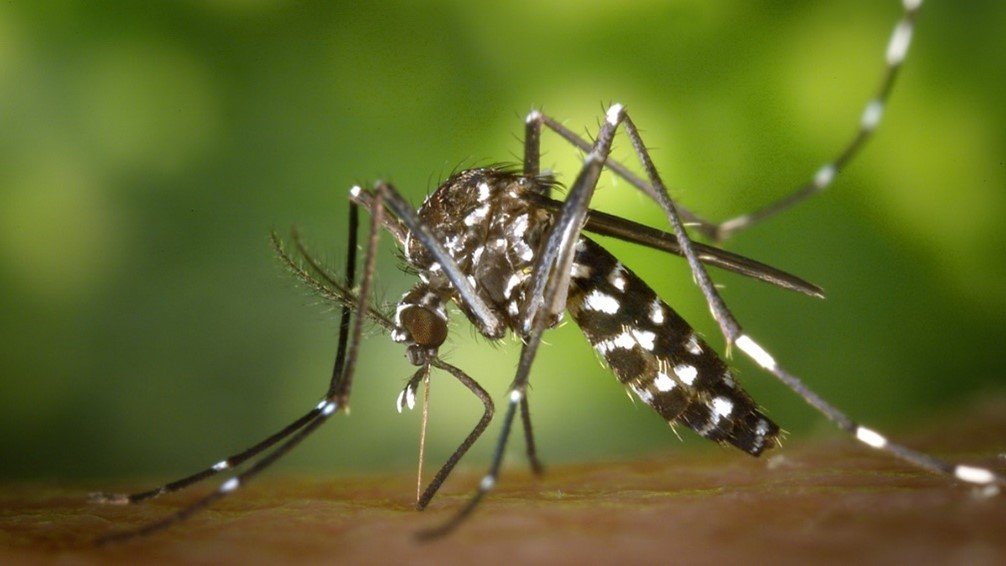
The feeding event may feel like a tiny prick or may be missed. Itching, redness, and localized swelling can become more noticeable after the mosquito has already flown away.
What is an oak leaf itch mite?
The oak leaf itch mite, Pyemotes herfsi, is a tiny predatory mite. Penn State Extension’s updated 2026 guidance describes it as approximately 0.2 mm long—so small that most people will never see the mite responsible for their bites.
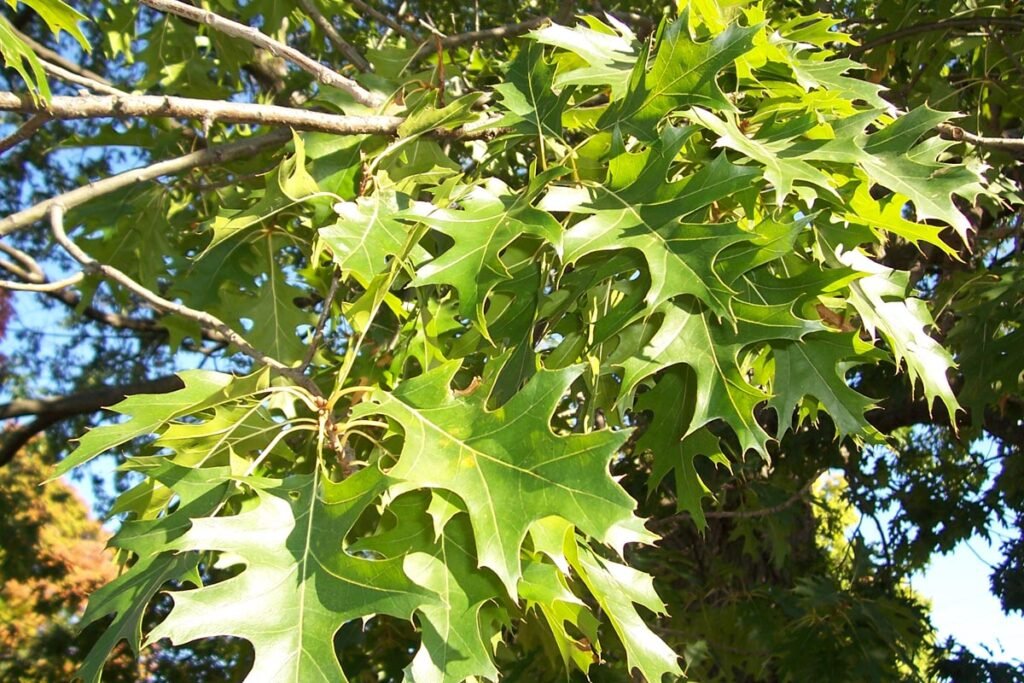
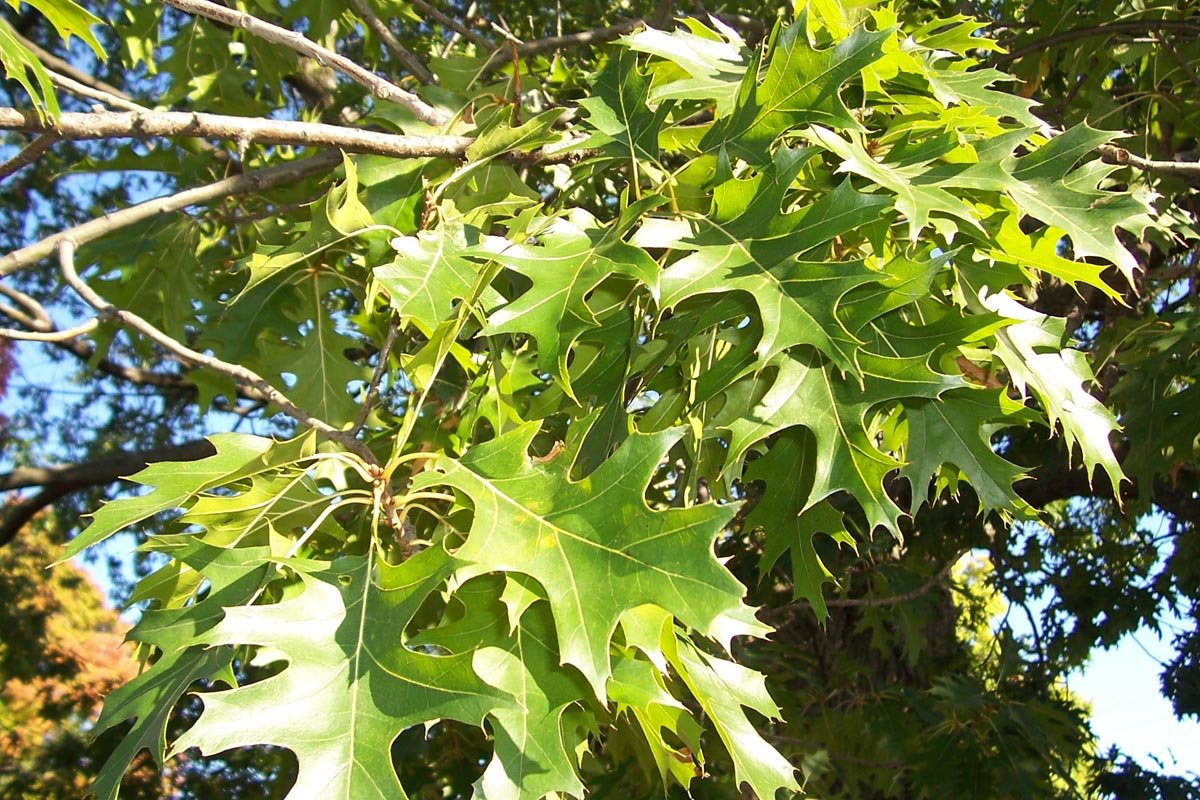
The mite normally feeds on small insects living in protected plant structures, especially midge larvae inside leaf-edge galls on oaks. When mite populations become extremely large or their normal prey becomes scarce, they can contact and inadvertently bite people.
Why do oak mite outbreaks happen?
Pyemotes herfsi can reproduce rapidly. Penn State notes that a fertilized female can produce a large number of offspring and that the generation time can be as short as about one week. When suitable prey is abundant inside oak galls, mite populations can become extremely large.
Once mites disperse, they can fall from trees or be carried by wind. Penn State reports that huge numbers may drop from infested trees in a day and that the mites are small enough to pass through ordinary window screens. That helps explain why people sometimes report bites even without prolonged direct contact with leaves.
Oak mite exposure pathway
1. Mites feed on insects inside oak leaf galls or other protected plant habitats.
2. Populations build rapidly, often later in the growing season.
3. Tiny mites disperse from leaves and may fall or blow onto people.
4. The bite itself may not be felt; itching and papules appear later.
Asian tiger mosquito bite vs oak mite bite symptoms
Both can cause itchy red bumps, so timing and exposure matter.
Typical Asian tiger mosquito reaction
- Small itchy papule or wheal.
- Localized redness and swelling.
- Several bites may occur on exposed skin.
- Itching often becomes noticeable after the mosquito has left.
Typical oak leaf itch mite reaction
- The actual bite is often not felt.
- Intense itching may develop hours after exposure.
- Raised red papules may appear, sometimes with a small blister-like center.
- Bites may affect the upper body when mites drop from the tree canopy.
- Hands and arms may be affected after gardening, raking, or handling leaves.
Kansas State Extension describes oak leaf itch mite bites as becoming noticeable roughly 10–16 hours after exposure in some cases. That delay is one reason people may struggle to connect a rash with time spent under an oak earlier in the day.
Pictures: can the rash confirm oak mites?
No. For asian tiger mosquito bite vs oak mite bite pictures, the skin alone is not reliable enough to confirm the culprit. An oak-mite rash can resemble chigger bites, contact dermatitis, other mite bites, flea bites, mosquito bites, or other itchy skin conditions.
The most useful clues are the activity before symptoms began, the season, whether infested oaks are nearby, whether other people exposed to the same area developed similar itching, and whether the reaction appeared after a delay.
If you are uncertain, use the StingHelp What Bit Me? identification guide and keep the diagnosis open.
Asian tiger mosquito bite vs oak mite bite treatment differences
For mild local reactions, both usually start with gentle cleansing, a cool compress, and avoiding scratching. The difference is that mosquito care also emphasizes mosquito-borne disease context and preventing more mosquito bites, while oak-mite management focuses on stopping exposure to infested trees or plant material and removing mites from clothing and skin.
What to do after a likely Asian tiger mosquito bite
- Wash the area gently with soap and water.
- Use a cool compress for itching or swelling.
- Avoid scratching and keep broken skin clean.
- Use an appropriate over-the-counter anti-itch product only if safe for you and according to the label.
- Prevent more bites with EPA-registered repellent, protective clothing, screens, and standing-water control.
- If fever or significant systemic illness develops, tell a healthcare professional about recent travel and local mosquito-borne disease activity.
What to do after likely oak mite exposure
- Leave the suspected exposure area.
- Shower as soon as practical and wash exposed skin.
- Remove and launder clothing worn beneath or around the suspected infested trees.
- Use a cool compress and an appropriate anti-itch product if safe for you and used according to the label.
- Avoid scratching because broken skin can become secondarily infected.
- Limit repeat exposure beneath the same trees during an active outbreak.
For broader symptom-care guidance, use the StingHelp bite and sting first-aid guide.
Do oak leaf itch mites live on people?
No. The Illinois Department of Public Health states that itch mites do not live on humans and are not known to survive indoors as a human infestation. They are accidental human biters associated with their normal insect-prey habitats.
This is an important distinction from scabies mites, which can live and reproduce on human skin. An oak-mite outbreak does not mean the affected person has become a host for a continuing mite colony.
Do oak mite bites transmit disease?
Oak leaf itch mites are not known to transmit disease to people. Illinois public-health guidance specifically notes that itch mites such as Pyemotes species are not known disease vectors.
The main medical problems are the intensity of itching, inflammation, sleep disruption, and secondary bacterial infection if the skin is scratched open. This differs from Asian tiger mosquitoes, which can transmit established mosquito-borne viruses when infected mosquitoes are circulating.
Decision guide: what should you do next?
Itchy bump after seeing a black-and-white mosquito: routine mosquito-bite care and mosquito prevention are usually appropriate.
Many intensely itchy bumps hours after raking or sitting under an oak: leave the exposure area, shower, launder clothing, and manage itching.
New bumps keep appearing with no oak exposure: reconsider other causes such as chiggers, bird/rodent mites, fleas, bed bugs, or dermatitis.
Breathing trouble, facial/throat swelling, fainting, severe dizziness, rapidly worsening swelling, or collapse: seek emergency care.
When should you seek medical care?
Most uncomplicated bites improve with supportive care. Contact a healthcare professional if itching is severe enough to interfere with sleep, swelling is extensive, redness keeps spreading, pain is increasing, pus or drainage appears, fever develops, or the skin becomes significantly damaged from scratching.
Seek emergency care for difficulty breathing, throat or facial swelling, fainting, severe dizziness, confusion, collapse, or another rapidly worsening systemic reaction.
Why scratching oak mite bites can make things worse
Penn State specifically warns against scratching because broken skin can lead to secondary bacterial infection. If the itch is intense, cooling the skin and using an appropriate anti-itch treatment is safer than repeatedly scratching the papules.
Keep fingernails short and keep any open areas clean. Increasing warmth, tenderness, pus, drainage, or expanding redness are reasons to seek medical evaluation.
Why tree spraying is usually disappointing
Oak leaf itch mites often live inside leaf-fold galls where sprays cannot easily reach them. Penn State notes that control of the mite in the landscape is difficult because the protected plant structures shield both the mites and their insect prey.
That means personal-exposure reduction is usually more practical than attempting to eliminate every mite from a mature oak. Local extension services can help confirm whether a regional outbreak is occurring before homeowners invest in unnecessary treatments.
USA: when and where oak mite outbreaks occur
The oak leaf itch mite was first recognized as a major U.S. human-biting problem in Kansas in 2004, when a large outbreak affected thousands of people. Since then, it has been reported in multiple states including parts of the Midwest, South, and Mid-Atlantic.
Outbreaks are particularly associated with late summer into fall, when mite numbers have had time to build. Gardening, sitting beneath affected trees, and raking infested leaves can increase contact.
Europe: interpret the risk carefully
Penn State reports that Pyemotes herfsi is thought to have originated in Europe and has also been recorded in several other parts of the world. However, the large public-health style outbreak literature most familiar to U.S. readers comes mainly from American extension and outbreak reports.
European readers should not assume that every itchy rash after being near an oak is an oak leaf itch mite reaction. Other mites, caterpillar hairs, plant contact reactions, and insects can produce similar symptoms, and local expert identification matters.
Asian tiger mosquito risk in Europe is different
Unlike oak mites, Asian tiger mosquitoes have a clearly documented and expanding European distribution. ECDC’s April 2026 map records established Aedes albopictus populations across many EU/EEA regions, particularly in southern and central Europe.
That means a European reader may reasonably encounter Asian tiger mosquitoes in established areas, while an oak-mite diagnosis should still depend on compatible local ecology and exposure rather than a skin picture.
How to prevent Asian tiger mosquito bites
Use EPA-registered or locally approved insect repellent, wear protective clothing when practical, maintain screens, and remove standing water from buckets, plant saucers, toys, tires, gutters, and other containers around the home.
For more mosquito-specific guidance, browse the StingHelp Mosquito Bites hub.
How to reduce oak mite bites
During a suspected outbreak, limit time directly beneath infested oaks, especially while raking or disturbing fallen leaves. If exposure occurs, remove outdoor clothing promptly, wash it, and shower. Penn State notes that wind can carry the mites and that they may even pass through ordinary screens, so complete avoidance can be difficult during heavy outbreaks.
If the pattern involves other mites or tiny outdoor arthropods, explore the StingHelp Chiggers & Mites hub. If the exposure came from pets or bedding rather than trees, the cat flea comparison may be more relevant.
Frequently asked questions
How can you tell an Asian tiger mosquito bite from an oak mite bite?
Look at the exposure and timing. A mosquito bite may follow visible black-and-white mosquito activity. Oak-mite bites often appear as intensely itchy papules hours after time beneath infested oaks, especially during late summer or fall. Skin appearance alone cannot prove the cause.
How long after exposure do oak mite bites start itching?
The bite itself is often not felt. Kansas State guidance notes that symptoms can become noticeable roughly 10–16 hours after exposure, although timing varies. This delay can make the connection to earlier yard work or time beneath an oak difficult to recognize.
Can oak leaf itch mites live on people?
No. Illinois public-health guidance states that itch mites do not live on humans and do not establish a continuing indoor human infestation. They are accidental biters when they leave their normal insect-prey habitat.
Do oak mite bites spread disease?
Oak leaf itch mites are not known to transmit disease to people. The main concerns are intense itching, inflammation, and secondary bacterial infection if scratching damages the skin.
What should you do after oak mite exposure?
Leave the exposure area, shower, wash exposed skin, launder clothing, use a cool compress, and use an appropriate anti-itch treatment if safe for you. Avoid scratching and limit additional time beneath the suspected infested trees.
When should someone seek medical care after a mosquito or oak mite bite?
Seek care for severe or worsening swelling, spreading redness, increasing pain, drainage, fever, signs of infection, or significant systemic symptoms. Emergency symptoms such as breathing difficulty, facial or throat swelling, fainting, or collapse need immediate evaluation.
Authoritative references
- Penn State Extension — Oak Leaf Itch Mite, updated August 3, 2026
- Illinois Department of Public Health — Mites Affecting Humans
- Kansas State Research and Extension — Household Pests of Kansas
- CDC — Asian Tiger Mosquito
- ECDC — Aedes albopictus distribution, April 2026
Bottom line
The practical asian tiger mosquito bite vs oak mite bite treatment differences are driven by exposure, timing, and disease context. A typical mosquito bite mainly needs itch relief and mosquito prevention. Oak-mite exposure calls for showering, laundering exposed clothing, avoiding affected trees, controlling intense itching, and watching scratched skin for secondary infection.
Educational information for a U.S.- and Europe-focused audience. This article cannot diagnose an insect or mite species, allergic reaction, infection, or mosquito-borne illness from a photograph and does not replace professional medical care.