
You wake up in a hotel room with red, itchy welts in a neat row — and the first question isn’t just what bit you, it’s when. Here’s the direct answer on how long until bed bug bites appear: most bites show up within hours to a few days after feeding, with many reacting within 24 to 48 hours. But timing varies enormously from person to person — some react within a day, others after several days, and some people never react at all. That wide variation is the most honest thing anyone can tell you about bite timing.
Why there’s a delay at all #
The delay isn’t because the bugs are slow — the visible bite is mostly your immune system, not the bite itself. Bed bugs feed at night while you sleep, usually for just a few minutes; their saliva contains compounds that numb the skin and keep blood flowing. You almost never feel the bite happening.
What you see later — the red bump, the itch, the swelling — is your body’s delayed reaction to proteins in that saliva. Like many allergic-type responses, your immune system needs time to recognize the intruder and respond. This also explains why the timing is so personal. Your reaction speed depends on immune sensitivity — genetics, prior exposure, age, and general health. Two people in the same bed can react on completely different timelines, or one may react while the other shows nothing. Clinical evidence on exact timing comes mostly from observation rather than controlled studies.
The typical range: hours to days #
Within that wide personal variation, there is a typical window. The bulk of reactions appear within a few days — a bite from the night often announces itself by the next morning or the morning after.
At the edges: some highly sensitive people develop welts within a few hours, occasionally while the night is still young. At the other end, some people don’t show marks for several days — and a meaningful minority develop no visible reaction at all, even with repeated feedings. This last group is one reason infestations spread: a person can be hosting nightly feedings and have no idea.
Practical takeaway: new welts appearing on consecutive mornings mean you’re likely being bitten each night — today’s bites probably happened last night or the night before. The pattern of fresh bites arriving daily is more informative than any single bite’s exact age.
Why your timing might differ from someone else’s #

If your travel partner is covered in bites and you’re clear (or vice versa), the bugs didn’t choose favorites — it usually means different immune responses or different reaction timelines. A few factors can genuinely shift when and whether bites appear:
- First exposure vs. sensitization. People encountering bed bugs for the first time sometimes react slower or less than people bitten before who’ve become sensitized. Repeated exposure tends to produce faster, stronger reactions — though this isn’t a hard rule.
- Bite count. Light exposure (one or two bites) may produce a delayed or mild reaction; heavier feeding can provoke a faster, more dramatic one.
- Immune differences. Age, medications (especially immune-suppressing ones), and individual sensitivity all shift the timeline. There’s no formula to correct for these.
- Skin location. Bites on areas with thinner skin can look angrier faster, while bites under thicker skin may take longer to surface visibly.
None of this lets you precisely date your first exposure from the marks — but do treat the whole window, the past week or more, as the possible exposure period when hunting for the source.
The “breakfast, lunch, dinner” pattern — useful, not proof #
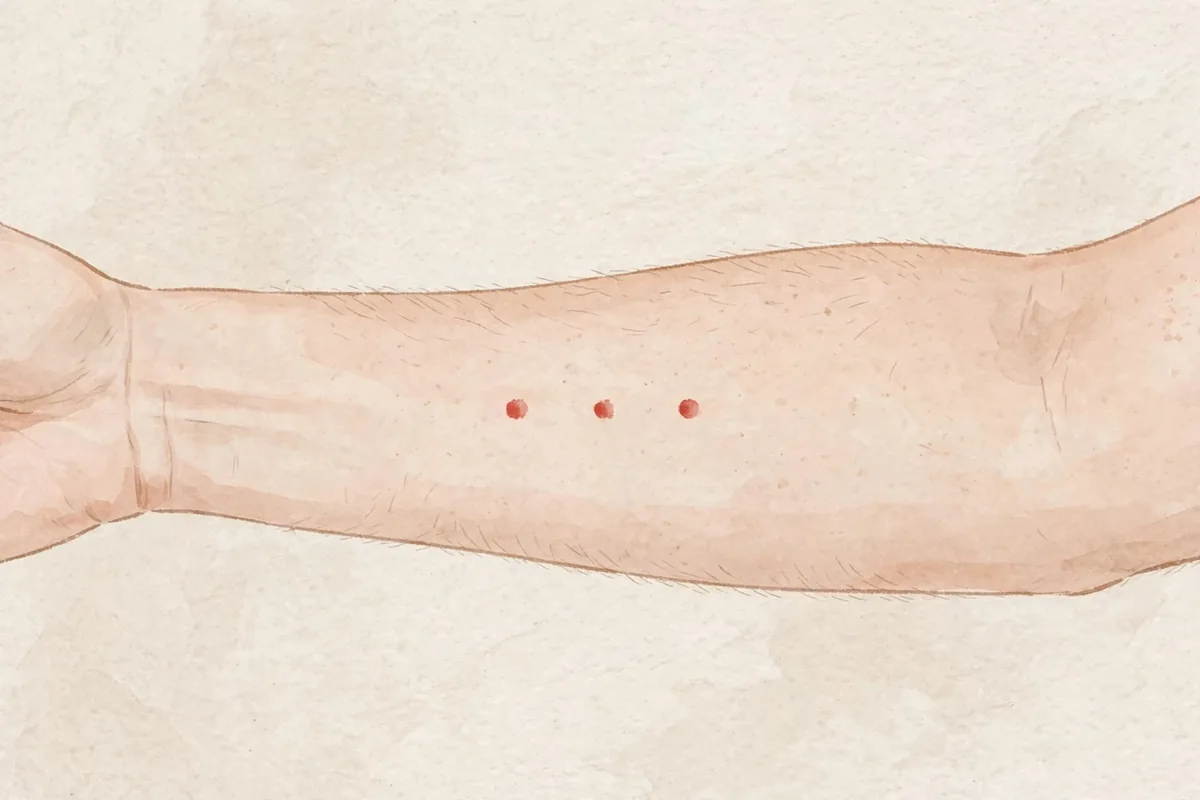
You’ve probably heard bed bug bites appear in a line of three — “breakfast, lunch, dinner” — as the bug feeds, moves a short distance, and feeds again. There’s real behavior behind it: a single bed bug often probes multiple times in one feeding session, leaving several marks in a row or small cluster.
But be honest with yourself about its limits. A line of bites suggests bed bugs; it does not prove them. Mosquitoes, fleas, and other biters can leave clustered marks too, and not every feeding produces the neat triple. Use the pattern as one clue among several — with new marks each morning, marks on skin exposed during sleep, and physical evidence (the bugs in mattress seams, rusty spots on sheets, shed skins).
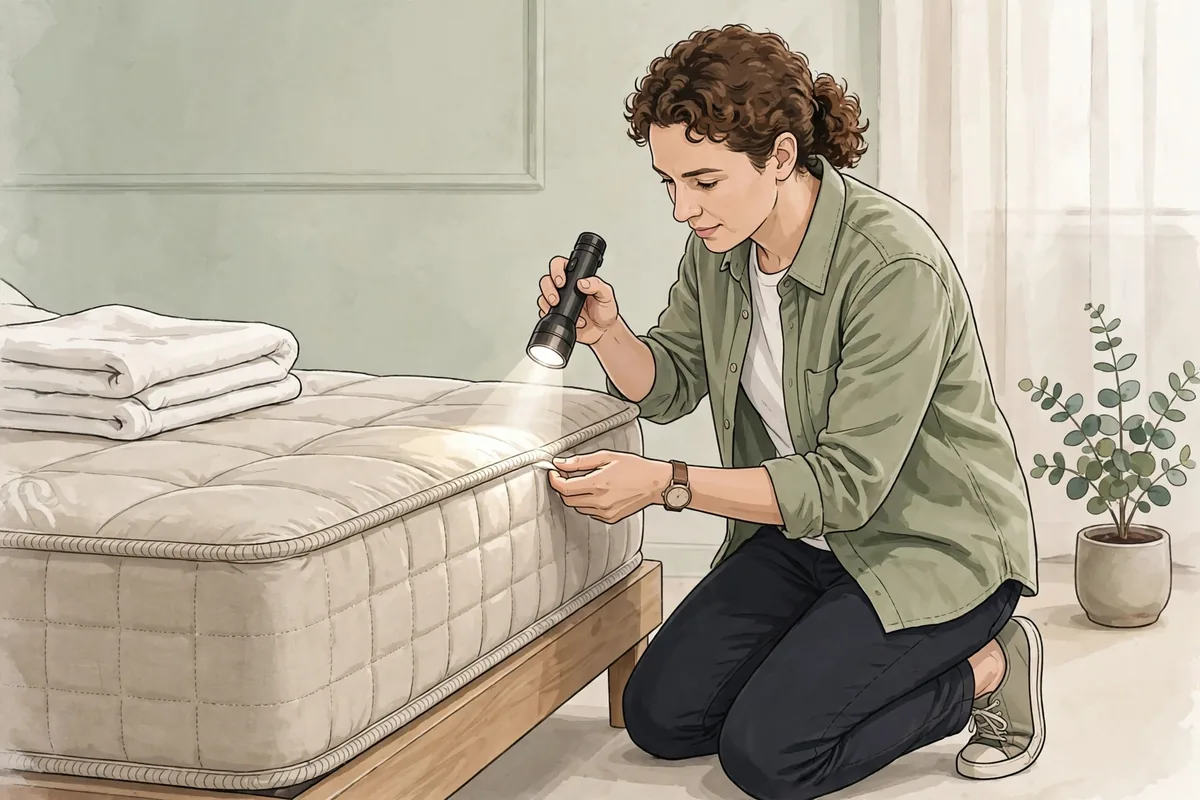
If you want certainty, the bugs beat the bites every time. A careful flashlight inspection of mattress seams, box spring edges, and headboard crevices tells you more than any bite pattern can.
How to estimate when you were bitten #
Since you can’t date an individual bite precisely, work backward like a detective:
- Anchor to travel dates. If bites appeared two days after checking into a hotel, the hotel is the prime suspect — but the reaction can lag several days, so bites appearing the day you get home could still be from the hotel.
- Note the rhythm. Fresh bites each morning point to an active, ongoing source where you sleep — your own bed, most likely. Bites that all appeared at once and then stopped point to a single past exposure, like one bad hotel night.
- Check who else is marked. If everyone in the room is reacting on different days, that’s consistent with one shared source and different personal timelines.
- Look for physical evidence dated to the same window. Fresh blood spots or live bugs mean recent activity; only old shed skins and stains suggest an older or resolved issue.
Keep a simple log for a week: each morning, note any new marks and where. This beats memory and gives a pest professional concrete data to work with.
What to do while you wait for answers #
You don’t need to identify the exact bite night to start protecting yourself:
- Don’t scratch. Scratching feels satisfying but can break the skin and invite infection. An oral antihistamine per label directions can take the edge off the itch; a cold compress helps too.
- Wash and contain. If you suspect a hotel or guest room, keep luggage off the bed and floor, sealed in the bathroom if possible — what to do about bed bug bites in a hotel covers the immediate steps. When you get home, wash everything on the hottest setting the fabric allows and dry on high heat.
- Inspect, don’t assume. Check your own mattress seams and bed frame. Finding no bugs doesn’t prove you’re clear, but finding them proves you’re not — and ends the guessing.
- Track, don’t panic. A daily bite log plus room inspections will reveal the pattern within days. If bites keep appearing at home, call a licensed pest professional rather than timing your way out of an infestation.
- See a clinician if bites look infected. Increasing pain, warmth, swelling, pus, or red streaks mean infection, not just bites — that needs medical attention, not more waiting.
Once bites appear, how long bed bug bites last covers the typical healing timeline and what normal fading looks like versus something that needs a doctor.
Warning signs: when to seek care #
Call 911 immediately if you develop trouble breathing or swallowing, swelling of the face, lips, tongue, or throat, widespread hives, dizziness or fainting, or a racing heartbeat after being bitten — these are signs of a severe allergic reaction. If you carry an epinephrine auto-injector, use it first, then call 911 even if you start feeling better.
Bed bug bites rarely cause emergencies, but seek urgent care if: bites show infection signs (increasing pain, warmth, swelling, pus, or red streaks); you develop a fever; itching disrupts sleep for multiple nights; or you have a known insect-bite allergy and notice swelling beyond the bite sites. Large numbers of bites in a child or older adult also deserve a clinician’s look, since heavy feeding can occasionally contribute to anemia-like symptoms over time.
Frequently asked questions #
Can bed bug bites appear a week later? #
Possible but uncommon — most reactions appear within a few days of feeding. Marks appearing a full week after suspected exposure were more likely bitten more recently than you think — the reaction lag means “appeared Monday” can mean “bitten Saturday.”
Why do I react but my partner doesn’t? #
Different immune responses. Your partner may show little or no visible reaction, may react on a slower timeline (their marks could appear days after yours), or may genuinely have been bitten less. Lack of marks on one person never rules out bed bugs in a shared bed.
Do bites appear faster the second time you’re exposed? #
Often, yes — sensitization tends to make reactions quicker and stronger with repeated exposure. But it’s a tendency, not a guarantee. Don’t use a faster reaction to conclude you’ve “definitely been bitten before,” or a slow reaction to conclude it’s your first time.
If I was bitten last night, will I definitely see marks tomorrow? #
No. While many react within 24 to 48 hours, plenty take several days, and some never show marks. If you found actual bed bugs in the room, treat the infestation as confirmed regardless of your skin — its silence is not evidence of safety.
Medical and editorial note #
This guide offers general information about bed bug bite timing based on clinical observation, not medical advice for your situation. Bite appearance varies widely, and timing estimates can’t identify the exact night you were bitten. If bites look infected, you’re having an allergic reaction, or an infestation is affecting your health or sleep, contact a healthcare professional or a licensed pest management professional.


