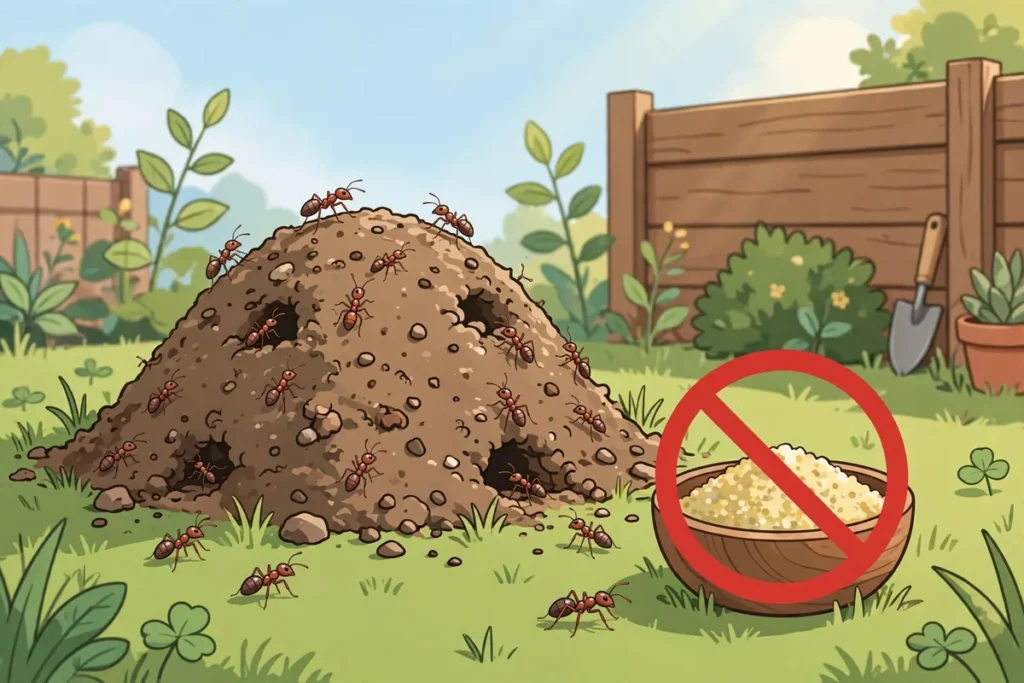
Somewhere in the American South, a neighbor is standing over a fire ant mound with a box of grits. The folk wisdom runs like this: sprinkle dry grits on the mound, the ants eat them, the grits swell with moisture, and the ants burst. It is one of the most persistent home-remedy legends in the region — and entomologists have been debunking it for decades.
So, does grits kill fire ants? No. Grits do not kill fire ants, not even a little. The reason is baked into ant biology: adult fire ants cannot eat solid food at all. This article walks through where the myth came from, why the biology makes it impossible, what university extension experts have found, and — because the mounds are still in your yard — what actually works instead.
Where the Grits Myth Came From
The grits legend is genuine Southern folklore, passed along at church picnics, hardware stores, and family cookouts. Several origin theories circulate. The most plausible, noted by entomologist and science writer Debbie Hadley, is confusion with commercial ant baits: many real fire ant bait products use corn grits as the carrier granule for their active ingredient. Someone saw gritty-looking bait granules scattered near a mound, assumed the grits themselves were the weapon, and a legend was born.
The image of tiny ants swelling up and popping like popcorn is memorable, funny, and just plausible enough to repeat — folklore travels on stories like that. The most careful debunkings are now years old (Hadley’s dates to 2019), which makes some people wonder whether “new research” changed the answer. It has not: the biology is settled, and no serious entomologist has reversed course.
The Biology That Makes It Impossible
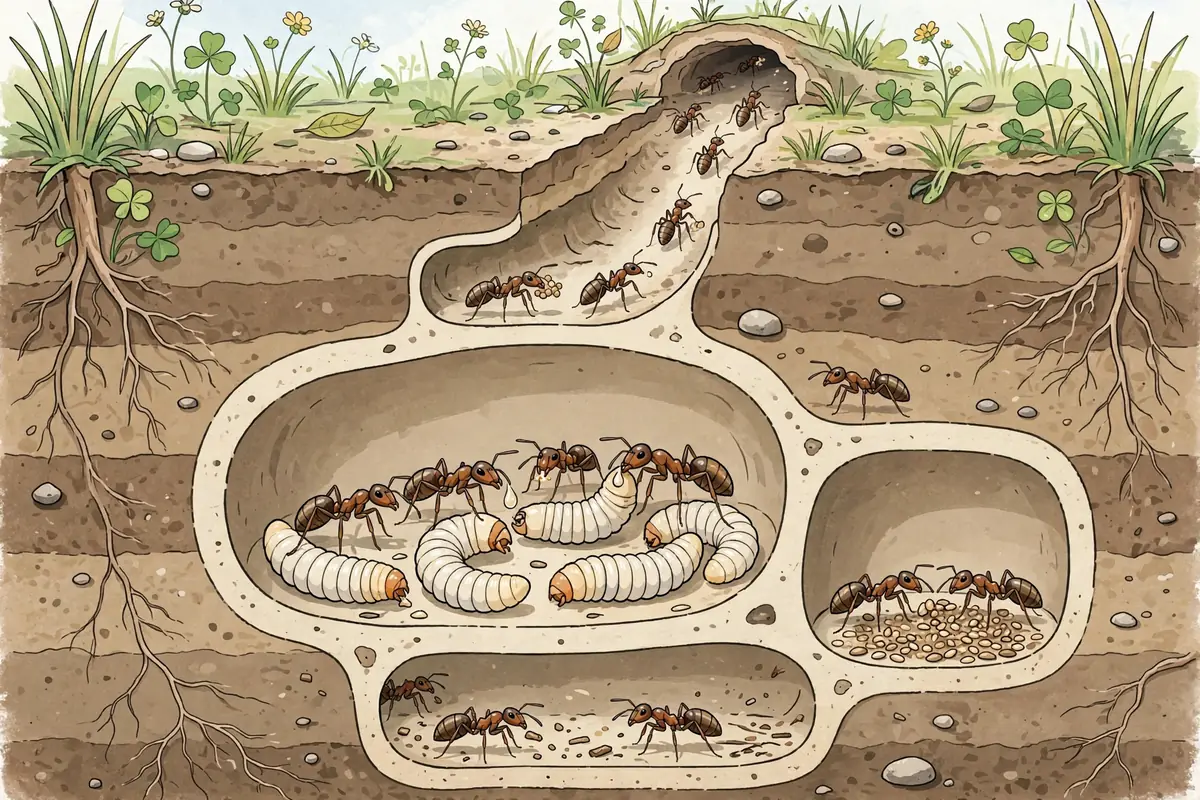
Here is the core fact: adult fire ants cannot ingest solid food particles. Their mouthparts and digestive anatomy only allow them to drink liquids. An adult worker can pick up a grit particle and carry it, but it cannot swallow it. That alone ends the “swell and explode” story before it starts.
So how do fire ants eat anything solid at all? Through the larvae. Foraging workers haul solid food back to the nest and feed it to the colony’s larvae — the soft, pale, worm-like stage. Larvae chew and process the solids, mix them with saliva and digestive enzymes, and regurgitate partially digested liquid food that the adult workers then consume and share around the colony. In other words, by the time any nutrition from a grit particle reaches an adult ant, it is liquid. Nothing solid ever enters an adult ant’s stomach, so nothing can swell inside it and cause it to burst.
A widely cited industry piece from a pest-control entomologist puts it plainly: fire ant workers only drink liquids and cannot ingest solids; larvae eat solid food but chew it and mix it with saliva before swallowing — exactly as we do. There is no mechanism by which dry grits could explode an ant from the inside. And even if grits reached the colony’s food stream, they would not reach the queen in a harmful form. A colony dies only when its queen dies.
What the Extension Experts Found
University extension services in fire ant country have taken this myth on directly, and their verdicts are unanimous.
Mississippi State University Extension ran a myth-buster specifically on fire ant home remedies and put uncooked grits at the top of the list: “Don’t fall for this one!” Their reasoning matches the biology — fire ants may pick up grits, but they do not swell up and explode. The same page takes on club soda (the carbon dioxide theory does not work) and boiling water, which can kill a mound but only with two to three gallons per mound, applied when mounds sit high in spring — and it kills the grass too.
An MSU Extension vegetable specialist separately warned gardeners away from natural remedies including grits, noting that none of them give consistent results. That is the honest frame: not “it never affects a mound,” but “it does not work reliably or as advertised.”
The professional pest-control literature agrees. A well-known industry dos-and-don’ts guide lays it out plainly: the theory is that ants eat dry grits, drink water, and die as the grits expand — the bottom line is that grits do not work, and any perceived effects come from mound disturbance and colony movement. The same applies to dry rice, a close cousin of the grits legend.
Controlled tests of grits and similar materials against fire ant colonies show the colonies survive. When people report that the ants “disappeared” after a grits treatment, extension experts point to the real cause: fire ants are quick to relocate when disturbed. The colony often moves a few feet away and rebuilds — out of sight, but very much alive.
Why People Swear It Worked
The sincerity of grits believers deserves an honest explanation, because they are not lying — they are misreading cause and effect.
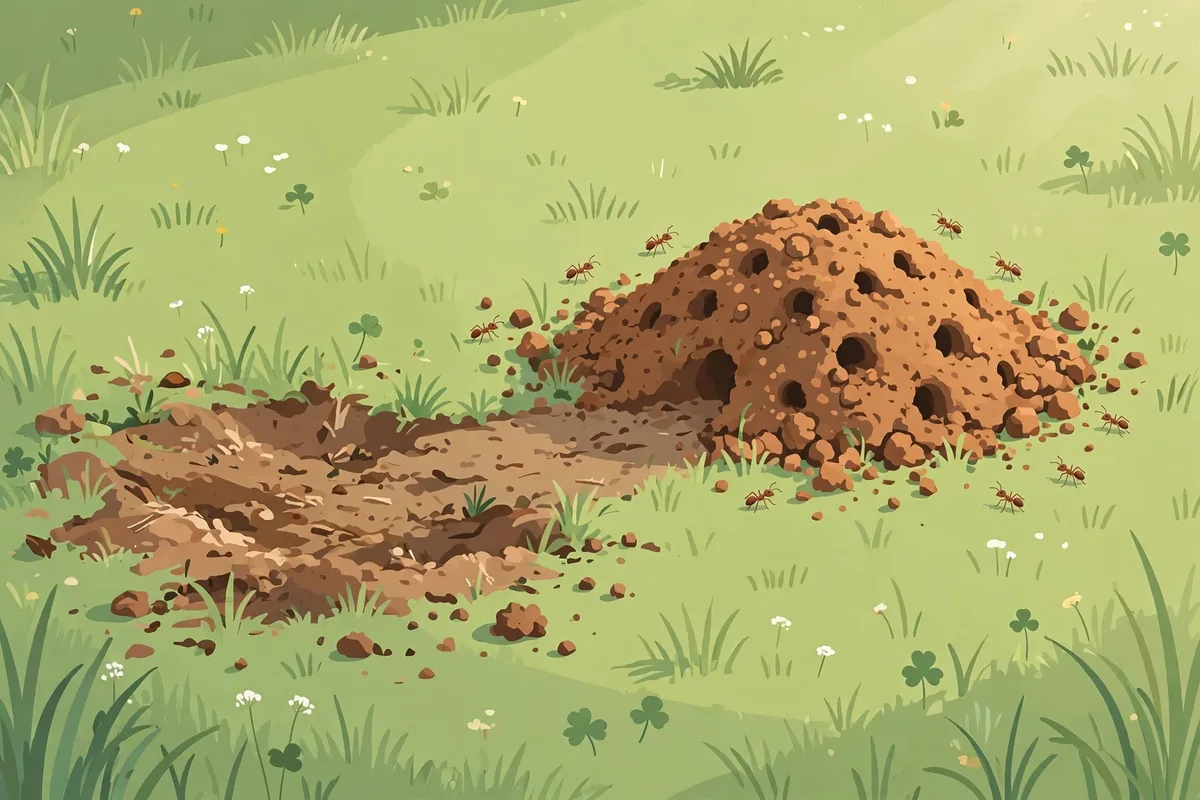
Disturbance relocation. Fire ants respond to disruption by moving. A pile of grits dumped on a mound is a disruption: new material, new smells, physical disturbance of the mound structure. The colony’s response is to shift — sometimes just a few feet, sometimes to a spot you have not found yet. The original mound goes quiet, the grits get credit, and the colony lives on under the patio.
Colony timing. Fire ant colonies rise and fall with seasons and weather. A mound that looks active in spring may quiet down in summer heat or after heavy rain regardless of what you sprinkled on it. Treatments applied just before a natural lull get credit they did not earn.
Misidentification. Not every small reddish ant in the South is a fire ant. Some yards host other ant species that are less aggressive or more transient. A grits treatment “working” on a non-fire-ant colony tells you nothing about fire ants.
Partial disturbance effects. Pouring anything on a mound can kill some surface workers through sheer disruption. A quieter mound is not a dead colony — without the queen, it rebounds, and a new mound often pops up nearby within weeks.
None of this makes grits believers foolish — they witnessed a real phenomenon (the ants left) and attributed it to the wrong cause (the grits killed them).
What Actually Works on Fire Ant Mounds
If the mounds are still there — and they are — here is what fire ant country experts actually recommend. None of it involves the breakfast aisle.
The two-step method. Mississippi State University Extension and other Southern extension services recommend a two-step approach: broadcast bait across the yard to suppress foraging colonies, then treat individual problem mounds directly. Baits work because they exploit the biology grits cannot touch — foraging workers carry bait particles back to the larvae, which process them into food that reaches the queen. Use products specifically labeled for fire ants, and read the label completely before applying. Labels are the law for pesticides, and they specify where, when, and how much to use.
Individual mound treatments. For mounds near play areas, patios, or garden beds, targeted treatments labeled for fire ant mounds can eliminate individual colonies. Apply when ants are actively foraging — typically when soil temperatures are moderate — and follow label directions on watering and timing.
Boiling water — with caveats. Extension experts acknowledge this one can work on individual mounds, but the bar is high: two to three gallons of truly boiling water per mound, applied carefully. It kills grass and plants in the area and can cause severe burns if spilled or splashed. With more than a few mounds, hauling kettle after kettle becomes impractical fast. It is an option of last resort for a single mound, not a yard strategy.
Cultural controls. Thick, healthy turf discourages new queens, which prefer thin, disturbed soil. Keep lawns dense and reduce debris and moisture sources that attract foraging ants.
When to call a professional. Large properties, heavy infestations, or mounds near play areas and allergic residents are good candidates for a licensed pest professional. A pro can apply broadcast treatments at scale and advise on re-treatment timing. Ask about their experience with fire ants specifically — this pest rewards local expertise.
Whatever route you take, skip the grits, the club soda, the dry rice, and the household cleaners. Most of those either do nothing or simply relocate the problem a few feet away.
When to See a Doctor for a Sting
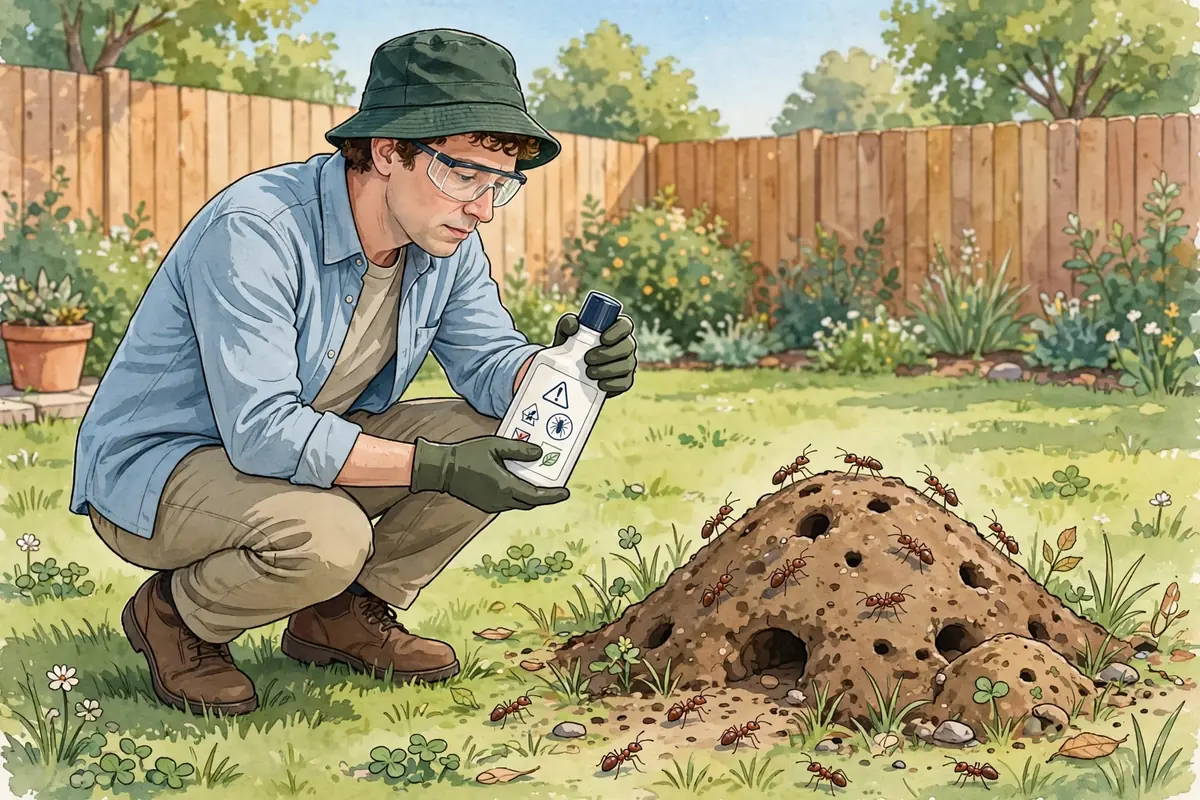
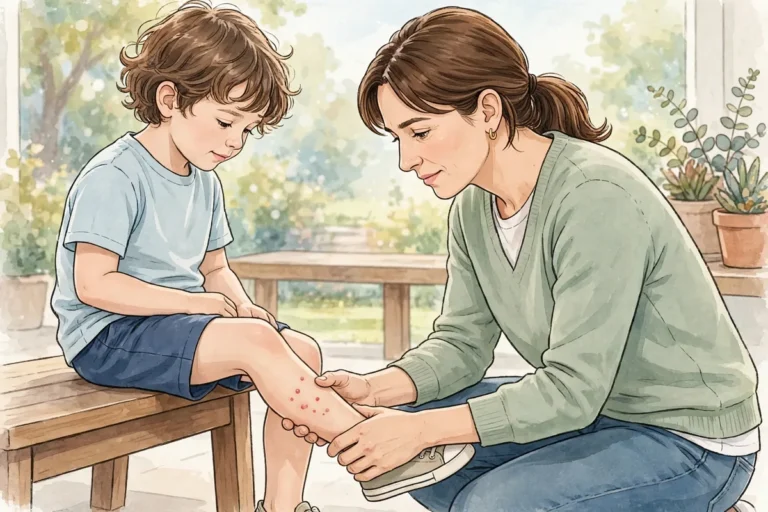
Grits mythology aside, fire ant stings are a real medical topic, and most people who try home remedies on mounds get stung sooner or later. Most stings produce itchy white pustules that resolve on their own — our guide to fire ant sting pustules explains what is normal and what not to do. Seek care if any of the following occur:
- Call 911 immediately for signs of anaphylaxis: difficulty breathing or swallowing, throat or chest tightness, wheezing, dizziness or fainting, a rapid or weak pulse, or swelling of the face, lips, or tongue. Know the anaphylaxis sting warning signs — severe reactions can escalate in minutes.
- Signs of infection (cellulitis): spreading redness, increasing warmth, swelling that worsens after 48 hours, pus, or red streaks moving away from the sting site. Do not pop pustules — opening them invites bacteria in.
- Timeline violations: stings that look worse on day three than day one, or wounds not clearly healing within a week.
- Fever, chills, or swollen lymph nodes after multiple stings.
- Special cases: stings inside the mouth or eyes, a very large number of stings, stings in infants, or anyone with a known fire ant allergy — follow your allergist’s action plan, including prescribed epinephrine, and call emergency services.
For general sting first aid and to reduce the mosquitoes that often share fire ant territory, see our bite and sting first-aid checklist for what to do after a sting.
Frequently Asked Questions
Will grits at least make fire ants move away?
Sometimes, but not reliably and not for the reason people think. Any physical disturbance of a mound can prompt a colony to relocate a few feet away. Grits are just an expensive way to disturb a mound — a shovel does the same thing. Neither kills the colony, and the new mound may end up somewhere worse, like against your foundation.
What about instant grits versus regular grits?
It makes no difference. The myth fails on biology, not on grit texture: adult fire ants cannot ingest any solid particle, instant or otherwise. No formulation of grits changes the anatomy of an ant’s digestive system.
Is there any scientific evidence grits work?
No. Extension services and researchers who have tested grits and similar dry materials against fire ant colonies found them ineffective. The evidence runs entirely the other way: Mississippi State University Extension’s myth-buster page lists grits first among remedies to avoid, and the professional pest-control literature reaches the same conclusion. Older debunkings (2019 and earlier) remain accurate because the underlying biology has not changed.
Why do real ant baits look like grits?
Because many commercial fire ant baits use a corn-grit carrier granule to hold the actual active ingredient. The grit is just the delivery vehicle — the insecticide in the bait is what kills the colony. This visual similarity is the most likely origin of the whole myth: people saw grit-like bait granules working and credited the grits instead of the chemistry.
What is the cheapest method that actually works?
For a single mound, a product specifically labeled for fire ant mounds, applied per label directions, is inexpensive and effective. Boiling water is cheap but risky (burns, dead grass) and impractical beyond one or two mounds. Folk remedies cost time and stings without results.
Medically reviewed by Dr. Sarah Jones, MD.
This article is for informational purposes only and isn’t medical advice. If you’re worried about a bite or sting, talk to a healthcare professional.