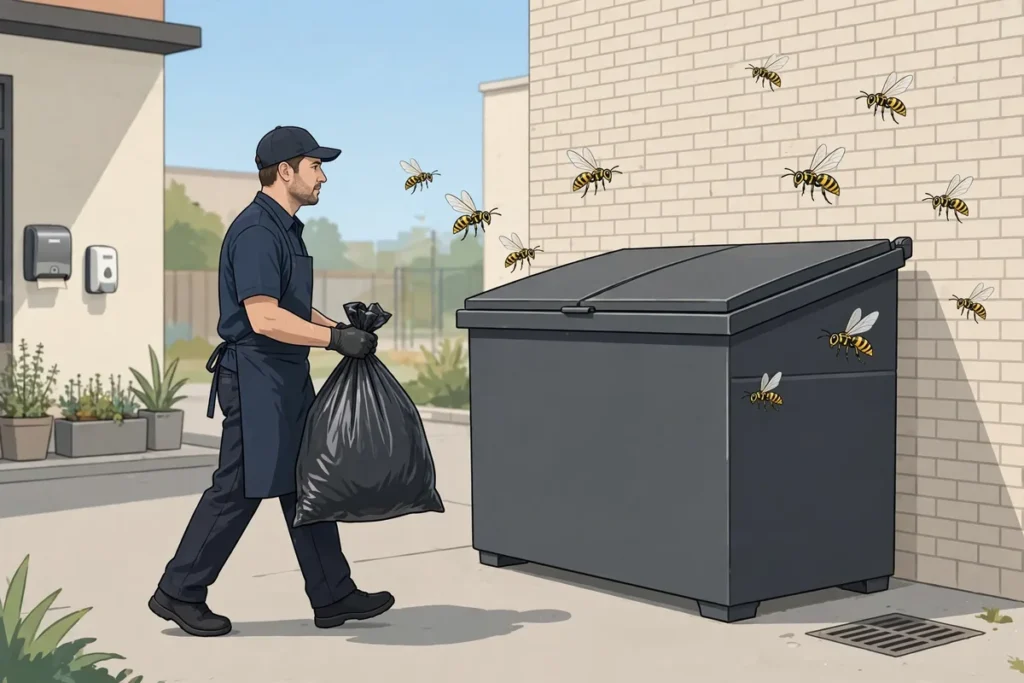
Every September and October, restaurant workers notice the same thing: the trip to the dumpster has gotten hazardous. Yellowjackets crowd the trash enclosure and investigate every bag you carry. For kitchen staff, servers, and bussers on closing duty, this is a genuine occupational sting hazard — and it peaks when colonies are largest and hungriest.
The short version of yellowjackets dumpsters restaurant workers sting safety: fall is peak season because colonies reach maximum size just as natural food runs out, pushing thousands of hungry foragers toward garbage. A few practical habits — tight lids, rinsed containers, spill cleanup, and calm behavior around foragers — cut sting risk dramatically. And if you or a coworker is allergic to wasp stings, this is the season to make sure everyone knows the emergency plan.
This guide covers why dumpsters attract yellowjackets, how these wasps differ from bees, where nests hide around food-service buildings, a practical safety routine for trash duty, and what to do if a sting happens on shift.
Why Yellowjackets Swarm Dumpsters in Late Summer and Fall
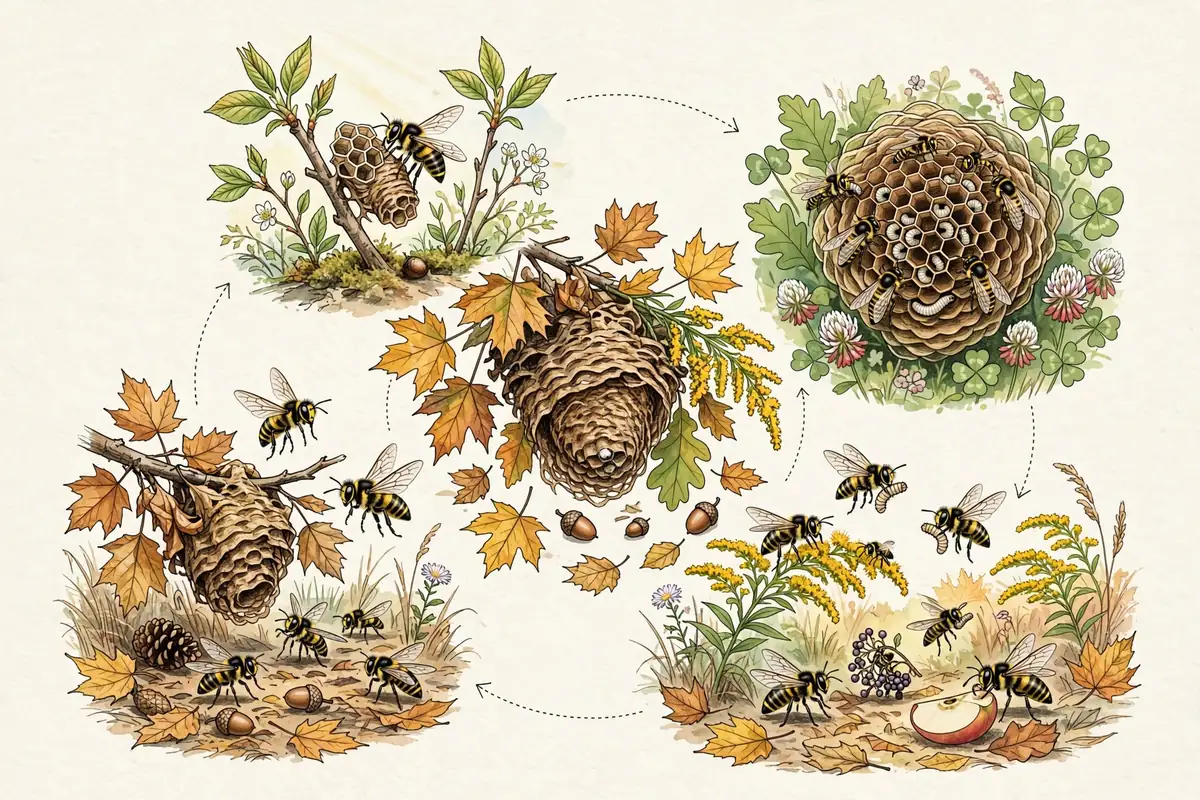
Yellowjackets are around all spring and summer, but most people barely notice them until fall. That is because colonies follow an annual cycle: by late summer into early fall the colony reaches maximum size, sometimes holding thousands of workers. All summer, workers fed the colony’s larvae, which produced a sugary secretion the workers consumed. As fall approaches, the queen stops laying, the larvae dwindle, and workers lose their main sugar source — just as flowers fade and nectar grows scarce.
The result, as Illinois Extension explains in its seasonal yellowjacket guidance, is a huge population of hungry foragers with nowhere natural left to feed, so they turn to human food sources: garbage cans, dumpsters, fallen fruit, sugary drinks, uncovered outdoor food. They are not angrier than they were in June. There are simply far more of them, and they are running out of food.
Yellowjackets are unusual among wasps because workers forage on foods people eat, not just other insects. Virginia Tech’s extension resources describe how fall foraging workers become serious nuisance pests, pestering outdoor diners and scavenging from trash bins and dumpsters. A restaurant dumpster offers both protein and sugar sources, refreshed daily, in a fixed location foragers learn to visit on schedule.
One more detail: yellowjackets can fly a mile or more from their colony to find food, so foragers from other colonies will still visit the dumpster even after one nest is removed. Lasting control means making the trash area unattractive, not just hunting nests.
How Yellowjackets Differ From Bees
Workers stung at the dumpster often say “a bee got me,” but the distinction matters for first aid and risk assessment:
Yellowjackets can sting repeatedly. A honeybee’s barbed stinger tears loose after one sting, killing the bee. A yellowjacket’s stinger is smooth and unbarbed, so one wasp can sting multiple times — and will, if trapped against skin or threatened. This is the single most important fact for anyone working near foragers.
They are defensive, not just curious. A forager investigating your soda can is focused on food. But swat at it, trap it in a sleeve, or step on a ground nest near the dumpster pad, and yellowjackets release alarm chemicals that recruit nestmates. Disturbing a nest can bring dozens of defenders in seconds — which is why calm, non-sudden behavior around foragers is a genuine safety measure.
They are bolder than bees in fall. Yellowjackets measure roughly five-eighths to one inch, with bold black-and-yellow patterning and a narrow waist, folding their wings lengthwise at rest. Unlike bees, they show no interest in flowers in fall — a black-and-yellow insect crawling on a trash bag or drink rim is almost certainly a yellowjacket, not a bee.
Any sting hurts; allergic stings can kill. For most people, a yellowjacket sting means sharp burning pain, then redness and swelling that fade. For people with wasp-venom allergy, a single sting can trigger anaphylaxis. Because a dumpster run can expose a worker to many foragers at once, knowing which coworkers carry epinephrine auto-injectors — and where they are kept — is worth sorting out before peak season. The full warning signs are in our anaphylaxis sting warning signs guide.
Where Nests Hide Around a Restaurant
Foragers at the dumpster may commute from nests a mile away, but restaurants also provide prime nesting real estate. Knowing the likely spots helps managers decide what to inspect and when to call a professional.
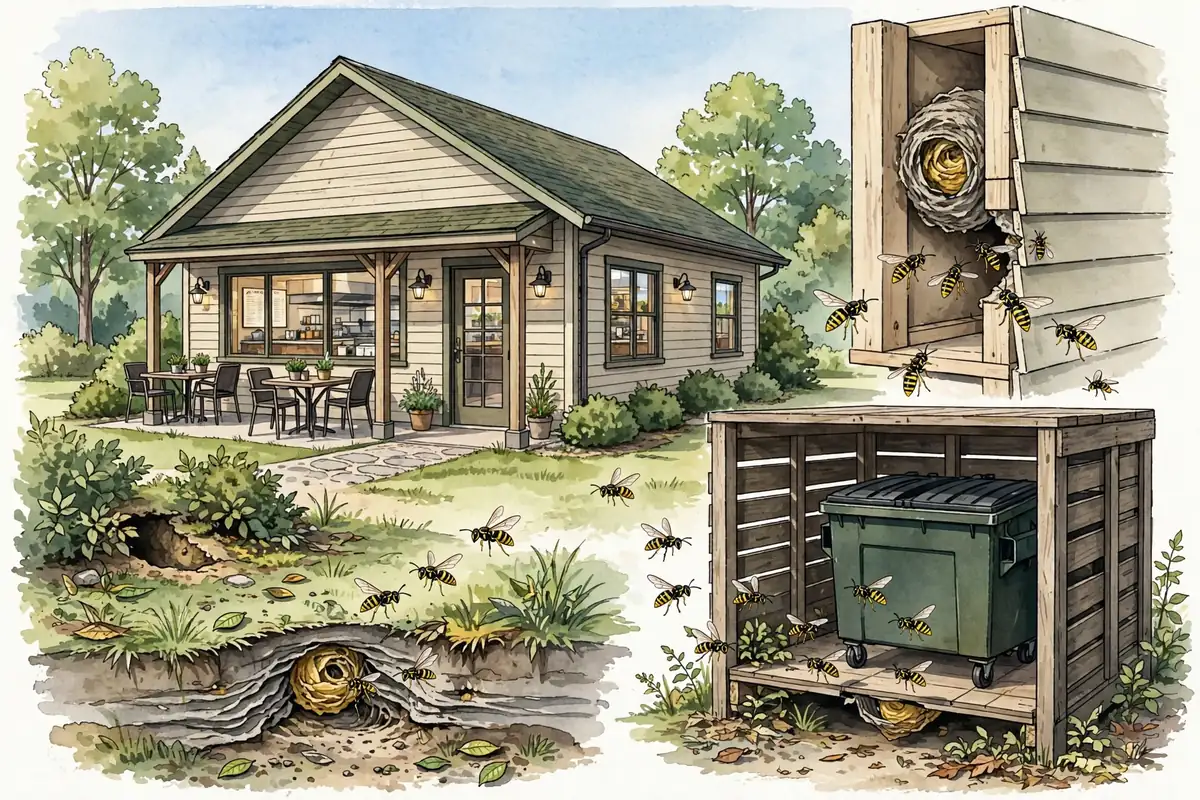
Ground nests are the classic setup: a small hole in a lawn strip, mulched bed, or the dirt beside the dumpster pad, with steady wasp traffic in and out during the day. These are the most dangerous to disturb accidentally — mowing or stepping near the entrance triggers the colony’s defense response. Anyone doing grounds work near the dumpster should watch for this traffic pattern before starting equipment.
Wall voids and structural gaps are the second favorite. Yellowjackets nest inside wall cavities, entering through gaps around utility lines, vents, or damaged siding. If workers report wasps appearing inside — near the back door, in dry storage, around windows — a nest may be in the structure itself. Do not seal the entrance without professional guidance: trapping a colony inside a wall can drive wasps further indoors.
Dumpster enclosures and clutter offer sheltered nesting and foraging in one package. Hollow fence posts, stacked pallets, and piled cardboard all provide the cavities wasps like. Keeping the enclosure clear of debris removes both nesting sites and foraging cover.
The rule for staff: locate nests by watching during the day, when workers fly in and out regularly — then leave treatment to professionals, who treat nests late at night with the right equipment and protective gear. A large fall colony can hold thousands of defensive workers; this is not a job for a spray can at noon.
A Dumpster-Area Safety Routine for Food-Service Staff
You cannot change the yellowjacket life cycle. What you can do is make your dumpster area the least attractive food source on the block. Extension and pest-management guidance converges on two moves: limit food sources and seal entry points. Translated to a restaurant routine:
Lid discipline is everything. Dumpster lids must close fully, every time. Lids propped open, bags piled beside a full bin, and broken or missing lids are the top attractants. Make “lids closed and latched” part of the closing checklist, and report damaged dumpsters to the waste hauler — a lid that will not close is a maintenance issue with sting consequences.
Rinse containers before they go in the trash. Sugary drink cups, sauce containers, and food-soiled packaging are the highest-value targets. A quick rinse of the worst offenders before bagging removes most of the attraction — especially important for outdoor dining operations generating a constant stream of sweet residue.
Clean up spills on a schedule. Sticky residue on the dumpster pad, patio tables, and grill-side shelves draws sugar-hungry workers. Wipe down surfaces after service periods rather than leaving residue overnight; even small amounts of dried soda can draw surprising numbers of foragers by morning.
Time trash runs strategically. Foraging peaks during warm daylight hours. Schedule big trash and cardboard runs for early morning or evening when possible. At minimum, do not linger: deposit the bag, close the lid, walk away. Do not eat or drink inside the trash enclosure.
Dress and behave defensively. Avoid bright yellow clothing on trash duty — yellow attracts many day-flying insects. If a yellowjacket investigates you, do not swat: Illinois Extension advises gently brushing or blowing the wasp away, since sudden swatting motions trigger stings. Set food or drinks down, step away slowly, and let the forager lose interest.
Secure the building. Keep back doors closed rather than propped, check window screens, and seal gaps around the trash-area door. Foragers that learn the kitchen is a food source start coming inside. For broader guidance covering delivery drivers, landscapers, and other outdoor workers, see our outdoor worker insect bite and sting prevention guide.
First Aid After a Sting at Work
Despite precautions, stings happen — especially in September and October. The response sequence:
1. Get away calmly. Walk — do not run or flail — away from the dumpster or nest area. Yellowjackets sting repeatedly and alarm chemicals draw more wasps, so distance comes first.
2. Treat the sting. Wash with soap and water, apply a cold compress, and consider an over-the-counter pain reliever or antihistamine as the label directs. Watch the area over the next day or two. Our first 10 minutes after a sting guide walks through these steps in detail.
3. Watch for allergic reaction. Difficulty breathing, throat tightness, facial or lip swelling, widespread hives, dizziness, or fainting mean anaphylaxis — call 911 immediately. If the person has an epinephrine auto-injector, help them use it without delay.
4. Respect multiple stings. Even without allergy, dozens of stings at once can cause a toxic reaction — large swelling, nausea, dizziness. Anyone who disturbs a nest and takes many stings should be evaluated medically, not sent back to the line with an ice pack.
5. Document the incident. A sting at work is a workplace injury. Record what happened, where, and what was done — recurring stings at the same dumpster signal a hazard needing a fix (a nest, a broken lid, a sanitation gap).
For managers: before peak season, discreetly ask staff whether anyone has a known bee or wasp sting allergy and carries an epinephrine auto-injector at work. Posting the anaphylaxis warning signs in the break room costs nothing and could matter enormously in October.
When to See a Doctor for a Sting

Most yellowjacket stings need only home care. Seek medical attention if:
- You show any anaphylaxis signs — call 911: difficulty breathing, throat tightness, facial swelling, widespread hives, dizziness, fainting
- You sustained many stings at once, especially after disturbing a nest
- Swelling is severe, spreads extensively, or involves the face, mouth, or throat
- The sting site shows infection signs days later: increasing redness, warmth, swelling, or pus
- Pain and swelling worsen after 48 hours instead of improving
Frequently Asked Questions
Why are yellowjackets suddenly everywhere around our dumpster in September?
September into October is prime yellowjacket season. Colonies reach maximum size — sometimes thousands of workers — just as flowers fade and the colony’s larvae stop producing the sugary food workers rely on. Hungry foragers shift to human food sources: garbage, fallen fruit, sugary drinks. They are not angrier than in summer; there are more of them and less natural food.
Can yellowjackets sting more than once?
Yes. Unlike honeybees, whose barbed stingers tear out after one sting, yellowjackets have smooth, unbarbed stingers and can sting repeatedly. That is why staying calm and moving away slowly matters more than swatting — a trapped or provoked yellowjacket will keep stinging.
Will removing a nest near our restaurant solve the dumpster problem?
Partially at best. Yellowjackets fly a mile or more to find food, so foragers from other colonies will still visit an attractive dumpster. Nest removal helps when the nest is on your property and poses a direct threat, but lasting control depends on food-source management: closed lids, rinsed containers, spill cleanup.
Are yellowjackets attracted to specific colors or smells?
They are strongly drawn to sweet and protein odors — soda, fruit, meat scraps, garbage — and show interest in the color yellow, a general attractant for day-flying insects. On trash duty, unscented products and light-colored, non-yellow clothing are the sensible choice.
What should I do if a coworker is stung and starts having trouble breathing?
Treat it as an emergency: call 911 immediately, help the person use their epinephrine auto-injector if they have one, and keep them still while waiting for help. Difficulty breathing, throat tightness, or facial swelling after any sting are anaphylaxis warning signs — act first and assess later.
Medically reviewed by Dr. Sarah Jones, MD.
This article is for informational purposes only and isn’t medical advice. If you’re worried about a bite or sting, talk to a healthcare professional.