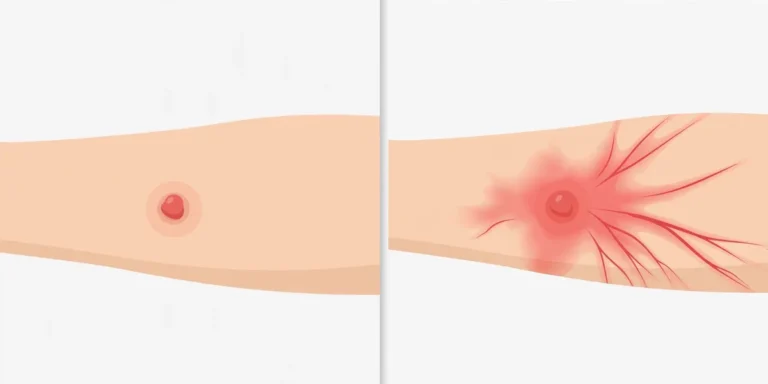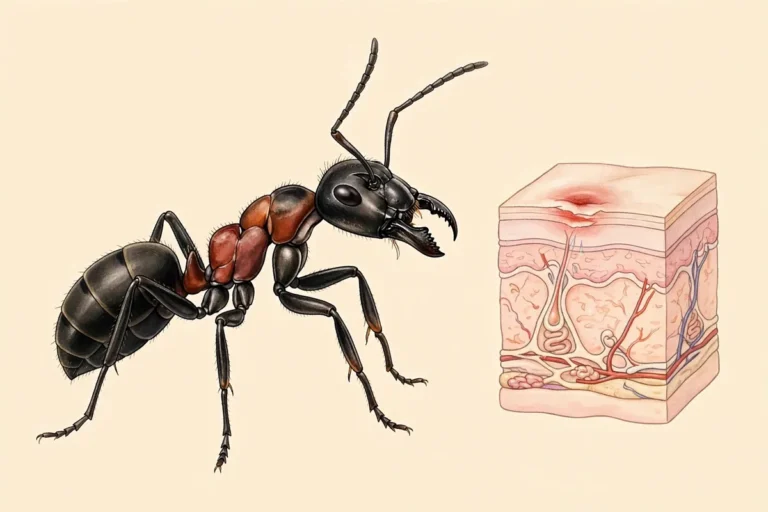
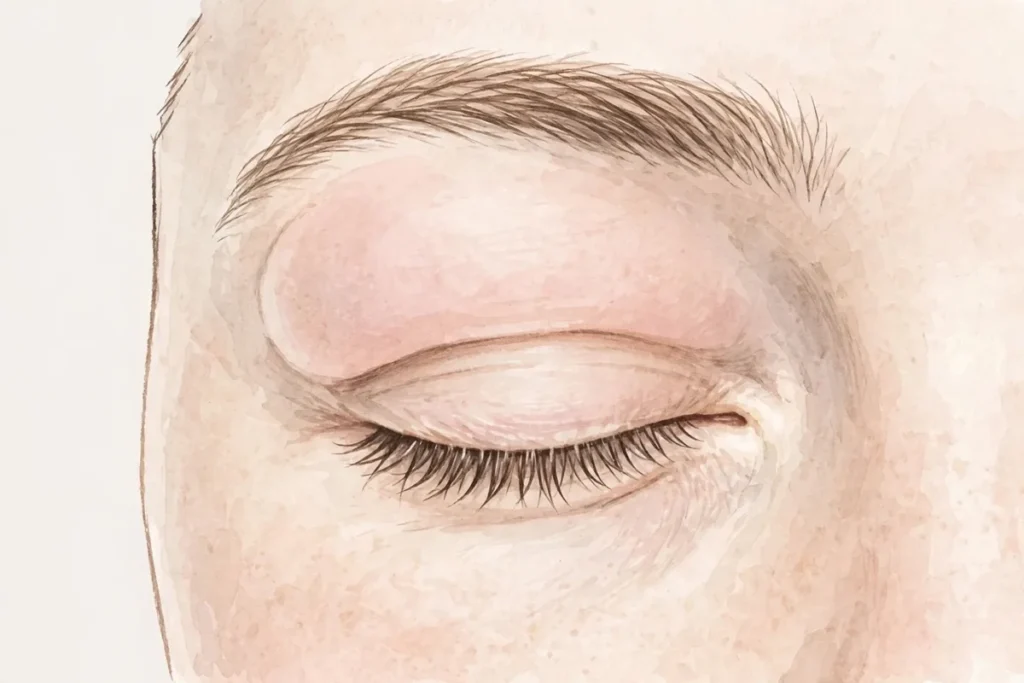
A bee sting on the eyelid is frightening out of proportion to its usual medical severity — the swelling can be so dramatic that the eye swells completely shut within hours, which looks like an emergency even when it isn’t. Eyelid tissue is thin, loose, and highly vascular, which means it swells more, faster, than almost any other sting location. This guide explains why the reaction looks so alarming, the safe first-aid steps specific to the eye area, how to remove a stinger near the eye, what must never go on or in the eye, the vision and eye-movement warning signs that change the picture, how long the swelling lasts, and when to get medical care.
Why Eyelid Stings Swell So Dramatically
The eyelid is anatomically designed to swell. The skin of the eyelid is the thinnest on the human body (under 1 mm), the underlying tissue is loose areolar connective tissue with almost no fat to resist fluid accumulation, and the area is richly supplied with blood vessels. When venom triggers the inflammatory cascade — histamine release, vasodilation, increased capillary permeability — fluid pours into tissue that offers no resistance. The result: swelling that can close the eye completely, sometimes within 1–2 hours.
This dramatic presentation causes most of the panic. Parents seeing their child’s eye swollen shut, or adults looking in the mirror at a face they barely recognize, reasonably assume something terrible is happening. In most cases, what’s happening is a normal local reaction in abnormally swell-prone tissue. The same amount of venom that produces a 1-inch bump on the forearm produces a shut eye on the eyelid — same reaction, different real estate.
Two factors can make it worse: stings on or very near the eyelid margin (closer to the eye itself), and rubbing the eye afterward, which mechanically spreads venom and inflammatory mediators through the loose tissue. The first thing to do — after the standard “get away from the bee” — is hands off the eye.
It’s also worth knowing that periorbital swelling (around the eye) from a sting elsewhere on the face can mimic an eyelid sting. A sting on the cheek, temple, or forehead can produce swelling that migrates to the eyelid through the loose tissue planes. The treatment is the same; the distinction just helps you find the actual sting site.
First Aid: Cold Compresses and What to Avoid Near the Eye
Eye-area first aid follows the same principles as elsewhere, with tighter safety margins:
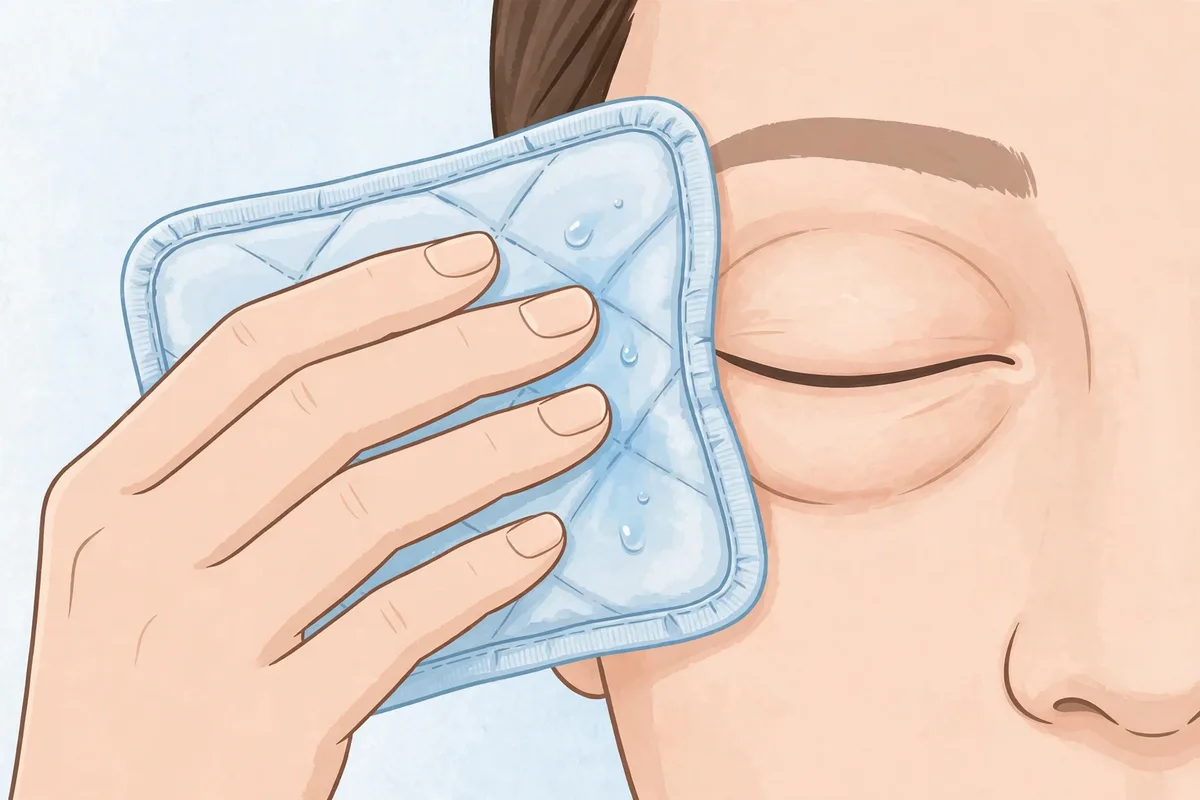
Cold compress — the cornerstone. Apply a cold compress (ice wrapped in a thin clean cloth, a bag of frozen peas in a towel, or a cold damp washcloth) gently against the closed eyelid for 10–15 minutes at a time, with breaks between. Cold constricts blood vessels, limits swelling, and numbs pain. Repeat several times over the first day. Never apply ice directly to the eyelid skin, and don’t press hard — gentle contact is enough.
Keep the eye closed and rested. If the swelling hasn’t closed it, keeping the eye closed reduces irritation and the urge to rub. For children, an eye patch or simply dimming the room can help them leave it alone.
Oral antihistamines. Cetirizine or loratadine (non-drowsy) as directed can reduce the histamine-driven swelling and itching. Diphenhydramine at night if discomfort interferes with sleep. These are safe for the eye-area reaction and are the main pharmacological tool for it.
Oral pain relievers. Ibuprofen or acetaminophen as directed for pain and throbbing.
What to avoid near the eye: Don’t rub the eye — this is the hardest instruction and the most important. Don’t apply heat. Don’t use any topical creams, ointments, or “sting relief” products on the eyelid unless specifically directed by a clinician — the eyelid skin absorbs readily and the eye itself is inches away. Don’t try to “drain” or squeeze the swelling. Don’t wear contact lenses until the swelling and irritation have fully resolved. Don’t apply makeup to the area while it’s healing.
Hygiene: Wash your hands before touching anywhere near the eye, and use a clean cloth for each compress application. The eye area is vulnerable to secondary bacterial infection (including styes and, rarely, periorbital cellulitis), and clean handling reduces that risk.
Removing the Stinger Safely Near the Eye
If the bee was a honey bee, it likely left its barbed stinger embedded in the skin with the venom sac attached — and near the eye, you want it out quickly but carefully. (For the full technique comparison, see scrape vs. tweezers for stinger removal.)
Speed matters more than method. The venom sac continues pumping venom into the skin after the bee is gone, so removal within the first minute or two meaningfully reduces the venom dose. Don’t spend five minutes debating technique while venom keeps flowing.
The scrape method is preferred near the eye. Use the edge of a credit card, a blunt butter knife, or your fingernail to scrape across the skin surface and flick the stinger out sideways. Scraping avoids squeezing the venom sac — the main risk with tweezers is pinching the sac and injecting the remaining venom in one bolus.
If you must use tweezers (because the stinger is the only visible option and you have clean, fine-tipped tweezers), grasp the stinger as close to the skin surface as possible — below the venom sac, not around it — and pull straight out steadily. Don’t dig, don’t twist.
Special eye-area cautions: Work in good light, ideally with someone helping — fine motor work centimeters from the eye is harder solo. If the stinger is on the eyelid margin (the lash line) or you can’t clearly see what you’re doing, don’t probe blindly — get medical help for removal. If the stinger appears to be in the eyeball itself (extremely rare, but possible with a direct hit), do not touch it — cover the eye lightly and seek emergency care immediately.
After removal, clean the area gently with mild soap and water (keeping soap out of the eye), and resume cold compresses.
What Never to Put on or in the Eye
The eye is the one place where well-meaning home remedies can cause real harm. Absolute don’ts:
- No eye drops unless prescribed — no “redness relief” drops, no antihistamine drops you happen to have, no homemade saline. Unnecessary drops irritate an already inflamed eye, and some contain vasoconstrictors or preservatives that don’t belong on a sting injury.
- No topical steroids or antibiotic ointments on the eyelid without a clinician’s direction. Steroid creams near the eye can raise intraocular pressure and mask infection; antibiotic ointments are for diagnosed bacterial issues, not routine sting care.
- No home remedies — no baking soda paste, no vinegar, no essential oils, no meat tenderizer, no toothpaste. On eyelid skin these irritate; near the eye itself they’re dangerous.
- No heat — warm compresses are for styes and blocked glands, not acute sting swelling. Heat increases blood flow and worsens the swelling.
- No pressure bandaging of the eye.
If something gets in the eye accidentally during first aid (soap, a cream), flush gently with clean lukewarm water or sterile saline — a gentle stream, not a blast — and seek advice if irritation persists.
Vision and Eye-Movement Warning Signs
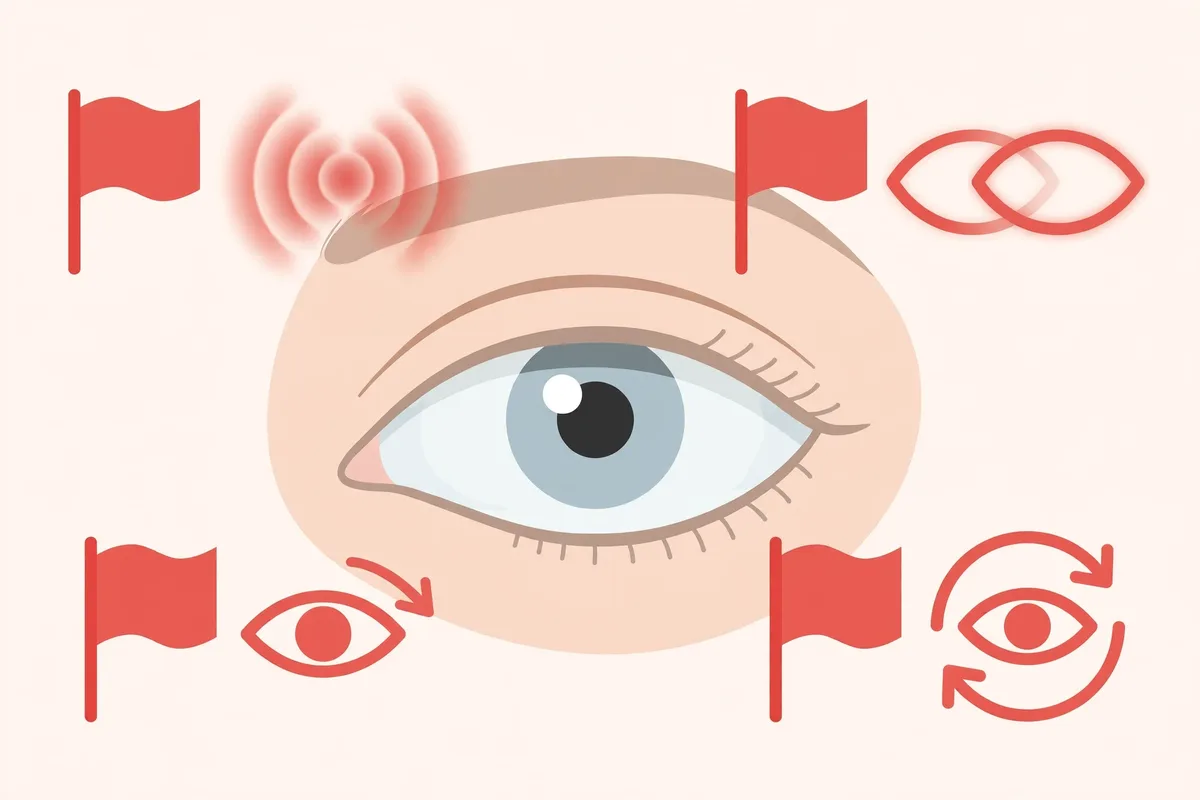
Most eyelid stings affect only the lid, with the eyeball itself untouched. But certain signs indicate the reaction involves the eye or the tissues around it more seriously, and they change the urgency:
Seek prompt medical care for:
– Any change in vision — blurriness, double vision, decreased sharpness, or blind spots in the affected eye. Test each eye separately (cover one, then the other) — people often don’t notice a deficit in one eye until they check.
– Eye pain beyond the lid — a deep ache inside the eyeball, or pain when moving the eye, suggests involvement beyond the skin.
– Restricted eye movement — if the eye doesn’t track normally or moving it hurts significantly.
– The eyeball itself looks affected — marked redness of the white of the eye, swelling of the conjunctiva (chemosis — looks like a jelly-like swelling over the white), or any discharge.
– Swelling that spreads — redness and swelling extending well beyond the eyelid onto the cheek and forehead with increasing pain and warmth may indicate periorbital cellulitis, a bacterial infection needing antibiotics.
– Fever accompanying the eye swelling.
– No improvement after 48–72 hours, or swelling that’s still worsening at day 3–4.
Emergency signs (call 911 or go to the ER): sudden vision loss, severe eye pain, a penetrating injury to the eyeball, or any anaphylaxis signs (breathing difficulty, facial/lip/tongue swelling beyond the sting side, hives elsewhere, dizziness).
A useful test while monitoring: can you see normally out of the swollen eye when you gently hold the lid open? If vision is normal and the eyeball looks and moves normally, the problem is confined to the lid — alarming-looking but typically self-limiting.
How Long Eyelid Swelling Usually Lasts
Eyelid sting swelling follows the standard inflammatory timeline but looks more dramatic at every stage:
- Hours 0–6: Rapid swelling, often progressing to the eye being partially or fully shut. This is the frightening phase. Cold compresses and antihistamines started early help limit the peak.
- Day 1–2: Maximum swelling. The eye may remain shut. Itching begins as pain fades.
- Day 3–4: Swelling begins to recede — often quite rapidly once it turns, because the loose tissue drains as easily as it filled. The eye typically starts opening again.
- Day 5–7: Residual puffiness, possibly some bruise-like discoloration (a yellowish or purplish tint is common as blood products from the inflammation clear — it looks like a fading black eye and is harmless).
- Week 2: Usually fully resolved, though a small firm area at the exact sting site can linger briefly.
The shut eye typically reopens within 2–4 days. If the eye is still completely swollen shut at day 4–5 with no improvement, or if any of the warning signs above appear, get evaluated rather than continuing to wait.
For comparison with stings elsewhere and the general trajectory of normal vs. abnormal healing, the bee sting swelling timeline guide covers the day-by-day pattern in detail.
When to See a Doctor
Eyelid stings warrant a lower threshold for medical evaluation than stings elsewhere, because the stakes of missing an eye-involving complication are higher. See a clinician promptly for:
- Any vision change, eye pain beyond the lid, or abnormal eye movement
- Redness of the eyeball, conjunctival swelling, or discharge
- Spreading redness with increasing pain and warmth (possible periorbital cellulitis)
- Fever accompanying the swelling
- A stinger you can’t safely remove yourself, or any suspected injury to the eyeball
- Swelling still worsening at day 3–4, or an eye still shut at day 5
- Known severe insect allergy — mention it even if the current reaction looks purely local
- Children with eyelid stings — pediatricians generally want to know, and the examination is quick
What the clinician may do: examine the eye itself (visual acuity, eye movements, the conjunctiva and cornea, sometimes with fluorescein dye to check the corneal surface), remove a retained stinger under proper visualization, prescribe antibiotic drops or ointment if bacterial infection is suspected, or prescribe a short course of oral steroids for severe swelling. They can also confirm the reassuring diagnosis — “it’s just the lid, the eye is fine” — which is worth the visit for peace of mind alone.
For stings elsewhere on the body, standard honey bee sting first aid applies — the eyelid is the special case, not the rule.
Frequently Asked Questions
Will my eye stay swollen shut?
No — not permanently. The dramatic shut-eye phase typically lasts 1–3 days, with the eye reopening as swelling recedes around days 3–5. Complete resolution usually takes about a week. If the eye is still fully shut at day 5, get evaluated.
Can a bee sting on the eyelid damage vision?
A sting confined to the eyelid tissue doesn’t damage vision — the swelling is in front of the eye, not in it. Vision is at risk only if the venom or inflammation involves the eyeball itself (cornea, conjunctiva) or if there’s a direct injury to the eye. That’s why the vision checks in this article matter: normal vision with a swollen lid is reassuring.
Should I take an antihistamine for a swollen eyelid sting?
Yes — oral antihistamines (cetirizine, loratadine) as directed are appropriate and are the main medication for reducing the histamine-driven swelling. They’re safe for this purpose in adults and in children’s formulations for kids (follow package age guidance).
Is the yellowish bruise-like color after the swelling goes down normal?
Yes. As the inflammatory fluid and minor blood-vessel leakage clear, the eyelid often goes through bruise-like color changes — purplish, then yellowish-green — before returning to normal. It looks alarming but it’s just the cleanup phase, similar to a fading black eye.
My child was stung on the eyelid — should I go to the ER?
Not automatically. If the child is breathing normally, has no hives elsewhere, no facial swelling beyond the sting side, and the eye itself (when you gently open the lid) looks normal with normal vision responses, you can start home care (cold compress, antihistamine per package directions) and call your pediatrician for guidance. Go to urgent care or the ER for any vision concern, spreading redness with fever, a stinger you can’t remove, or any anaphylaxis sign.
This article is for informational purposes only and isn’t medical advice. If you’re worried about a bite or sting, talk to a healthcare professional.