Carpenter ant bite treatment rarely requires emergency care, but it does require knowing what you’re dealing with — because a carpenter ant “bite” isn’t really a single event. These large ants grip the skin with powerful mandibles and then spray formic acid into the wound, producing a sharp, burning pain that surprises most people. Unlike fire ants, carpenter ants don’t sting and don’t form pustules, so the aftercare is different. This guide covers how to identify the ant, what the bite looks and feels like, the first-aid steps that actually help, and the warning signs that mean it’s time to call a doctor.
How to Identify a Carpenter Ant
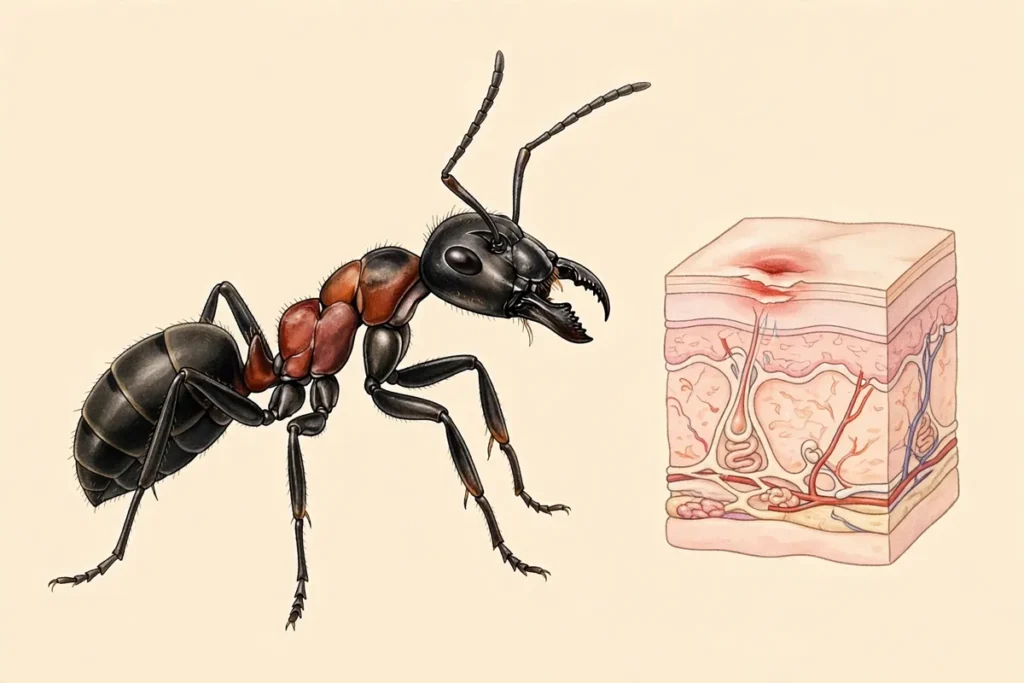
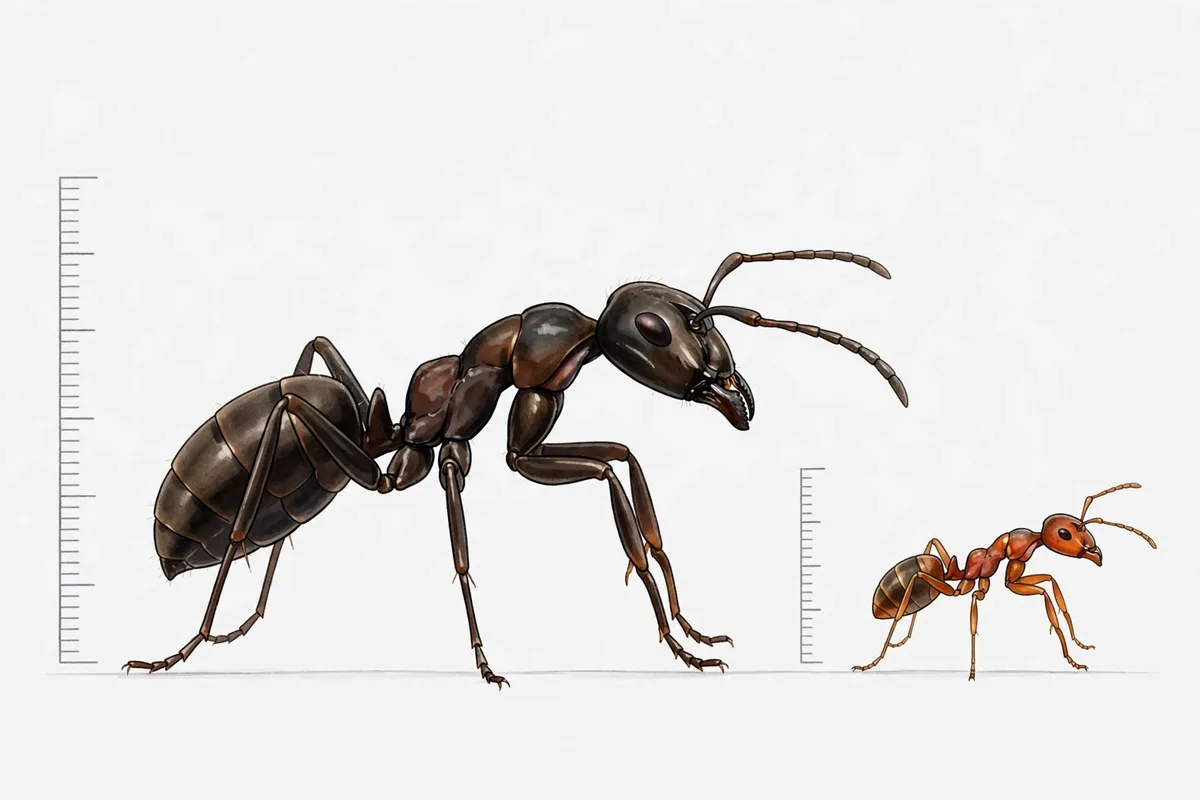
Carpenter ants are among the largest ants you’ll encounter in North America, typically 6 to 13 mm long (about 1/4 to 1/2 inch), noticeably bigger than the tiny fire ants most people know. Workers are usually black, though some species have a dark reddish-brown thorax. Their bodies have the classic three-segmented ant shape with a single node (bump) between the thorax and abdomen, and their antennae are elbowed.
Where you find them matters for identification. Carpenter ants excavate galleries in wood — they don’t eat it like termites, they chew it out to build nests. You’ll encounter them in or near wooden structures, stumps, logs, and trees, and indoors along baseboards, window frames, and damp wooden areas. They often forage at night, and winged swarmers appear in spring. If a large black ant bit you inside your house near wood trim, or while you were handling firewood, a carpenter ant is the prime suspect.
One more identifier: carpenter ants have no stinger. If the ant gripped you with visible jaws and the pain came with a burning sensation rather than the sharp venom-injection feeling of a wasp, that matches the carpenter ant pattern. They’re also less likely to attack in swarms — a carpenter ant bite is usually a single, defensive nip rather than the dozens of coordinated stings you’d get from stepping on a fire ant mound.
What a Carpenter Ant Bite Looks and Feels Like
The bite itself is mechanical: the ant’s mandibles pinch and break the skin. Most people describe an immediate sharp pinch or sting, followed within seconds by a burning sensation that can last 15 minutes to an hour or more. This is the formic acid doing its work.
Visually, expect a small red mark or a raised welt at the site. Unlike a mosquito bite, there’s no white center or hive-like swelling in the typical case. Unlike a fire ant sting, there’s no white pustule that develops a day later — if you see a pus-filled blister forming, that suggests a different culprit (or a secondary infection). The carpenter ant site may develop a small red ring of irritation and can feel hot to the touch for a while. Swelling is usually modest — a quarter-sized area or less — and fades over one to two days.
Pain level is the surprise factor. Carpenter ant bites hurt more than their appearance suggests, precisely because of the acid. People bitten on fingers or hands — common when handling wood — report throbbing pain that makes the finger feel stiff. The good news: the pain peaks early and declines steadily. If pain is worsening after the first day, something else is going on.
Formic Acid: Why the Bite Burns
Carpenter ants belong to the genus Camponotus, and like many formicine ants, they defend themselves with formic acid — the simplest carboxylic acid, and the same compound that makes certain caterpillar stings and nettle stings burn. When threatened, the ant bites down and flexes its abdomen forward, spraying or dribbling acid into the wound its mandibles just made.
Formic acid is an irritant, not a true venom with neurotoxins. It causes an immediate chemical burn sensation on exposed nerve endings in the broken skin. This is why the pain has that distinctive acid-burn quality — sharp, hot, and “chemical” — rather than the deep ache of a bee sting or the itchy histamine response of a mosquito bite.
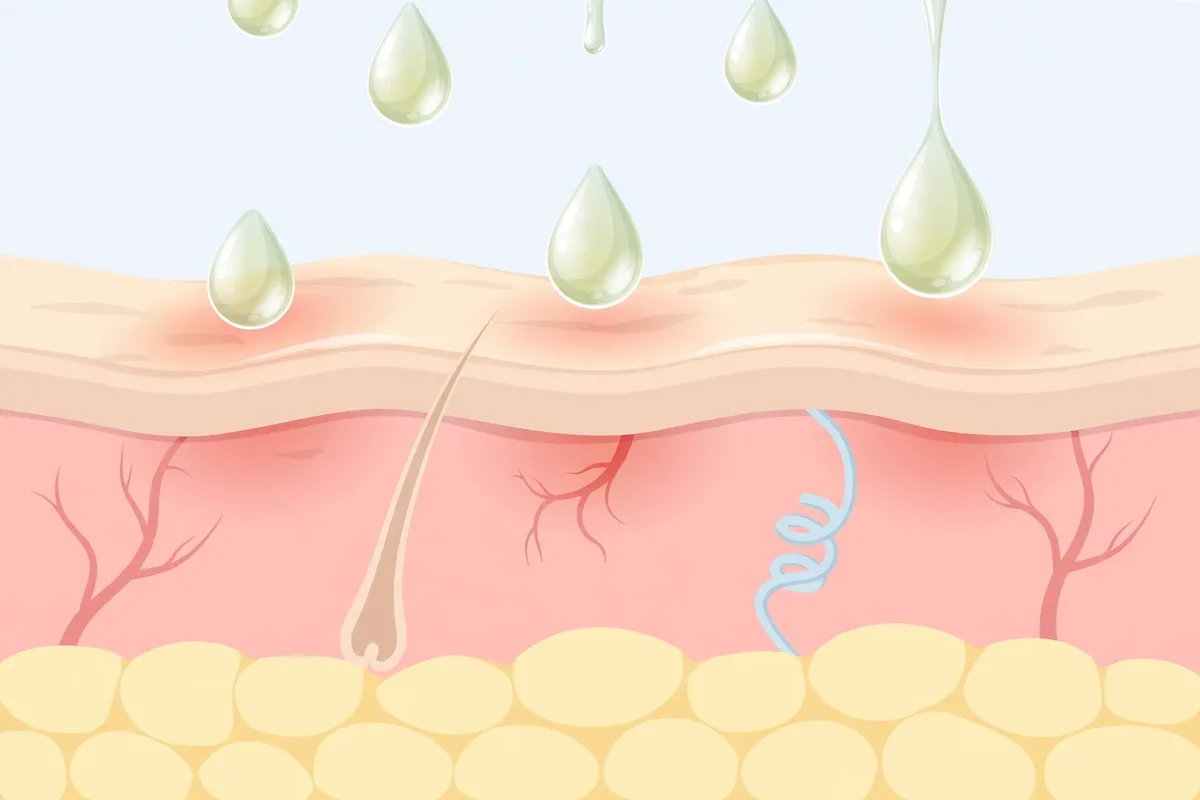
The practical consequence: formic acid is water-soluble, so prompt washing actually neutralizes and removes the irritant — a rare case where the very first first-aid step directly counteracts the cause of pain. It also explains why the pain, while intense, is short-lived compared to stings that inject protein venoms designed to keep hurting. And it’s worth knowing that allergic reactions to formic acid are uncommon, though not impossible — most reactions are local irritation, not immune responses. Still, anyone with a known severe insect allergy should treat any bite with extra caution.
First Aid Steps: Clean, Cool, Protect
Carpenter ant bite treatment follows the standard wound-care triad, and order matters — especially the “clean” step, because washing removes the formic acid.
1. Get the ant off and wash immediately. Brush the ant away (don’t crush it against the skin — that can grind more acid in). Then wash the bite with mild soap and cool or lukewarm running water for a full minute. This is the single most effective step: it flushes out residual formic acid and removes bacteria that could cause a secondary infection. Don’t use hot water, which increases blood flow and can intensify the burning sensation.
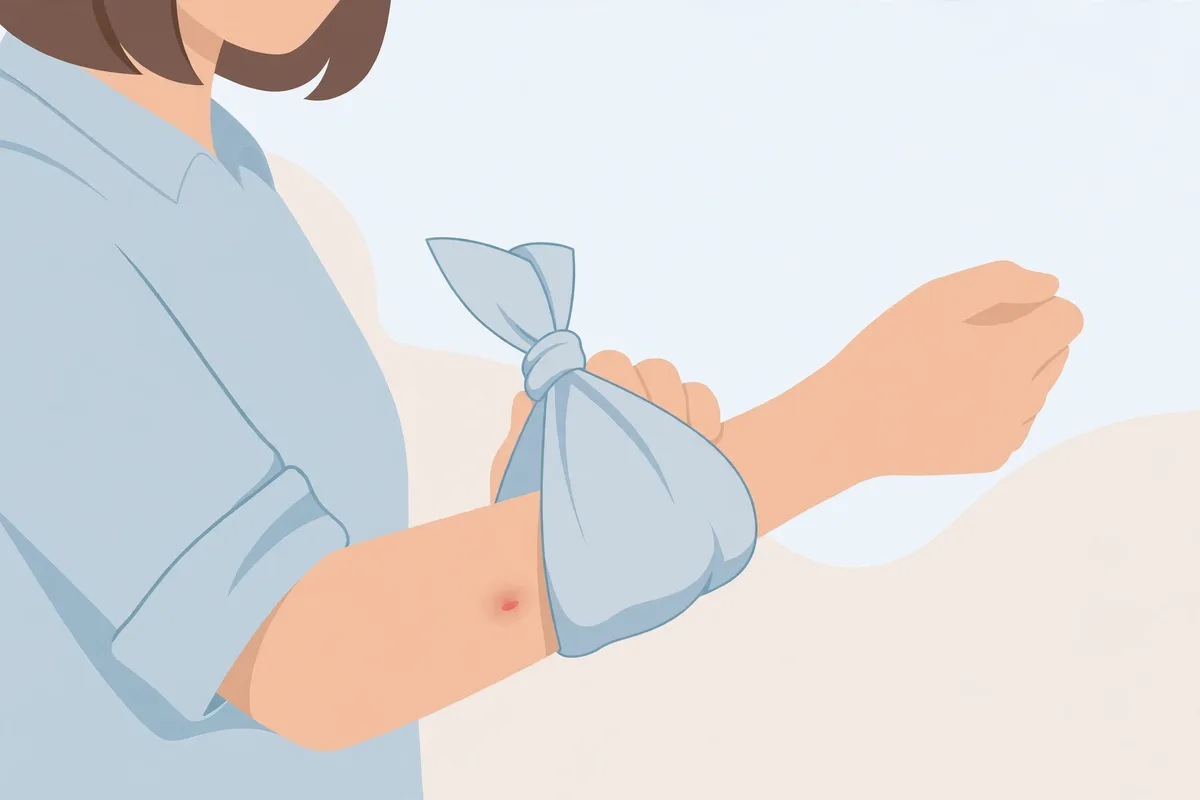
2. Cool the area. Apply a cold compress — ice wrapped in a thin cloth, a bag of frozen vegetables, or a cool damp towel — for 10 to 15 minutes at a time, with breaks between applications. Cold constricts blood vessels, reduces swelling, and numbs the burning pain. You can repeat this several times over the first day. Never apply ice directly to bare skin.
3. Protect the wound. If the mandibles broke the skin (look for a tiny puncture or tear), treat it as a minor wound: apply a thin layer of plain petroleum jelly and cover with a small adhesive bandage, especially if it’s on a hand or finger that will touch things all day. Change the bandage daily. If the skin isn’t broken — just a red mark — no covering is needed.
4. Elevate if swollen. For bites on fingers or hands that swell, keeping the hand elevated above heart level for a while reduces throbbing and swelling.
Avoid home remedies like pouring vinegar, baking soda paste, or alcohol on the bite. Vinegar is itself an acid — adding acid to acid does nothing helpful. Alcohol stings on broken skin and dries it out. Soap and water outperform all of them. Also skip the temptation to squeeze or dig at the mark; there’s no stinger or venom sac to remove (carpenter ants don’t leave one behind), so manipulation only adds trauma.
Home Relief for Pain and Itching
After the first hour, most carpenter ant bites settle into mild soreness, itching, or tenderness that lasts a day or two. For that phase:
- Oral pain relievers: ibuprofen or acetaminophen, used as directed on the label, handle the residual ache and throbbing. Ibuprofen has the added benefit of reducing inflammation.
- Topical hydrocortisone 1%: a thin layer on the surrounding skin (not in an open wound) calms redness and itching. Use sparingly for a few days.
- Oral antihistamines: cetirizine or loratadine (non-drowsy daytime options) or diphenhydramine at night if itching interferes with sleep. These help with the histamine-driven itch even though the original pain was chemical, not histamine-based.
- Calamine lotion or colloidal oatmeal: reasonable for itchy, intact skin in the day or two after the bite.
- Cool (not hot) showers: hot water on a recent bite can reactivate the burning sensation for some people; keep it lukewarm for a day.
Avoid scratching — the skin is already compromised, and scratching converts a clean mechanical wound into a ragged one with higher infection risk. If itching is the dominant symptom and it’s spreading beyond the bite site, that pattern is worth noting as a possible allergy sign (see below).
Allergic Reactions to Formic Acid
True allergic reactions to carpenter ant bites are uncommon, but any insect bite can trigger an allergy in a susceptible person. The distinction that matters: local irritation stays at the bite site and improves over 24–48 hours. An allergic reaction spreads or goes systemic.
Watch for these signs and treat them as urgent:
- Hives, welts, or an itchy rash appearing away from the bite site
- Swelling of the lips, tongue, face, or eyelids
- Difficulty breathing, wheezing, tightness in the throat or chest
- Dizziness, lightheadedness, fainting, or a rapid heartbeat
- Nausea, vomiting, or abdominal cramping after the bite
- A feeling of dread or that something is badly wrong
These are anaphylaxis signs. If they appear, call 911 immediately and use an epinephrine auto-injector if the person has one prescribed. Even if symptoms seem to ease after epinephrine, go to the emergency department — biphasic reactions (a second wave hours later) are possible.
People with known severe allergies to insect stings should carry epinephrine whenever outdoors or working with wood, regardless of the species. Cross-reactivity between different ant venoms/allergens isn’t fully predictable, so caution is warranted.
When to See a Doctor
Most carpenter ant bites need nothing beyond home care, but see a doctor or urgent-care clinic for:
- Any anaphylaxis sign — emergency care immediately, not a scheduled appointment.
- Signs of infection: redness that keeps spreading beyond the original mark after day one, increasing pain or swelling after 48 hours, warmth, yellow-green drainage, red streaks extending outward, or fever. A mechanical bite that becomes infected needs medical treatment — possibly antibiotics.
- Swelling that won’t quit: a large local reaction (swelling that engulfs much of a hand, for instance) is uncomfortable and slow to resolve; a clinician can advise whether antihistamines, a short steroid course, or other measures are appropriate.
- Multiple bites or a nest exposure: finding carpenter ants indoors repeatedly may signal a structural infestation — that’s a pest-control matter, but the bites themselves still merit individual care.
- Bites near the eyes, on the face, or inside the mouth: facial swelling near eyes or airways deserves professional evaluation, even if it looks mild.
- No improvement after a week: most bites resolve in a few days. A lesion that lingers, ulcerates, or keeps getting bigger needs a clinician’s eyes on it.
If you’ve also been dealing with fire ants — a much more common source of ant-related skin problems in the southern US — fire ant bite treatment follows a different protocol because of the pustules those stings produce. And if you’re ever unsure whether a bite is healing normally or turning into something worse, that day-by-day guide walks through the red flags.
Frequently Asked Questions
Do carpenter ants bite or sting?
They bite. Carpenter ants have no stinger; they grip with strong mandibles and spray formic acid into the wound. The pain is real and can be intense, but it’s chemical irritation, not venom injection.
How long does a carpenter ant bite hurt?
The sharp burning pain typically peaks within minutes and fades over 15 minutes to an hour. Residual soreness, tenderness, or itching usually resolves within one to two days. Pain that worsens after the first day is abnormal — get it checked.
Can carpenter ant bites cause infection?
Any break in the skin can become infected, but carpenter ant bites themselves aren’t inherently infectious. Infection comes from bacteria (usually your own skin bacteria or environmental dirt) entering the wound. Washing promptly and keeping the wound covered dramatically reduces the risk.
Should I worry about carpenter ants in my house?
From a health standpoint, occasional bites are a nuisance. From a property standpoint, yes — carpenter ants tunnel through wood and can cause structural damage over time. If you’re seeing them indoors regularly, especially large numbers or winged swarmers, call a pest professional. That’s separate from the medical question, but it’s the real reason to take an indoor carpenter ant sighting seriously.
Do I need a tetanus shot after a carpenter ant bite?
A tetanus booster is generally recommended if your last one was more than 10 years ago (5 years for a dirty wound) and the bite broke the skin — same rule as any minor skin break. If you’re unsure of your vaccination status, ask your doctor. It’s a routine precaution, not a carpenter-ant-specific requirement.
This article is for informational purposes only and isn’t medical advice. If you’re worried about a bite or sting, talk to a healthcare professional.