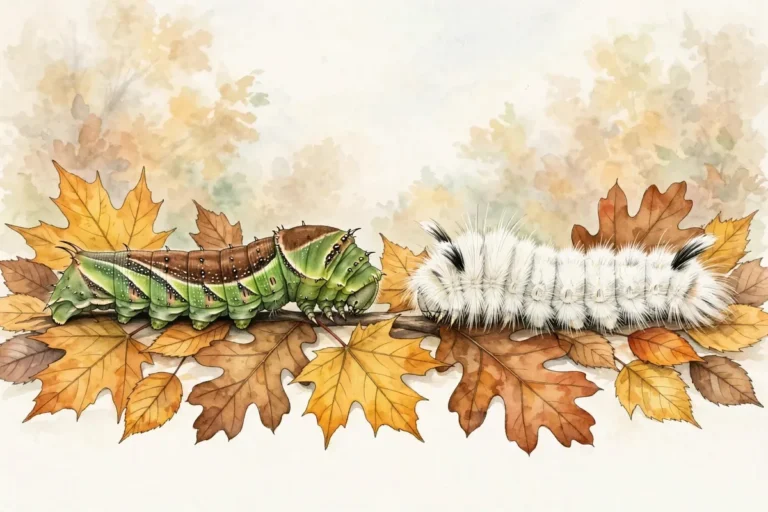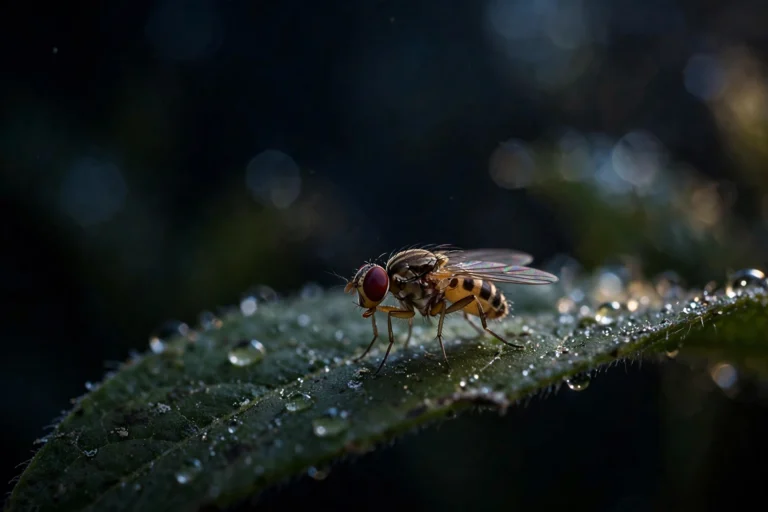
You scouted the perfect funnel, sat the morning sit, and never saw a deer — but two days later your ankles, waistband, and the backs of your knees are a map of furiously itchy red welts. Welcome to chigger season. Chigger bites while deer hunting are practically a fall tradition in the South and Midwest, and hunters get hit harder than almost anyone: you push through the exact brush chiggers live in, sit motionless on the ground for hours, and drag gear (and sometimes deer) through prime chigger habitat.
The good news: chigger bites are one of the most preventable hunting miseries there is. This guide covers where chiggers ambush hunters, the prevention system that actually works (permethrin-treated clothing plus skin repellent plus habits), and what to do when prevention fails. Fall deer season is short — don’t spend it scratching.
Why Hunters Are Chigger Magnets
Chiggers are the larval stage of trombiculid mites — nearly microscopic (about 1/150 of an inch), reddish, and waiting in low vegetation. They don’t burrow into skin and they don’t drink blood, despite the old myths. Instead, they attach where skin is thin or clothing is tight, inject digestive enzymes that break down skin cells, and feed on the dissolved tissue. The intense itch is your immune system reacting to those enzymes.
Everything about deer hunting puts you in their world:
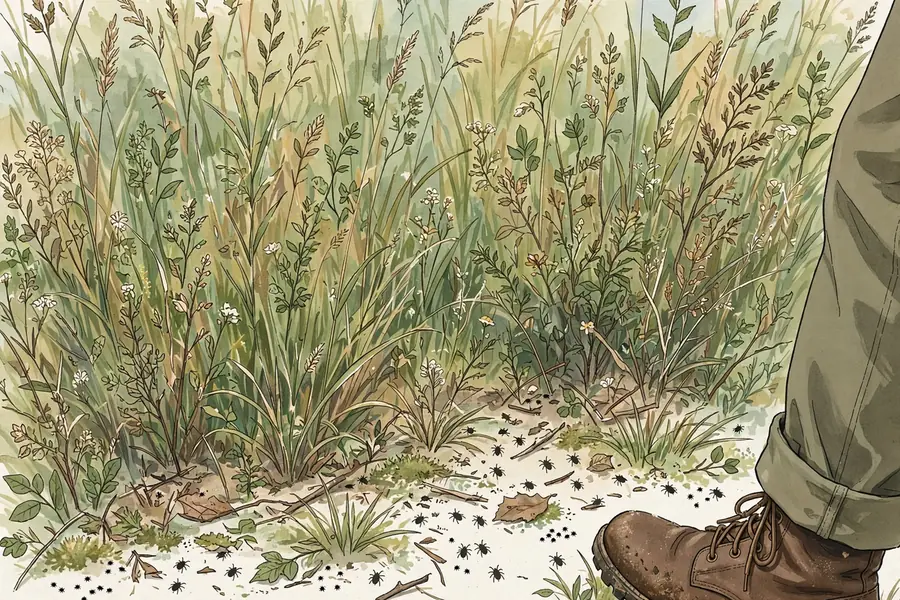
- You walk through their habitat. Chiggers cluster in tall grass, brush, leaf litter, and along field edges — exactly the transition zones deer use and hunters walk. Brushing against vegetation is how they transfer onto you.
- You sit still. On a bucket, a ground blind chair, or a log. Motionless warmth is an invitation; chiggers migrate across clothing to find snug spots and stay put for hours.
- You go early and stay late. Chiggers are most active in warm conditions, and early fall — September through October in much of the South — still delivers plenty of warm afternoons.
- You handle deer and drag through brush. Field dressing and dragging put you on the ground in vegetation, with sleeves rolled and gloves off.
The classic hunter pattern of bites tells the story: clusters around sock lines, boot tops, waistbands, belt lines, behind the knees, and armpits. Anywhere clothing presses against skin is a chigger highway exit.
Where Chiggers Hit Hunters: The Usual Ambush Points
Understanding the ambush points helps you defend them:
- Scouting trips are often worse than actual hunts. You’re bushwhacking off-trail, hanging stands, trimming shooting lanes, and checking cameras — maximum vegetation contact, often in shorts or light pants because it’s still warm.
- Ground blinds and still-hunting setups put your lower body in sustained contact with grass and leaf litter for hours.
- Tree stand seats and climbing sticks can harbor chiggers on straps and cushions that sat in the woods all summer. That stand you hung in August has been collecting them.
- ATV and truck beds where you toss brush, hang stands, or load a deer become transfer points — chiggers ride gear into the cab and onto the next site.
- Camp and base — the grassy area around the cabin or camp where everyone walks in flip-flops at dusk.
Chiggers remain active into the fall as long as temperatures stay warm — in the Deep South, hunters deal with them well into deer season. Don’t assume one October cold snap ended the risk; activity can resume during later warm stretches.
Permethrin: The Hunter’s Best Defense
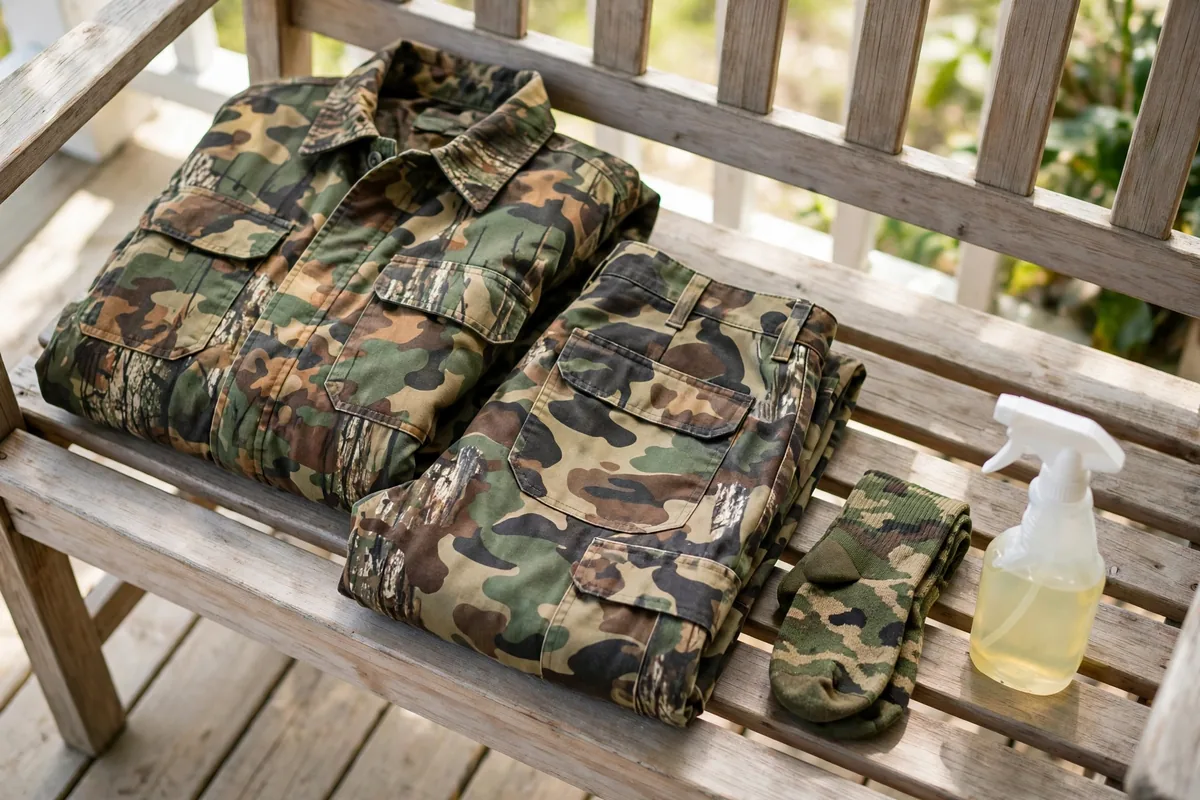
If there’s one product every deer hunter should own, it’s permethrin clothing treatment. Permethrin is an insecticide applied to clothing — not skin — that kills ticks, chiggers, and mosquitoes on contact. It survives multiple washings (follow the product label) and is considered the gold standard for chigger prevention by hunters and outdoor professionals alike. (See also our guide to outdoor worker insect bite prevention.)
How to use it:
- Treat outer clothing: pants, socks, boot tops, gaiters, and jacket. Pay special attention to cuffs, waistbands, and sock lines — the chigger entry points.
- Apply outdoors, let everything dry completely (a few hours) before wearing. Once dry, it’s considered safe for wear per the label — but never apply permethrin to skin, and keep cats away from wet treated clothing (permethrin is toxic to cats while wet).
- Re-treat per the label schedule, typically after several washings or weeks of use.
Pair it with skin repellent. Permethrin handles clothing; exposed skin needs its own protection. EPA-registered repellents containing DEET or picaridin, applied to ankles, wrists, neck, and waistline per the label, complete the system. For the full rundown on choosing between them, see our comparison of insect repellent options — and note that children and pregnant hunters should follow label age guidance carefully.
Dress like you mean it:
- Tuck pants into boots or socks — this single habit blocks the main chigger route.
- Tuck your shirt in, or wear a base layer tucked into your pants.
- Blouse your pant cuffs if your hunting pants have that option.
- Avoid sitting directly on the ground or on logs; carry a small pad or use your pack as a seat.
The Post-Hunt Decontamination Routine
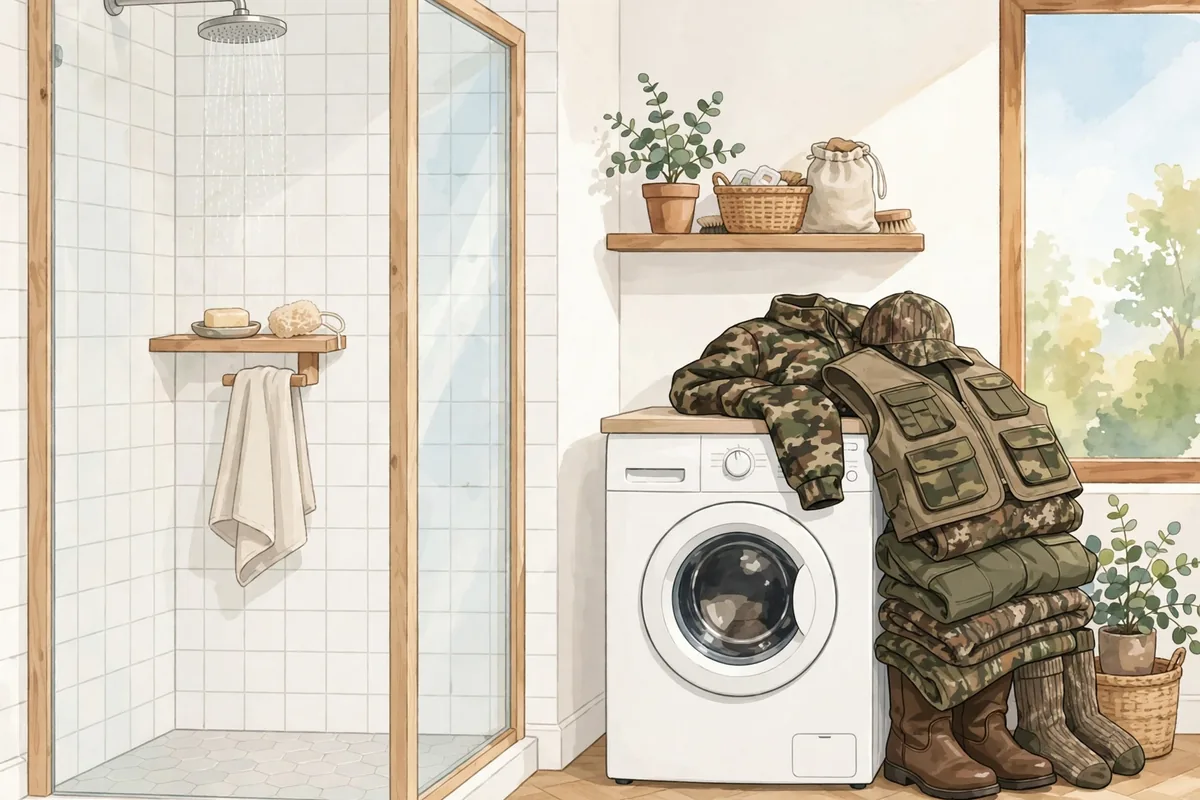
Chiggers wander on clothing and skin for a while before settling in to feed, which gives you a window after every hunt:
- Strip at the door — or at the truck. Don’t wear hunting clothes into the house. Bag them for the wash.
- Hot shower with soap and a washcloth. Scrub well, especially ankles, waist, armpits, and behind the knees. Chiggers that haven’t attached wash off easily; even some attached ones can be dislodged with firm scrubbing in the first hours.
- Wash hunting clothes in hot water and dry on high heat. This kills any hitchhikers and is the same routine that handles ticks.
- Wipe down gear. Stand straps, seat cushions, packs, and especially anything fabric that sat in vegetation. A quick inspection and shake-out prevents the truck-seat-to-next-hunt transfer.
- Check the dog. Hunting dogs run the same brush you do. Check their bellies and ears, and keep them on veterinarian-recommended parasite prevention.
Do this every hunt, not just the ones where you “felt itchy.” Chigger bites typically don’t start itching for hours — by the time you feel them, the feeding is done and you’re treating symptoms, not preventing them.
When Prevention Fails: Treating Chigger Bites
If the welts show up anyway, here’s the reality: nothing kills chiggers already feeding faster than your immune system handles them, and folk remedies like nail polish or bleach are myths that damage skin. What works is symptom care:
- Don’t scratch. Chigger bites itch intensely, but scratching breaks skin and invites infection. See our full guide to chigger bite treatment.
- Cool it down. A cold compress or cool bath calms the itch. An oatmeal bath helps when bites are widespread.
- Anti-itch options. Calamine lotion or over-the-counter anti-itch creams used as directed on the label; oral antihistamines are commonly used for widespread itching — check with your pharmacist about what’s appropriate for you.
- Keep bites clean. Wash daily with soap and water; cover any you can’t stop scratching with a bandage.
- Know the timeline. Chigger bites typically itch hardest for the first few days and fade over one to two weeks — our chigger bite treatment guide covers the full healing timeline.
Unsure whether those ankle clusters are chiggers or fleas? The chigger-versus-flea comparison in our treatment guide can help you sort it out — the treatment overlap is significant either way.
When to See a Doctor for Chigger Bites
Chigger bites are miserable but rarely dangerous. See a doctor if:
- Signs of skin infection: increasing redness, warmth, swelling, or pain around bites; pus; red streaks spreading outward; fever. Scratched chigger bites can develop cellulitis.
- Bites aren’t improving after two weeks, or keep appearing without new outdoor exposure (which suggests a different cause).
- Severe swelling or hives beyond the bite sites, or any breathing difficulty — uncommon with chiggers, but any allergic-type reaction deserves prompt care.
- You’re unsure it’s chiggers. Rashes with similar patterns have other causes, and a clinician can sort out what’s actually going on.
Frequently Asked Questions
Do chiggers stay active during fall deer season?
In much of the South and lower Midwest, yes — chiggers stay active as long as daytime temperatures are warm, which often means well into October and sometimes November. Early-season bowhunters in September face the highest risk, but don’t drop your guard for rifle season.
Can chiggers get through hunting clothing?
They don’t bite through fabric so much as crawl under and around it — up pant legs, through loose cuffs, and under waistbands. That’s why tucked-in layers and permethrin-treated cuffs work: they block the routes, not just the fabric.
How long after a hunt do chigger bites show up?
The itch typically starts several hours after feeding begins, and the full welt-and-itch reaction often peaks 24–48 hours later. That’s why the post-hunt shower matters: you’re racing the clock before they settle in.
Are chigger bites contagious?
No. Chiggers don’t spread from person to person, and the bites themselves aren’t contagious. But the chiggers on your unwashed hunting clothes can transfer to someone else who handles them — another reason to wash gear promptly.
Will a Thermacell or campfire smoke keep chiggers off?
Area repellents that work on mosquitoes don’t reliably stop chiggers, which live in vegetation at ground level and transfer by contact. Clothing treatment and physical barriers (tucked pants, boots) are far more effective for chiggers specifically.
This article is for informational purposes only and isn’t medical advice. If you’re worried about a bite or sting, talk to a healthcare professional.