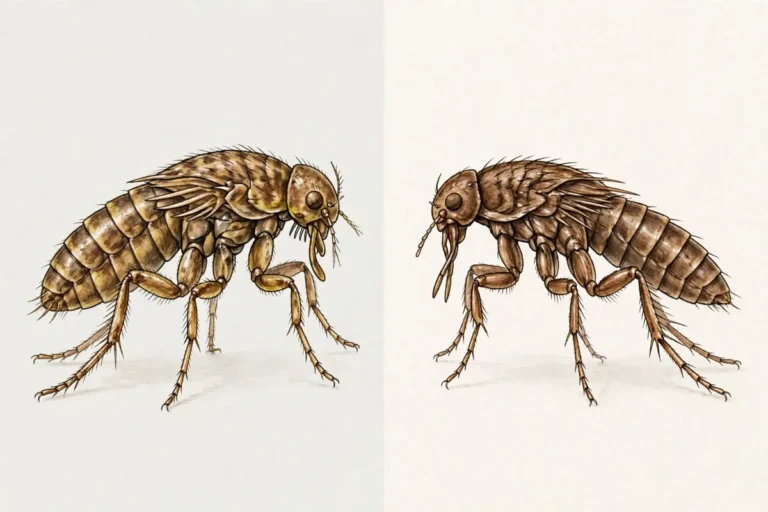
If your dog or cat is scratching nonstop, an ultrasonic flea collar can look like the perfect answer: no pills, no chemical smell — just strap on a collar and let sound waves do the work.
So do ultrasonic flea collars work? The direct answer is no. Controlled laboratory tests found these collars not at all effective at repelling fleas, and the Federal Trade Commission took enforcement action against companies making those claims. Below: what the studies found, why regulators stepped in, why the product still appeals, what flea bites mean for humans, and what genuinely ends a flea problem.
How Ultrasonic Flea Collars Claim to Work
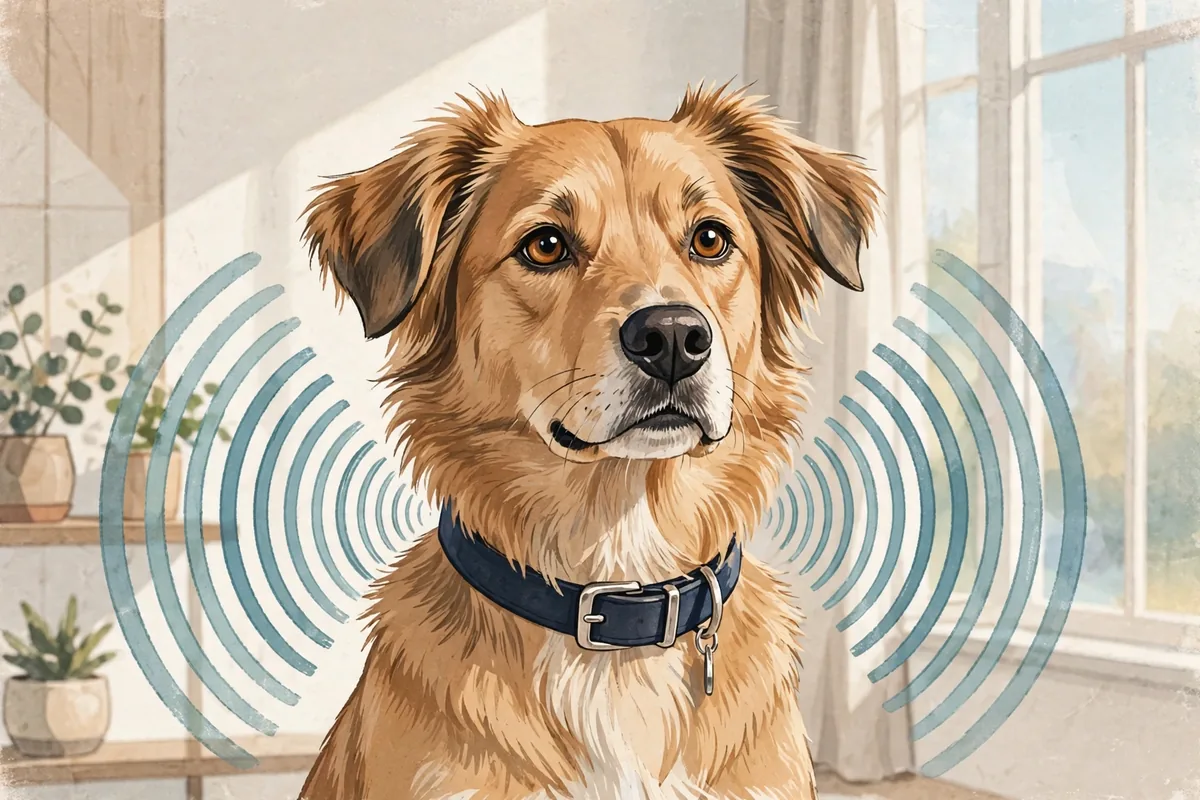
An ultrasonic flea collar is a plastic collar fitted with a small electronic module that emits high-frequency sound waves — sound above the range of human hearing, typically described as ultrasound. Marketers claim the waves irritate fleas, driving them off the pet.
The pitch is aimed squarely at pet owners who are uneasy about chemical preventatives. The packaging leans on words like “chemical-free,” “natural,” and “drug-free,” positioning ultrasound as the gentle alternative to topical insecticides and oral medications. It is an attractive story: sound is invisible, leaves no residue, and cannot poison anything — so what is there to lose?
What sellers rarely mention is that the story has been tested — several times, by independent researchers — and has not held up. Fleas do not have ears in the mammalian sense; they detect vibrations through specialized sensory hairs. There is a second, rarely advertised consideration: the device sits directly around the pet’s neck, placing the sound source inches from the animal’s ears. Cats and dogs hear far higher frequencies than people do, so a sound silent to you may be well within their hearing range — a genuine welfare question if the pet starts pawing at the collar or trying to remove it.
What the Controlled Tests Actually Found
The strongest evidence comes from controlled laboratory trials, where fleas were exposed to the devices with confounding variables removed — and the collars still failed.
A late-1980s controlled laboratory trial tested ultrasonic flea collars on cats and found them not at all effective — the fleas did not avoid treated animals and there was no measurable flea reduction versus controls. A 1991 study by Schein and colleagues found no difference in flea and tick placement on dogs with ultrasonic pet-collars versus control dogs, even after 14 days of continuous device operation — the parasites settled right next to the devices.
The pattern held decades later. A 2021 peer-reviewed study in the MDPI journal Animals evaluated nine commercial ultrasonic devices against ticks, finding a maximum repellency of only about 19.5% — far too weak to matter — and its authors cited the earlier ultrasonic flea-collar trials as ineffective, with no flea reduction versus controls.
Pest professionals are blunt: no ultrasonic device has worked in controlled trials, and money spent on them is money not spent on methods that do. A flea problem can decline on its own as seasons change, and the collar wrongly gets the credit. But in the lab, it was doing nothing — and ultrasound offers nothing for the flea eggs and larvae living in carpets and bedding either.
The FTC Record: Why Regulators Stepped In
The Federal Trade Commission has a long record of challenging ultrasonic pest-control devices, including flea collars. Between 1985 and 1997, the FTC took enforcement actions against six companies marketing ultrasonic pest devices, objecting to claims that included the assertion that the devices “eliminate fleas on dogs or cats.” The Commission’s position has been consistent: efficacy claims must be supported by competent scientific evidence — and the controlled studies did not support the claims.
The FTC later sent warning letters to more than 60 manufacturers and retailers of ultrasonic pest-control devices, reminding them that efficacy claims must be backed by science. The online marketplace still carries plenty of ultrasonic flea collars with confident-sounding claims, often from sellers who were not around for the enforcement era. If a product page tells you its collar is “scientifically proven” to repel fleas, the record says that claim has not survived scrutiny.
The practical lesson for shoppers is how to read these listings. A collar page that cites “independent studies” without naming journals, dates, or authors is offering the appearance of evidence, not evidence. When a company can name a peer-reviewed trial and its results, it does.
Why the Appeal Persists
Given the test results, why do ultrasonic flea collars keep selling? The answer is mostly about how pet owners think, not how fleas behave.
The strongest draw is the word “chemical-free.” Many owners worry about applying insecticides to an animal that sleeps on their bed and grooms itself constantly. That worry is legitimate, and it creates an opening for any alternative that promises results without chemicals. Ultrasound fills it perfectly: it sounds scientific, feels harmless, and costs less than a year of vet preventatives.
A collar worn for two weeks while the flea population naturally dips can generate a glowing review, and algorithms amplify the confident testimonial over the dry journal article. Once fleas return, owners tend to blame the infestation rather than the collar.
Videos showing fleas “fleeing” a sound device show choreography, not control. In the lab, researchers watched for 24 hours and found no difference in flea placement around the devices.
The real cost is time: every week spent on an ineffective collar is a week of scratching and egg-laying that genuine treatment could have ended. Meanwhile, the product keeps selling — proof that good marketing can outrun bad evidence for years.
Flea Bites on Humans and Flea Allergy Dermatitis

Fleas are a pet problem first, but they bite people too. Flea bites on humans typically appear as small, red, intensely itchy bumps, often clustered around the ankles and lower legs — the classic sign of walking across a carpet or pet bedding. Most bites resolve on their own within a week or two, though broken skin from scratching can invite secondary infection, and the bumps can leave dark marks that linger after healing.
The bigger health story is what fleas do to pets. Flea allergy dermatitis (FAD) is the most common skin condition in dogs and cats, and it is not an allergy to the bite itself — it is a hypersensitivity to proteins in flea saliva. A single flea bite can trigger days of frantic scratching, inflamed skin, and hair loss along the back and tail base.
This matters to households relying on an ultrasonic collar. FAD is a veterinary condition, not a gadget problem — a dog that keeps scratching despite treatment, or a cat with worsening skin, needs a veterinarian, not a new collar.
What Actually Works Instead
Flea control is a solved problem — not with sound waves, but with proven products plus environmental work. Here is what veterinarians and entomologists recommend.
Vet-approved preventatives come first. Modern flea preventatives — prescription oral medications and veterinarian-recommended topicals — have published efficacy data showing high flea kill rates. Talk to your veterinarian about which option suits your pet, because products are not interchangeable between species: never apply a dog flea product to a cat — permethrin can be fatal to cats.
Treat the environment, not just the animal. Most of a flea population lives off the pet — eggs, larvae, and pupae developing in carpets, bedding, and floor cracks. Hot-water laundry plus a high-heat dryer cycle for pet bedding and blankets, frequent vacuuming of carpets and upholstery with immediate disposal of the bag or canister contents, and decluttering pet sleeping areas all cut the population. Systematically inspect the areas where your pets rest and sleep — behind and under furniture, along baseboards, in rugs and upholstery seams — so you know where the problem is concentrated.
Use traps and monitoring, not gimmicks. Simple light-and-sticky flea traps help you gauge whether the infestation is shrinking. They will not solve an infestation alone, but unlike ultrasonic collars, they show you honest information.
Call in help for heavy infestations. If vacuuming, laundry, and a vet-recommended preventative have not reduced the problem in a few weeks, a licensed pest-management professional can apply targeted residual treatments. Flea pupae can survive dormant for months and re-emerge with vibration and warmth — persistence with the proven program is the answer.
For bite relief in the meantime, cool compresses and resisting the urge to scratch cover the basics, and if a bite looks like it may be infected, review our bite and sting warning signs checklist.
When to See a Doctor for a Bug Bite

Flea bites themselves are usually a nuisance rather than a medical emergency, but certain signs mean it is time to seek care promptly:
- Signs of allergic reaction: hives spreading beyond the bite area, swelling of the face or throat, dizziness, or any trouble breathing — call 911 immediately for breathing trouble or facial/throat swelling.
- Signs of infection: redness that spreads outward from a bite, increasing warmth, swelling, pus, red streaks, or fever.
- Bites that worsen after 48 hours instead of improving — expanding, darkening, or increasingly painful bites are not following the normal healing course.
- Severe or non-improving flea allergy dermatitis: if your pet is losing hair, developing open sores, or scratching constantly despite treatment, schedule a veterinary visit rather than trying home remedies.
- Numerous or repeated bites with systemic symptoms such as fever, body aches, or swollen glands — seek medical evaluation.
Frequently Asked Questions
Can ultrasonic flea collars repel fleas at all?
Based on controlled testing, no. A late-1980s laboratory trial found ultrasonic flea collars not at all effective on cats, a 1991 study by Schein and colleagues found no difference in flea and tick placement on dogs with ultrasonic collars versus control dogs after 14 days of device operation, and a 2021 peer-reviewed study in Animals (MDPI) cited these flea-collar trials as showing no flea reduction versus controls.
Are ultrasonic flea collars safe for my pet?
There is a specific welfare caveat: the device sits at the neck, close to the animal’s ears, and cats and dogs hear frequencies well above the human range. If the collar’s frequency falls within your pet’s hearing range, it may cause stress — head-shaking, pawing at the collar, restlessness, or hiding. If your pet seems bothered by the collar, take it off.
Why does the FTC care about flea collars?
The FTC enforces the rule that health and pest-control claims must be supported by scientific evidence. Between 1985 and 1997 it took action against six companies over ultrasonic pest-device claims — including the claim that the devices “eliminate fleas on dogs or cats” — and later sent warning letters to more than 60 manufacturers and retailers in the category.
My pet still has fleas after using a collar. What should I do?
Stop relying on the collar and talk to your veterinarian about a proven flea preventative. Wash pet bedding in hot water, vacuum carpets and upholstery frequently, and monitor with flea traps. Because flea pupae can lie dormant for weeks or months, keep up both the pet treatment and the environmental measures consistently rather than stopping when things look better.
Is there any “natural” flea option that actually works?
Mechanisms matter more than marketing labels. Heat kills fleas — hot-water laundry and thorough drying of pet bedding — and physical removal through vacuuming and flea combs genuinely reduces populations. What “natural” alternatives cannot do is replace a vet-approved preventative for ongoing protection — and no ultrasonic, herbal, or electronic gadget has shown reliable flea control in trials. If you prefer to minimize chemicals, ask your veterinarian about the lowest-risk proven options for your pet.
Medically reviewed by Dr. Sarah Jones, MD.
This article is for informational purposes only and isn’t medical advice. If you’re worried about a bite or sting, talk to a healthcare professional.