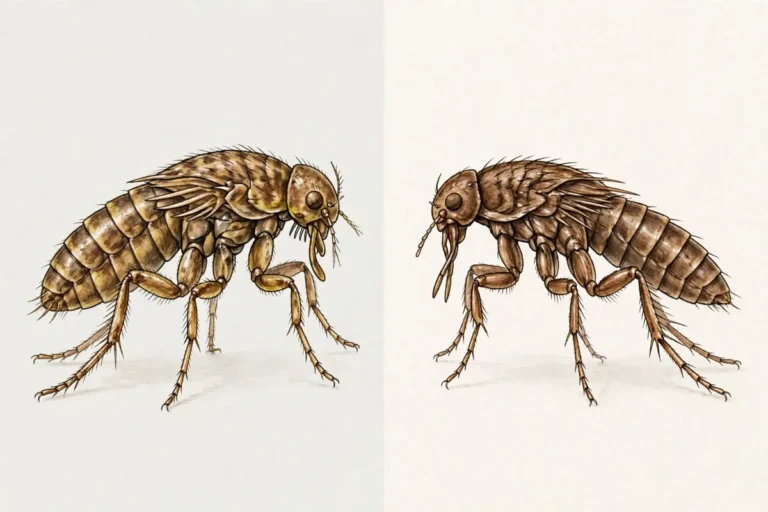
Bed bugs are one of the hardest household pests to live with. Their bites show up as itchy clusters that often appear in a line pattern, and once the insects settle into a mattress or baseboard, most store-brand sprays barely slow them down — which is why so many people search does Crossfire kill bed bugs, hoping one product will finally finish the job.
The short answer: yes. CrossFire Bed Bug Concentrate (MGK) is a professional-grade residual insecticide that kills bed bugs on contact and leaves a residue meant to keep killing for up to 30 days. Hundreds of verified buyers rate it around 4.5 stars. But it is not a miracle in a bottle: it works only when the label is followed closely and paired with non-chemical steps, and heavy infestations still belong with a licensed professional.
This review covers what CrossFire is, how it kills, the honest evidence, the label safety rules, and when DIY is the wrong call.
What CrossFire Bed Bug Concentrate Is
CrossFire is a water-based liquid concentrate for mixing and spraying, registered with the EPA as 1021-2776 under manufacturer MGK — an EPA-registered pesticide with a full label of legal restrictions. You dilute it yourself: 13 ounces of concentrate per 115 ounces of water makes one gallon, treating roughly 1,000 square feet.
Its active-ingredient mix has three components with different modes of action:
- Clothianidin (4.00%) — a neonicotinoid that attacks the insect’s nervous system. Bed bugs have had little exposure to this class, so resistance is rare.
- Metofluthrin (0.10%) — a pyrethroid that disrupts nerve function on contact and helps knock insects down fast.
- Piperonyl butoxide, or PBO (10.00%) — a synergist, not an insecticide on its own. PBO blocks the enzymes bed bugs use to detoxify pyrethroids, restoring the pyrethroid’s punch against resistant strains.
That combination matters because pyrethroid resistance is the defining fact of the modern bed bug problem. Most over-the-counter sprays rely on a single pyrethroid, and many US bed bug populations now carry genetic resistance that lets them walk through those treatments unharmed — which is why CrossFire’s label states it is formulated to kill pyrethroid-resistant strains.
How It Kills: Contact and Residual Action
CrossFire works in two phases, and understanding both separates a successful treatment from a wasted gallon.
Phase one is contact kill. The label states the product kills bed bugs within 5 minutes of contact — adults, nymphs, and eggs — and the manufacturer states it prevents egg hatch — the stage that survives most quick-fix treatments and restarts infestations weeks later.
Phase two is residual control. Once the spray dries, it leaves a residue the label says remains effective for up to 30 days. Bed bugs feed roughly every few days, so a persistent residue intercepts insects as they emerge — including ones hiding in cracks you never found. The manufacturer approves direct application on mattresses and box springs — as a spot treatment to seams, folds, tufts, and edges — plus bed frames, furniture, baseboards, and other harborage areas. You do not spray the whole sleeping surface, and you never broadcast-spray a room.
Residues degrade faster in heat, on porous surfaces, and where cleaning disturbs them, so “up to 30 days” reflects controlled conditions. Retreatment at the label’s directed interval keeps protection continuous — skipping the follow-up is the most common reason DIY treatments fail.
The Honest Verdict: Does It Work?

CrossFire is one of the better-regarded bed bug products available to consumers, and the reputation appears earned. Its triple-mode-of-action formula targets pyrethroid resistance — the biggest reason other sprays fail — and the label claims are specific: kills resistant strains, adults, nymphs, and eggs by contact, prevents egg hatch, residual action up to 30 days.
Buyer reviews are broadly positive, frequently praising the contact kill and long residual, with many reviewers reporting it succeeded where cheaper sprays had failed.
Expectations still need setting:
- It is not instant. Even with a 5-minute contact kill, clearing an infestation takes several weeks and repeat applications — eggs keep hatching and some insects avoid treated surfaces.
- It does not forgive poor coverage. Miss the harborage — seams, box spring underside, frame joints, baseboards — and you leave a refuge that repopulates the room.
- It cannot fix clutter. Bed bugs thrive where residues cannot reach them. No chemical solves that; decluttering is part of the job.
- Reviews are not controlled studies. Broadly positive buyer reviews are a useful signal, but evidence is limited compared to controlled testing, and results vary with infestation size, application care, and non-chemical support.
Bottom line: CrossFire is a genuinely professional-grade residual insecticide, not a gimmick. It kills bed bugs — including resistant ones — when the label is followed and it is paired with non-chemical measures. It is not a miracle and will not rescue a careless treatment.
Label Safety Rules You Cannot Skip
CrossFire is a pesticide, and the label is legally binding. Read it in full before mixing or spraying — below are the rules you must know, not the complete list.
- “This product is not for use on humans or animals.” Do not spray it on yourself, your children, or your pets — or on pets’ bedding.
- Keep everyone out until sprays have dried. Adults, children, and pets must not enter the treated area until sprays have dried — plan treatments so rooms air out fully before anyone returns.
- Do not apply when occupants are present. Clear the room — people and pets — before you start.
- Not for broadcast use. No blanket-spraying carpets, walls, or whole rooms. Apply only as directed: mattress seams, folds, and tufts; bed frames; baseboards; furniture crevices.
- Remove pets and cover fish aquariums before spraying. Aquatic life is extremely sensitive to pyrethroids — cover tanks completely.
- Do not wet articles to the point of runoff. Over-spraying does not kill more bugs; it just moves pesticide where it should not go.
- New York restriction. This product is restricted to licensed applicators in New York — consumers cannot legally apply it there. Check your own state’s rules as well.
Follow the label’s protective-equipment directions and keep concentrate and mixed product locked away from children. If a child or pet is exposed, call Poison Control (1-800-222-1222).
Pairing It With Non-Chemical Measures

The fastest way to make CrossFire fail is to spray it onto an untreated mess. Pair the chemical with these non-chemical tactics:
- Heat-dry everything washable. Bed bugs and their eggs die at sustained high heat — wash bedding, curtains, and clothing hot, then run them through the dryer on the hottest setting the fabric allows.
- Encase the mattress and box spring. Quality encasements zip the mattress shut so trapped bugs starve, and the smooth cover gives new arrivals nowhere to hide. Keep them on for at least a year.
- Declutter around the bed. Every stack of magazines and pile of clothes under the bed is a spray-proof bunker. Reduce clutter so residues can reach the surfaces where bugs travel.
- Vacuum thoroughly, then seal the contents. A crevice tool along seams, baseboards, and frame joints physically removes bugs and eggs before you spray.
- Inspect with a flashlight. Check mattress seams, under piping, frame screw holes, behind the headboard, and baseboards. If you are unsure which pest is the problem, work through a bite-and-sting clue checklist and confirm the pest first.
- Use interceptors under bed legs. Simple pitfall traps catch bugs traveling to feed and double as monitors. If interceptor counts drop week over week and bites stop appearing and begin healing, the treatment is working. If counts stay flat after two properly labeled rounds, stop DIY and call a professional.
When to Call a Professional Instead of DIY
CrossFire is sold to consumers, but “available to buy” is not the same as “right for your situation.” Call a licensed pest professional — don’t keep spraying on your own — when any of the following is true:
- The infestation is heavy or widespread. Bed bugs in multiple rooms, inside walls, or in neighboring units are beyond a hand sprayer. Multi-unit buildings need coordinated treatment; one apartment alone rarely wins.
- You have tried twice and bites continue. Two properly labeled applications should show clear improvement. If they do not, the problem is bigger than DIY — or it may not be bed bugs at all.
- You are not sure bed bugs are the culprit. Bat bugs, carpet beetles, and fleas all get mistaken for bed bugs, and each needs a different approach. A professional identifies the pest first — bites alone cannot confirm bed bugs.
- Someone in the home is especially vulnerable. Infants, pregnant people, the elderly, or anyone with serious respiratory conditions deserve a professional’s judgment on whether chemical treatment is appropriate.
- You cannot follow the label safely. If you cannot clear rooms until dry, keep pets away, or use protective equipment correctly, do not improvise. Off-label use is illegal and dangerous.
- New York residents. The product is restricted to licensed applicators there, so professional treatment is the only legal route.
Heavy infestations often need whole-room heat treatment or multi-visit programs no single bottle delivers — and repeated DIY rounds frequently cost more than one professional job done right the first time.
When to See a Doctor for a Bug Bite

Bed bug bites are usually a nuisance, but these signs mean you should get medical care promptly:
- Signs of a severe allergic reaction — trouble breathing, swelling of the face, lips, tongue, or throat, dizziness, or widespread hives. Call 911 immediately.
- Signs of infection — spreading redness, warmth, worsening swelling, pus, red streaks, or fever. See a clinician the same day.
- Bites that worsen after 48 hours instead of gradually improving.
- Itching so severe it disrupts sleep night after night, or bites in infants or near the eyes that look unusual or are not healing.
For everyday itch relief, a cool compress can calm the itch — and try not to scratch, since broken skin invites infection. If you notice red-flag warning signs on any bite or sting, get care rather than waiting it out.
Frequently Asked Questions
How fast does CrossFire kill bed bugs?
Per the product label, CrossFire kills bed bugs within 5 minutes of direct contact — adults, nymphs, and eggs. The residue keeps killing for up to 30 days per the label. Clearing a full infestation still takes weeks and usually a second labeled application, because eggs can hatch after the first round.
Can I spray CrossFire on my mattress?
Yes, but only as a targeted spot treatment to seams, folds, tufts, and edges — never a whole-surface spray. Do not saturate the mattress or sleep on it until fully dry and label re-entry directions are satisfied. Remove all bedding first and heat-dry it separately.
Is CrossFire safe around pets and kids?
Only when the label’s safety rules are followed strictly: not for use on humans or animals, pets must never be sprayed directly, and everyone — adults, children, pets — stays out of the treated area until sprays have dried. Fish aquariums must be covered. If you cannot guarantee those conditions, talk to a licensed pest professional instead of treating yourself.
Why did regular bug spray fail but CrossFire might work?
Most store-brand sprays rely on a single pyrethroid, and many US bed bug populations carry genetic resistance that makes those products nearly useless. CrossFire combines a neonicotinoid (clothianidin), a pyrethroid (metofluthrin), and the synergist PBO, which blocks the enzymes resistant bugs use to detoxify pyrethroids. That multi-mode attack is designed to overcome resistance — but correct application and non-chemical support still matter.
Medically reviewed by Dr. Sarah Jones, MD.
This article is for informational purposes only and isn’t medical advice. If you’re worried about a bite or sting, talk to a healthcare professional.