
Bed Bug Nymph vs Carpet Beetle Larva: ID Guide
You found a tiny bug in the bedroom, and your stomach dropped. The question of bed bug nymph vs carpet beetle larva is one…
You pull back the sheets and notice tiny black specks. Your stomach drops, is it bed bugs, or fleas? Both pests leave behind dark droppings that look like ground pepper,…
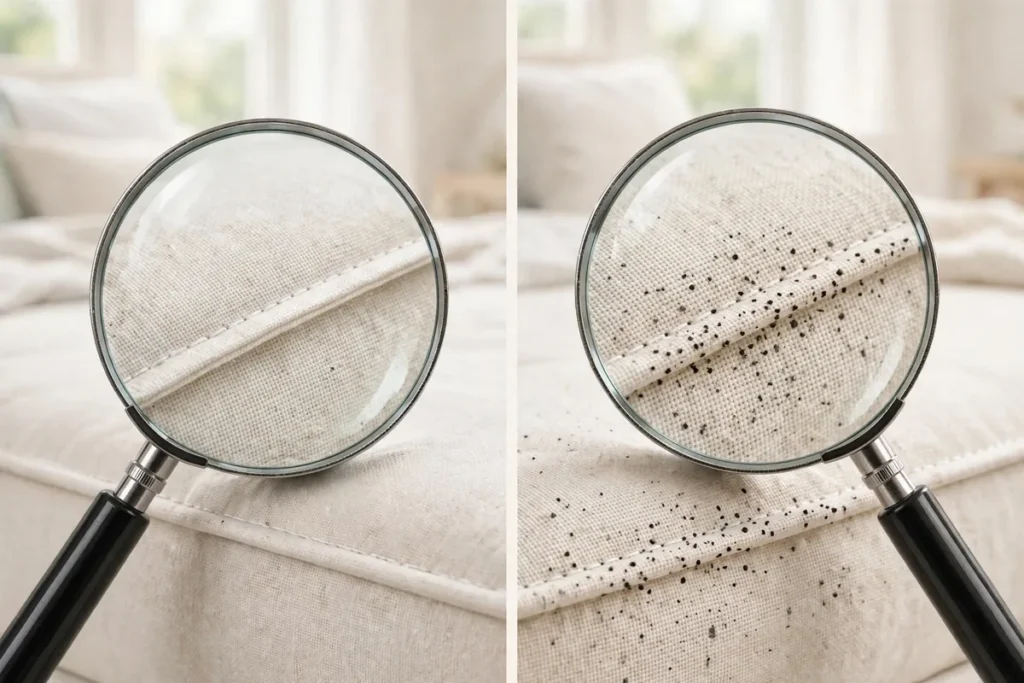
You pull back the sheets and notice tiny black specks. Your stomach drops, is it bed bugs, or fleas? Both pests leave behind dark droppings that look like ground pepper, and both can turn a calm evening into a spiral of worry. But bed bug poop vs flea dirt is a solvable identification problem. The two signs differ in texture, location, behavior on a damp cloth, and, most importantly, what they tell you to do next.
This article is about fecal signs only, not bites. (If you are comparing the bites themselves, that is a different question.) Here you will learn what each type of dropping looks like, the simple wet-paper-towel test that separates them, where each one shows up in a home, and the inspection protocol to follow once you know which pest you are dealing with. No pesticide advice beyond this: inspect carefully, confirm what you have, and then decide your next steps with a professional.
Live bed bugs and fleas are experts at hiding. Bed bugs feed at night and retreat into cracks by dawn; fleas spend most of their life cycle off the host, buried in carpet, pet bedding, and floor cracks. By the time you see a live insect, the infestation is usually well established. Their droppings, on the other hand, accumulate wherever the pests spend time, making fecal signs the earliest and most reliable evidence most homeowners ever find.
There is another reason droppings matter: they tell you where the pests are, not just that they exist. Bed bug fecal spots cluster around harborages near where people sleep. Flea dirt concentrates where pets rest. The location of the specks is itself a diagnostic clue, often more informative than the specks alone. Learning to read these signs saves the most common and expensive mistake in home pest situations: treating for the wrong insect for months while the real one multiplies.
Bed bug droppings are small, dark spots, roughly a millimeter across, about the size of the dot from a fine-tip marker, ranging from dark brown to black. Because bed bugs feed only on blood and excrete liquid waste, fresh droppings often look like tiny ink spots that have soaked into fabric, leaving a slightly raised or glossy dot on hard surfaces. On absorbent materials like mattress fabric, sheets, or wood, the liquid wicks into the fibers and creates a permanent ink-bleed stain. Older spots dry to a flat, dark mark.
The clustering pattern is a hallmark. Bed bugs excrete shortly after feeding and near their daytime hiding spots, so fecal spots appear in groups: three or four dots together, a gap, then another cluster. Finding a single isolated speck means little; finding clustered spotting along a seam means a harborage is nearby. Bed bugs also leave behind shed skins, translucent, hollow, light-brown casings, which often appear alongside the fecal spots and are another strong confirmation sign.
Dab a suspicious spot with a damp white cloth or cotton swab. Fresh bed bug fecal matter, being digested blood, will often smear or bleed into a rusty-red or reddish-brown streak. This re-liquefying happens because the iron-containing waste is water-soluble when fresh. Old, fully dried spots may not smear much, age reduces the test’s sensitivity, but a positive smear with the right color is meaningful evidence. Mold, ink, and ordinary dirt do not produce that rusty-red smear; ink stays black or blue, and mold looks fuzzy or powdery rather than flat and ink-like.
Bed bug fecal spotting concentrates within a few feet of where people sleep: along mattress seams, piping, and tags; on box spring edges; in bed frame joints and screw holes; behind the headboard; on the wall or baseboard near the bed; and along the tuck-in lines of sheets. Inspect with a flashlight, pulling back seams and looking into crevices, and remember that bed bugs feed wherever skin is accessible, including through thin sleepwear, as our guide on whether bed bugs bite through clothes explains.
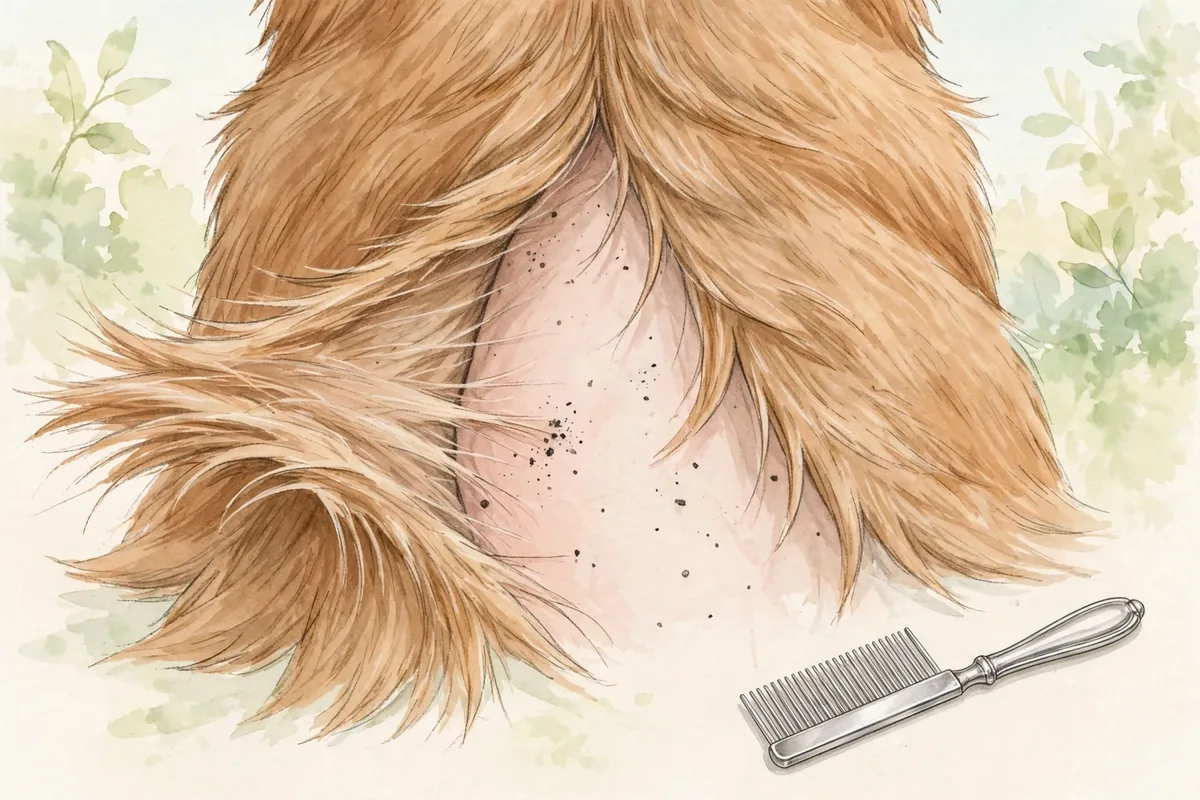
Flea dirt is flea feces, and it is essentially dried, partially digested blood. It appears as tiny dark specks, like coarse ground black pepper, scattered through pet fur or on bedding, carpets, and pet resting areas. Unlike bed bug spots, which soak into fabric as liquid, flea dirt usually presents as loose, dry granules that sit on surfaces or tangle in fur. You may also notice tiny white, salt-like ovals nearby: flea eggs, which fall off the host into the environment.
Here is the critical biological detail: the vast majority of a flea population, eggs, larvae, and pupae, lives in the environment, not on the animal. Adult fleas on a pet represent only a small fraction of the infestation. That is why flea dirt on pet bedding and carpets matters as much as flea dirt in fur; it maps the real extent of the problem.
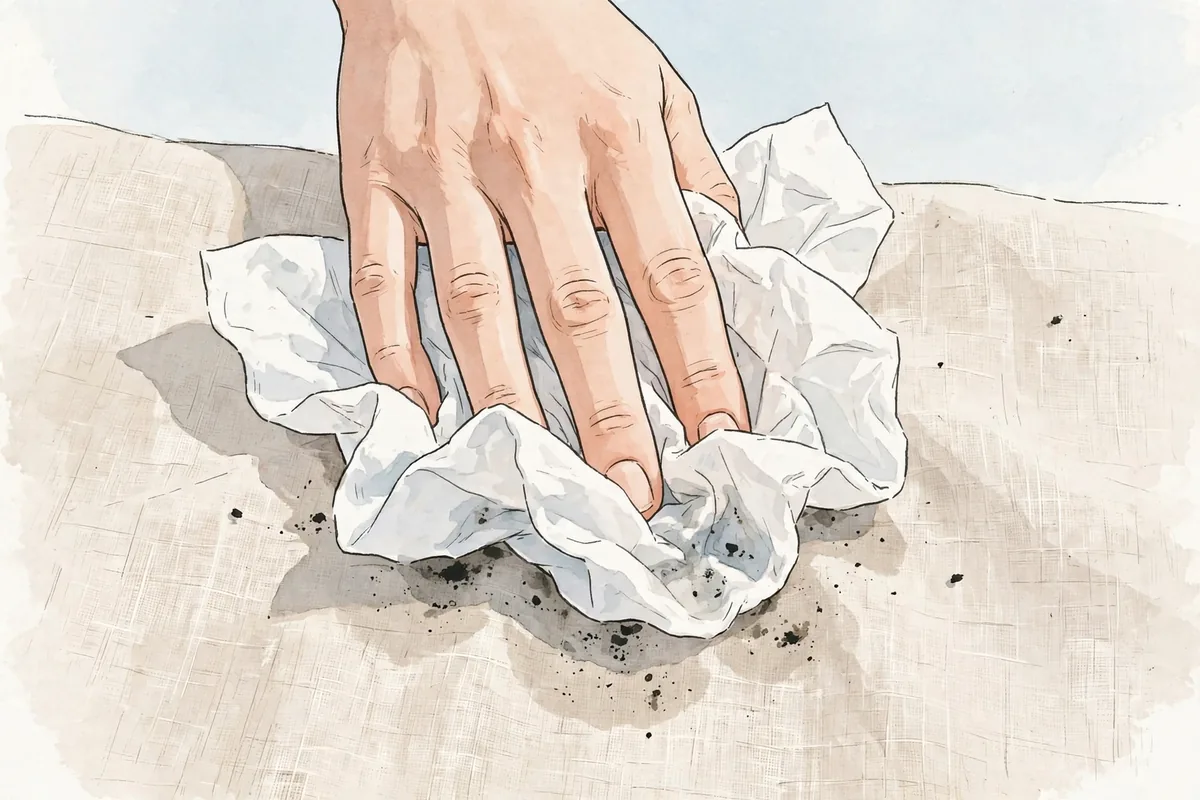
This is the definitive home test. Collect a few specks on a damp white paper towel. Flea dirt, rich in undigested blood, dissolves into a reddish-brown stain, sometimes described as looking like diluted blood. Ordinary dirt just makes a gray smudge; it does not turn red. This color change is the single most reliable way to confirm that black specks are flea feces rather than soil, dandruff, or debris tracked in from outside.
Flea dirt concentrates where pets spend time: in the fur around the base of the tail and hindquarters in dogs, around the head and neck in cats, on pet bedding, on carpets and rugs near pet resting spots, and along baseboards. If you do not have pets, flea dirt on your own bedding is less likely, but not impossible, since fleas can arrive via visiting pets, wildlife under the house, or a previous tenant’s infestation. Focus the inspection on bedding and carpeted areas near where animals rest.
| Feature | Bed Bug Poop (Fecal Spots) | Flea Dirt |
|---|---|---|
| Form | Liquid waste that soaks in like ink; flat spots or slightly raised dots | Dry granules like ground pepper; loose specks |
| Size | ~1 mm dots, like a fine-marker dot | Tiny pepper-like grains |
| Color | Dark brown to black; smears rusty-red when fresh and dampened | Black specks that dissolve reddish-brown on a wet towel |
| Texture | Soaked into fibers; permanent stain on fabric | Loose; sits on fur and surfaces |
| Pattern | Clustered near harborages: groups of spots, then gaps | Scattered where pets rest; in fur and on bedding |
| Location logic | Mattress seams, box spring, headboard, bed frame, nearby walls | Pet fur, pet bedding, carpets, baseboards near pet areas |
| Companion signs | Shed skins (translucent casings), live bugs in seams | Flea eggs (white salt-like ovals), live fleas on pet |
| Definitive home test | Damp-cloth smear: rusty-red bleed suggests digested blood | Wet paper towel: specks dissolve into reddish-brown stain |

Use a plain white paper towel, dampened, not dripping. Press it gently onto the specks or collect a few grains onto the towel, then wait a few seconds and look. Flea dirt blooms into a reddish-brown halo. Fresh bed bug fecal spots smear into a rusty-red streak when rubbed. The white background is essential; on a colored cloth the color change is easy to miss.
A clear reddish-brown result confirms blood-based waste, but remember that both pests’ droppings are blood-based, so the test alone does not name the pest. It rules out ordinary dirt, mold, and ink. Combine the color result with location logic: reddish smear from specks clustered along a mattress seam points to bed bugs; reddish bloom from pepper-like grains in pet bedding points to fleas. When the specks are old and dry, the test may be inconclusive, that is a limitation, not a failure. Note it and lean harder on location and companion signs.
Do not scrub aggressively, you will smear everything into an unreadable mess and destroy the pattern. Do not test a single speck and declare victory; sample several spots. Do not use printed or colored paper towels, which can bleed dye and mimic a positive result. And do not test stains on a mattress and conclude “bed bugs” when the dog sleeps on that bed every afternoon, context is part of the test.
Specks concentrated within a few feet of the bed, mattress seams, headboard, nightstand joints, the wall behind the bed, with no pets sleeping there strongly suggest bed bugs. Bed bugs are tied to sleeping humans, and their signs radiate outward from the bed as an infestation grows. If the specks form the classic clustered pattern along seams and piping, confidence rises further.
Specks concentrated where animals rest, dog beds, the couch cushion the cat claims, carpeted areas where pets nap, the base of the pet’s tail during a fur check, point to fleas. The presence of a pet with scratching, plus pepper-like specks in its fur that turn red on a wet towel, is about as conclusive as a home diagnosis gets. Remember that flea dirt in the environment (not just on the animal) confirms an established population: check pet bedding and nearby carpet, not just the pet.
Real life is messy. A dog that sleeps on the bed introduces flea dirt into the bedroom zone; a bed bug infestation in a pet owner’s home creates specks in rooms the pet never enters. When zones overlap, run the full protocol: map every speck location, test samples from each area, look for companion signs (shed skins vs. flea eggs), and check both the pet and the mattress seams. If you find evidence of both pests, treat it as two problems, not one, they require entirely different approaches.
Do not panic, and do not start spraying random products, scattering bed bugs with repellent sprays drives them deeper into walls and makes professional treatment harder. Instead: confirm with a thorough inspection (seams, box spring, headboard, nearby furniture), consider a professional inspection for confirmation, and reduce clutter around the bed to eliminate hiding spots. Encasements for mattress and box spring trap bugs inside and make future inspections easier. If you travel or use shared transport, our article on bed bugs on public transit explains how they hitchhike, useful context for figuring out how they arrived.
The pet is the starting point but not the whole project. Talk to your veterinarian about appropriate flea prevention and treatment for your specific animal, product choice depends on species, age, weight, and health, which is why the vet visit matters. Simultaneously address the environment: wash pet bedding in hot water and dry on high heat, vacuum carpets, rugs, and upholstery thoroughly (and dispose of the vacuum bag or empty the canister outside), and repeat on a schedule, because pupae in the environment will keep hatching for weeks. Treating only the pet while ignoring the environment is the classic reason flea problems “come back.”
Call a licensed pest professional when: the infestation is beyond a few isolated signs, you find evidence of both pests, DIY steps have not resolved the issue after a few weeks, or you live in multi-unit housing where pests move between units. A professional inspection is also worthwhile when you simply cannot confirm what you have, misidentification is the most expensive mistake, and an expert ID costs far less than months of wrong treatments. For renters, notify the landlord or property manager early; many jurisdictions assign bed bug treatment responsibility to property owners.
Can bed bug poop and flea dirt look identical?
To the naked eye, sometimes yes, both can appear as tiny black specks. The differences emerge on closer inspection: bed bug fecal spots are liquid waste soaked into fabric like ink, often in clusters along seams, while flea dirt is dry, pepper-like granules that sit loosely in fur or on surfaces. The wet-towel test plus location logic separates them in most cases.
Does the wet paper towel test work for both?
It detects blood-based waste in both, which is both its strength and its limitation. Flea dirt reliably blooms reddish-brown on a damp white towel. Fresh bed bug fecal spots smear rusty-red when dampened. The test confirms “this is digested blood, not dirt”, then location and companion signs (shed skins vs. flea eggs, mattress seams vs. pet bedding) identify which pest.
I found black specks but no bites. Should I still worry?
Fecal signs without bites still deserve investigation, because both pests can be present before anyone notices bites, and some people do not react to bites at all. Map the specks, run the wet-towel test, check the likely zones (mattress seams, pet areas), and look for companion signs. Early confirmation is far cheaper than late treatment.
Can I have bed bugs and fleas at the same time?
Yes, especially in homes with pets where the dog sleeps on the bed. The two infestations are independent and need independent responses: bed bugs require a harborage-focused approach around sleeping areas, while fleas require coordinated pet treatment plus environmental control. Finding evidence of one does not rule out the other, inspect for both.
How do I clean up the droppings safely?
For ordinary cleanup, wear gloves, wipe hard surfaces with a damp cloth, and launder fabrics in hot water followed by high-heat drying. Avoid dry-sweeping or dry-vacuuming large amounts of droppings without a mask, since it aerosolizes fine particles. Cleanup removes the signs but not the infestation, it is a hygiene step and an inspection aid (fresh spots after cleanup prove ongoing activity), not a treatment.
Medically reviewed by Dr. Sarah Jones, MD.
This article is for informational purposes only and isn’t medical advice. If you’re worried about a bite or sting, talk to a healthcare professional.
Dr. Jones oversees StingHelp’s clinical verification process. Every guide is systematically evaluated against active Centers for Disease Control and Prevention (CDC), Environmental Protection Agency (EPA), and American Academy of Allergy, Asthma & Immunology (AAAAI) medical consensus standards to ensure symptom distinctions and care recommendations are clinically sound.
Explore physician-reviewed first-aid procedures, identification clues, and symptom comparisons for other common outdoor bites and stings.
You found a tiny bug in the bedroom, and your stomach dropped. The question of bed bug nymph vs carpet beetle larva is one…
Vinegar shows up in nearly every do-it-yourself bed bug discussion online. It is cheap, it is already in the kitchen, and countless forum posts…
The logic feels airtight. Salt kills slugs in the garden by drawing the moisture out of them, so sprinkling salt around the bed should…